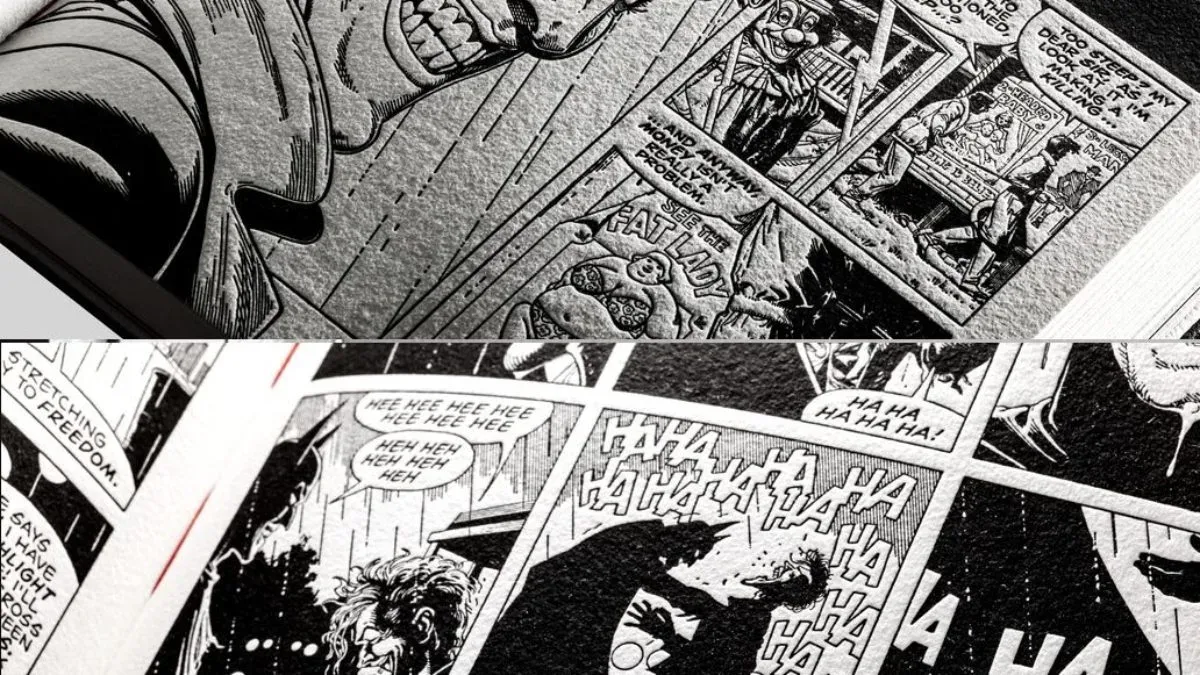
Batman: The Killing Joke is receiving an extremely limited physical edition built less like a conventional comic book and more like a fine-press art object. The licensed Noir Edition, based on the 2016 black-and-white presentation of Alan Moore and Brian Bolland’s story, will have only 47 numbered copies available for sale. Every copy is to be signed by Bolland and accompanied by a newly written introduction from the artist.
The project’s central appeal is not a new chapter, altered plot, or ordinary variant cover. It is the production process. The book is being letterpress-printed by hand on heavy archival cotton paper, then sewn and bound in goatskin. Its presentation also includes bespoke paper items and a padded clamshell case. An optional, made-to-order Arkham Case takes the concept still further with a concrete-resin exterior, padded interior and functioning metal cell door.
A black-and-white edition designed around the line art
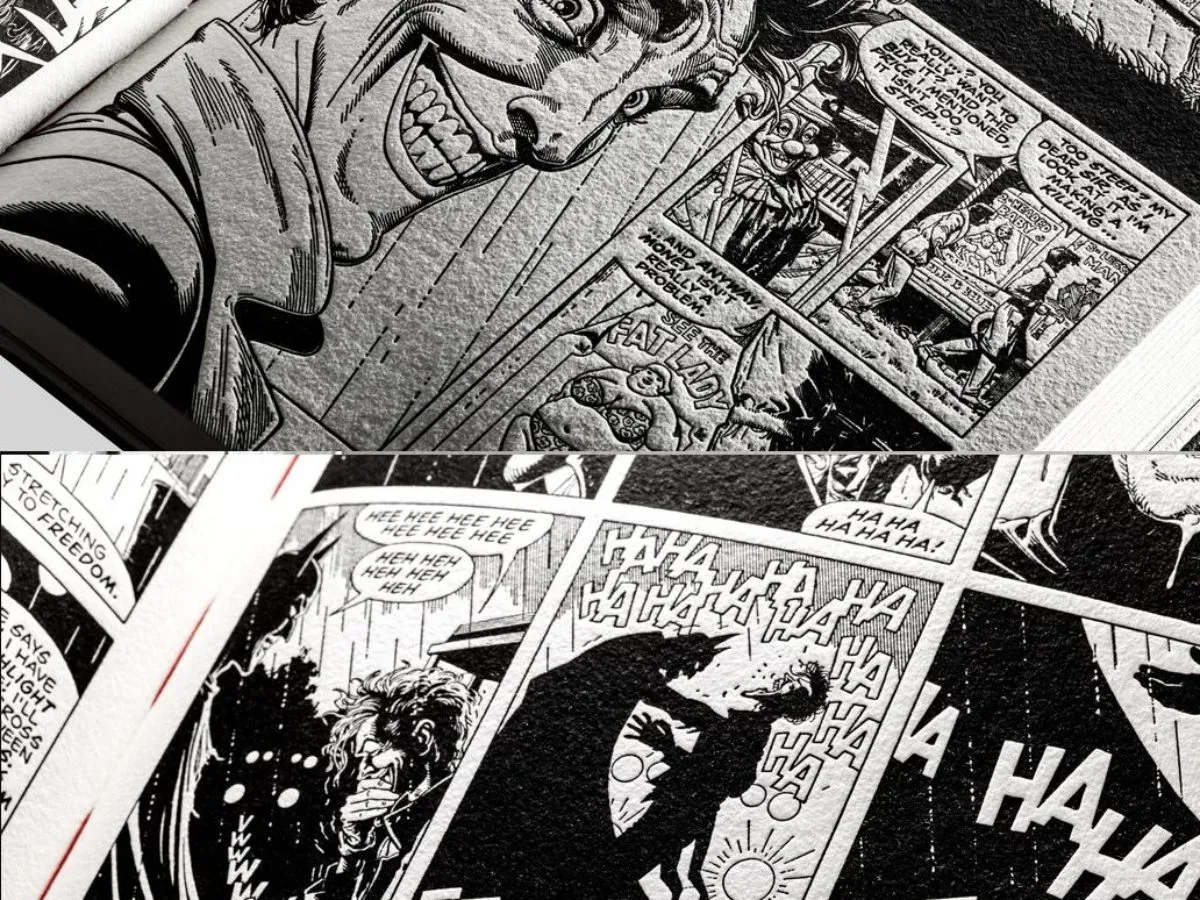
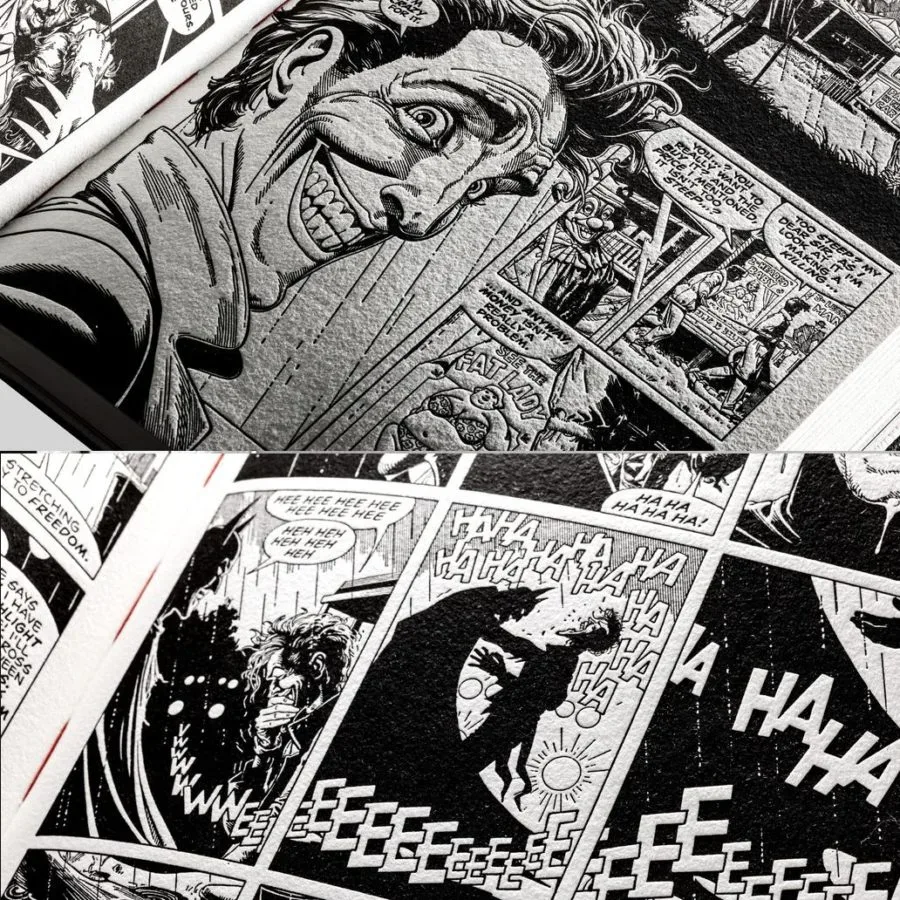
The Noir Edition draws from the 2016 black-and-white version of The Killing Joke. That distinction matters because it puts Bolland’s drawing, inking, page design and use of contrast at the centre of the object. Rather than treating monochrome as merely a stripped-back alternative to a color comic, this release is designed to make the art’s physical reproduction part of the experience.
Each page is being printed on a Heidelberg cylinder press using 300gsm, 100% cotton, mould-made Hahnemühle paper. In practical terms, 300gsm describes a notably thick, substantial paper stock rather than the lighter paper generally associated with standard periodical comics. Cotton paper is valued in fine printing for durability and texture, while mould-made paper is manufactured to emulate some characteristics associated with traditional handmade sheets.
Letterpress is also a meaningful choice here. It is a relief-printing process in which a raised image or type surface transfers ink to paper under pressure. That pressure can leave a subtle impression in the sheet, giving the page an element of physical texture beyond the printed image. The stated goal is that readers can feel the artwork as well as view it. For a black-and-white comic, where line, negative space and tonal balance do so much of the work, that tactile component is a deliberately fitting production choice.
It should not be confused with an entirely new artistic version of the story. The supplied details identify the 2016 black-and-white edition as the visual basis. What changes is the scale of craft applied to its reproduction: letterpress printing, heavyweight archival paper, hand sewing and luxury binding replace the expectations of a normal bookstore or comic-shop volume.
Hand binding, goatskin and a red detail in a monochrome package
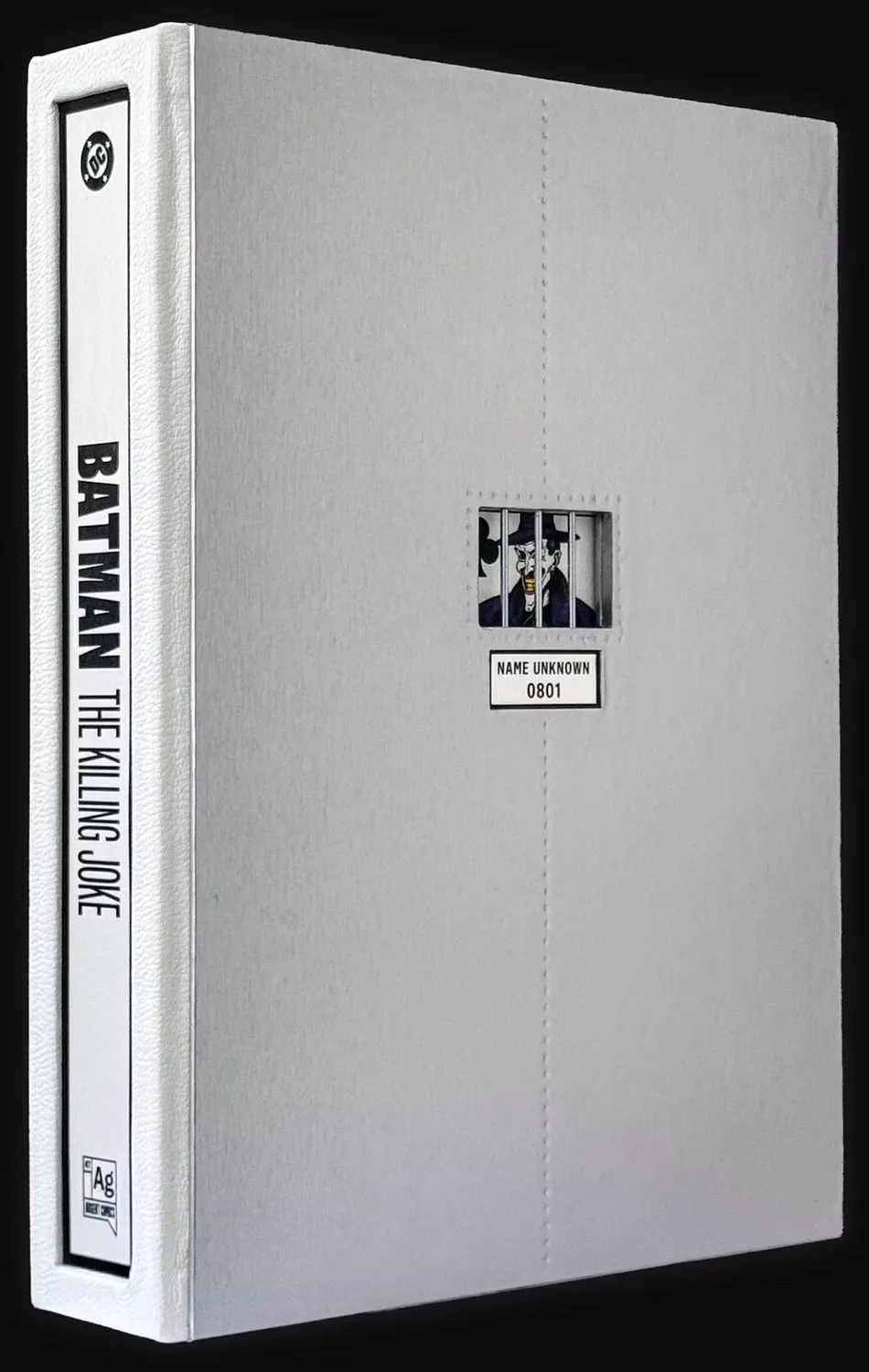
The books will be hand-sewn and bound at Aurelian Hands, the in-house atelier of Pigment Collective in Zagreb. Goatskin leather is used on both the exterior and interior of the boards, with extensive foil stamping. Goatskin is often selected for high-end bookbinding because it is a durable leather that can remain supple, helping it suit books meant to be handled carefully over long periods.
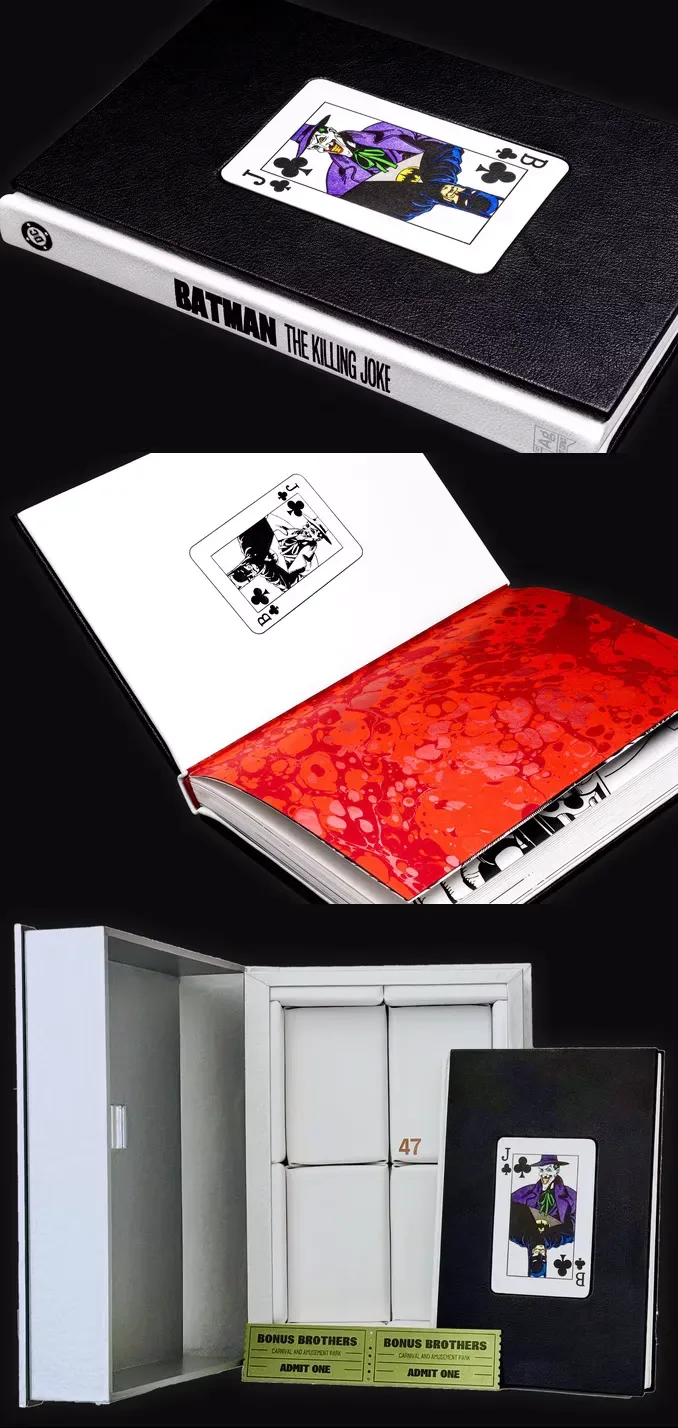
Its design otherwise commits to the black-and-white premise. The handmade marbled endpapers provide the only stated burst of red in the presentation. Endpapers are the sheets that connect a book block to its cover boards, but in a fine binding they can also serve as a major visual flourish. Here, the red endpapers become an intentional contrast against an overwhelmingly monochrome Batman and Joker object.
That approach reflects the edition’s basic identity. This is not positioned as a broadly accessible reprint with a few upgraded extras. It is a scarce collectible whose material decisions are as important as its comic content. The edition number reinforces that idea: 47 copies will be offered commercially, with the number chosen for silver’s atomic number. “Argentum,” the Latin term associated with silver, inspired the imprint’s name.
What comes with each numbered copy
Besides the signed volume and Bolland’s new introduction, each copy includes several printed components made to echo themes and imagery from the story:
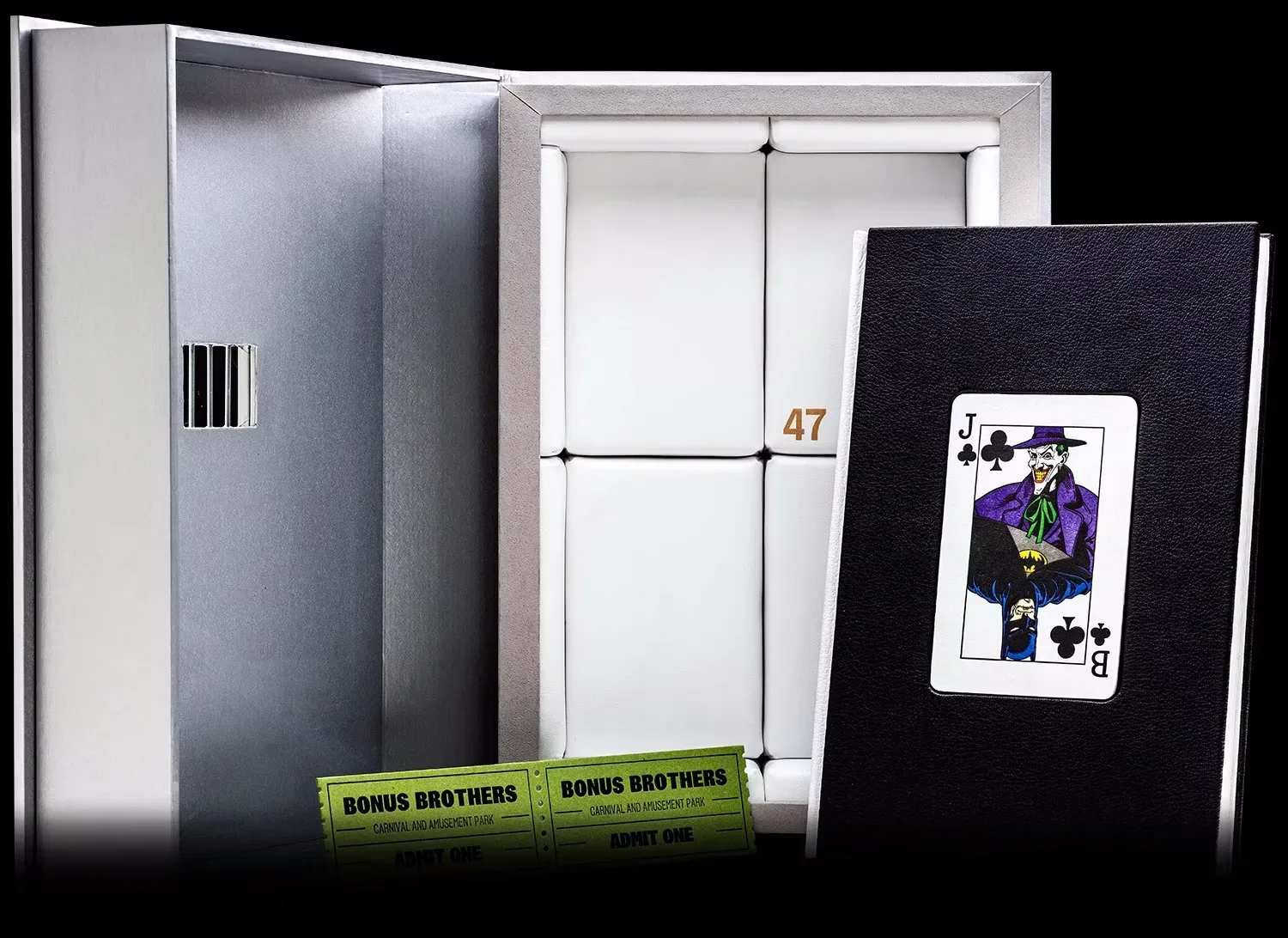
- A detachable letterpress-printed playing card showing Batman and the Joker sharing one face, with one figure upright and the other inverted.
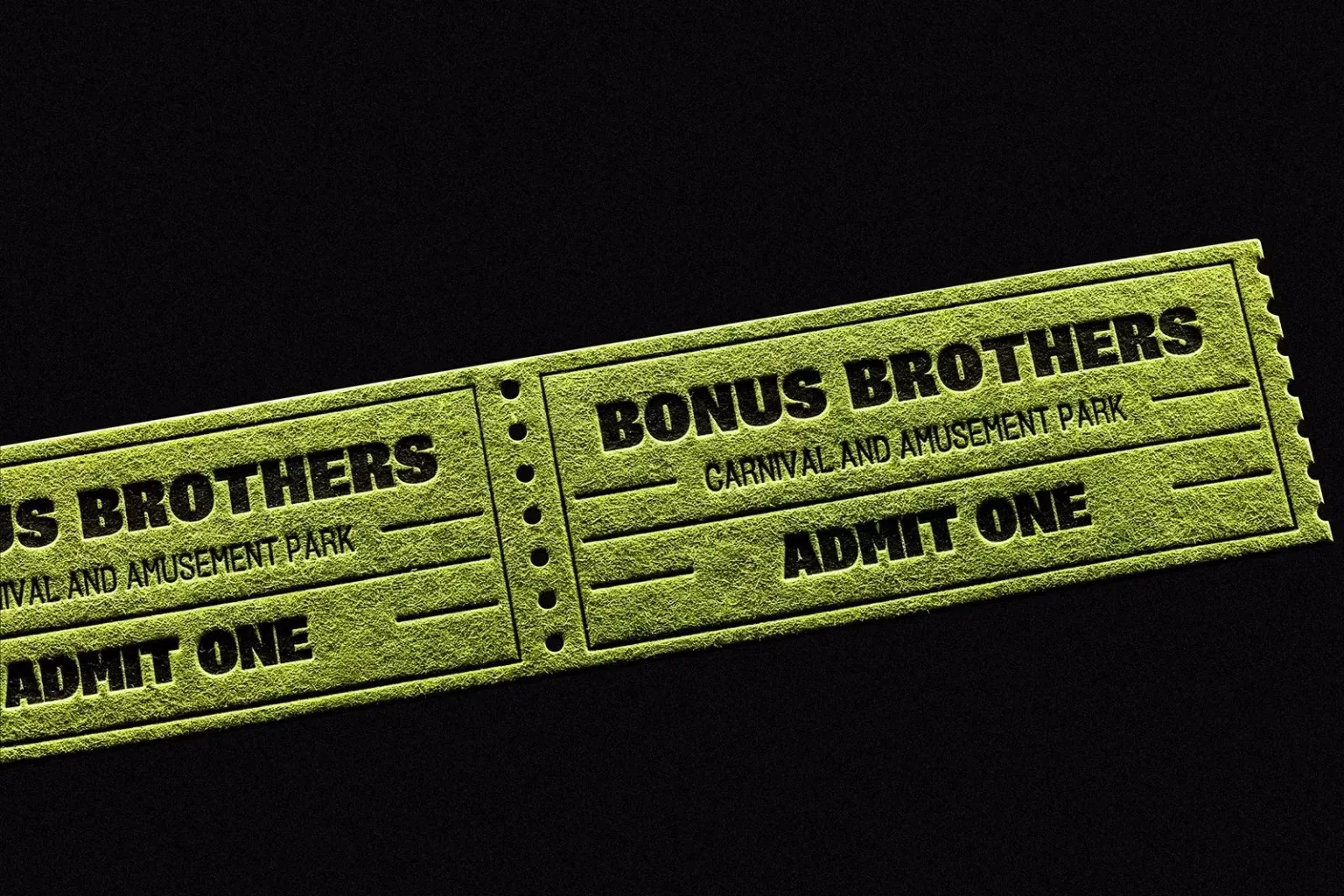
- A letterpress bookmark modeled after carnival tickets connected to the comic’s imagery.
- A clamshell case lined in clinically white padding, invoking a padded cell.
The playing card is said to require eight color passes. A color pass is one trip through the press for a specific ink layer; multiple passes are used when a print needs several colors or stages of detail. Even though the book itself is presented as a Noir Edition, the card’s production underlines the labor-intensive mindset behind the package.
The inclusion of individual ephemera also makes completeness especially important for collectors. A numbered book, signature and case establish scarcity and provenance, while detachable extras raise a more practical question: whether to separate and display them or retain them in the original package. Nothing in the release information prescribes how owners should handle the pieces, but keeping the book, card, bookmark and case together would preserve the form in which this edition is being presented.
The Arkham Case is a separate, made-to-order presentation
For buyers seeking an even more elaborate display piece, the optional Arkham Case is available by commission. It is described as a concrete-resin housing with a functional metal cell door, a complex lock and two keys. Its interior is fully padded, and its reverse bears graffiti based on the Joker’s “emergency exit” line about madness.
Each Arkham Case will be numbered to match the accompanying book and made only to order. The matching number is a useful detail for a collector-focused release: it links the external display case to its corresponding volume rather than treating the case as a generic accessory. At the same time, prospective buyers should distinguish the case from the standard clamshell package. The clamshell case is included among the described features of each book, while the Arkham Case is an extra commission.
It is a deliberately theatrical idea, but one aligned with the release’s material premise. The padded clamshell already frames the book through the story’s institutional imagery; the Arkham Case pushes that framing toward a sculptural container. Whether that enhances the book or overwhelms it will be an aesthetic judgment for the small group able to secure one. Either way, it signals that this edition is intended to occupy display space as much as shelf space.
Scarcity, archive copies and what “officially licensed” establishes
There will be 47 commercial copies, each numbered and signed by Brian Bolland. Five additional archive copies will be made for DC Comics and Argent Comics. Those archive copies are stated to be distinct from the commercial edition and not for sale.
For collectors, that separation is worth noting. The sale edition’s stated population is 47, not 52. Archive material can exist around a limited release for publisher or producer use without increasing the number offered to the public. The key factual boundary in this case is clear: five copies are reserved internally, while 47 are the numbered commercial copies.
The official DC license likewise distinguishes this project from an unofficial fan-made binding or custom alteration of an existing book. That does not make it a mass-market edition; its hand-built specification and tiny run do the opposite. But it does establish that the publisher authorized the use of Batman: The Killing Joke for this fine-press release.
Why this kind of release occupies a different collecting lane
Fine-press comics sit at an intersection of comics collecting, book arts and character memorabilia. Their appeal is generally not based on reading convenience. A letterpress volume on 300gsm cotton paper, leather boards, foil work and a padded clamshell is inherently less casual than a standard paperback or single issue. Its value proposition is rooted in craftsmanship, presentation and severe limitation.
That also means buyers should approach it differently from a routine reprint. The supplied information confirms the limited number, signature, materials and accessories, but it does not establish future resale value. Scarcity can make an edition notable; it does not guarantee any particular market outcome. A buyer’s strongest practical reasons to pursue it are appreciation for Bolland’s black-and-white work, interest in fine bookmaking, and a desire for this unusually elaborate presentation of a major Batman story.
The very limited run also creates a difference between availability and visibility. Forty-seven commercial copies can be enough to establish a real, documented edition, but not enough for it to become commonly encountered. That makes careful recordkeeping valuable: retain any purchase documentation, preserve the signed book’s stated numbering, and keep included materials and matching presentation components together where possible.
In a wider collecting sense, physical editions carry a kind of permanence that does not depend on a storefront remaining online or a platform maintaining access. That distinction has become more visible as digital libraries and services can change over time; the impending closure of Legacy Games illustrates why a “keep forever” promise can still involve deadlines. This Batman release is emphatically a physical object, although its rarity means ownership will be limited to a very narrow audience.
A carefully matched treatment for a singular Batman comic
Batman: The Killing Joke Noir Edition is being framed as a premium interpretation of an existing black-and-white presentation, not a replacement for ordinary editions of the comic. Its strongest concept is the way the making of the book mirrors its artistic focus: dense cotton sheets and letterpress relief give physical weight to Bolland’s lines; goatskin and foil turn the binding into part of the display; and the clinical white packaging draws from the story’s unsettling visual language.
With just 47 copies offered for sale, a Bolland signature in every copy, and an optional numbered Arkham Case, this is firmly a specialist collector release. For those interested in comics as artifacts of print craft as well as narrative, its specifications make a clear case for why it exists. For everyone else, it remains a striking example of how far a licensed comic-book edition can move from the newsstand format without changing the story on its pages.