Sega’s Dreamcast era is often reduced to a familiar sequence: Saturn struggled, PlayStation 2 arrived, and Sega left the hardware business. Those events mattered, but they do not explain the whole transition. Dreamcast represented a different kind of company strategy, combining arcade-derived technology, an unusually early online plan, distinctive software and a push to recover Sega’s reputation after the Saturn years.
This history follows Sega as a manufacturer rather than treating Dreamcast as an isolated machine. It separates regional launch dates, corporate identities and documented financial pressures, while using representative games to show what Sega and its partners were trying to build. The result is not a story about one fatal mistake, but about a company whose ambitions repeatedly ran ahead of the market’s ability to support them.
From amusement machines to the Sega name
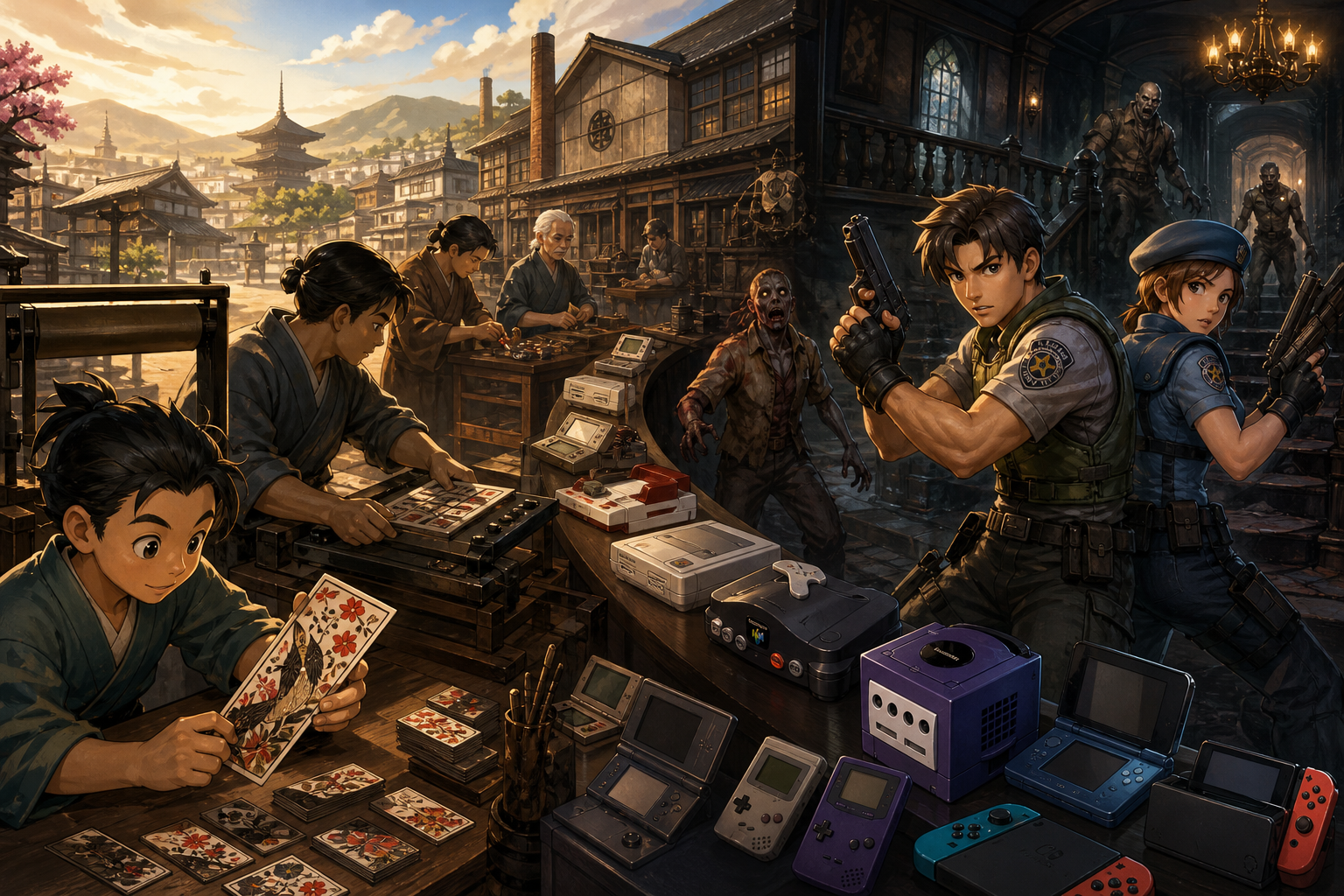
Sega’s roots were not in home consoles. In April 1951, Richard D. Stewart and Raymond J. Lemaire began importing, selling, renting and maintaining commercial amusement equipment. Service Games Japan followed in 1957, while Nihon Goraku Bussan and Nihon Kikai Seizo were established in June 1960. These businesses dealt in jukeboxes, electromechanical amusement machines and arcade operations before Sega became closely associated with video games.
The Sega name became part of the company identity after Rosen Enterprises merged with the Japanese amusement business in 1965. Sega itself explains that the name was derived from the first two letters of Service and Games. This history matters because Sega approached home hardware with experience in coin-operated entertainment, where visual impact, frequent player turnover and unusual cabinet ideas were central concerns. Its later consoles inherited that interest in spectacle and experimentation, even when the economics of a living room differed sharply from those of an arcade.
The company’s first home-console step was the SG-1000, released in Japan in July 1983. Sega continued working across arcade and consumer businesses rather than replacing one with the other. That dual identity would define the company for decades: Sega could create hardware and software that looked forward, but it also carried the costs and expectations of an arcade manufacturer trying to compete in a mass-market console business.
The Mega Drive showed Sega could challenge Nintendo
The Mega Drive launched in Japan in October 1988, reached North America under the Genesis name in 1989 and arrived in Europe in 1990. The regional naming difference reflected marketing rather than a separate hardware generation. More important was Sega’s developing ability to sell a console through a combination of fast arcade-style games, aggressive promotion and a recognizable software identity.
Sonic the Hedgehog became the clearest symbol of that rise. Sega’s own history credits the Mega Drive and Genesis with more than 15 million units sold in North America and 8 million in Europe after Sonic’s arrival. Those figures describe a major regional achievement, even though they should not be casually converted into a single worldwide hardware total. Sega had demonstrated that it could compete internationally rather than remain a niche arcade company with a console on the side.
The success also raised the stakes for the next generation. Sega was no longer simply testing the home market. It had a large installed base, an international audience and a reputation to defend. The Saturn’s Japanese launch in November 1994 began a more difficult chapter. Its architecture supported both 2D and 3D software, but its commercial position became increasingly strained. That experience helped create the conditions for a new hardware project only four years later.
The people and partnerships behind the next machine
Dreamcast emerged from a company dealing with internal transition and external pressure. Shoichiro Irimajiri became Sega Enterprises’ president during the preparation of Dreamcast, while Isao Okawa was a crucial senior figure during the later restructuring. Hardware veteran Hideki Sato represented the engineering tradition that had shaped earlier Sega systems. Sega of America and Sega Europe also had to translate the machine’s identity into markets with different launch conditions and different relationships with retailers and publishers.
It is tempting to turn this period into a contest between named executives or to assign every design choice to one personality. The surviving record supports a more careful picture. Dreamcast was the product of engineering teams, regional organizations, outside technology partners and software divisions working within a company still carrying the consequences of Saturn. Individual leaders mattered, but the machine cannot be explained by executive folklore alone.
Microsoft announced in May 1998 that it would provide an optimized Windows CE environment with DirectX services for Dreamcast. That collaboration offered developers a familiar toolset, but Windows CE was not the complete technical identity of every game. Microsoft’s announcement specifically described a modular environment in which developers could omit operating-system components or replace them with custom libraries. Sega’s own hardware and development approaches remained central to the platform.
A console designed to look beyond the living room
Dreamcast launched in Japan on November 27, 1998. North America followed on September 9, 1999, and Europe on October 14, 1999. Those dates matter because the system’s commercial story changed between regions. The famous North American launch came after the Japanese debut, while European consumers received the machine later still.
The hardware reflected Sega’s attempt to make the console feel like a platform rather than only a box for packaged games. It used Sega’s proprietary GD-ROM format, a higher-density optical medium with approximately 1GB of capacity, and included the VMU memory-card concept. The VMU could display game information and support small interactive features through its own screen, making the controller area part of the experience.
Dreamcast hardware specifications also list a removable 33.6Kbps modem and a customized Microsoft Windows CE operating system. Sega promoted browser services, email, data delivery and online games. This did not make Dreamcast a modern broadband console. Dial-up access, regional services and limited online populations imposed practical constraints. Still, the decision to include communication hardware demonstrated that Sega was trying to establish a future-facing identity before console networking became routine.

Software made the hardware feel unlike its rivals
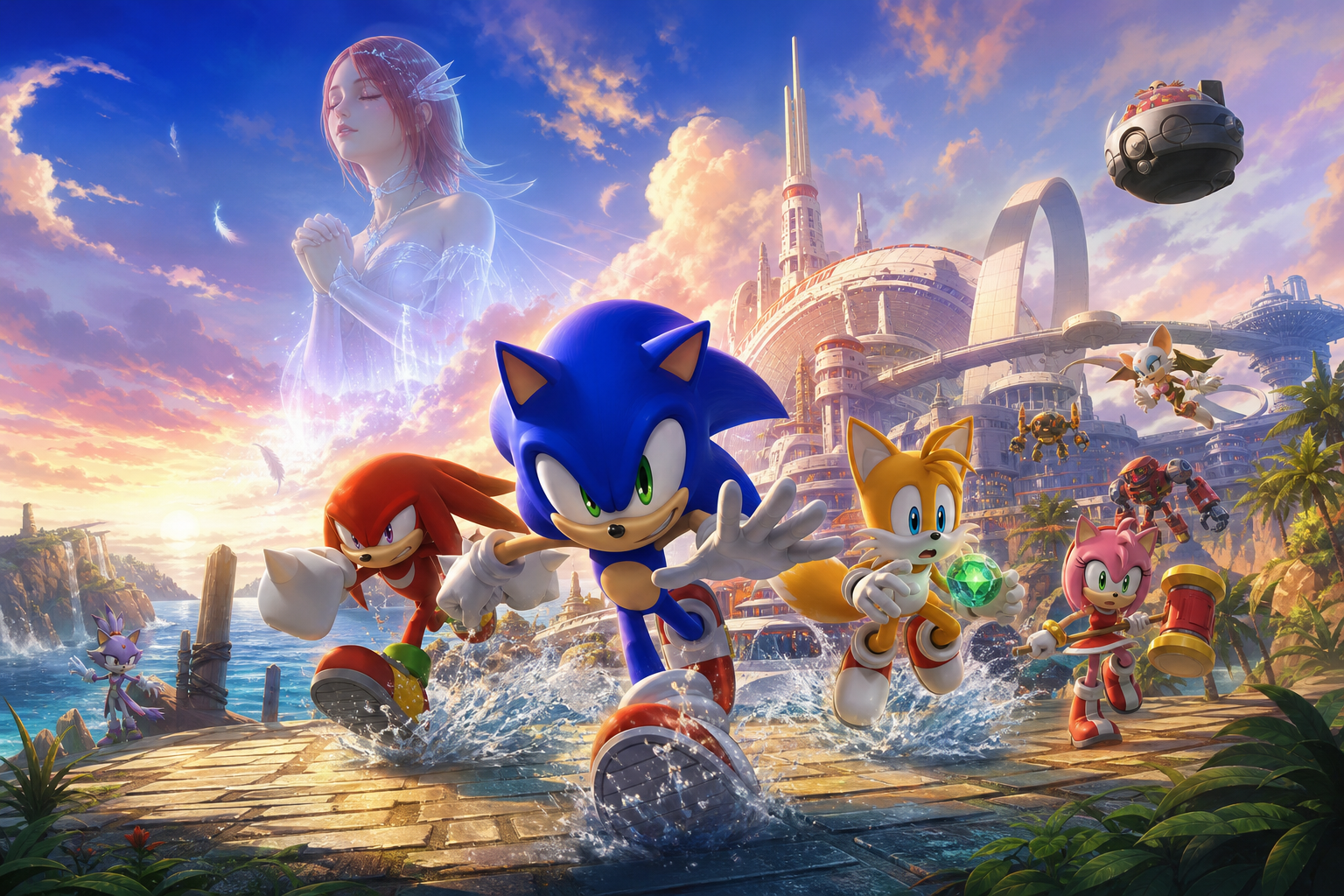
Dreamcast’s software library showed Sega’s willingness to combine established mascots with experiments that did not fit one commercial formula. Sonic Adventure presented Sonic in a large 3D environment and became one of the machine’s defining early showcases. Sonic Adventure 2 later sharpened the series’ two-sided campaign structure and demonstrated that Sega was still using its flagship character to establish the console’s identity.
Capcom’s Resident Evil: Code Veronica gave the machine a major survival-horror release in early 2000. Capcom’s annual report identifies it as a top Dreamcast seller and separately distinguishes the original Dreamcast release from the broader Resident Evil series. That distinction matters because later Code Veronica X and Complete editions are not interchangeable with the first Dreamcast version. The game also showed Sega’s dependence on outside publishers: a strong platform needed partners with established series, not only Sega-owned properties.
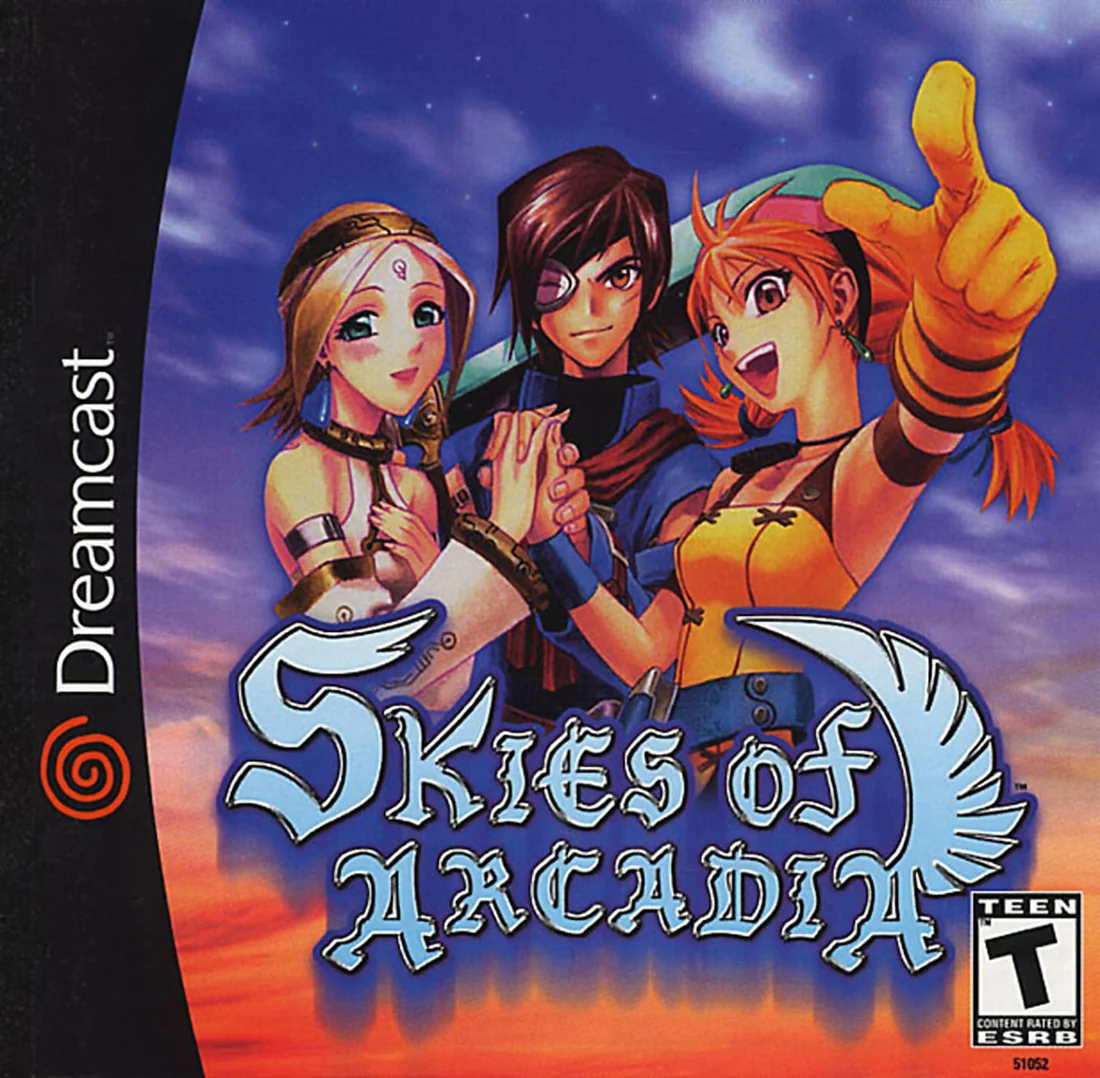
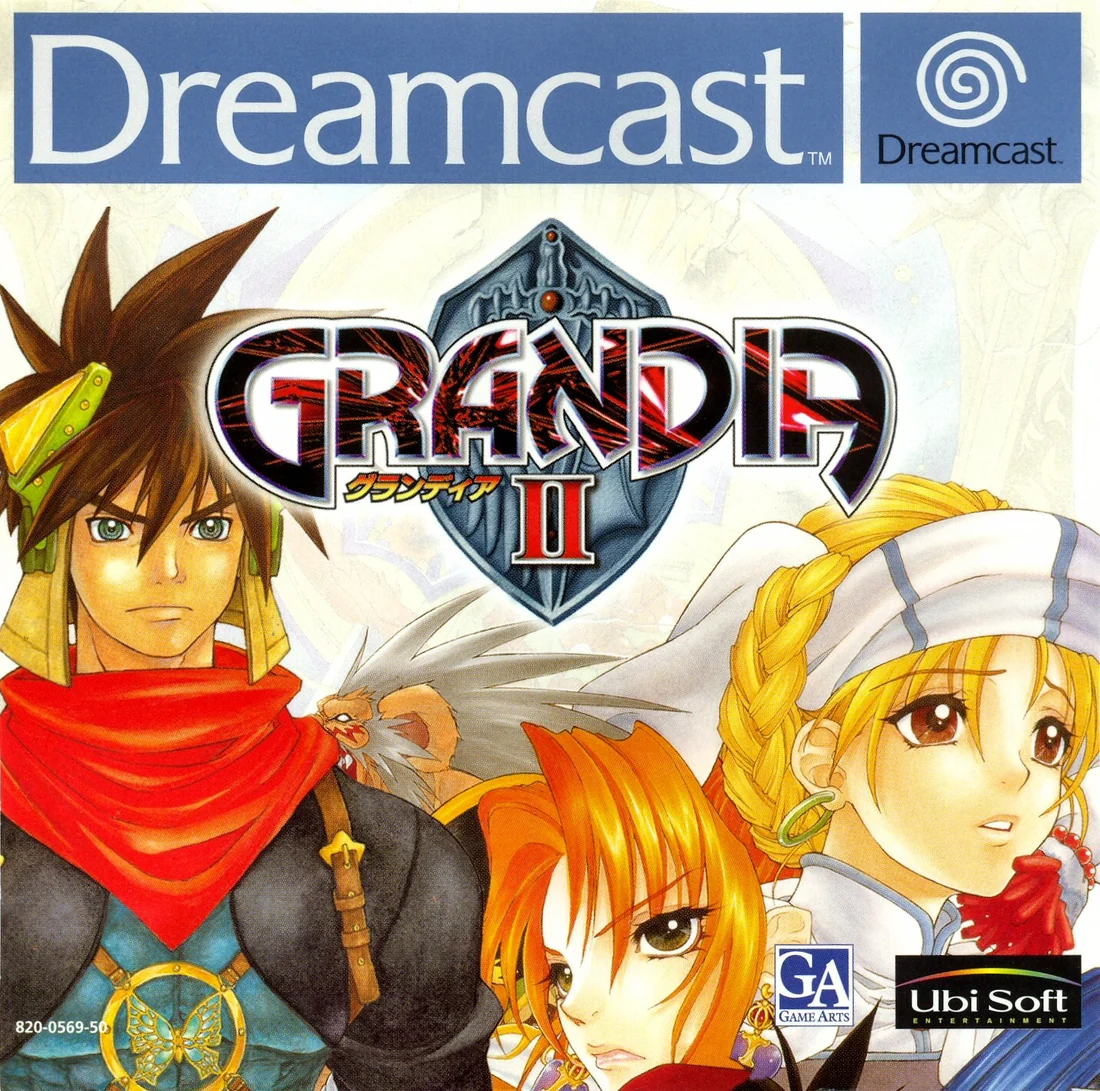
Other releases broadened the picture. Shenmue pursued detailed 3D spaces and everyday routines; Skies of Arcadia offered a large role-playing adventure built around airship exploration; and Grandia II brought a prominent Japanese RPG to the system. Rayman 2: The Great Escape and Legacy of Kain: Soul Reaver represented substantial Western-developed adventure and action software, while Ecco the Dolphin: Defender of the Future revived a Sega series through a more atmospheric 3D setting. These games did not form one unified commercial strategy, but together they show why Dreamcast attracted such a distinct software reputation.

Online play before it became ordinary
Sega’s online ambition extended beyond a modem included in the hardware. Dream Passport and related regional services offered browsing and communication functions, while Sega experimented with online play and data delivery. ChuChu Rocket! helped demonstrate that network features could be treated as a platform concern rather than an unusual add-on. The experience was uneven by modern standards, but the strategic direction was unusually visible.
Phantasy Star Online became the clearest expression of the idea. Sega identifies its Japanese release as December 2000 and describes it as the company’s first full-scale network RPG for a consumer console. The game supported simultaneous cooperative play for up to four players, connecting Sega’s role-playing heritage to the emerging idea of a persistent online audience.
There were limits that should not be forgotten. Players needed compatible services, telephone access and suitable regional support, while the audience was much smaller than the later online populations created by broadband consoles. Dreamcast was therefore an early and important online platform, not a fully formed version of Xbox Live or PlayStation Network. Its significance lies in how directly Sega made connectivity part of the console’s proposition.
Why Sega’s business model could not recover
Dreamcast’s technical ideas and software variety did not remove the financial pressures surrounding Sega. Sega’s retrospective identifies several burdens: substantial launch advertising costs, early price reductions that made it harder to recover development expenses and the cost of building services such as an internet-provider operation. These expenses mattered because a console business needs enough hardware sales and software revenue to sustain the next investment cycle.
The arrival of PlayStation 2 intensified the problem. Sony launched its new system in Japan in March 2000 and in North America later that year, backed by the PlayStation brand’s existing momentum and a broad third-party ecosystem. Sega’s own account points to the difficulty of securing third-party support in a global market where PlayStation already had substantial strength. The issue was not simply whether Dreamcast hardware was capable; publishers and consumers were deciding which platform would offer the safest long-term audience.
DVD playback is often presented as the single reason Dreamcast lost. It may have influenced consumer comparisons, but the documented story is broader. Sega faced accumulated losses, expensive services, advertising commitments, pricing pressure and competition from a company with an enormous installed base. Sega’s 2002 annual report records a major write-down connected to restructuring consumer products, hardware and software development costs, as well as severe losses in the consumer business. Reducing the outcome to one missing feature makes the history easier to repeat, but less accurate.
January 31, 2001: the end of Sega hardware
At a board meeting on January 31, 2001, Sega decided to discontinue Dreamcast production and concentrate resources on content and amusement businesses. The decision did not mean Sega stopped making games immediately. It marked a change in the company’s center of gravity, from owning a console ecosystem to creating content for competing machines.
Sega’s 2002 annual report also records Isao Okawa’s plan to contribute personal assets in support of Sega. The report states that Okawa, then chairman and president, proposed a net contribution of ¥77.913 billion and that the board accepted the proposal on January 31, 2001. Okawa died on March 16, 2001. His support was significant and documented, but it should not be inflated into a complete explanation of Sega’s survival or treated as the sole cause of the hardware withdrawal.
Software continued after the production decision, including later Japanese releases such as Sakura Wars 4 in 2002. Sega’s retrospective describes Dreamcast’s lifetime output as slightly more than 10 million units, while sales totals can vary according to accounting definitions and reporting periods. The console’s commercial life was short, but its software program did not vanish on the day production ended.
The company’s transition was visible in its business results. The 2002 annual report records Dreamcast software sales alongside sales for third-party platforms, showing how Sega was already shifting its publishing resources beyond its own hardware. That is more useful than describing the change as an overnight transformation: Sega’s post-console identity was being built during the withdrawal itself.
A final console that changed Sega’s future
Sega’s move into third-party publishing preserved a company that no longer controlled a home-console platform. Sonic continued across competing systems, while arcade properties and less conventional series remained part of Sega’s broader software identity. The transition was painful, but it also separated Sega’s creative output from the financial responsibility of manufacturing and supporting a console generation.
Dreamcast’s legacy is therefore larger than its sales position. It combined Sega’s amusement-machine heritage with a relatively accessible development environment, GD-ROM media, the VMU, an integrated modem and an aggressive online plan. Its games demonstrated that Sega was willing to fund unusual worlds, ambitious role-playing projects and arcade-to-console experiments even while its business foundation was weakening.
The final console era should be remembered neither as proof that innovation guarantees success nor as a simple failure caused by poor decisions. Sega reached Dreamcast after decades of hardware experience, international growth and internal strain. The machine’s commercial end closed one chapter, but its design choices and software helped define how players later understood Sega: inventive, sometimes impractical, unusually willing to take risks and still capable of making a console feel like its own place.
Dreamcast was Sega’s final home console, but it was not an isolated last stand. It carried forward the company’s arcade instincts, international ambitions and appetite for unusual hardware while confronting a market increasingly shaped by platform scale, third-party confidence and expensive network infrastructure.
That combination explains why the system remains historically important. Sega did not leave hardware because Dreamcast lacked ideas. It left after those ideas proved difficult to finance and sustain against stronger commercial forces. The company’s later life as a publisher and amusement business was built from the same software and creative traditions that made its final console so distinctive.