Nintendo’s modern identity can make its origins seem surprising. The company began in Kyoto in 1889 as a maker and seller of hanafuda playing cards, later producing Western-style cards, licensed character cards, toys and electronic amusements. Consoles came much later, after Nintendo had already learned how to manufacture consumer products, negotiate licenses and package familiar play for a broad audience.
This history follows the company’s documented development through 2001, with attention to corporate identities, regional launches, hardware choices, commercial setbacks and the people who shaped its direction. The central thread is not that Nintendo always chose the most powerful technology. It repeatedly built platforms around a clear play idea, then used software to explain that idea to households.
1889–1959: A card business learns to widen its audience
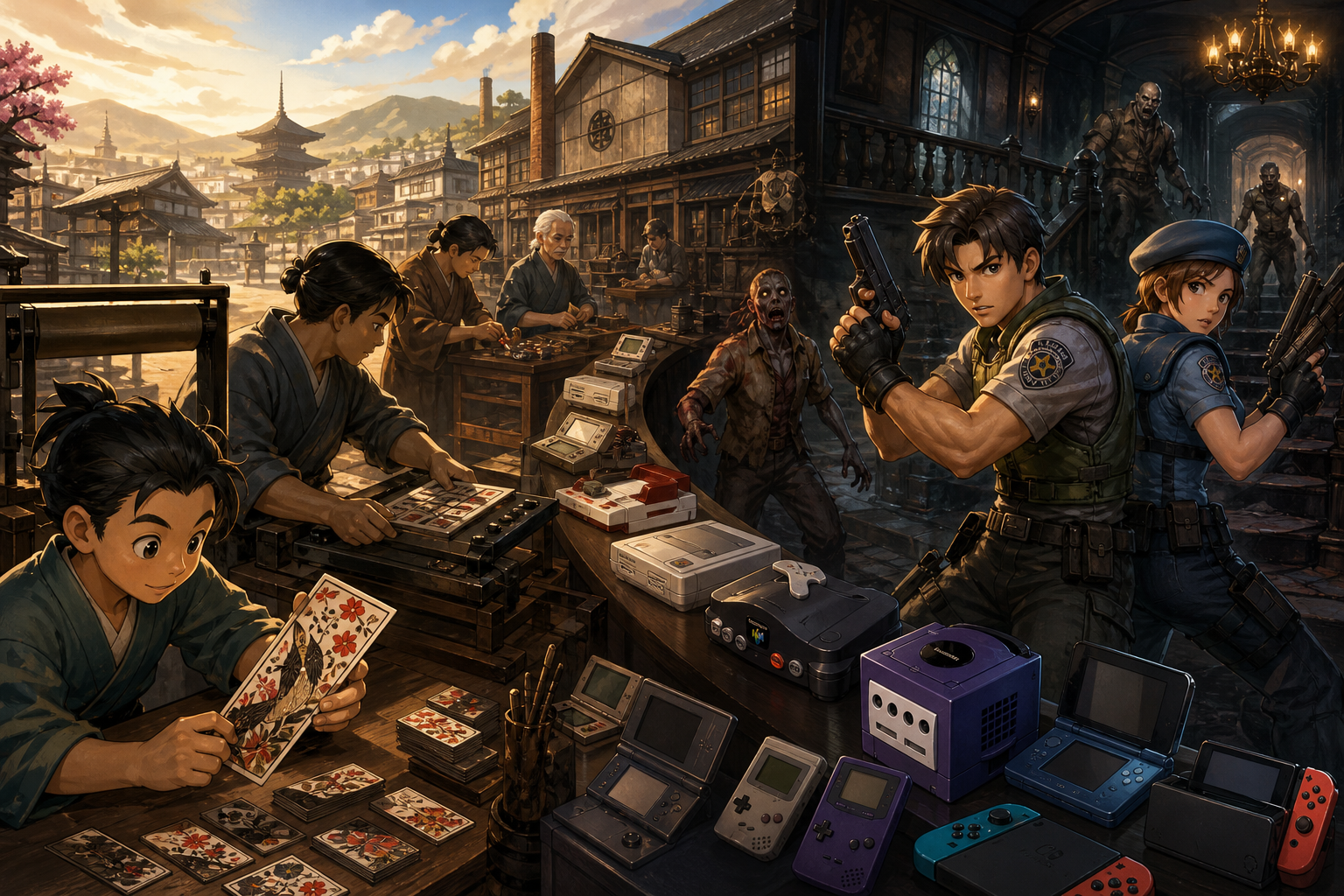
Fusajiro Yamauchi began manufacturing and selling hanafuda cards in Kyoto in 1889. These cards belonged to an established Japanese playing tradition, but Nintendo’s early business was not yet a video-game company in any meaningful sense. Its work involved physical production, distribution and the practical challenge of making a traditional product commercially sustainable.
Nintendo began producing Western-style playing cards in 1902. The corporate structure also changed over time: Marufuku Co., Ltd. was established in 1947, Hiroshi Yamauchi became president in 1949, and the company adopted the name Nintendo Playing Card Co., Ltd. in 1951. Nintendo consolidated manufacturing facilities in 1952 and became the first Japanese company to mass-produce plastic playing cards in 1953.
The 1959 Disney playing-card partnership was an important commercial expansion. Character licensing allowed Nintendo to present cards as a family-oriented product with broader popular appeal. It also provided experience that would matter later, when Nintendo’s games depended on recognizable characters, carefully controlled presentation and relationships with outside rights holders. The card business did not automatically predict the console business, but it supplied useful manufacturing and licensing experience.
- Keep Nintendo’s early corporate names separate rather than applying Nintendo Co., Ltd. to every period.
- Treat the Disney partnership as a documented licensing and product milestone, not proof of an unsupported corporate master plan.
1963–1976: From cards to toys and electronic amusements
Nintendo changed its name to Nintendo Co., Ltd. in 1963 and began manufacturing games in addition to playing cards. The company expanded its games department and built a production plant in Uji in 1969. This was a move into a wider play-products business, not yet a clean transition into home consoles.
The Beam Gun series introduced optoelectronic technology to Nintendo’s toy business in 1970. Nintendo developed the Laser Clay Shooting System in 1973, connecting toy technology with location-based entertainment and arcade-style activity. These products demonstrated a recurring Nintendo pattern: take an unfamiliar technical system and frame it through a recognizable physical activity.
Nintendo worked with Mitsubishi Electric on video-game systems using electronic video recording technology in 1975. The following year, microprocessors were introduced into that system. Nintendo and Mitsubishi then developed the TV Game 6 and TV Game 15, which launched in Japan in 1977. These early systems were fixed-function products rather than cartridge platforms. Their significance lies in the company’s increasing familiarity with electronics, manufacturing partnerships and the presentation of screen-based play to consumers.
- Distinguish the Beam Gun and Laser Clay projects from later home consoles.
- Do not turn documented experimentation into a claim that Nintendo had one predetermined route into the games industry.
1977–1982: Game & Watch and the portable play pattern
Nintendo’s TV Game systems helped establish a relationship with electronic play, while the Game & Watch line made portable play a central part of the company’s identity. The first Game & Watch product launched in Japan in 1980, combining a dedicated LCD display with a microprocessor. Each unit was designed around a specific game rather than a general-purpose cartridge library.
That limitation was also the product’s strength. A player could understand the device quickly because its screen, controls and game concept were integrated. Nintendo’s historical material records 59 Game & Watch titles and more than 43 million units sold worldwide. The line also exposed Nintendo to the practical demands of compact hardware, low-power displays and play sessions that could happen outside the living room.
Nintendo’s move into the United States became more direct in 1980, when Nintendo of America was established in New York under Minoru Arakawa. In 1982, Nintendo created a Washington-based Nintendo of America and merged the New York subsidiary into it. The company was no longer relying only on distant export relationships. It was building regional knowledge and distribution capacity that would become crucial when Nintendo attempted to sell a home console in North America.
- Remember that Game & Watch games were dedicated products, not interchangeable cartridge software.
- Use the line as evidence of portable-design experience, not as an early version of Game Boy in every technical respect.
- Use 1980, rather than 1979, for the establishment of Nintendo of America in New York.
1983–1986: Famicom becomes the NES
The Family Computer launched in Japan in 1983 and gave Nintendo a platform for interchangeable software. That was a major change from dedicated electronic products. A single machine could support a growing library, while Nintendo could manage the relationship among hardware, software production and retail distribution.
The North American launch of the Nintendo Entertainment System began in 1985. Its presentation responded to a market that had suffered a severe collapse in confidence around console games. Nintendo positioned the NES as a controlled entertainment product rather than simply another interchangeable game machine. The regional hardware design, retail strategy and software approval structure were parts of that response.
The NES story is often simplified into a lone-company rescue of the entire North American industry. The documented history supports a more careful conclusion. Nintendo created a strong platform and changed how a console was presented, but the market involved retailers, developers, consumers and wider economic conditions. Its achievement was the construction of a controlled ecosystem that made the console and its software feel dependable to ordinary households.
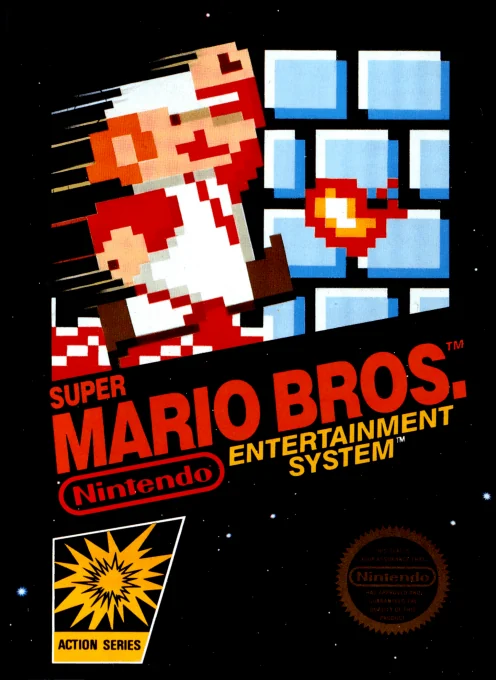
Games such as Super Mario Bros. and Super Mario Bros. 3 showed why software mattered to the hardware story. They made the controller, scrolling display and cartridge platform legible through movement, level structure and recognizable characters. The machine’s identity was communicated through play rather than through specifications alone.
- Separate the 1983 Japanese Famicom launch from the 1985 North American NES launch.
- Avoid claiming that Nintendo single-handedly revived every part of the North American games business.
1989–1994: Game Boy makes cartridges portable
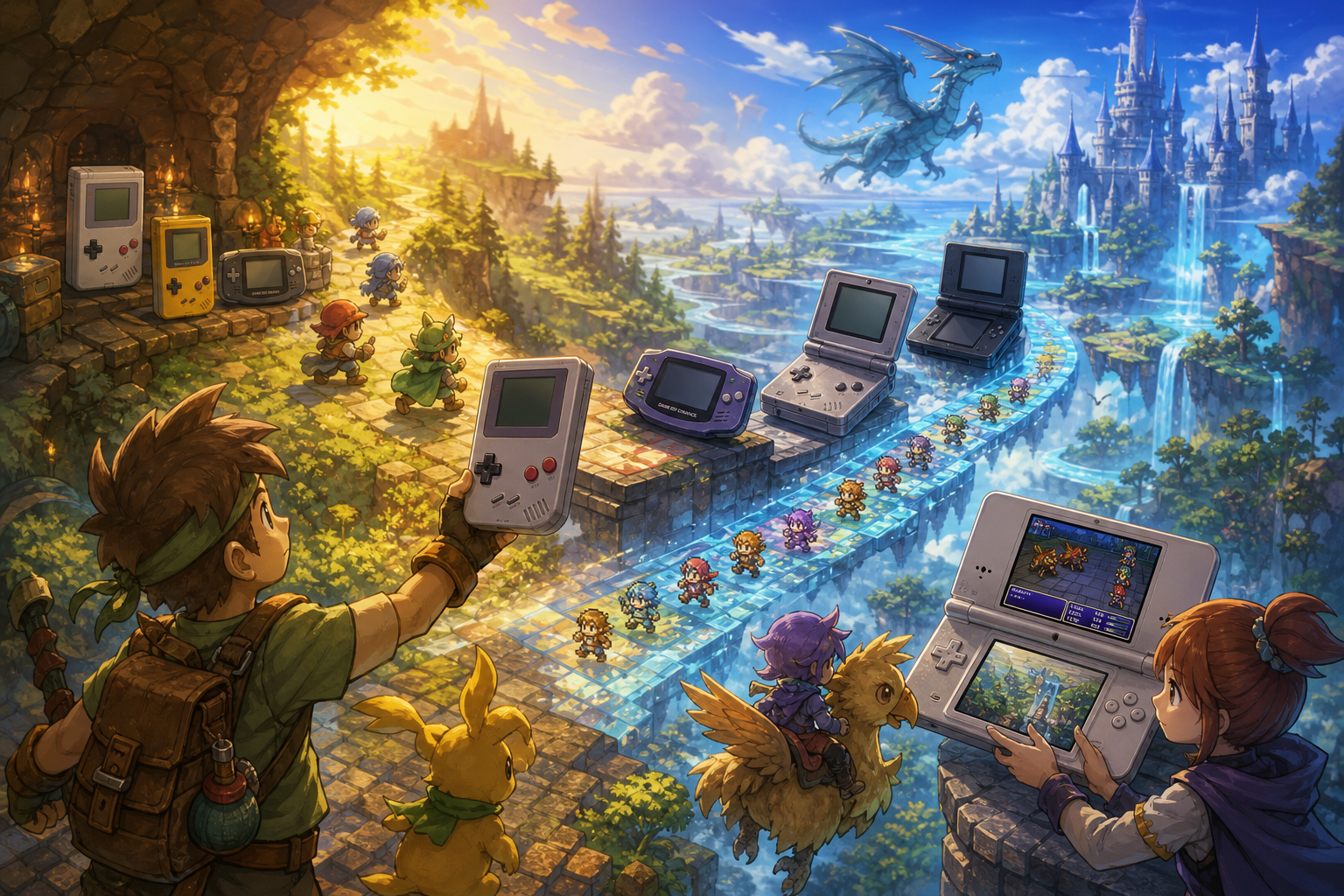
Game Boy launched in 1989 and extended Nintendo’s portable strategy from fixed LCD games to interchangeable cartridge software. This was a significant platform decision: the player received a device that could support many games, while Nintendo gained a portable software business with a familiar cartridge model.
The importance of Game Boy was not simply that it was smaller than a home console. It made a portable library practical and connected Nintendo’s earlier lessons about compact play with the longer-lived value of interchangeable software. Game Boy could coexist with the home-console business instead of merely reproducing it in miniature.
Nintendo’s software relationships were central to the system’s reach. Tetris became a defining example of a simple, readable game concept paired with portable hardware, while Nintendo’s own characters helped make the platform recognizable. The broader lesson was that hardware could succeed by matching a specific use case: short sessions, easy controls and a library that could travel.
This approach also reduced Nintendo’s dependence on one home-console cycle. If a household did not replace its living-room machine immediately, the portable line still offered a separate path into Nintendo’s software ecosystem.
- Do not describe Game Boy as a color system; the original hardware and later Game Boy Color were separate products.
- Explain the cartridge decision as a platform choice, not merely a technical shortcut.
1990–1995: Super Famicom, SNES and the Virtual Boy setback
The Super Famicom launched in Japan in 1990, followed by the Super Nintendo Entertainment System in overseas markets. Nintendo carried its cartridge-based platform model into the 16-bit generation while using first-party software to demonstrate what the new hardware could do.
Super Mario World, The Legend of Zelda: A Link to the Past and Super Metroid each showed a different side of the system’s identity: precise platform movement, expansive exploration and atmospheric action. Their value to Nintendo’s hardware story was not only commercial. They gave players concrete reasons to notice improved color, sound, input and world design.
Virtual Boy, launched in Japan and North America in 1995, represented a riskier experiment. It used a stereoscopic display in a tabletop form rather than offering the portable freedom associated with Game Boy. That distinction matters. Virtual Boy is often folded into general claims about virtual reality, but its actual product format and limited release make it a specific historical case: an ambitious display concept constrained by how and where the hardware could be used.
The Virtual Boy episode complicates any story in which Nintendo’s experiments always succeed. Nintendo could produce clear, accessible platforms, but it also tested unusual display ideas that did not become a durable product family.
- Describe Virtual Boy’s tabletop format accurately.
- Avoid inventing a single executive motive or reducing its outcome to one unsupported design explanation.
1996–2000: Nintendo 64 chooses analog control and cartridges
Nintendo 64 launched in Japan on June 23, 1996, with an analog controller and cartridge-based software. The analog stick addressed a central problem of early 3D games: movement through three-dimensional spaces required more than the directional precision associated with many earlier 2D designs.
Super Mario 64 made that control idea visible. Its open spaces, camera challenges and movement options demonstrated why an analog input could change how players navigated a game world. The hardware’s identity was therefore tied to a control relationship, not just to a processor number.
Nintendo’s continued use of cartridges also became a major strategic difference as Sony PlayStation established optical discs as a powerful alternative. Cartridges offered fast access and physical durability, but they imposed different constraints on storage and manufacturing. The choice affected the kinds of games and partnerships that could fit comfortably on the platform.
The 64DD eventually reached Japan in December 1999 after delays and limited distribution. It should not be described as a normal worldwide Nintendo 64 expansion. Its restricted path illustrates the difficulty of turning an ambitious add-on into a broad platform standard.
- Separate Nintendo 64’s 1996 launch from the later Japanese 64DD release.
- Discuss cartridges and discs as tradeoffs rather than declaring one format universally superior.
- Do not present the 64DD as a broadly released successor or standard expansion.
1998–2001: Extending handhelds while changing home-console media
Game Boy Color launched in 1998, showing Nintendo’s preference for extending an established handheld family rather than immediately replacing it. The product preserved continuity with the Game Boy name and cartridge ecosystem while adding color capabilities. This kind of incremental extension reduced the disruption faced by players and software makers.
Nintendo’s handheld strategy continued to benefit from recognizable software. Pokémon demonstrated how a portable platform could support a long-running social and collection-driven phenomenon, while other Nintendo series maintained a steady connection between hardware identity and character design.
The GameCube launched in Japan on September 14, 2001, and in North America on November 18, 2001. It marked a major change in Nintendo’s home-console media format. Instead of the cartridges used by Nintendo 64, it used proprietary optical discs. This was not a rejection of platform control; the disc format remained part of Nintendo’s controlled hardware environment while addressing the needs of a new generation.
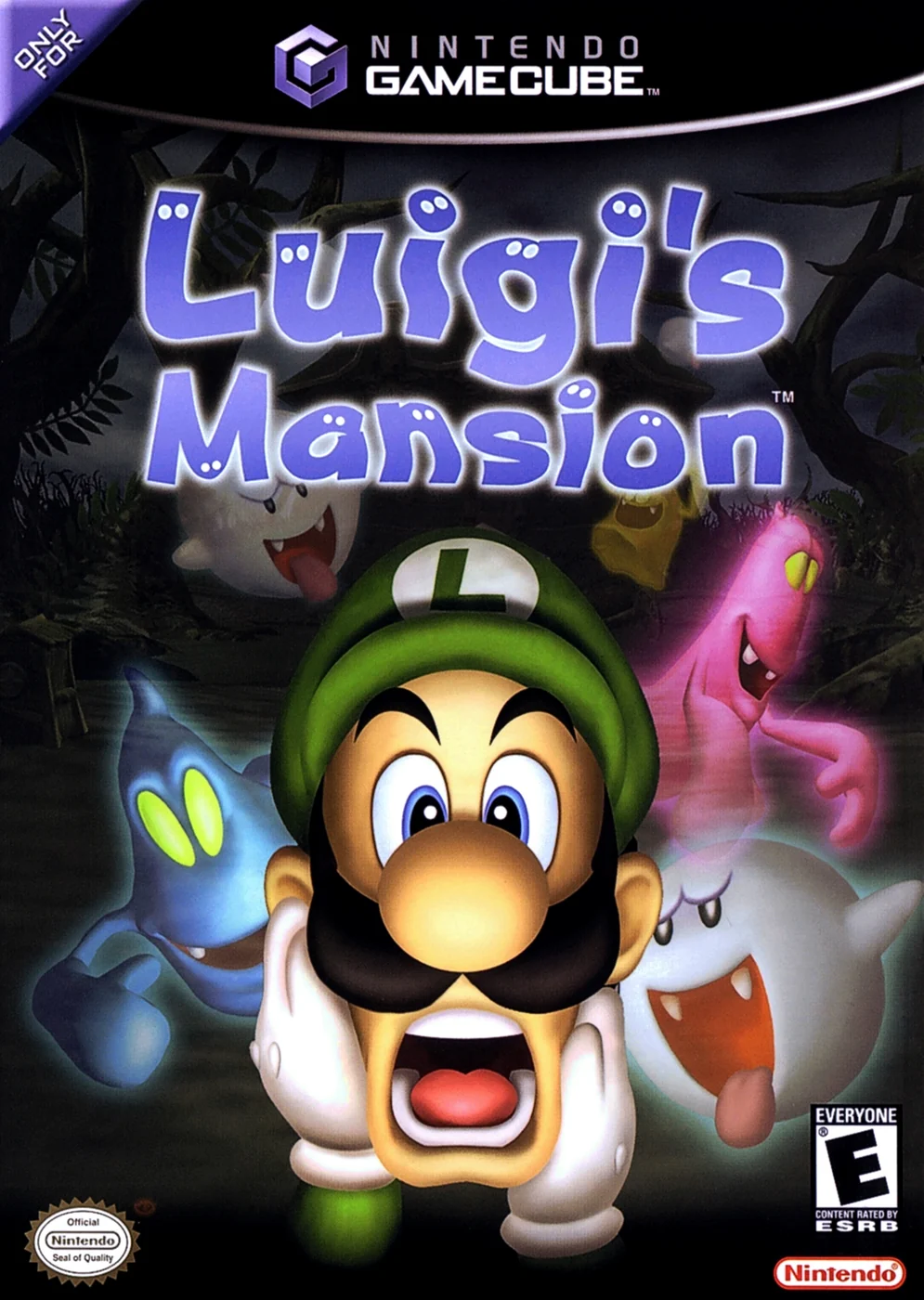
Launch-period software such as Luigi’s Mansion and later 2001 releases including Super Smash Bros. Melee showed the range Nintendo wanted from the system. One emphasized a new character-led adventure format, while the other turned a broad roster into a local multiplayer showcase. The GameCube therefore continued Nintendo’s preference for hardware that could be explained through distinct play experiences.
- Do not confuse Game Boy Color with the original monochrome Game Boy.
- Keep GameCube’s 2001 Japanese and North American launches distinct from each other and from the Nintendo 64 era.
What Nintendo’s first 112 years reveal
Nintendo’s hardware history is best understood as a sequence of experiments rather than a march toward inevitable success. Hanafuda manufacturing established a physical production base. Western cards and Disney licensing broadened the company’s consumer and partnership experience. Toys and electronic amusements introduced sensors, displays and location-based play. Game & Watch made compact dedicated hardware understandable, while Famicom and NES turned Nintendo into a platform manager.
The company repeatedly linked a hardware decision to a visible play pattern. The NES made cartridge software and controlled presentation feel dependable. Game Boy made interchangeable games portable. Super Famicom and SNES used first-party software to demonstrate richer audiovisual and mechanical possibilities. Nintendo 64 prioritized analog 3D control even as its cartridge decision created tradeoffs. GameCube changed media format while retaining a tightly managed platform.
That pattern does not mean Nintendo ignored technology. It means technology was usually presented through a game, controller or use case that ordinary players could recognize. Some experiments, especially Virtual Boy and 64DD, remained limited. Their place in the story is valuable precisely because they show that Nintendo’s willingness to experiment did not guarantee adoption.
By 2001, Nintendo had become a major hardware company through accumulated manufacturing knowledge, software relationships, regional operations and platform control. The company’s identity was no longer defined by one format. It rested on the ability to turn a technical choice into a clear invitation to play.
- Treat documented events as evidence and avoid hindsight claims about inevitable success.
- Distinguish verified chronology from speculation about private motives.
Nintendo’s journey from Kyoto card maker to console manufacturer was built through repetition and revision. The company learned to manufacture physical products, work with licenses, design toys, manage regional markets and connect hardware to software before it became synonymous with home consoles.
Its lasting legacy through 2001 was not a single winning specification. It was a method: find a play pattern, build hardware that makes that pattern readable, and use software to give the platform a reason to exist. That method survived changes from hanafuda to LCD screens, cartridges, analog 3D control and optical discs.