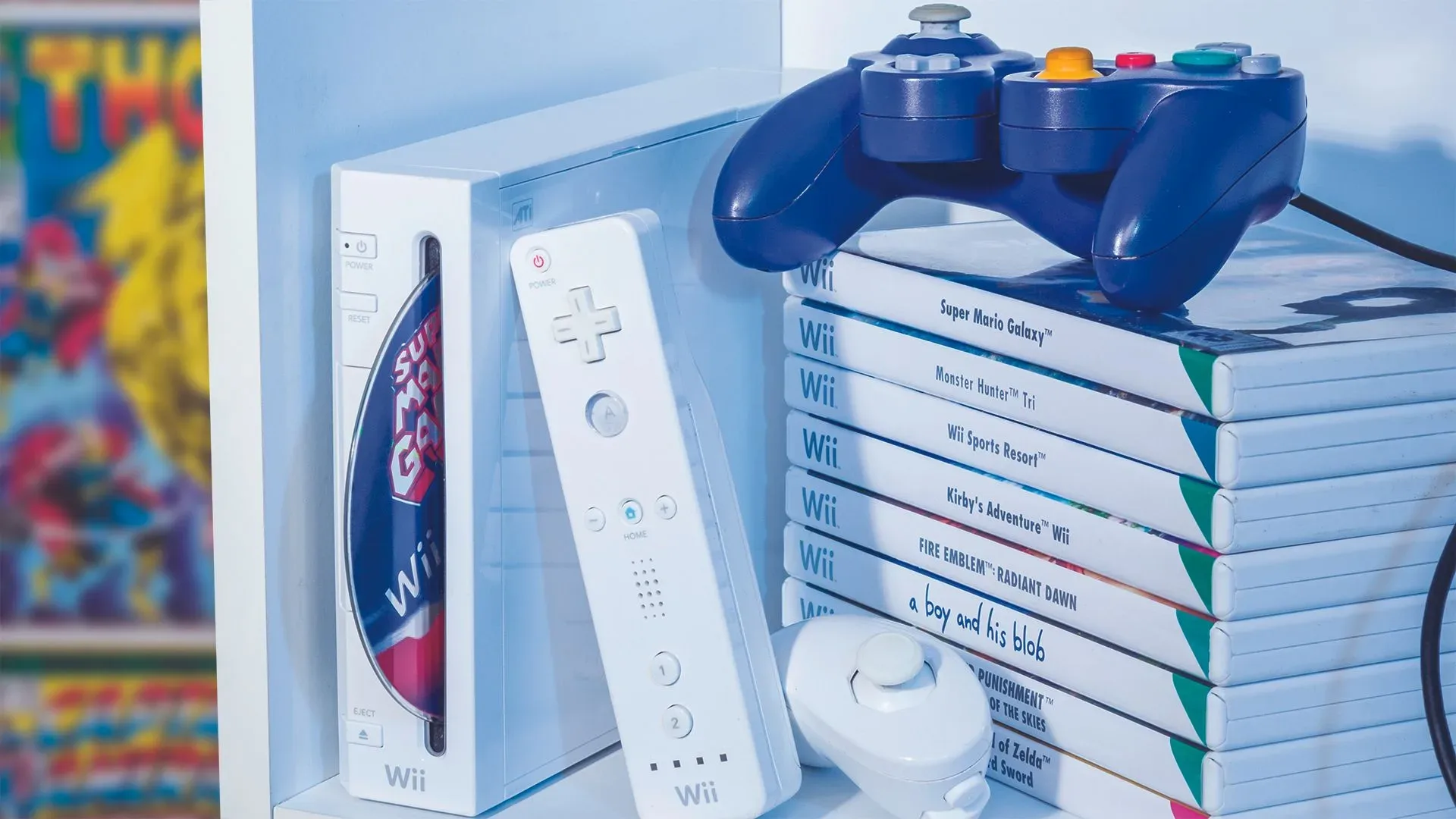
Wireless gaming controllers may feel inseparable from modern consoles, but the idea is far older than Bluetooth pairing screens and rechargeable pads. Wireless play on a home console can be traced back to the early 1980s, when the Atari 2600 received a radio-based peripheral called the Cynex Game Mate 2. It is widely regarded as the first wireless controller compatible with a console.
That does not mean the technology immediately became effortless or universal. Early wireless controllers had to contend with bulky hardware, demanding batteries and imperfect signal methods. The path from a hefty Atari joystick to the familiar cordless controller was shaped by a series of trade-offs: radio frequency versus infrared, battery duration versus force feedback, and experimental motion sensing versus established features players expected.
Three products make that progression particularly clear: the Cynex Game Mate 2, Nintendo’s GameCube WaveBird and Sony’s initial PlayStation 3 controller, the Sixaxis. Together, they explain why wireless control existed long before it became the default—and why being cordless was never the only requirement for a successful gamepad.
The Atari 2600 had a wireless controller around 1982
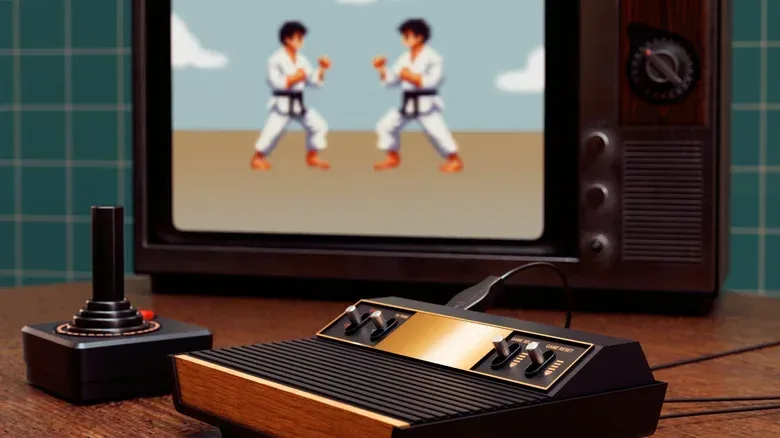
The Cynex Game Mate 2 arrived around 1982 as an Atari 2600 peripheral. Its significance lies in both its age and its connection method. Rather than requiring a physical cable from controller to console, it used radio frequency, usually shortened to RF. RF refers to wireless communication carried by radio waves, allowing a controller to send inputs to a receiver without an unobstructed visual path.
That distinction mattered. Later in the decade, the Acclaim Remote Controller for the NES, released in 1989, used infrared (IR). Infrared is the same general kind of signalling associated with traditional television remotes: the transmitter needs to be directed at the receiver, and objects between them can interrupt the signal. That is a poor fit for a living room full of people shifting around during a game.
The Game Mate 2’s RF approach avoided that line-of-sight constraint. A player did not need to aim it precisely at the Atari 2600, and its reported range reached as far as 20 feet. In practical terms, that is the core promise still associated with a wireless controller: more freedom to choose where to sit and less anxiety over a cable being pulled taut across the room.
Yet the Game Mate 2 also demonstrates why the concept took decades to become standard. Its design was physically cumbersome, essentially placing a conventional Atari 2600 controller above a substantial base. It also relied on a 9V battery that depleted quickly. A controller can technically work without a wire while still asking players to accept too much weight, too much maintenance or both.
Atari took over distribution a year after the peripheral’s release and renamed it the CX42 Remote Control Wireless Joystick. The renamed product remains a useful reminder that early wireless control was not a recent breakthrough waiting for modern consoles to discover it. The breakthrough was making the experience convenient enough that players did not feel they were paying for freedom with frustration.
Why RF was a better foundation than infrared
RF and IR solve the same basic problem—getting button presses from the player to the hardware—but they do so in meaningfully different ways. The useful advantage described by these early controllers is not simply “wireless versus wired.” It is whether the controller can keep communicating when the room is not perfectly arranged around it.
- Infrared: requires a relatively direct path between transmitter and receiver. A person, piece of furniture or other obstruction can disrupt the connection.
- Radio frequency: does not require that same direct pointing relationship, giving the player more flexibility in how and where they use the pad.
- Range: a longer range expands physical options, but it does not by itself solve issues such as size, battery use or missing features.
The reported 20-foot reach of the Game Mate 2 is notable because it identifies the right living-room problem early: players wanted to get away from the console. Still, a good signal was only one element. The controller also had to be comfortable, dependable and economical to run. Those additional expectations became central by the time wireless pads reached a wider audience.
The WaveBird was the mainstream turning point
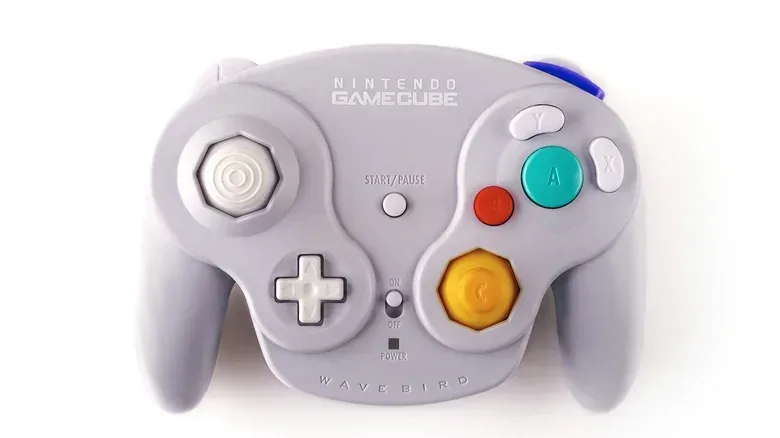
Nintendo’s WaveBird Wireless Controller, released for the GameCube in 2002, is the clearest example in this history of a wireless pad becoming a broadly practical proposition rather than a curiosity. It was the first mainstream wireless controller that did not arrive burdened by an overwhelming set of compromises.
Like the earlier Atari peripheral, the WaveBird used radio-based technology. Its 2.4G radio-frequency system was identified as a first for a controller, and it offered a range of at least around 20 feet. But the WaveBird’s importance is best understood as a combination of range, usable battery life and compatibility with a major console at a time when living-room multiplayer was especially visible.
The hardware was not discreet. It added noticeable size to the standard GameCube controller, and it required a sizable receiver that plugged into the console. Users also had to match the channel settings on the receiver and controller through sliders. That channel matching is an example of the kind of setup modern players may barely think about: the controller and console-side receiver needed to be configured to communicate with one another.
What the WaveBird sacrificed was rumble, also called force feedback. Rumble is the vibration a controller produces to reinforce an action or event in a game. It can communicate impacts, damage, motion or other feedback through the player’s hands. Nintendo omitted it to help extend battery performance. That was a compromise, but one players could weigh against an advertised operating life of up to 100 hours from two AA batteries.
The decision illustrates a smart prioritisation for the time. A wireless pad that frequently needs new batteries risks making the cable look attractive again. The WaveBird instead made longevity a major part of its pitch, even if it meant missing a feature available on the standard wired controller.
What the WaveBird changed in the room
Its legacy is not merely technical. Removing the cable changed the social layout of a game session. Players no longer had to remain close to the GameCube or squeeze around a couch simply because of the controller lead. In multiplayer settings, a longer range could make the room more comfortable and less restrictive.
That is why the WaveBird is often remembered as more than a GameCube accessory. It helped establish the expectation that a console controller should provide reliable wireless play without turning battery replacement, signal loss or awkward positioning into a constant concern. Later wireless controllers from Sony, Microsoft and other manufacturers built on the demand it demonstrated.
The GameCube era’s controller history remains part of the broader retro conversation because it captures a genuine transition in player expectations. Wireless control was no longer a novel add-on; it was becoming a feature worth designing around. For more GameCube-era context, visit this look at a later PlayStation game update, which shows how controller-led accessibility and feedback options continue to matter in software design.
PlayStation’s first wireless pad came with a major omission
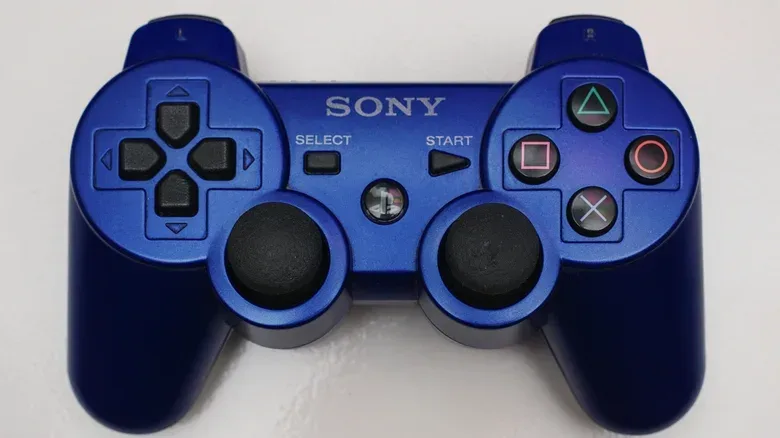
It is easy to associate wireless controllers with PlayStation, but Sony’s first wireless first-party peripheral did not arrive until the PlayStation 3 generation. The Sixaxis launched in 2006 as the PS3’s initial controller model. It was wireless, but its reception shows why a controller cannot be judged on connectivity alone.
The Sixaxis omitted rumble while promoting motion controls. Motion controls use the physical movement or orientation of the controller as an input method, potentially allowing players to steer, aim or otherwise interact by tilting and moving the pad. In principle, this offered a new form of interaction. In practice, the feature did not consistently persuade players that it was worth losing vibration feedback.
Resistance: Fall of Man, a PS3 launch game, was among the first titles to support Sixaxis features. But Lair, the dragon-riding game, became closely associated with the controller’s troubled motion-control reputation. Its implementation was widely criticised, helping turn the Sixaxis into an example of a new technical feature failing to replace a familiar, valued one.
Sony executive Phil Harrison argued shortly after the Sixaxis launched that rumble had not been left out because of a patent-rights lawsuit, describing it instead as a “last-generation feature.” The subsequent response from players made the market’s view clear: vibration was not regarded as expendable.
The company restored the feature with the DualShock 3, released in 2008. Games including 2007’s Ratchet & Clank Future: Tools of Destruction would support the controller’s vibration capabilities. The sequence is a useful design lesson. Innovation is not automatically an upgrade if it removes a form of feedback that players use and enjoy.
The real lesson: wireless control needed balance
The history from the Game Mate 2 to the WaveBird and Sixaxis is not a simple march from bad technology to good technology. Each controller made a different bargain. The Atari-era device offered radio-based freedom but was large and hard on batteries. The WaveBird delivered dependable room-scale flexibility and exceptionally long battery life, while dropping rumble. The Sixaxis made wireless control standard for PS3 owners but showed the risks of replacing rumble with motion sensing before games could consistently justify that exchange.
Modern wireless controllers benefit from the lessons those devices provided. Players expect a strong connection, comfortable form factor and sensible battery solution, but they also expect the features that make games feel responsive in their hands. The cable disappeared gradually because controller makers had to solve more than one problem at once.
So, wireless gaming controllers have been around since roughly 1982. The more meaningful answer is that they became convincing to a mass audience in 2002, when the WaveBird showed that a cable-free controller could work reliably over a useful distance and last long enough to be practical. The PS3’s Sixaxis then reinforced another point: freedom from a wire is important, but it is only one part of what makes a controller feel complete.