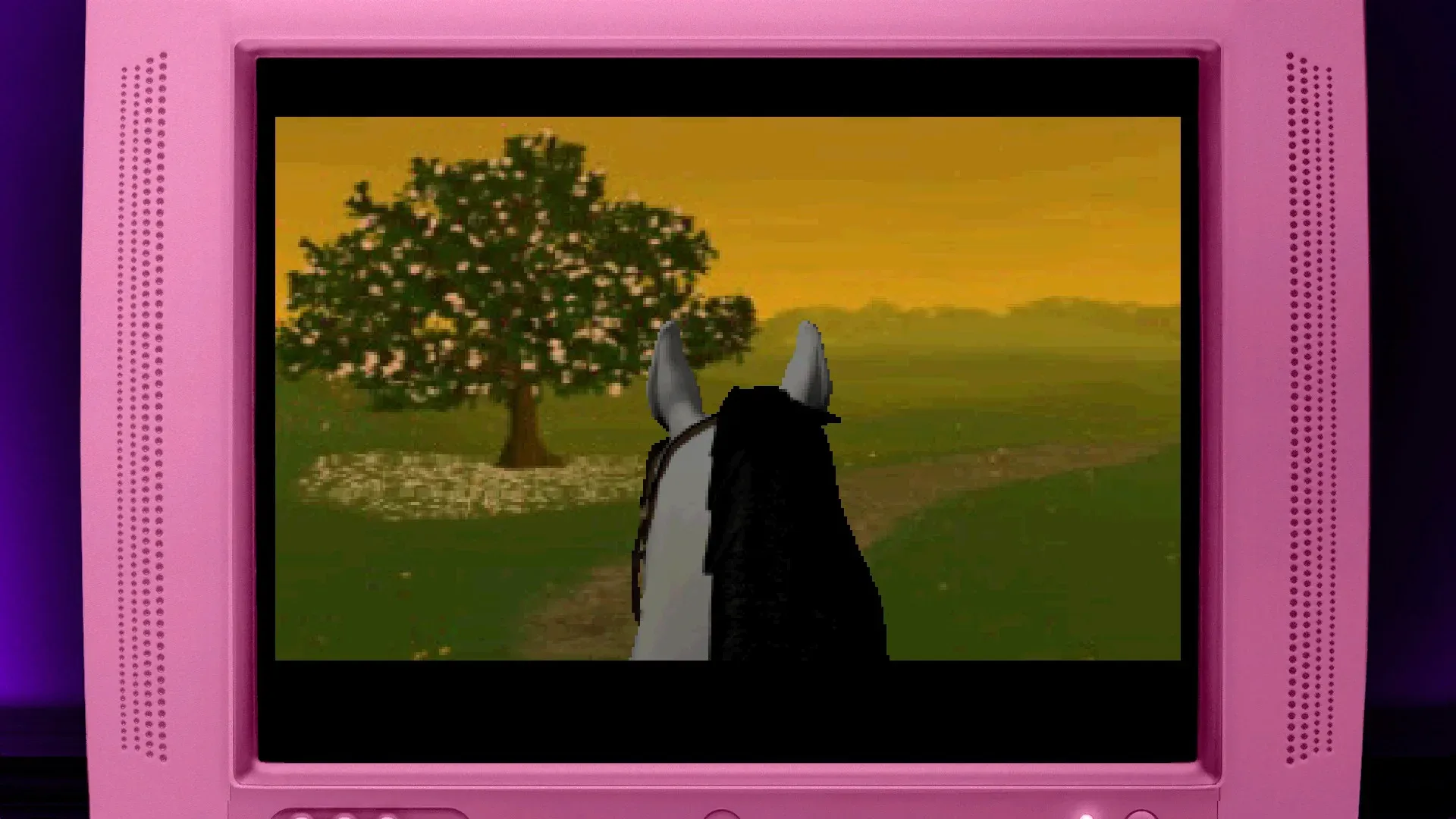
Barbie Rewind has the right big idea: put a neglected stretch of video-game history back in people’s hands, and present it as something worth remembering rather than an embarrassing footnote. The Digital Eclipse collection assembles 16 older Barbie games, including Barbie: Vacation Adventure, a game that had previously surfaced only through a small number of magazine previews rather than a full release.
That alone makes the project significant. Game preservation is often discussed through the expected canon—major action games, role-playing games, platformers, and hardware mascots. But many players’ first interactions with games happened elsewhere: on a household computer, through a sibling’s game, or with licensed releases built around fashion, animals, careers, sports, decorating, and make-believe. Barbie games belong to that history, whether or not they have traditionally received the same attention as Mario, Zelda, or Mega Man.
The complication is that preservation is not merely about getting old software to boot. It also means making it usable, understandable, and dependable on current hardware. Barbie Rewind’s reported technical issues make that distinction hard to ignore. Its historical ambition is admirable; its execution, at least in the experience described here, is much less secure.
A collection with a genuine archival purpose
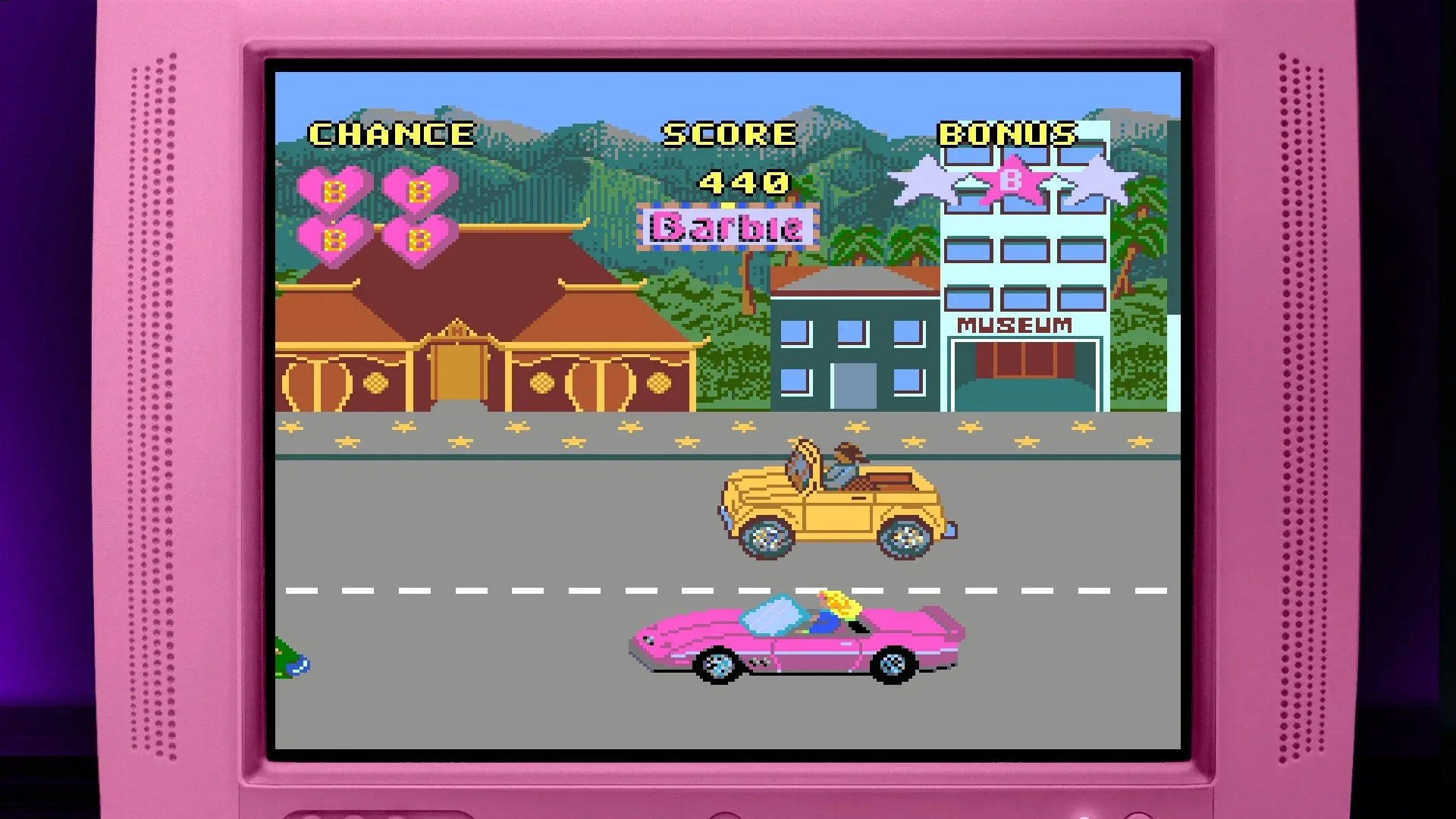
There are 16 games in Barbie Rewind, spanning decades of releases. The most notable inclusion may be Barbie: Vacation Adventure, which is now playable despite never having received a full release in its original era. That is the kind of recovery work that can change how a library is understood. A game known only from previews is not the same thing as a game people can finally examine, play, and place alongside related titles.
Calling this preservation does not mean declaring every included game flawless or timeless. In this context, the term means keeping software accessible enough for people to experience it instead of relying entirely on fading memories, expensive original hardware, or incomplete documentation. That is particularly relevant for licensed games, which can be overlooked when their original commercial moment has passed.
Rachel Simone Weil, a historian of girls’ video games and toys who worked as a historical consultant on the project, characterizes the compilation as a rare retro release centered primarily on girl-led console-game experiences from the 20th century. Her point is broader than sales or nostalgia alone. These games made an impression on the people who played them, including players who remember negotiating with siblings for controller time and spending long hours with games that rarely entered the conventional retro-gaming conversation.
That makes Barbie Rewind’s existence meaningful even before judging individual games. A compilation can function as an argument about what deserves to be kept. Here, the argument is that girl-focused game experiences were real, culturally consequential, and part of gaming history—not a disposable category to be rediscovered and then dismissed every generation.
The Dreamhouse is more than a reward screen
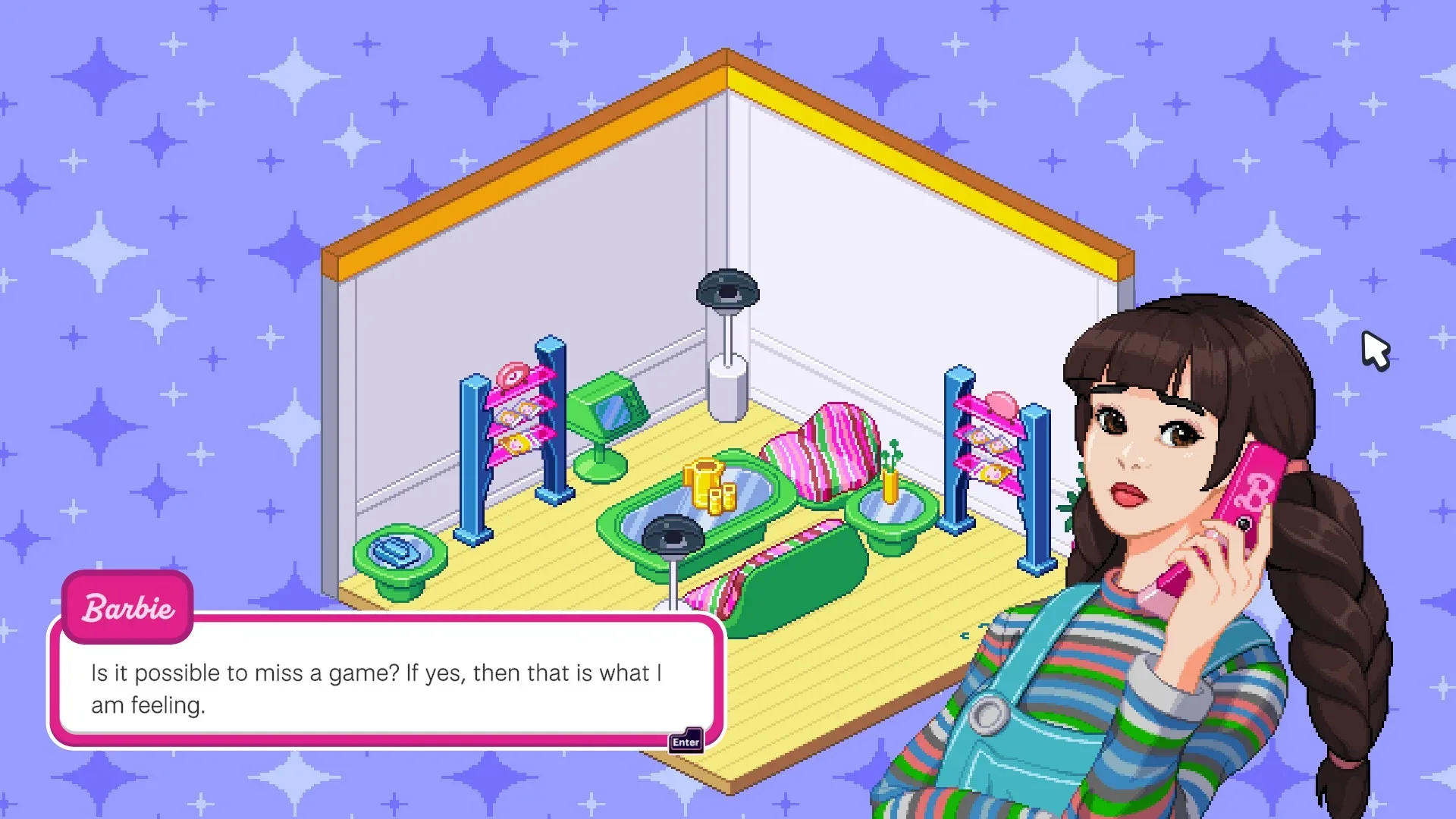
Barbie Rewind’s most distinctive addition is its virtual Dreamhouse. Playing the included games unlocks new rooms and pieces of furniture, which can then be arranged in a simple decorating space. The furniture draws on Barbie playsets from across the brand’s history: beds, phones, tables, lamps, couches, and other household items rendered in bright pastels, neon colors, and deliberately playful shapes.
On a mechanical level, decorating is straightforward. But its importance is historical as well as cosmetic. The Dreamhouse turns the collection into a small interactive exhibit of toy design. Rather than keeping contextual material at arm’s length in menus, it lets players handle an approximation of the objects, styles, and domestic worlds that surrounded Barbie across different eras.
Weil’s consultation focused especially on making that Dreamhouse material accurate and celebratory while recognizing that no single compilation could include every playset. The selections mix major touchstones with less obvious choices. Examples named for the collection include the original Barbie Dreamhouse, the Beach Blast pool, and Cafe Today, a psychedelic cafe design described as relatively rare and difficult to find in good condition.
This is also where Barbie Rewind connects toys to the larger technological history around them. Barbie playsets included phones, record players, CD players, and computers as those devices entered everyday life and popular imagination. A 1979 Dreamhouse nightstand includes a tiny computer, reflecting an early moment when personal computers were only beginning to become familiar household objects. Later examples moved toward IBM PC-style designs, while a travel-agent playset from around 1986 placed Barbie beside a computer in an industry that was quickly adopting the technology. Home-office sets in the 1980s and 1990s continued that pattern.
Those details matter because they challenge a flattening view of Barbie as only fashion and pink plastic. The playsets also documented changing ideas about work, communication, technology, and home life. Barbie Rewind’s Dreamhouse is therefore not simply a progression system. It is a compact design archive, and arguably the collection’s clearest demonstration of why the surrounding history is worth revisiting.
Where the modern presentation reportedly falls short
A retro compilation has to balance authenticity against accessibility. Original games should retain their identity, but a contemporary release also needs to account for modern displays, current control expectations, reliable saving, and stable menus. The reported problems in Barbie Rewind show what happens when that balance does not hold.
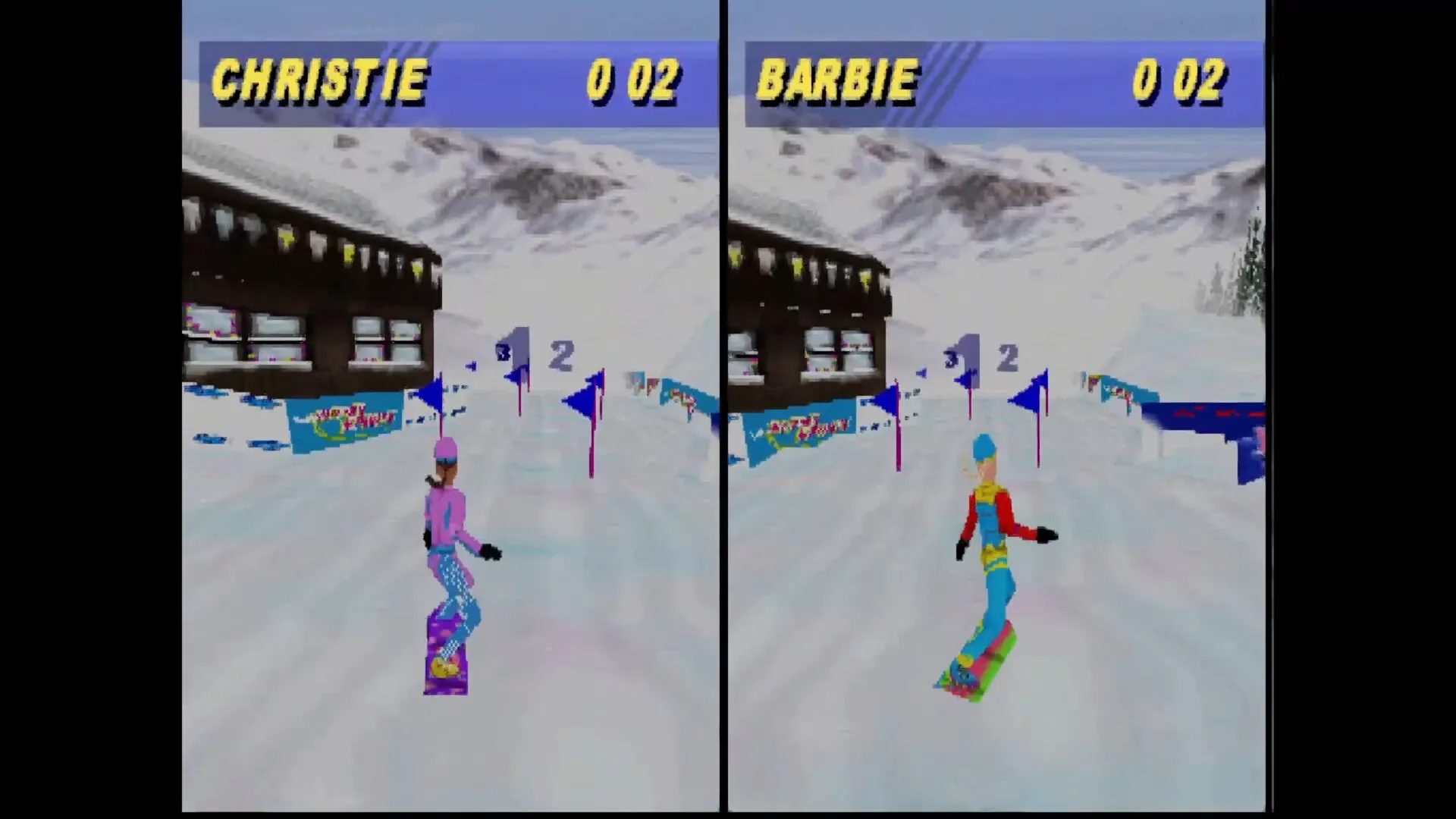
Audio reportedly cuts out or becomes distorted at times in both Dreamhouse portions and several games. One account also describes a serious progression-blocking problem in Barbie Super Sports: after reaching its skiing section, the character could not be moved in any direction regardless of button presses. Repeatedly entering menus to check controls then led to a menu becoming stuck on its controls page, requiring the game to be forcibly closed.
The consequence was larger than a single crashed session. Closing the game reportedly erased progress in Barbie Super Sports and two other previously played titles, which also disrupted Dreamhouse objectives. For a collection structured around playing games to unlock its hub content, lost saves are especially damaging. They interrupt both the individual title being played and the larger archival journey the package is attempting to create.
There is a visual issue, too. Games displayed at their original resolution can be difficult to read on a 1080p monitor. Resolution refers to the number of pixels used to form an image. Older software was built for displays and viewing conditions very different from a modern desktop monitor. Retaining an original image is not automatically wrong, but a preservation release needs presentation options that help players interpret small text, sprites, and interface elements without obscuring the original work.
None of this diminishes the value of recovering the games. It does, however, underscore an essential preservation principle: accessibility is not an optional extra. If sound is unstable, controls fail, menus trap players, saves disappear, or visuals are difficult to parse, a collection risks making the past available in theory rather than comfortably playable in practice.
What “girl games” can mean without becoming a box
The phrase “girl game” can invite an unproductive argument if it is treated as a fixed rule about what girls must enjoy. It should not be read that way. The useful historical question is not whether all women or girls share a taste. They plainly do not. It is whether games made around interests culturally coded as feminine—fashion, dolls, animals, social play, vacation themes, caring activities, and domestic imagination—have been granted the same legitimacy as games aimed at boys.
Weil deliberately uses the term because it brings that tension into the open: the gap between what girls are told they should like, what they are permitted to like, and what they actually did play. She notes that the conversation was even more difficult roughly 15 years ago, recalling academic resistance to studying Barbie games and an exhibit that was vandalized over the idea of acknowledging girls’ video-game memories.
That history helps explain why Barbie games can be both familiar to millions of people and marginal in retro discourse. Their subject matter has often invited a special level of scrutiny. Are they setting the right expectations? Are they endorsing stereotypes? Are they healthy role models? Those questions can be worth asking, but they are not consistently applied across gaming culture. Few works in the traditional canon are excluded from historical consideration because their protagonists might be imperfect role models for boys.
The important distinction is between criticism and erasure. Critical discussion can address consumer culture, gender expectations, and the limits of a particular Barbie game or playset. Erasure happens when those complications are used as a reason to pretend the games had no audience, no significance, or no place in the record. Barbie Rewind, at its best, resists that erasure.
A wider retro canon benefits everyone
Barbie’s game legacy was never only for girls. Atari marketing director David Lowey has heard a recurring story from male players too: a Barbie game might have been a sister’s title or a computer installed in the kitchen, but it still became something they played extensively. That anecdote is a useful reminder that audiences are more complicated than the marketing labels applied to games.
It is also worth separating historical recognition from a demand for uniform praise. Barbie Rewind does not need every included game to stand beside the most celebrated classics on identical terms. Its games can be uneven, genre-specific, technically dated, or simply not to every player’s taste while still being deserving of preservation. The same generosity is already extended to many other parts of retro gaming.
Modern interest in fashion, life simulation, pet-focused, and customization-driven games also makes the old hierarchy look less convincing. The popularity of titles such as Infinity Nikki, The Sims, Style Savvy, and Nintendogs demonstrates that the interests historically associated with Barbie games did not vanish. They evolved, found new forms, and continued to attract large audiences.
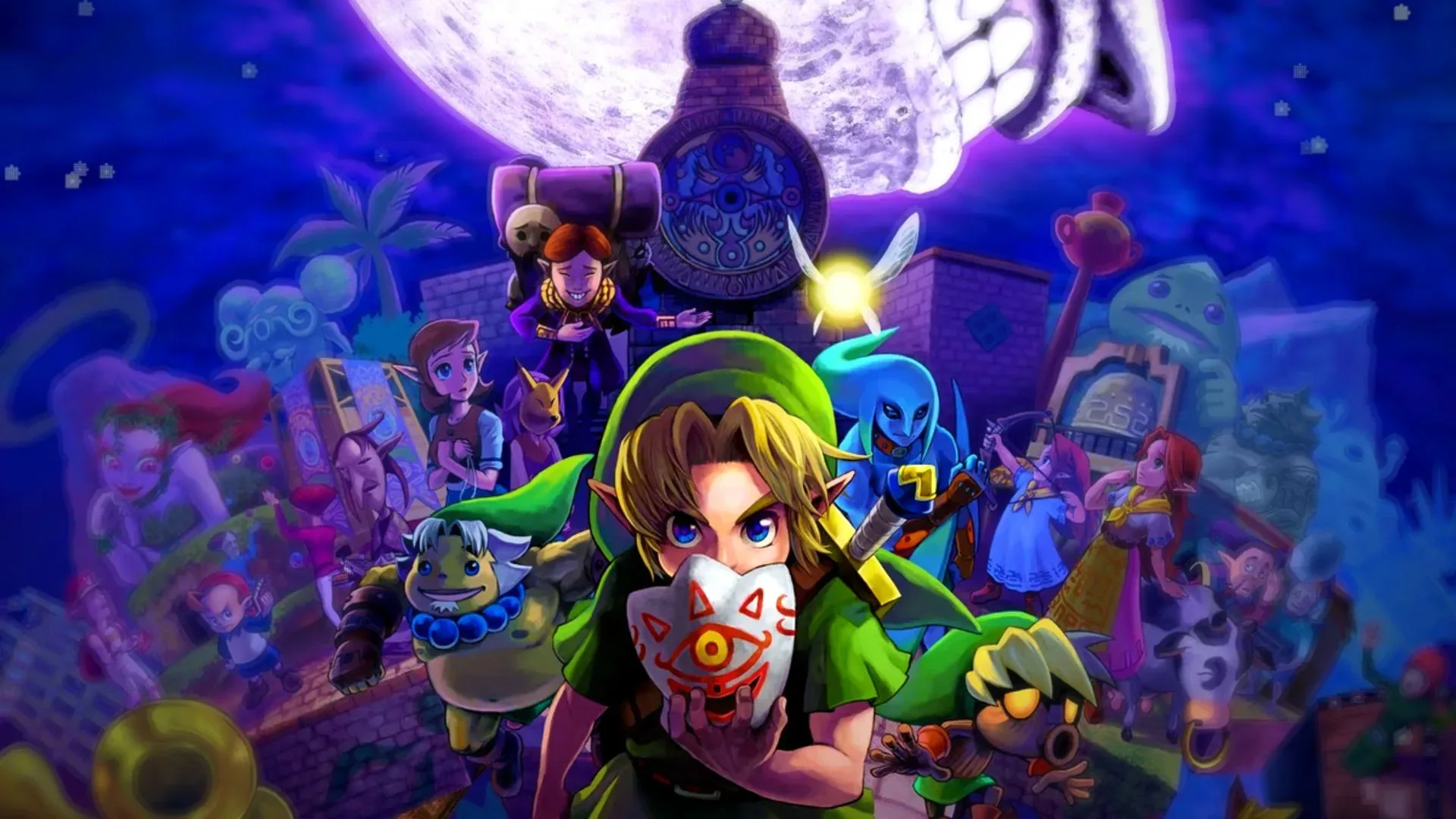
There is a parallel lesson in the continuing desire to revisit celebrated older games, including uncertainty around projects like a potential Majora’s Mask remake. Retro interest is often framed around a familiar, selective group of classics. Barbie Rewind expands that picture by preserving a different kind of formative gaming memory.
The collection’s technical shortcomings deserve attention, especially where they affect movement, menus, audio, readability, and saved progress. But the central project remains valuable: it returns 16 Barbie games to public view, recovers an unreleased title, and frames toys, technology, and girl-led play as legitimate pieces of game history. That is a substantial contribution. The next step is ensuring the software itself receives the same care as the history it aims to honor.