Barbie is heading back to old consoles without requiring anyone to locate a scratched demo disc, negotiate with an aging cartridge, or explain to a modern television why a Game Boy Advance deserves a turn. Barbie Rewind, from Atari and Digital Eclipse, is scheduled for November 12, 2026 on Nintendo Switch 1 and 2, PlayStation 4, PlayStation 5, Xbox One, Xbox Series X/S, and PC through Steam.
The collection revisits Barbie games released between 1991 and 2007, spanning NES, Game Boy, Sega Genesis, Super Nintendo, PlayStation, Game Boy Color, and Game Boy Advance. Rather than presenting those games as a bare shelf of software, Barbie Rewind also uses a Barbie Dreamhouse as its central hub, with decoration part of the package. That framing is fitting for a series that has repeatedly mixed platforming, sports, mysteries, fashion, animal care, and small-scale activities under one extremely pink umbrella.
It is a release aimed at a particular kind of videogame memory: not necessarily the memory of clearing every course or seeing every ending, but the memory of spending a limited turn at the family computer or handheld, replaying the small portion available, and becoming attached to the routines. Grooming a horse, buying unattainable virtual outfits, pushing through a minigame, or simply navigating a colorful menu could be the whole event.
A cross-platform Barbie time capsule
The published game list reaches from Barbie on NES in 1991 to Barbie as the Island Princess on Game Boy Advance in 2007. In practical terms, that means Barbie Rewind is not centered on one single game style. Players should expect a compilation built from titles made for markedly different hardware generations and audiences rather than a collection of variations on one template.
The listed games are:
- Barbie (1991, NES)
- Barbie Game Girl (1992, Game Boy)
- Barbie Super Model (1993, Sega Genesis and Super Nintendo)
- Barbie Vacation Adventure (unreleased, Sega Genesis and Super Nintendo)
- Barbie Race & Ride (1999, PlayStation)
- Barbie Super Sports (1999, PlayStation)
- Barbie Ocean Discovery (1999, Game Boy Color)
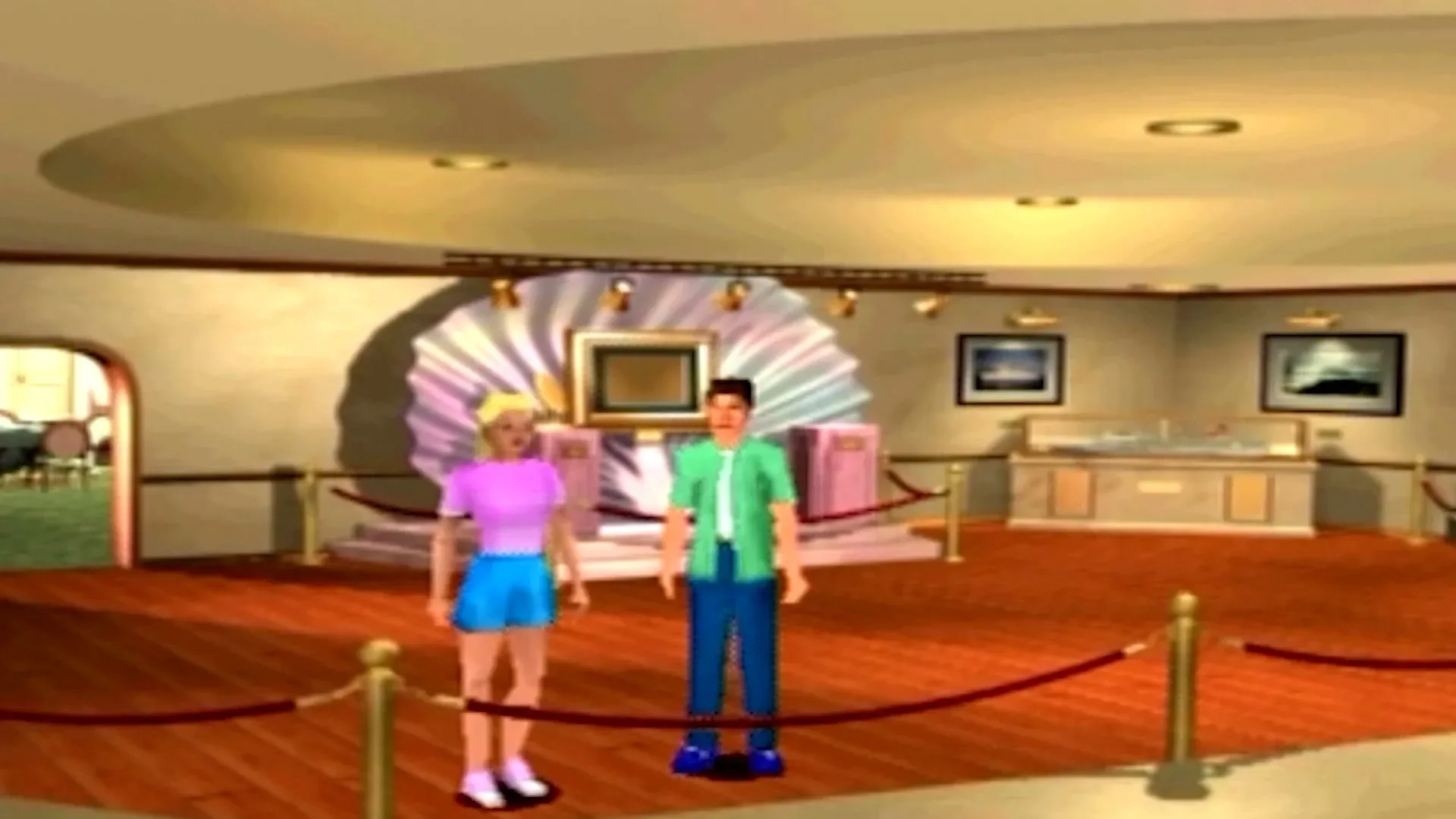
- Detective Barbie: The Mystery Cruise (2000, PlayStation)
- Barbie Fashion Pack Games (2000, Game Boy Color)
- Barbie Pet Rescue (2001, Game Boy Color)
- Secret Agent Barbie: Royal Jewels Mission (2002, Game Boy Advance)
- Barbie Groovy Games (2002, Game Boy Advance)
- Barbie Gotta Have Games (2003, PlayStation)
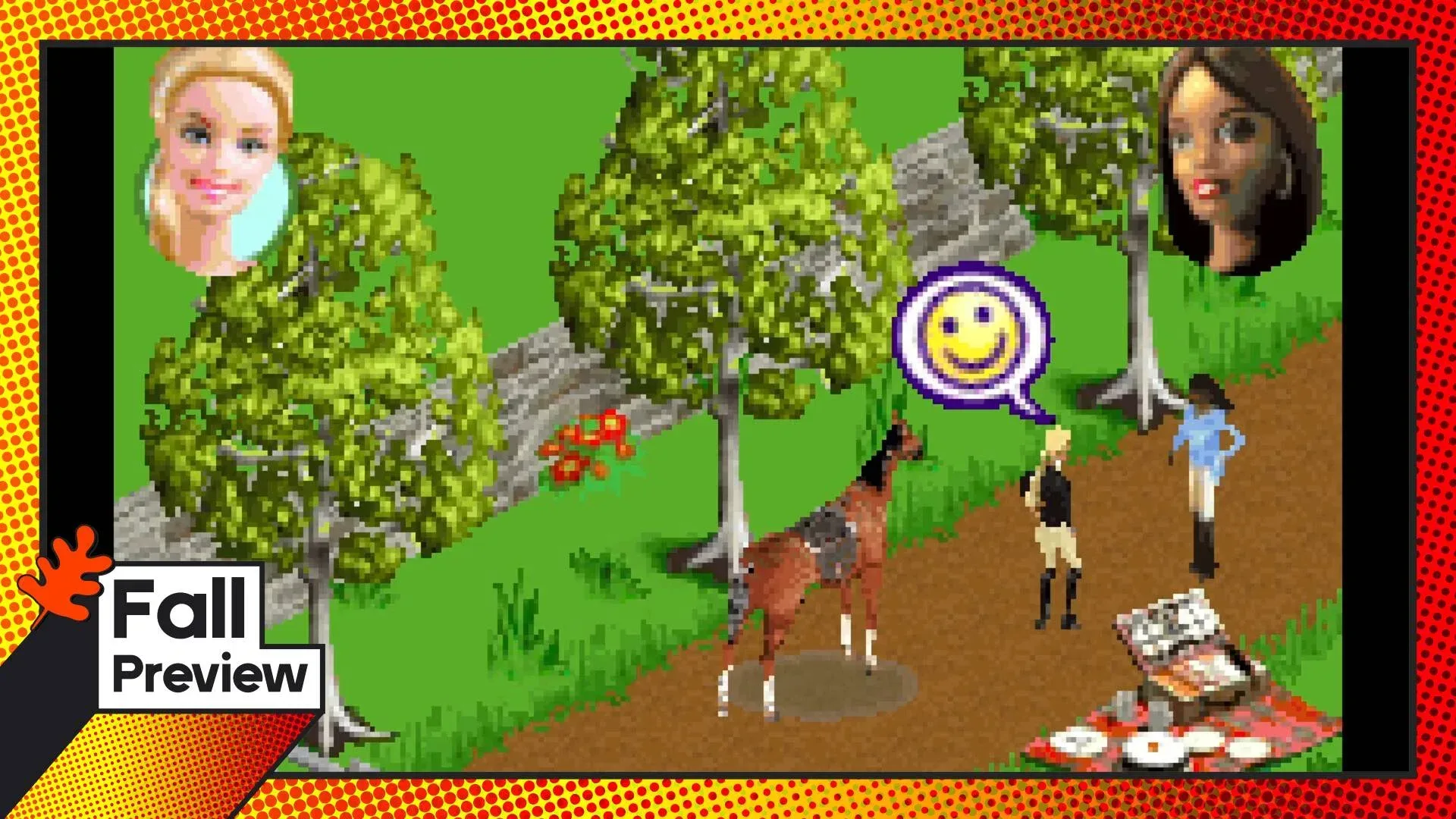
- Barbie Horse Adventures: Blue Ribbon Race (2003, Game Boy Advance)
- The Barbie Diaries: High School Mystery (2006, Game Boy Advance)
- Barbie in the 12 Dancing Princesses (2006, Game Boy Advance)
- Barbie as the Island Princess (2007, Game Boy Advance)
One small detail merits care: Barbie Rewind has been described as a 16-game collection, but the published list above contains 17 entries. That could reflect a listing error or a difference in how the compilation is being counted. Until the lineup is clarified, prospective players should treat the individual titles as the more useful guide to what has been named for the package.
The unreleased game is more than a curiosity
Barbie Vacation Adventure is the standout on the list because it is identified as unreleased. A game compilation is often judged on familiar favorites, but an unreleased inclusion gives the project another purpose: preservation. It puts a previously unavailable entry alongside games that people may remember from a childhood bedroom, a borrowed console, or a store demo station.
That does not automatically make it the collection’s largest game or its best game. Nothing in the announced details establishes its length, quality, or how it differs from the other entries. Its inclusion matters because it expands Barbie Rewind beyond a straightforward repackaging exercise. For players interested in the history of licensed games, it may be the least known game in the entire selection.
Related coverage includes Barbie Rewind Brings a Pink-Tinted Retro Game Collection to Modern Platforms.
Licensed games are sometimes treated as disposable artifacts, especially when they were built around a toy line or an animated property and released across several platforms. Barbie Rewind makes the case, implicitly, that they are also part of the medium’s history. The range here illustrates how broadly the Barbie brand was adapted: a Nintendo home-console game, portable adventures, PlayStation sports and mystery games, and Game Boy Advance releases connected to later Barbie stories.
Horse games, sports games, and the appeal of tiny routines
For many returning players, the emotional hook will not be prestige or technical showmanship. It will be recognition. The collection includes Barbie Race & Ride, Barbie Super Sports, and Barbie Horse Adventures: Blue Ribbon Race, three titles whose names alone point toward very different corners of Barbie game nostalgia.
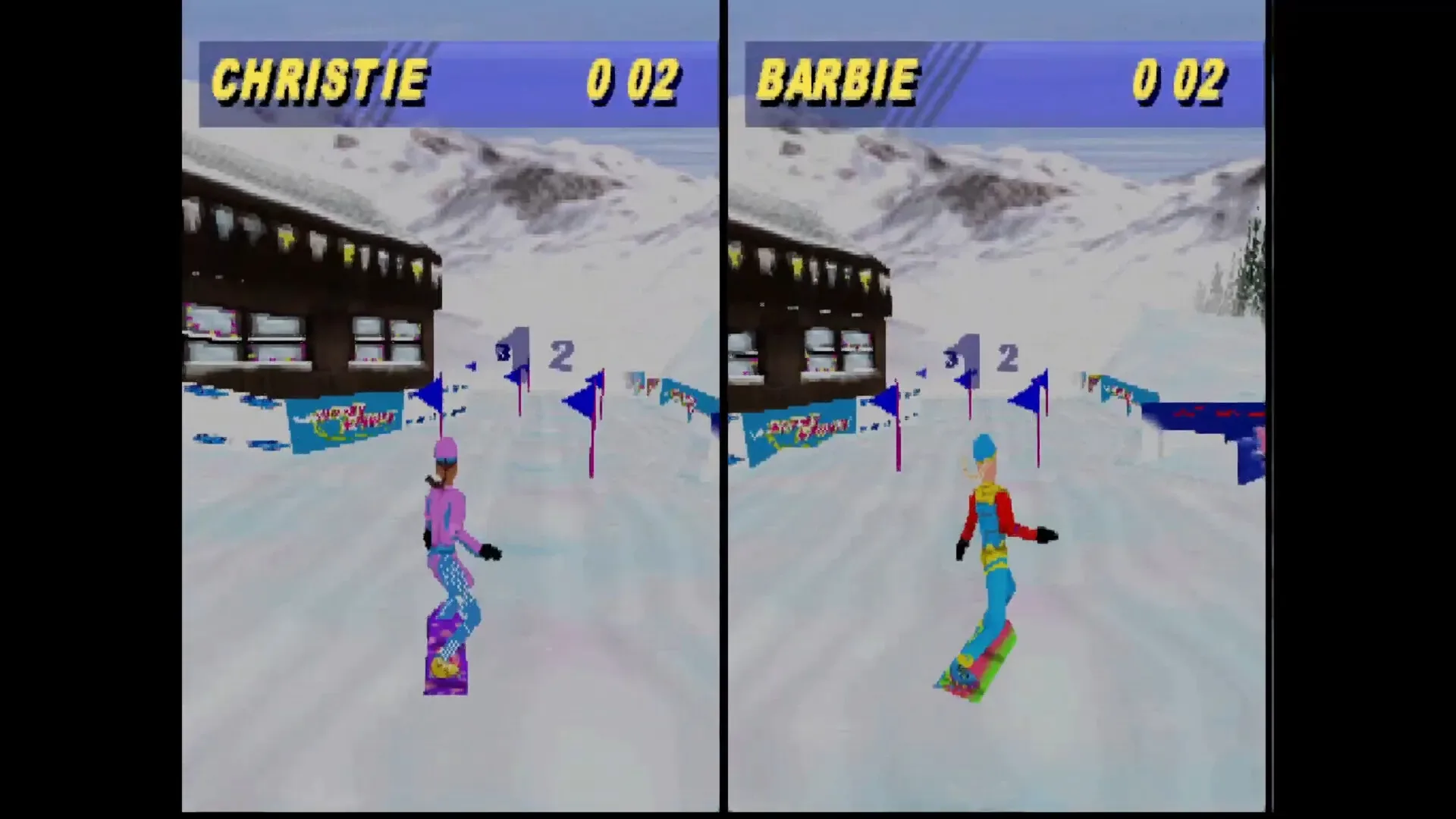
Barbie Super Sports is associated with snowboarding challenges: racing through gates, dealing with course hazards, and earning in-game money that could be spent in a clothing store. In a demo context, an unavailable item shop is almost a perfect artifact of the era. It turned a small sample into a longer-lasting wish list, even if the player could not earn enough to buy anything. The game was not only about finishing a challenge; it was also about the tantalizing prospect of a reward just beyond the demo’s boundary.
The horse-game pull is similarly easy to understand. Horse care and riding games can make a simple loop feel meaningful: select a horse, give it a name, brush or feed it, then move into riding. Even when a player cannot master a jump or clear a course, the care portion can still be satisfying. That distinction matters. Not every childhood game memory is about difficulty or completion. Sometimes the lasting part is simply being allowed to inhabit a world with a horse, a name field, and a brush.
Barbie Riding Club, a separate horse game, is not listed for Barbie Rewind. However, Barbie Race & Ride is described as similar enough to make it a potentially appealing substitute for people whose recollections revolve around riding courses and getting over obstacles. Anyone specifically seeking Barbie Riding Club should note that it is not among the named inclusions rather than assume every remembered Barbie horse game has been gathered here.
What a “hub” changes in a retro collection
The Dreamhouse hub is an important structural detail. A hub is a central interactive space that connects separate games or activities. In Barbie Rewind, the Dreamhouse also supports decoration, making it more than a neutral menu. The approach potentially gives the compilation a shared identity even though its games came from different platforms, years, and genres.
That is especially appropriate for Barbie. Decoration and personal expression are not an unrelated bonus in this context; they align with the appeal of fashion games, virtual care activities, and customizable spaces. Modern games frequently make character creation or aesthetic choices part of the main attraction, an idea explored in this look at a game built around the pleasures of character creation. Barbie Rewind’s Dreamhouse approach suggests a similar understanding: players may come for a specific vintage title, but they can also enjoy arranging the collection’s connecting space.
There are still practical unknowns. The named details do not explain which modern quality-of-life options will be included, whether the games will receive display filters or control remapping, or how progression and decoration will interact. Those features can substantially affect the experience of revisiting software designed for old controllers and displays, so it is sensible to wait for fuller technical information rather than presume any particular enhancement.
A lineup that reflects changing hardware—and changing social pressure
The release chronology tells a quiet story. Early entries come from the NES, Game Boy, Genesis, and Super Nintendo period. The 1999 and 2000 selections emphasize PlayStation and Game Boy Color. By 2002 through 2007, the library leans heavily into Game Boy Advance releases. Barbie Rewind therefore tracks a shift from home-console releases to portable games as much as it follows a single character.
It also collects games that some players may have enjoyed privately while feeling pressure to outgrow them publicly. Barbie’s audience was never one uniform group, and the collection’s variety makes that plain: mysteries, sports, animal rescue, secret-agent missions, fashion, racing, and dancing coexist here. Still, the social expectation that certain games were childish or embarrassing could be powerful, particularly as players reached the early 2000s and began choosing what they were willing to admit they liked.
That is why a retrospective release can land differently from the original games. Nostalgia does not mean pretending every old game was sophisticated. It can mean recognizing what an old game offered at the time: a first taste of non-educational PC play, a favorite demo replayed relentlessly, a wardrobe menu that felt aspirational, or an adventure that looked larger than the half-hour permitted at the computer.
Price and versions
Barbie Rewind is priced at $30 for the standard release. A $60 version includes an exclusive physical Barbie doll wearing an Atari T-shirt. The doll edition is a separate proposition from the game library itself, geared toward buyers who want a tangible tie-in as well as the software.
The standard edition’s value will naturally depend on which period of Barbie gaming resonates with each player. Someone who wants PlayStation-era snowboarding or riding may focus on Barbie Super Sports and Barbie Race & Ride. A Game Boy Advance player may be more interested in the several later handheld games. Others may be drawn primarily by the chance to see the unreleased Barbie Vacation Adventure. Barbie Rewind’s strength is not that every entry serves exactly the same audience; it is that the package preserves a wide enough selection for several kinds of memory to meet in one Dreamhouse.