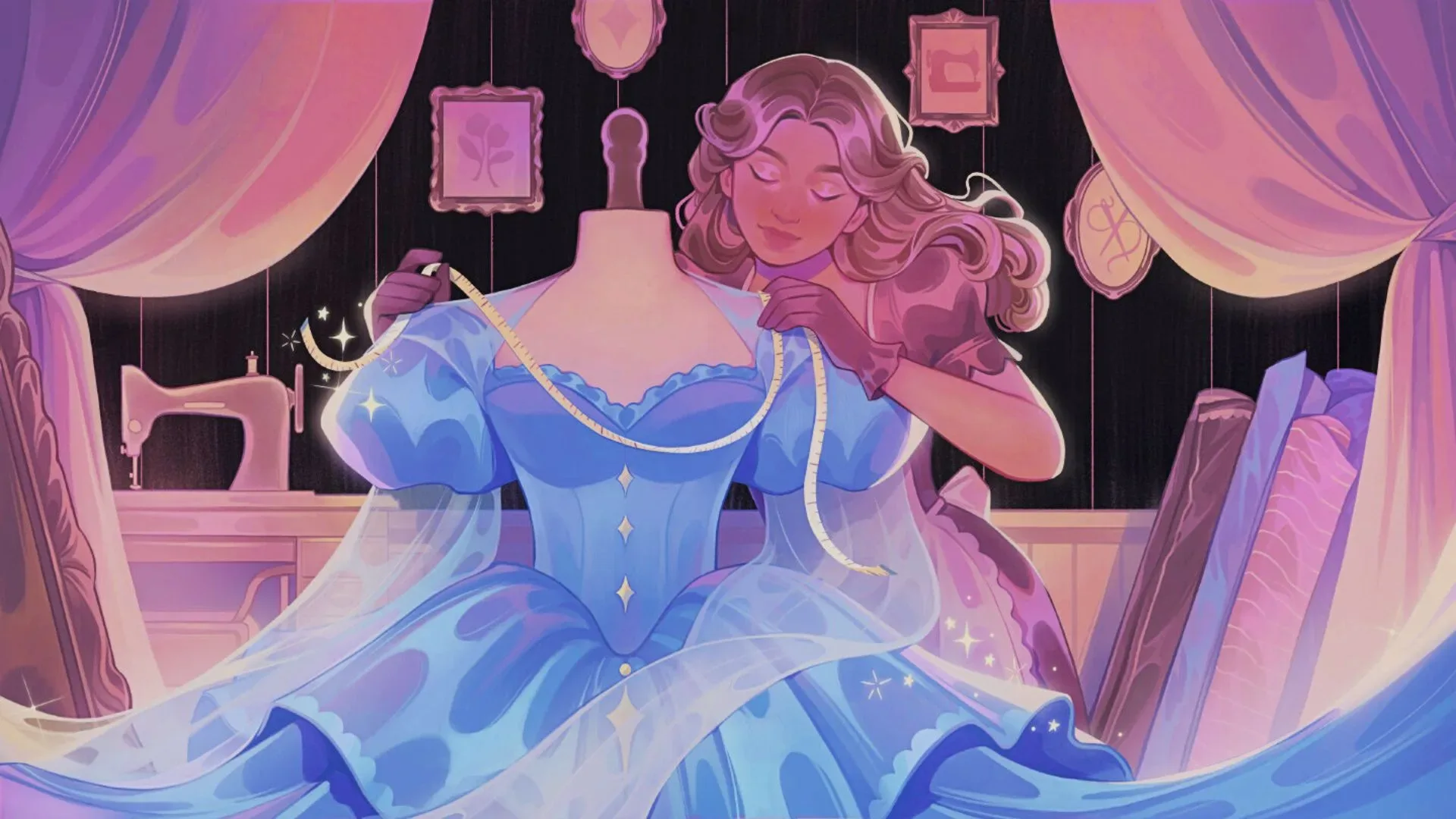
For a certain kind of player, the character creator is not a prelude to the game. It is the game. Faces can be adjusted later, perhaps, but an outfit has to be right: the silhouette, the color pairing, the tiny question of whether a dramatic sleeve turns an otherwise sensible look into exactly the right amount of nonsense.
Dressmaker builds its whole premise around that impulse. Rather than offering a rack of finished costumes, it asks players to make the garment. Clients arrive with an occasion and a set of needs; the player measures them, configures a mannequin, assembles a pattern, chooses fabric, cuts the pieces, sews the garment and adds decorations. The reward is not merely unlocking another item of clothing. It is having more ways to make the next dress distinctly one’s own.
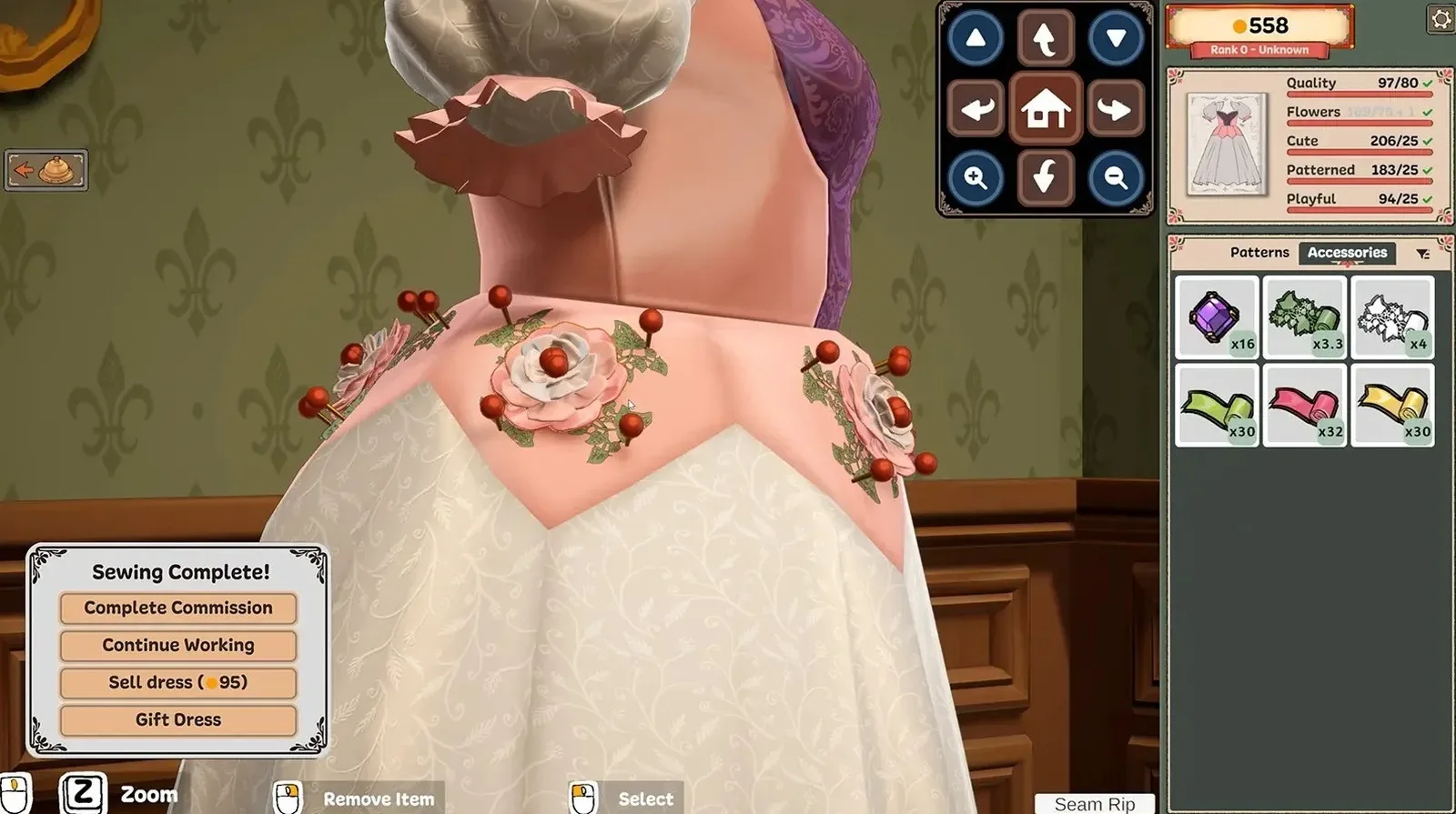
That focus gives the game an unusually tactile fantasy. Fabric has limited quantity, patterns take up space, and a poor cut can compromise the outcome. Yet the process is forgiving enough that curiosity does not become a punishment. Pieces can be returned to a scrap basket and effectively restored to the original fabric roll before a dress is completed, while a seam ripper lets the player undo sewing mistakes or revise pieces. The result is a crafting system where experimentation is encouraged, even when the experiment produces a gothic lace catastrophe.
A commission system built around taste, not a single “correct” dress
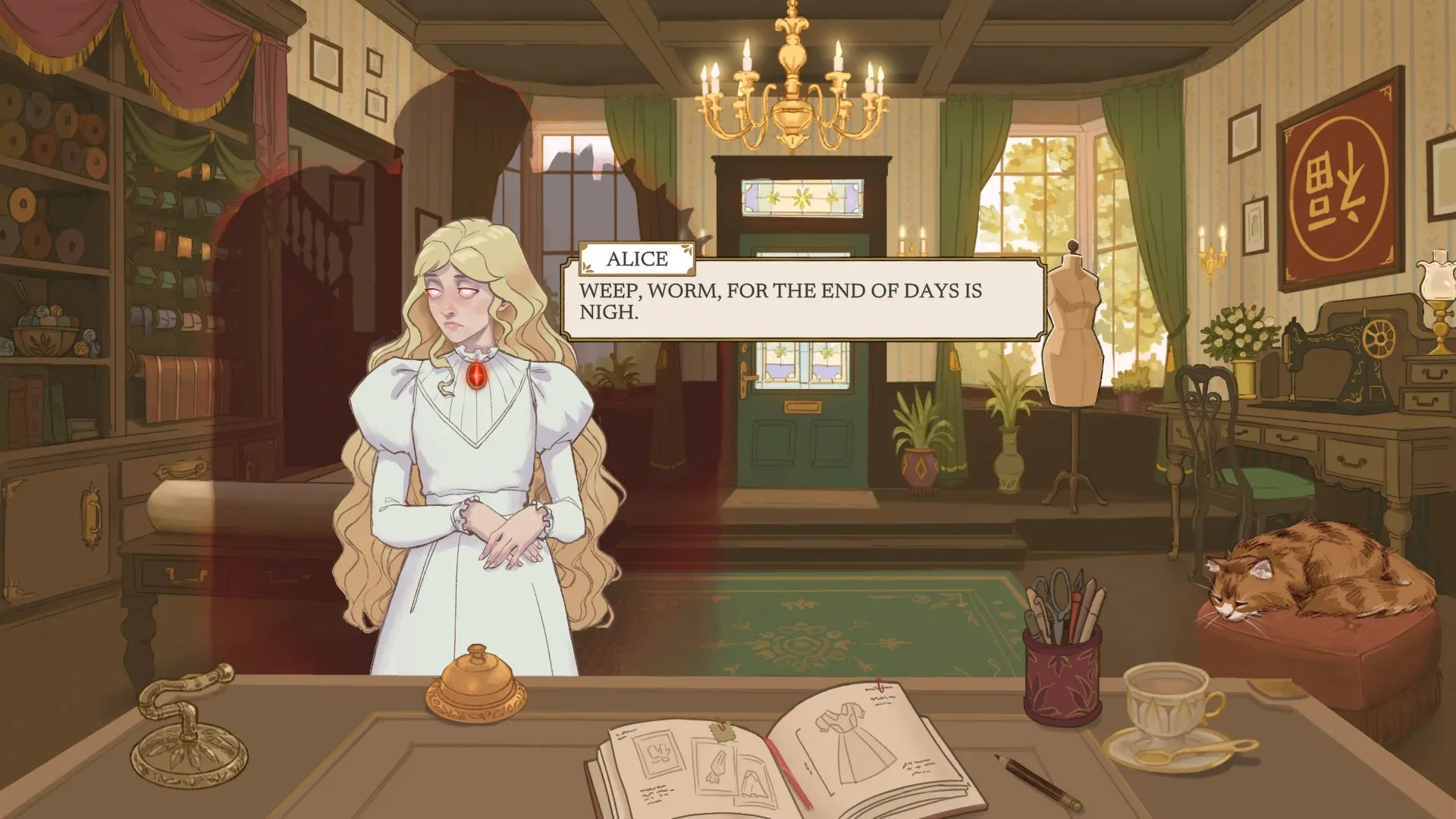
The early requests are linked to a Duke’s funeral. Some clients want mourning attire; others are less interested in mourning than making an impression on the Duke’s unmarried son. One request might favor black and intimidating styling, while another calls for glamour that is conspicuously ill-suited to a solemn event. It is a funny setup, but it establishes an important rule: the client’s requirements matter more than conventional good taste.
That distinction is what makes Dressmaker sound inviting for players who freeze at open-ended customization. A commission supplies a creative brief: desired style, color and fabric qualities. A dress does not need to be universally beautiful to succeed. It needs to meet the wearer’s request. The game can therefore support both sincere fashion design and maximalist silliness without treating either as a failure.
Later commissions reportedly stretch across sporting events, balls, weddings and pet shows, and their requirements become more layered. “Warm and professional” is already a more useful challenge than simply asking for a red dress; adding “cute, but not too cute” makes interpretation part of the work. These prompts are constraints, and constraints are often what turn a pile of options into a creative game.
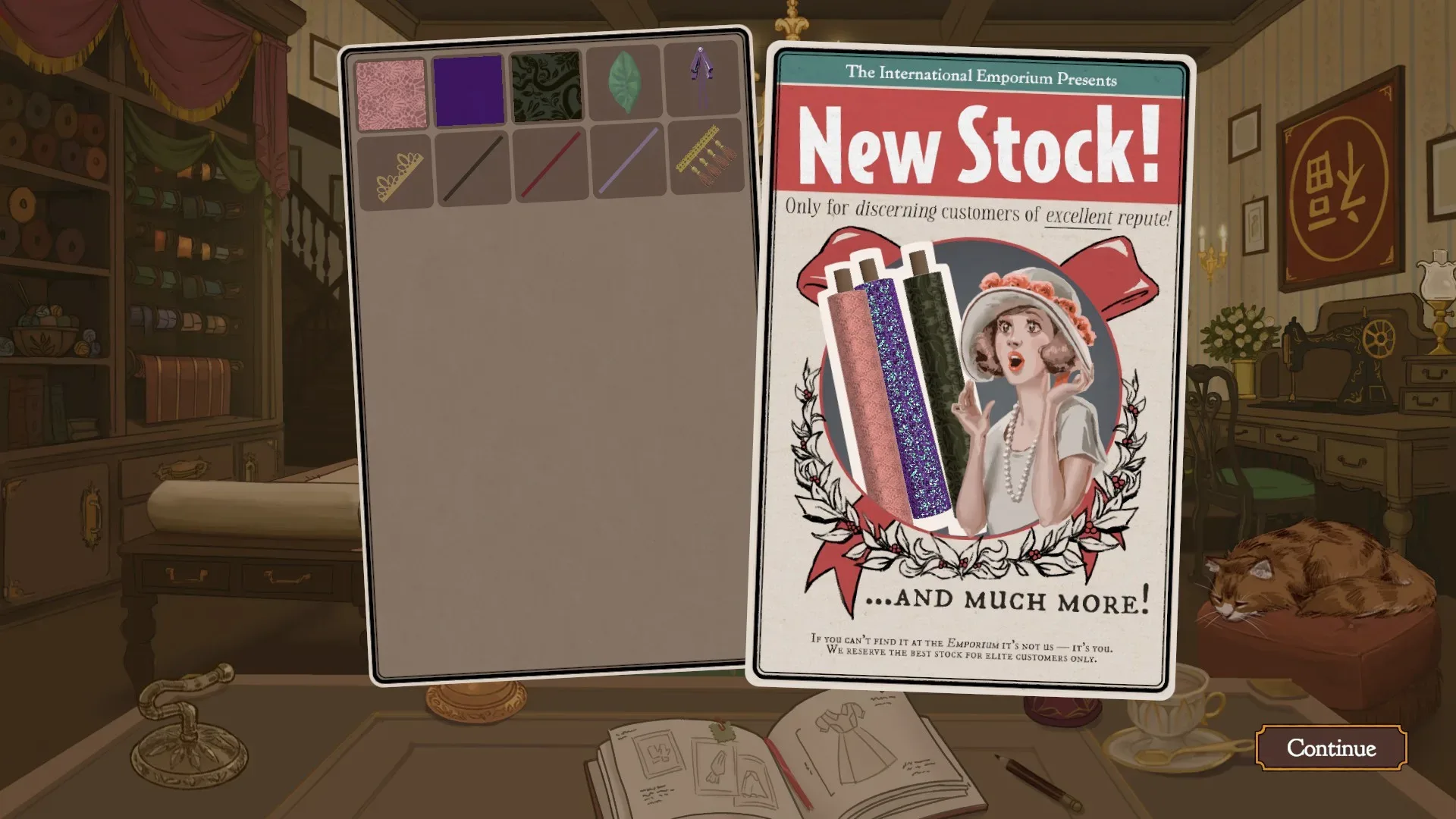
Completing commissions unlocks further cuts and styles. Renown opens additional fabrics and accessories, while money limits the ability to buy new material. That structure gives the dressmaking process a steady progression without reducing every project to a checklist. New components expand the design vocabulary: more ways to shape a neckline, sleeve, bodice or skirt, and more materials with which to make those parts feel coherent—or deliciously incoherent.
What players actually do at the worktable
Dressmaker’s workflow begins with measurement. Clients are measured with a tape measure, and the mannequin used for the design is adjusted to the appropriate proportions. Players can select the mannequin’s skin tone as well. This is a small but meaningful step away from the usual game wardrobe, where clothing is generally a finished asset dropped onto a standard character model.
Related coverage includes Dressmaker Turns Character-Creator Fashion Into a Full Crafting Fantasy.
Next comes pattern building. A pattern is the template used to cut the component pieces of a garment. Players select elements including the sleeves, collar, bodice and skirt. The bodice is the fitted upper part of a dress, while sleeves and skirts naturally control much of the garment’s outline. In Dressmaker, these selections also influence broad style signals such as romantic, gothic, workwear-oriented or cute.
The game optionally allows players to sketch a rough fabric plan with colored pencils, then attach fabric swatches to compare potential combinations. That is a smart bridge between an idea and a commitment. A swatch is simply a small sample of material, but here it becomes a low-stakes way to check whether a particular color and texture belongs beside another before the player starts cutting into a purchased roll.
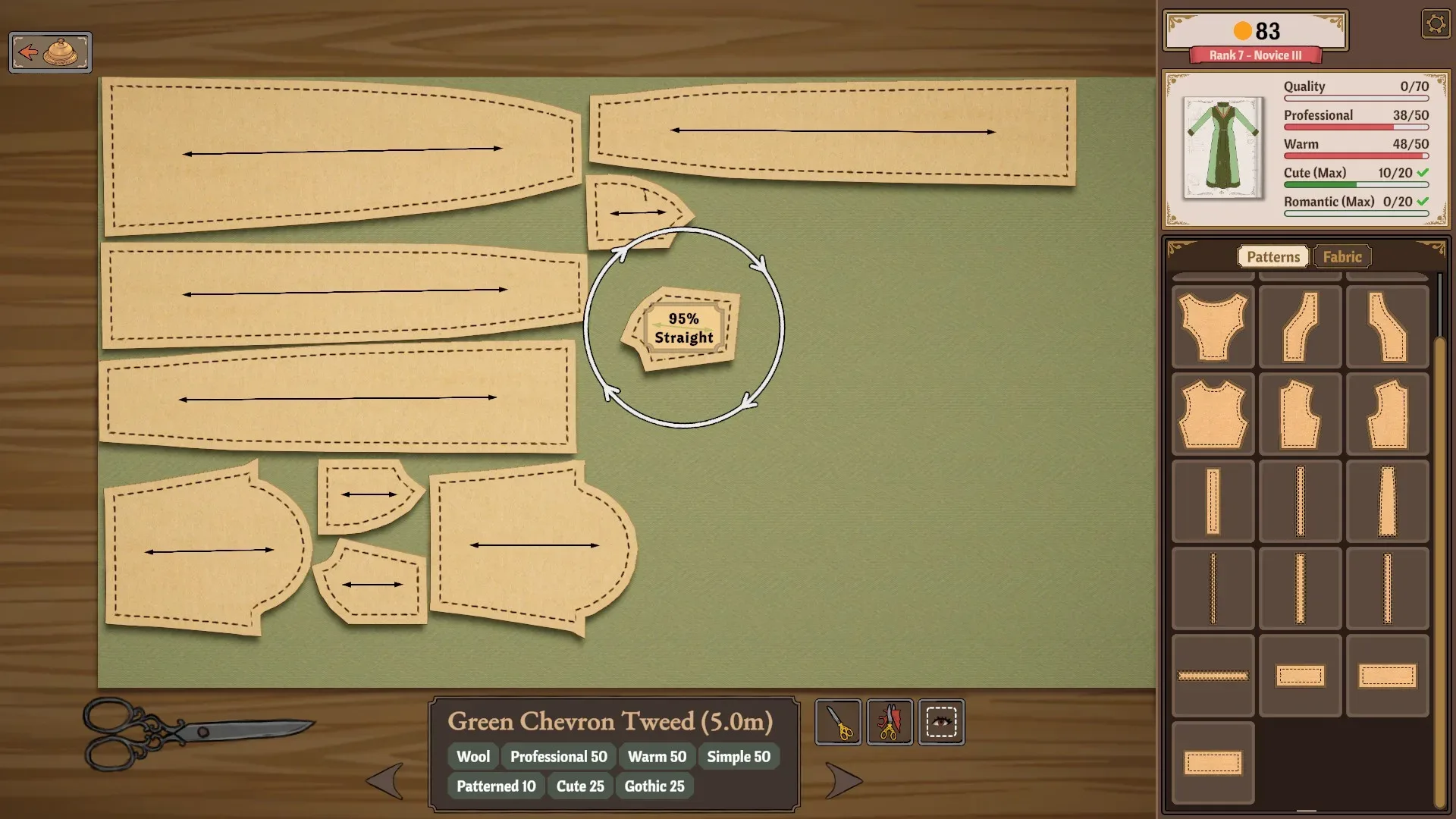
Then comes the system’s central bit of practical friction: layout. A player spreads a fabric roll on the table and places pattern pieces onto it to cut. If five yards have been bought, there are five yards available, and every piece taken from that roll leaves less for later commissions. This turns placement into a spatial puzzle. Pattern parts should fit efficiently to reduce waste, but they also have to be aligned properly.
One relevant term is cutting on the bias. The game does not demand prior sewing knowledge, but it asks players to rotate pieces and line up directional arrows correctly when quality depends on it. “Bias” refers to a diagonal direction in the fabric rather than a straight alignment. In the game’s terms, it is not a lecture or a test on textile theory; it is a visible rule the player can follow to help make a better-quality garment.
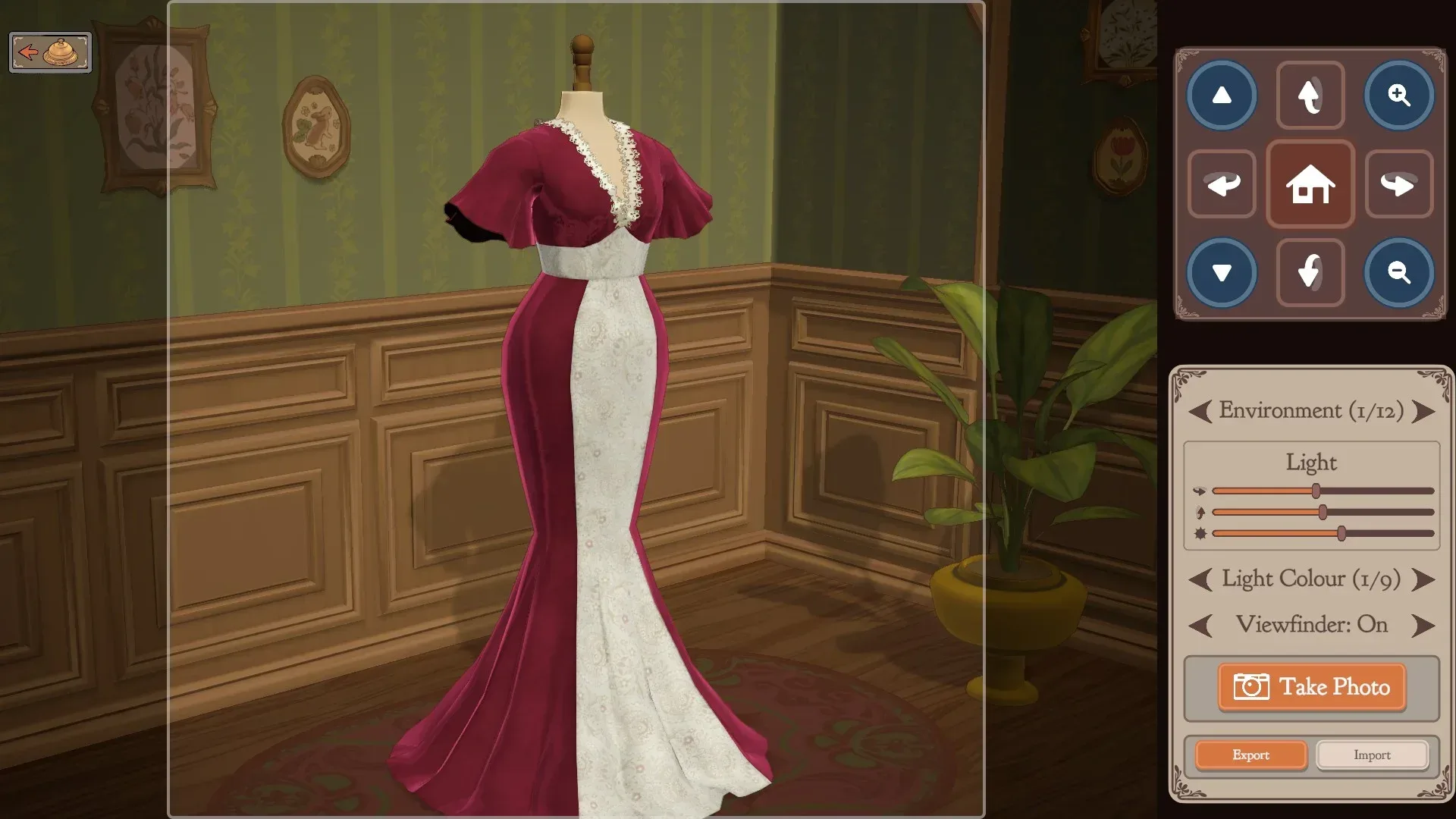
Once pieces are cut, they are placed on the mannequin and stitched with the sewing machine. The player must follow the indicated sewing lines instead of wandering away from them. Afterward come the finishing touches: lace, buttons, brooches and ribbons can be pinned onto the dress. Those details matter because they provide another level of expression after the larger structural choices have already been made.
Why the reversibility matters
Dressmaker appears to understand that a game about craft should preserve the pleasure of trying things. The ability to restore cut pieces to the original roll before final completion is unrealistic, but it serves a clear purpose. It allows a player to test a silhouette, revise an awkward fabric pairing, or recover from a bad layout without treating the learning process as irreversible damage.
Likewise, the seam ripper gives sewing a revision tool. Players can undo an error or alter their material decisions until the dress is finalized. These mechanics are especially helpful when a game is presenting concepts that may be unfamiliar. A newcomer can learn what a pattern arrangement does by moving it around, not by reading a manual and fearing the cost of getting it wrong.
There is still meaningful pressure in the economy. Fabric costs money, and restarting a dress does not necessarily refund fabric that was purchased for the job. That can leave a player short of funds after buying the wrong materials, with a compromised final result. It is a notable limitation because the rest of the process is so generous about revisions: undoing cuts is easy, but undoing a purchase is not.
There are also a few reported rough edges. Lace can resist being pinned exactly where the player intends. Neither issue changes the appeal of the core loop, but both are worth knowing because precise placement and material planning are central to the fantasy. In a game centered on the satisfaction of tiny aesthetic choices, an accessory that will not sit where desired can feel bigger than a minor interface quirk.
More than cosmetic unlocks
Many games reserve fashion for surface-level rewards: acquire a garment, equip it, perhaps pay for a more ornate variation. Dressmaker instead makes the route to the outfit inseparable from the outfit itself. The player is not choosing between pre-authored finished dresses; they are determining how component choices, material allocation and decoration produce the finished piece.
That makes its unlocks more interesting than a simple accumulation of cosmetics. A new cut or accessory is another tool in a design kit, potentially changing the interpretation of every future commission. An elevated scoop ruffle bodice, a gathered ballgown skirt or butterfly sleeves are not just labels in an inventory. They are building blocks that can be combined with plum silk, meadow-green cotton, ebony lace or ecru wool to push a commission toward a particular mood.
There is a useful contrast with the wider business of optional game cosmetics, where visual identity is often tied to reward passes and premium items. For example, some games structure cosmetic access around a reward pass and premium cosmetics. Dressmaker’s described appeal is different: clothing is not a side reward attached to another activity. It is the activity, with its own tools, mistakes, budget and creative decisions.
A playful craft fantasy, not a sewing exam
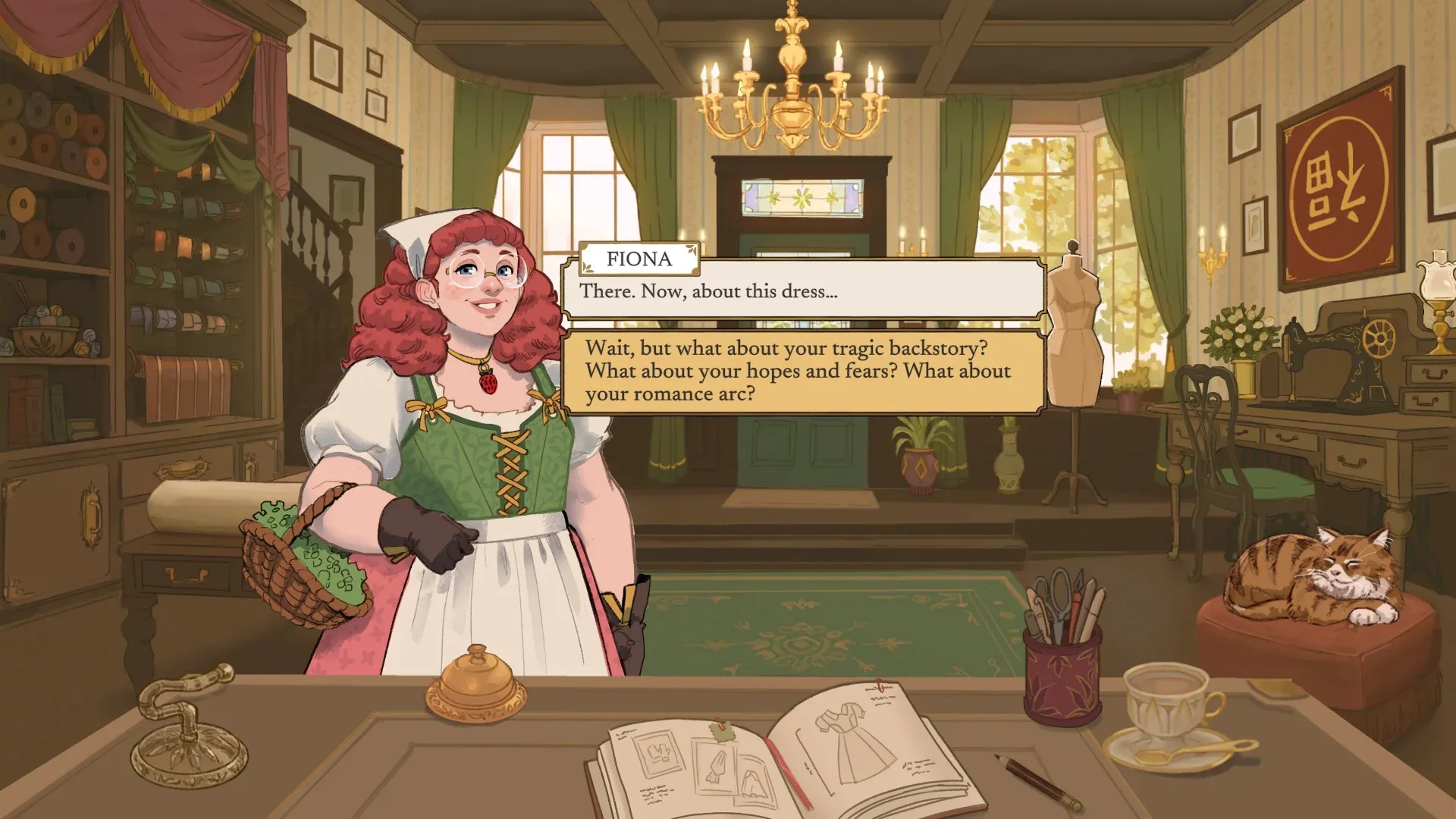
The tone is deliberately light. The story is described as cute and fluffy, with funny writing and appealing character art, while the commission setup provides enough conventional game progression to keep the atelier moving. Most importantly, the systems do not appear to require an existing fashion education. Players can learn through the act of making, and they can fulfill a brief even if their own preferences lean toward bizarre combinations.
That accessibility is perhaps Dressmaker’s most compelling design choice. It respects the details of dressmaking—measurements, pattern pieces, cutting direction, seams and embellishments—without insisting that players arrive already fluent in them. The simulation is selective rather than punitive. Material has scarcity, but cut fabric can be magically restored. Sewing needs care, but mistakes can be ripped out. Clients have opinions, but they can still be pleased by an odd-looking dress if the important requirements are met.
For players who have ever spent an hour adjusting a character’s outfit before the first mission begins, that balance may be the whole point. Dressmaker takes the usually abbreviated pleasure of clothing customization and gives it room to breathe. It is a game about turning a prompt, a handful of shapes and a roll of cloth into something that feels personal—even if the final result is technically funeral wear and visually a spectacular crime.