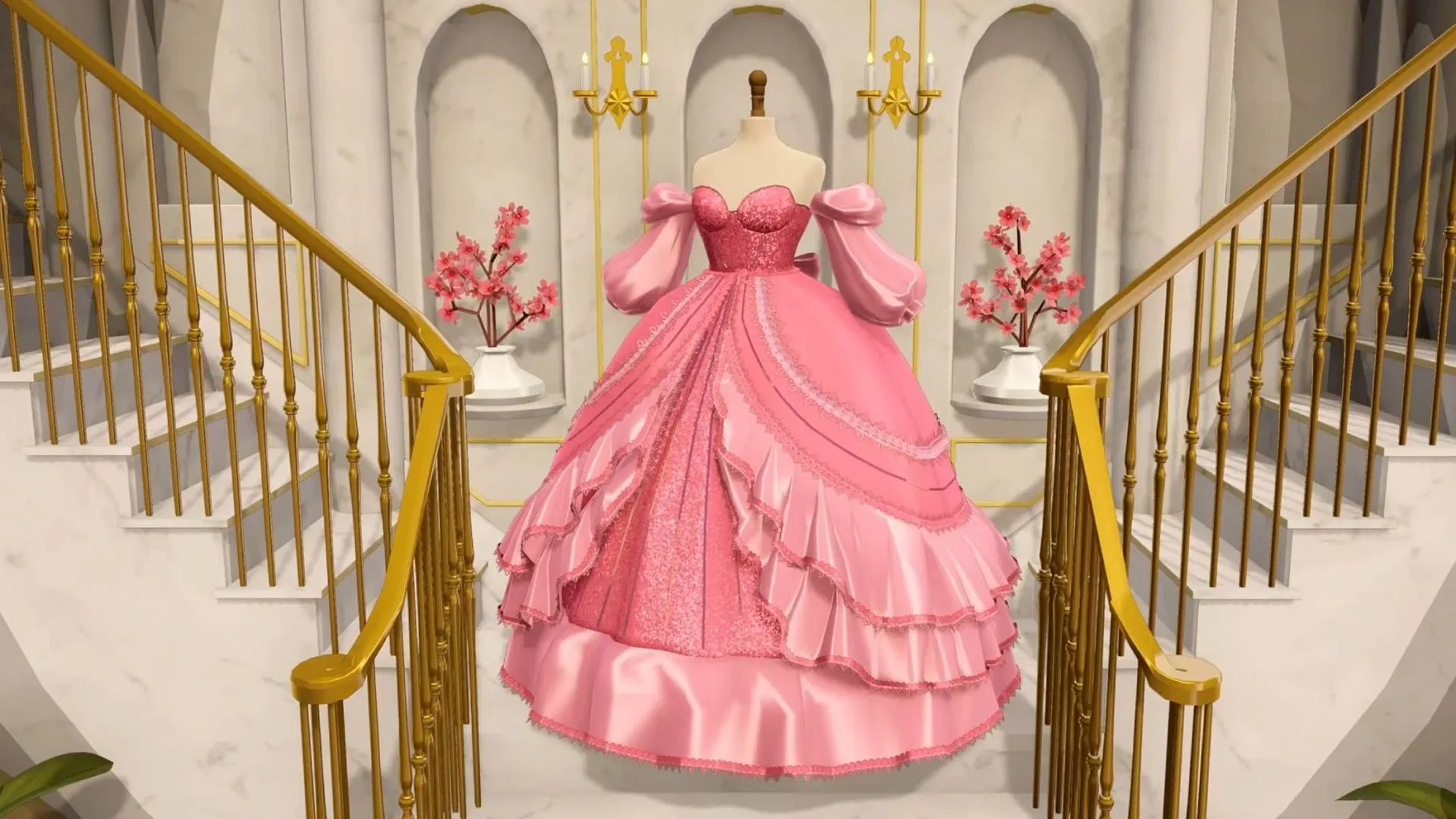
Dressmaker has quickly become a showcase for the sort of player creativity that makes a small, focused simulation game feel much larger than its premise. The Steam release arrived during the previous week, and its community is already sharing dresses that range from finely patterned garments to ambitious recreations of famous art.
The eye-catching part is not simply that players can make fashionable outfits. It is that the designs are assembled through the placement of individual beads. That makes the most elaborate results feel less like selecting a prebuilt texture and more like constructing an image, one tiny element at a time, across the surface of a dress.
Among the shared creations are a dress based on Vincent van Gogh’s The Starry Night, a compact Mona Lisa-inspired design, a monarch butterfly piece, an angelic gown, traditional Balkan clothing and an outfit described by its creator as “dress armor.” The range is the story: Dressmaker’s community has treated the same basic clothing-focused toolset as a craft bench, a fashion sketchbook and a miniature canvas.
A cozy game with a remarkably high creative ceiling
“Cozy” is often used to describe games with a gentler pace, lower pressure and routines built around making, arranging or personal expression rather than combat or competition. Dressmaker appears to fit that broad appeal for players interested in fashion design as well as newcomers simply looking for a calming creative activity.
But cozy does not necessarily mean simple. The community response illustrates a familiar tension in creative games: an approachable activity can still reward precision, patience and a sharp eye for colour, proportion and pattern. A player can make something quick and personal, while another can spend far longer producing a piece that reads as a recognizable image at a glance.
That distinction helps explain why the Starry Night and Mona Lisa designs have gained attention. Both subjects are instantly recognizable, which means the creators had to preserve their most important visual cues within the constraints of a dress silhouette. In a traditional painting, the artist controls a rectangular canvas. Here, the imagery must work across folds, edges and the specific shape of the garment.
The result is closer to wearable mosaic or pixel art than a conventional painted reproduction. That is an explanation rather than a confirmed in-game label: the visible process described by players is placing singular beads, and the final designs depend on many small marks combining into a larger image. At a distance, colour blocks and outlines resolve into a scene or portrait; up close, the labour behind those choices becomes much more apparent.
Why individual bead placement matters
Individual placement creates a different kind of creative challenge from choosing a premade print. The player has to decide where every bead belongs, how densely colours should cluster and where a boundary needs to be clear enough for the design to remain legible. In an artwork-inspired dress, even a minor shift in placement can change the apparent line of a face, the curve of a wing or the motion in a night sky.
Related coverage includes Dressmaker Players Are Turning Cozy Fashion Into Wearable Art on Steam.
That is why the community’s admiration has carried a slightly overwhelmed tone. One response to an elaborate design joked that the commenter was sorry to own the game at all; another remarked that players seemed to be playing something entirely different. The humour lands because it recognizes two valid experiences of the same game. One person might be happily assembling an outfit, while another is effectively planning a detailed piece of bead art.
Neither approach invalidates the other. If anything, the gap between casual and advanced work is evidence that the system has room for experimentation. The presence of striking examples does not mean every player has to chase museum-piece results. It does mean that players who want a longer-term project can find one without leaving the game’s central theme of dressmaking.
From paintings to personal and cultural references
Fine-art recreations are an easy way to demonstrate technical effort, but they are only one part of the early work being shared. The monarch butterfly dress points to the use of symmetrical shapes, high-contrast colours and recognizable natural patterns. The armor-like outfit suggests that players are testing how far a dress can move away from soft or traditional fashion language while still remaining a garment.
Traditional Balkan wear adds another dimension. Clothing can communicate regional heritage, ceremonial meaning and personal identity, so recreating traditional styles in a fashion game is not just a test of visual fidelity. It is also an example of players using a creative tool to bring references important to them into a shared digital space. The available information does not establish which specific garments or traditions were represented, but the appearance of Balkan-inspired work demonstrates that the community is not limiting itself to a single art style.
This variety matters because a game’s customization tools become more valuable when they accommodate several kinds of goals. Some players want fantasy glamour; some want a dress based on a famous image; some want a familiar butterfly pattern; some want to evoke real-world clothing traditions. The designs circulating so far suggest that Dressmaker can prompt all of those impulses.
That breadth also gives the community a reason to keep sharing. An impressive creation does more than collect praise: it can demonstrate a technique, reveal an unexpected colour combination or encourage someone else to attempt a different reference. A player who sees a painting interpreted in beads may decide to make an animal motif. Someone drawn in by ornate armor may then try a historical or ceremonial-inspired look. In this sense, shared designs become informal examples of what the game’s creative language can express.
Strong Steam sentiment, but creative sharing is the bigger signal
Dressmaker has been marked “Overwhelmingly Positive” on Steam, with reporting around this early surge citing a 98% positive review figure. That is a strong early indicator of player satisfaction, though review percentages are snapshots that can change as more people post their reactions.
More telling than a single score, however, is the kind of work players are voluntarily displaying. Screenshots and posts are not a substitute for a full breakdown of every system in the game, nor do they prove that every player will enjoy the same loop. They do show that a segment of the audience has found enough flexibility in the bead-based design process to make it worth investing considerable time and care.
For a creative sim, that is an especially meaningful form of engagement. Players are not merely completing an objective and moving on; they are using the game’s materials to make a result that is personal, recognizable or technically ambitious. The dress is both the activity and the final display piece.
It is also a useful reminder that presentation tools can be as important as a game’s theme. A dressmaking game naturally attracts people interested in clothes, but the bead placement system appears to have opened the door to people interested in illustration, costume concepts and pattern work too. The community’s Mona Lisa, Starry Night and butterfly interpretations are examples of how a focused premise can invite unexpectedly broad creative play.
What new players can take from the community’s standout work
The early wave of ornate dresses may look intimidating, especially to someone who has only just begun. The practical lesson is not that a new player needs to recreate a painting immediately. It is that the game’s designs can benefit from a simple, deliberate plan.
- Start with a clear silhouette: A butterfly, flower, heart or geometric panel can be easier to read than a detailed portrait.
- Choose a limited palette: Fewer colours can make a pattern more coherent and help a newcomer focus on placement.
- Work from large shapes to small details: Establish the main blocks of colour first, then refine edges, highlights and decoration.
- Use references thoughtfully: A familiar painting or garment can provide direction, but an original variation can be just as rewarding.
- Keep the garment shape in mind: A design has to work on a dress rather than on a flat page, so the most important feature should remain visible and recognizable.
Those are general creative principles, not instructions tied to a confirmed set of in-game controls. Still, they reflect what the shared designs make clear: strong results come from intentional choices rather than sheer complexity. A small, clean motif can be as effective as a densely detailed scene if it is placed well.
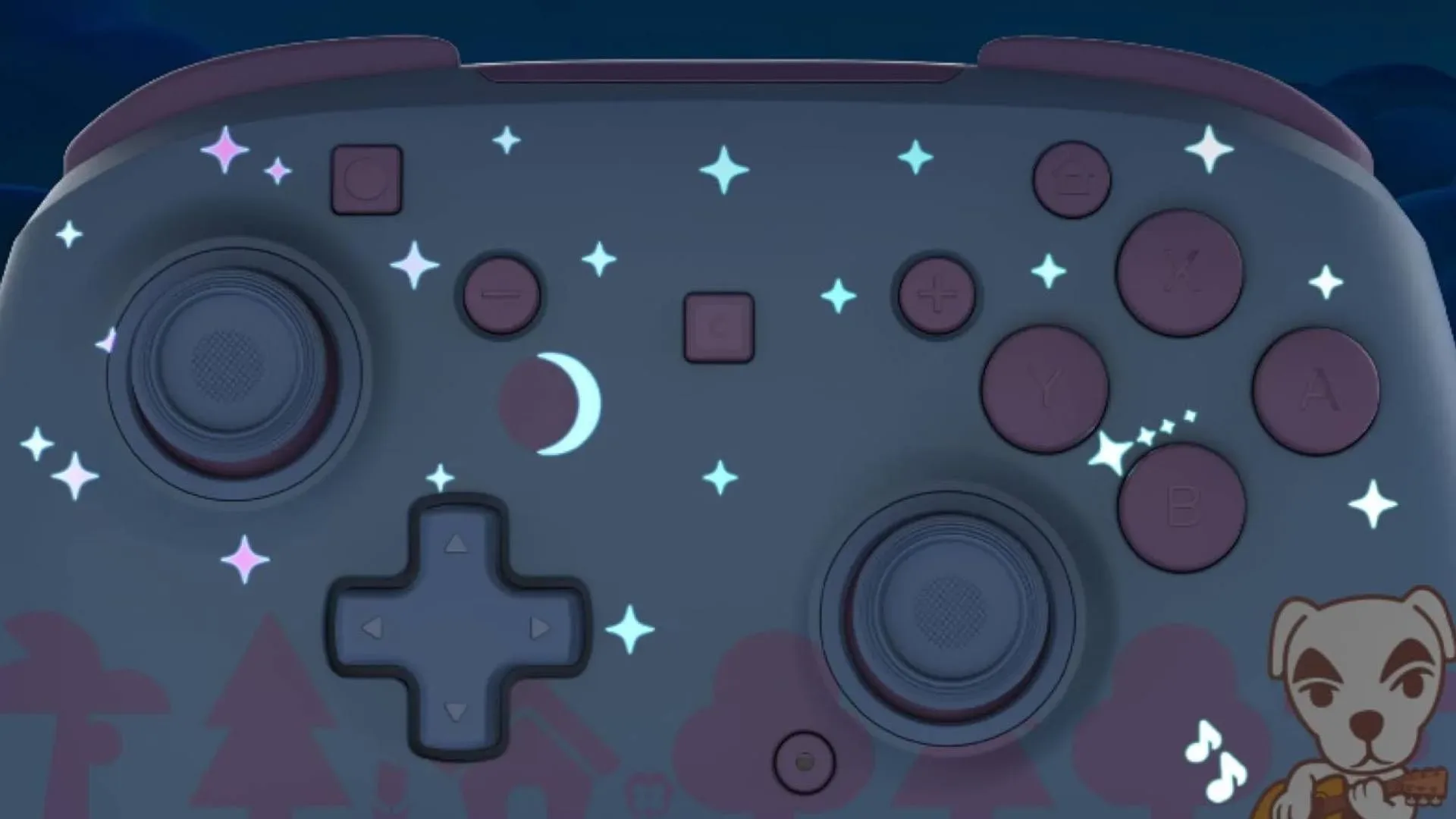
Players who enjoy cozy creative spaces may also recognize the appeal of making something without a need for a competitive payoff. That appetite for expressive, personalized play is part of why even adjacent communities respond so strongly to customization-focused games; the wider Nintendo audience, for example, continues to see lifestyle game aesthetics reflected in products such as Animal Crossing-themed Switch 2 gear.
The best response to impossible-looking dresses: make a different one
There is an amusing downside to any game with powerful creative tools: the first viral masterpieces can make ordinary players wonder whether they have misunderstood the assignment. The jokes about not playing the same game capture that feeling perfectly. Yet Dressmaker’s early gallery is more encouraging than exclusionary.
The paintings, angelic gowns, traditional-wear inspirations and armor experiments are not evidence of one correct way to play. They are evidence of a toolset broad enough to support a lot of different visual languages. The player wanting a quiet few minutes of fashion customization and the player mapping a famous artwork bead by bead are using the same foundation for very different purposes.
That may be the most significant milestone in Dressmaker’s early Steam run. It has not just gathered positive reactions; it has already given players a reason to surprise one another. In a genre built around expression, that is a far more durable achievement than any single viral dress.