Dressmaker’s early Steam performance has given Cozy Lives a striking answer to a question the studio built its game around: is there a large audience for a deeply fashion-focused game made with women explicitly in mind? One month after release, the single-player dressmaking simulation had 17,530 user reviews, a 98% positive average, more than 15,000 average concurrent players, and a place in Steam’s top 100.
For Sabrina Becker, who leads Cozy Lives with her husband Jonathan Hau-Yoon, the result is not simply evidence that a cozy game caught on. It supports the studio’s central belief that many women enjoy games but have not been offered enough games shaped around the subjects and activities they want to spend time with. Dressmaker was deliberately aimed at women from the start, while its appeal to male players has been a welcome extra rather than a change in that premise.
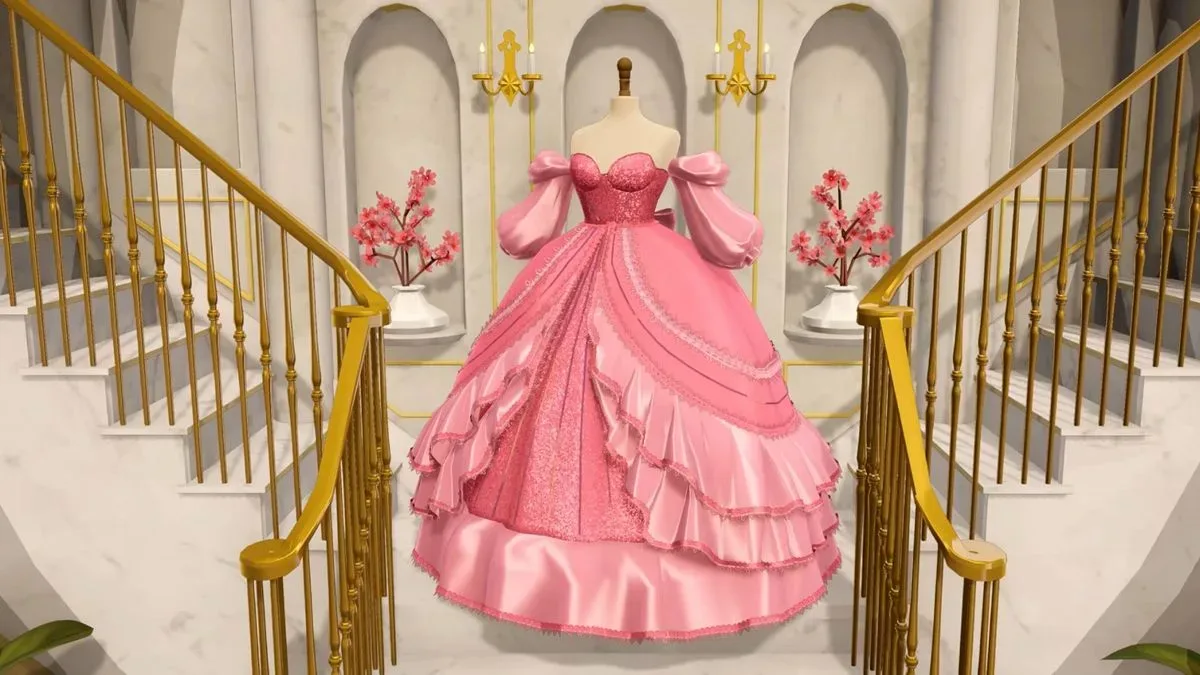
That distinction matters. “Women” are not a monolithic genre category, and fashion is not an interest exclusive to women. But a developer can still make a specific creative choice about who it wants to address and what it wants to take seriously. In Dressmaker’s case, that means treating dress design and sewing as the heart of the game rather than a thin cosmetic layer around another kind of play.
A Steam result with unusual staying power
The headline numbers point to more than a brief burst of curiosity. User-review totals show that a substantial number of purchasers chose to leave feedback, while the 98% positive rating reflects an overwhelmingly favorable response from the people who reviewed it. Average concurrent players measure how many people are playing at the same time on average. More than 15,000 concurrent players for a small single-player game, still enough for the Steam top 100 a month after launch, suggests Dressmaker retained serious momentum after its opening period.
Those measures are not the same as total sales, and no sales figure has been provided. They do, however, illustrate a broad and active audience. Hau-Yoon described the scale of player interest and attention as overwhelming, explaining that he had prepared for the work of shipping the game and handling post-launch patches, not for such a large influx all at once.
Becker’s explanation for that response is direct: the market contains people who want this sort of game and will seek it out even when the available options are limited. She pointed to the large population of women, including adults as well as younger players, using platforms such as Roblox for dress-up games despite what she considers an imperfect experience. The demand was visible; the opportunity was to create a more purposeful home for it.
Designing for an underserved audience is not a side quest
Becker argues that a common assumption about women and video games gets the cause backward. The issue is not that women inherently dislike games, she says. It is that the industry does not always produce enough games aligned with their interests. Dressmaker was conceived as a response to that gap, not as an attempt to bolt a fashionable aesthetic onto a familiar formula.
The language around “targeting women” can be easy to flatten into a marketing talking point. The more useful reading here is about creative focus. A game about making dresses can decide whether clothing is an incidental reward, an interchangeable character skin, or a craft worthy of detailed attention. Cozy Lives chose the latter direction, and Becker said the studio saw no reason to dilute the feminine quality of a game centered on an interest commonly coded as feminine.
Related coverage includes Dressmaker's Steam Success Shows the Demand for Fashion-Focused Games.
That approach also helps explain why the game’s reception has extended beyond a conventional idea of a gaming audience. Some of the strongest feedback has come from players connecting Dressmaker to real sewing, family relationships, and access to an activity that illness or physical limitations can make difficult.
“Women love video games,” Becker said, arguing that the more relevant question is whether games exist that are geared toward the things they want.
One Steam reviewer who identifies as a nursing-home caretaker wrote that the game had given older women with arthritis a way to reconnect with dressmaking and had encouraged the reviewer to take out a sewing machine again. Another described a mother who had worked as a seamstress and who became interested after watching Dressmaker being played. For that family, a game became a shared point of connection around a skill and history the mother had passed down.
These are individual reviews, not demographic research, and they should be understood as personal accounts rather than proof that every player has the same experience. Still, they are meaningful examples of why a narrowly defined theme can reach people who might not normally see themselves in a game’s intended audience. They also show that accessibility can be emotional as well as physical: a digital activity may let someone revisit the pleasure, memories, and creative decisions associated with a hands-on practice.
Becker’s connection to the material
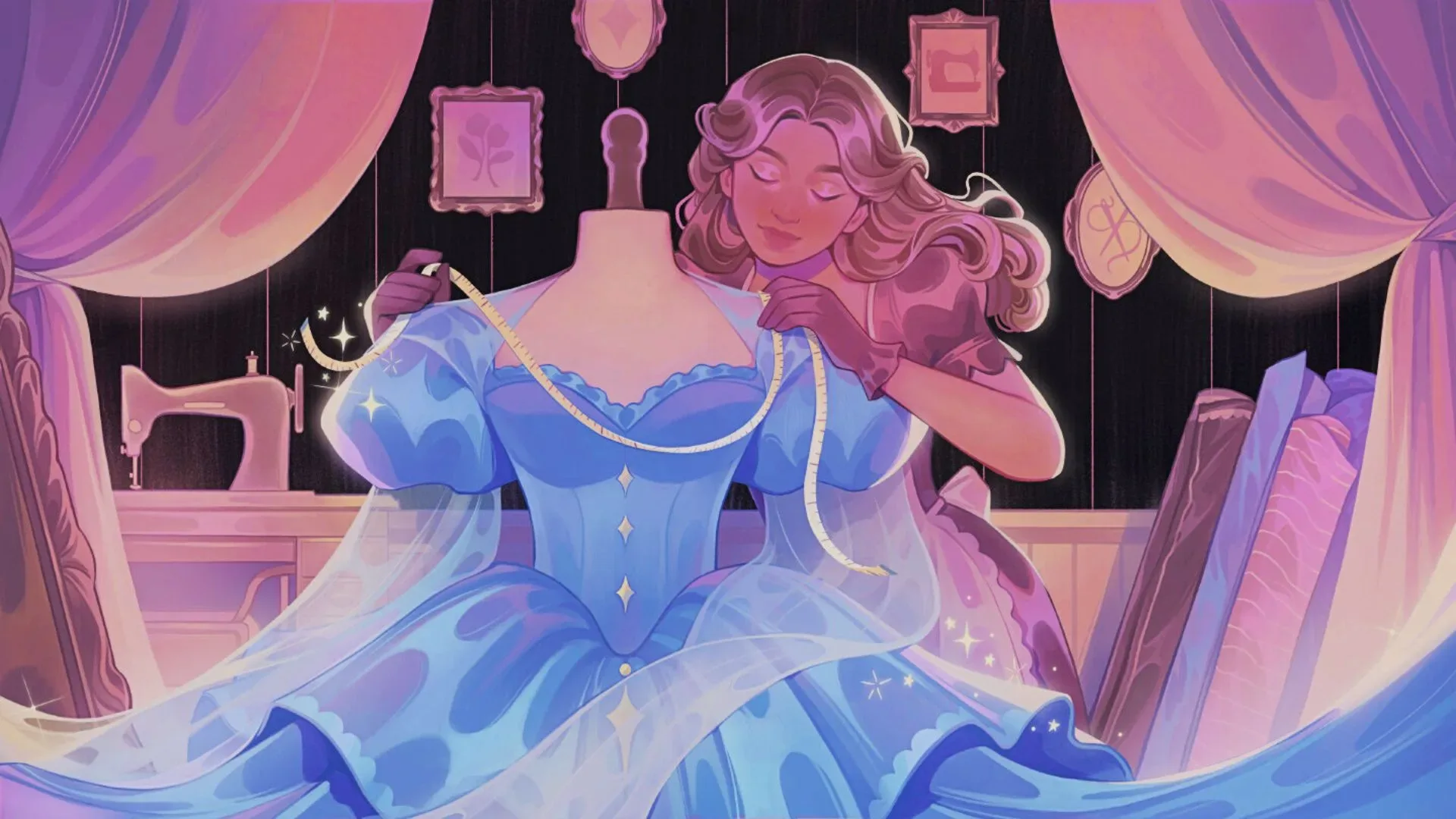
Dressmaker’s premise is especially personal for Becker. Before game development, she was pursuing costume design. Sewing and clothing had been important to her since childhood; her mother taught her to sew and was herself a designer. Becker later had to step away from that path after Ehlers-Danlos syndrome, or EDS, made her seriously ill.
EDS is the abbreviation Becker used for the chronic illness that forced her career change. The available details do not establish a broader medical account of her condition, nor do they need to. The key point is the impact she described: she could not continue pursuing or engaging with the fashion work she loved, so she put that passion aside and concentrated on what she could do.
As her health gradually improved, Hau-Yoon wanted to pursue Dressmaker at the studio. The timing reunited Becker with an interest that had been central to her life. That personal history does not automatically make a game successful, but it supplies a credible explanation for the specificity of its perspective. The game was not built from an abstract assumption that clothing might be marketable; it grew out of a creator’s enduring relationship with sewing, design, and costume work.
It also creates a powerful throughline with the player responses. The caretaker’s account of older people returning to dressmaking and the family story of a seamstress mother discovering a game speak to the same possibility Becker described: games can offer a renewed way to engage with a passion when conventional participation has changed or become harder.
The launch version is a foundation, not a finish line
Cozy Lives does not consider Dressmaker complete in the broad sense. Hau-Yoon characterized the released version as the best the team could make within its time and budget limits, while acknowledging a backlog of ideas the studio had wanted to include. Now that the game has found a large audience, the team has the opportunity to return to those plans.
Major future updates are planned, though the studio has not laid out a full roadmap, dates, or feature list. Becker did identify one prospective online element: a system that would let players vote for their favorite dress designs. That is a notable addition because it would turn an activity currently framed around personal creation into a light community showcase. It is not a confirmed release-date promise, so players should treat it as an indicated direction rather than a finalized commitment.
The team began on Steam in part because PC updates are easier to iterate on. Iteration means repeatedly refining a product through successive versions: making changes, assessing the results, then building again. On PC, the studio faces less platform certification before updates can go live. Certification is the approval process platform holders use to check software before it is distributed on their systems. Reducing that procedural burden can make it easier for a small team to adjust a live game.
Cozy Lives had originally expected a larger audience on mobile devices and Nintendo Switch, and it plans to bring Dressmaker to other platforms eventually. The exact platforms, timing, and scope remain unannounced. Its Switch ambitions arrive at a moment when Nintendo-platform discussions remain an active part of the industry, as illustrated by Palworld’s stated interest in Switch 2 talks despite its Nintendo patent dispute, though there is no suggestion that Dressmaker faces a comparable situation.
What the response means for cozy games
Dressmaker’s result should not be reduced to a simplistic claim that every game needs fashion mechanics or that a single title can represent all women players. Its lesson is more practical: audiences can be substantial when a game takes a neglected interest seriously, gives it room to lead, and understands the emotional context players bring with them.
For players, the likely near-term implication is continued support rather than a finished product being left untouched. Cozy Lives says it wants to expand both the game and its world, and the post-launch response has created space to work through ideas that time and budget previously prevented. For the developers, success brings a different challenge: converting intense early enthusiasm into updates that respect the existing audience without losing the focused appeal that drew people in.
Becker is simply pleased that people love the game. That grounded reaction fits a story in which a small game’s commercial momentum and its personal resonance are closely intertwined. Dressmaker’s audience is not only praising an absorbing simulation. Some players are using it to reconnect with a craft, a family member, or a part of themselves that they thought had been set aside.