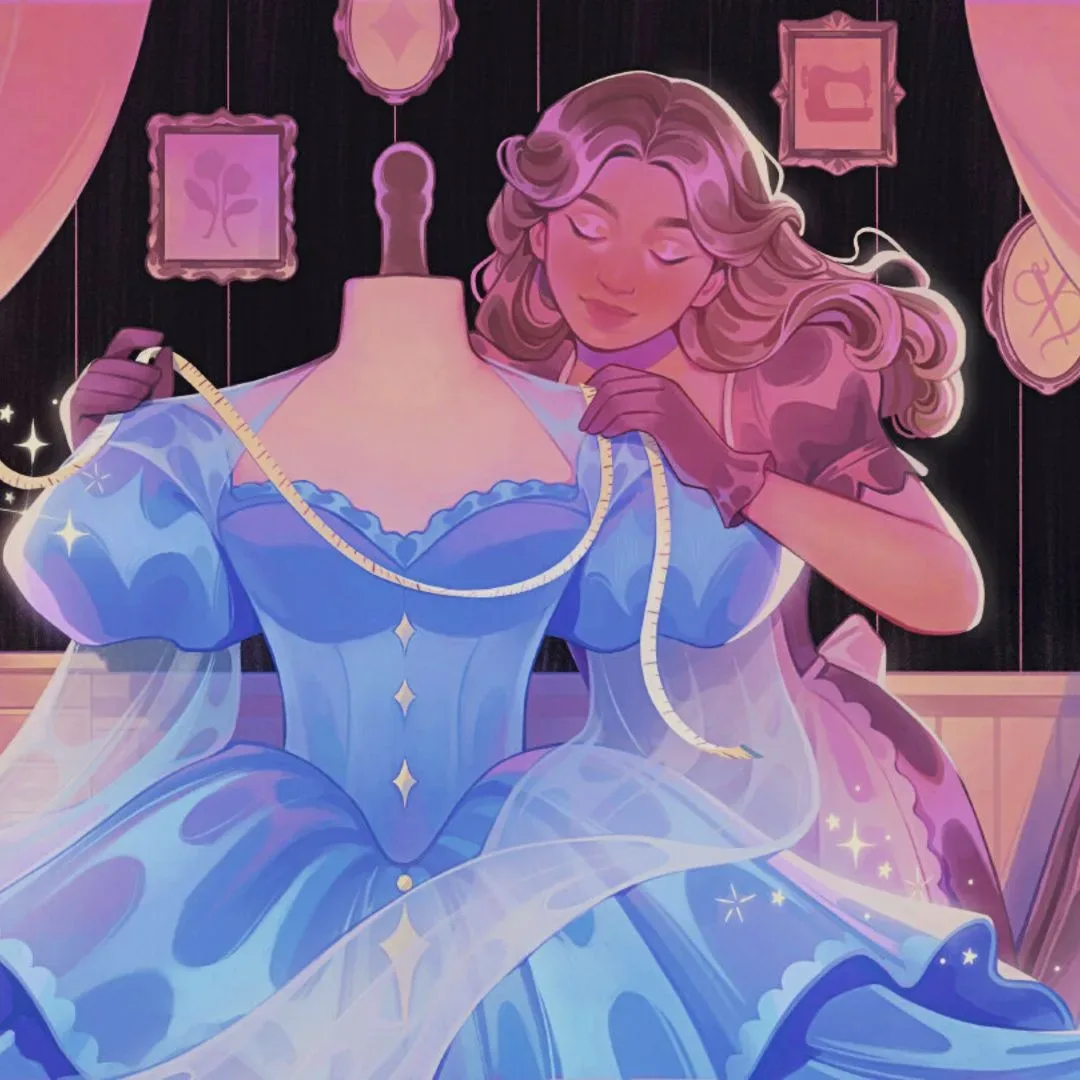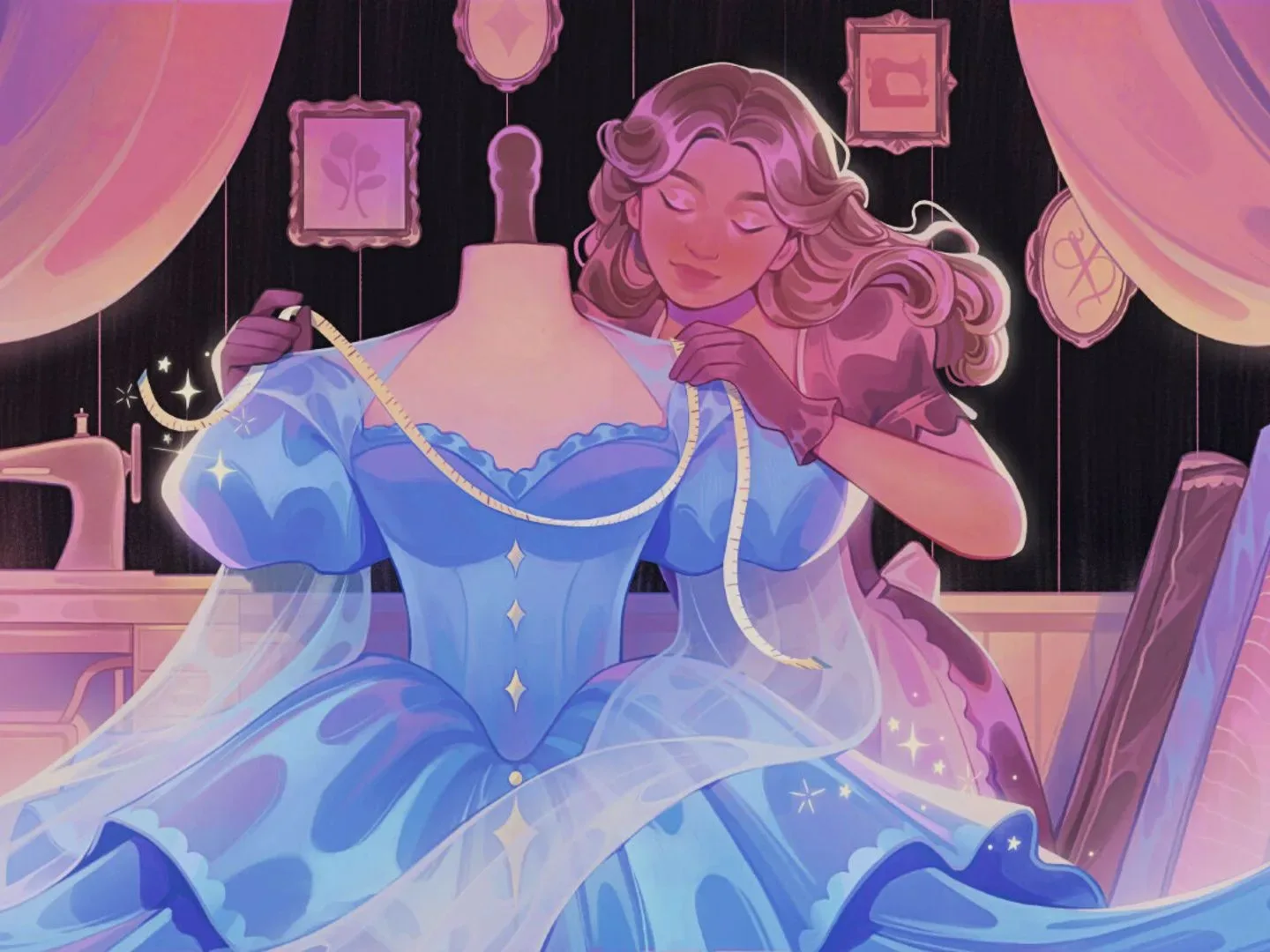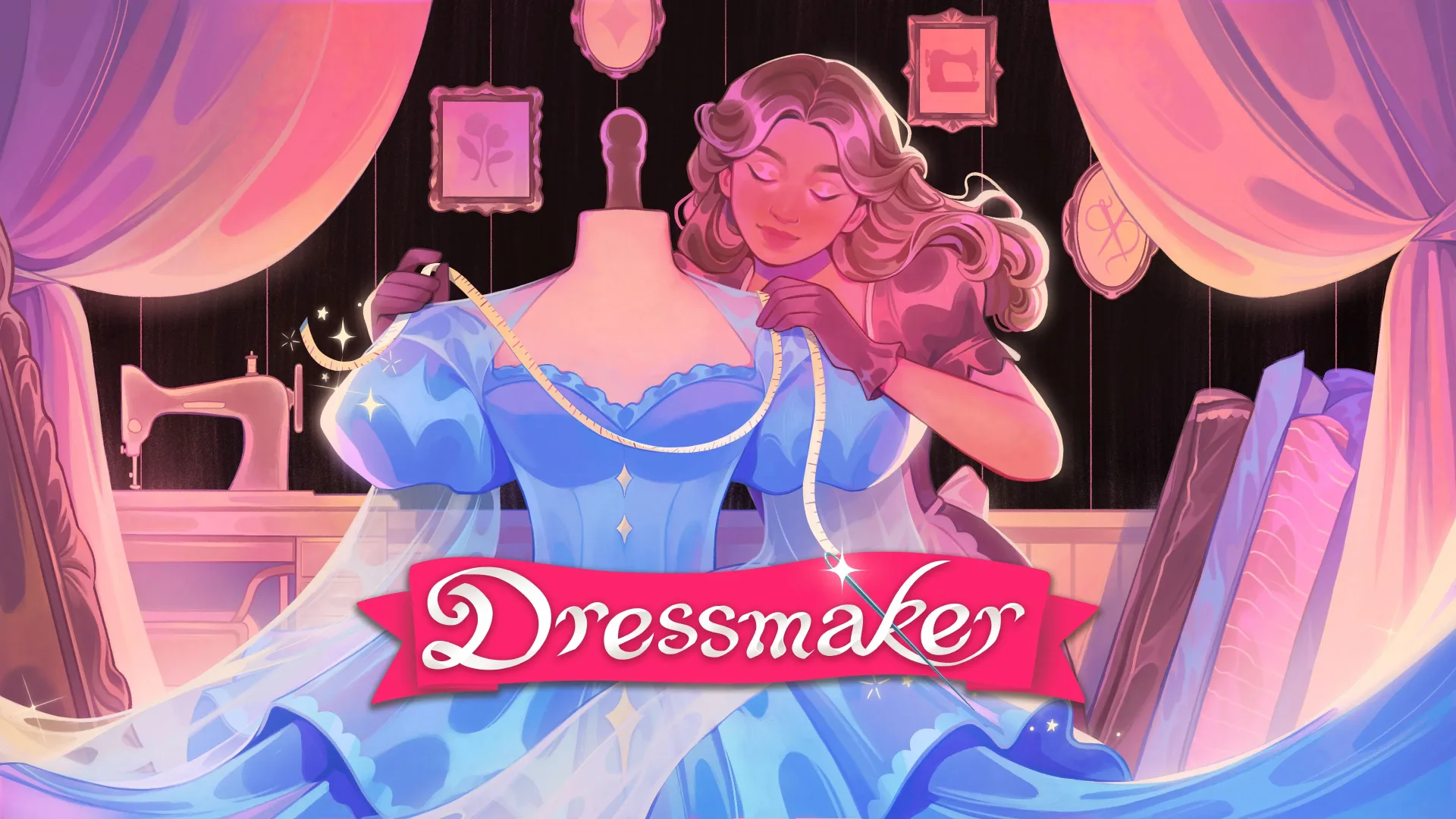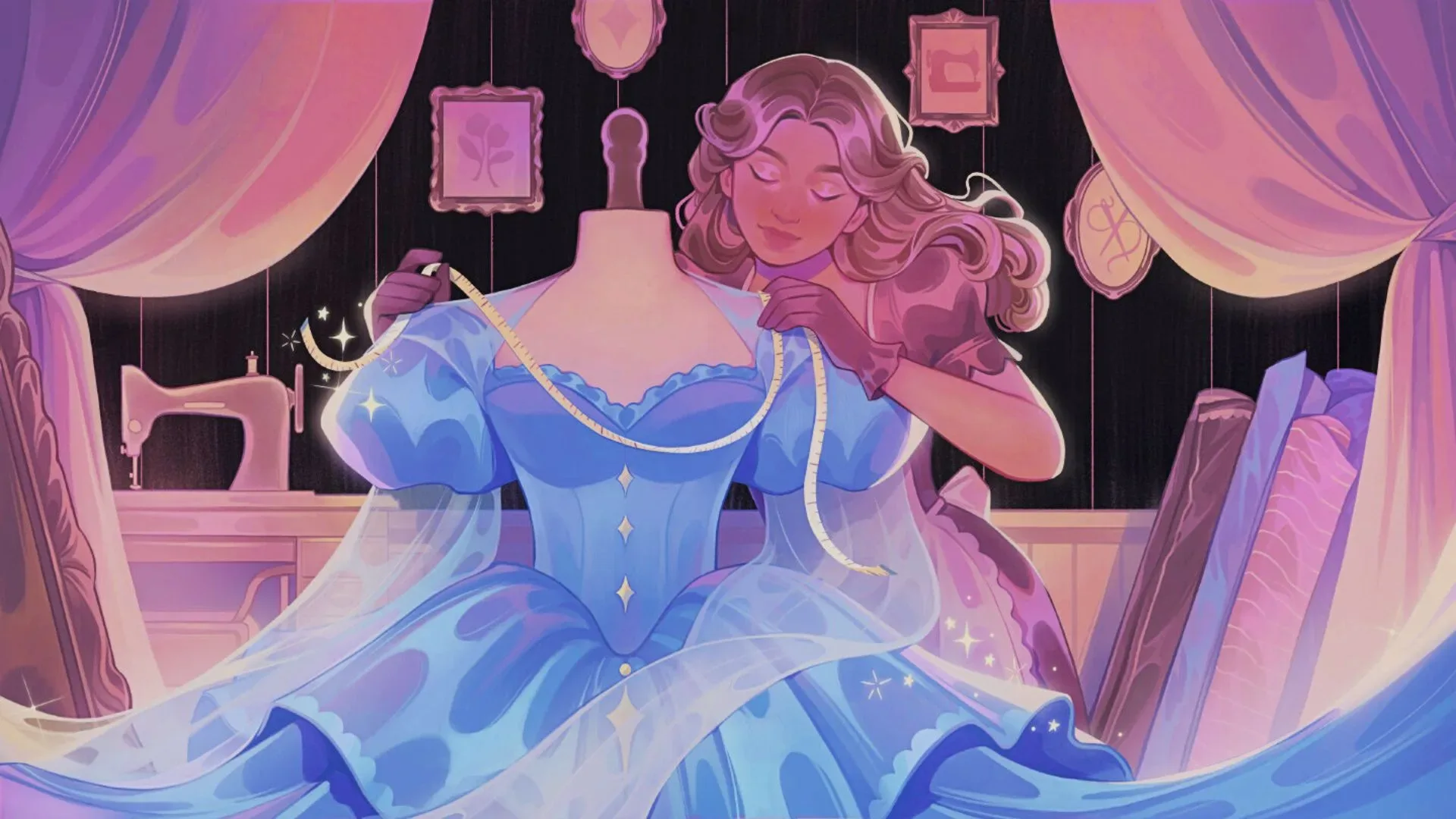
Dressmaker, the new boutique-running simulation from developer Cozy Lives, has made a strikingly fast entrance on Steam. Within a day of release, the game was sitting ninth on the platform’s global top-sellers chart, ahead of major releases including Diablo 4 and Control Resonant.
That is an impressive early position for a small-scale game built around a particularly specific fantasy: operating a dressmaking shop. Its premise is not about saving a kingdom, winning a war, or assembling the largest possible arsenal. Players choose fabrics, cut patterns and sew garments for local customers. The wrinkle is that customers can be satisfied—or deliberately sabotaged.
It is a cozy game with a sewing needle in one hand and a tiny chaos lever in the other. Naturally, the internet has noticed.
A strong opening for a specialized sim
Dressmaker has a 96% positive user rating on Steam and carries the store’s Overwhelmingly Positive review designation. Those figures reflect early player feedback, so they are best read as a snapshot rather than a permanent verdict; review averages and sales rankings can change as more people buy and play a game. Still, reaching that label immediately after launch is a meaningful show of enthusiasm.
Steam’s global top-sellers list ranks games by sales performance, rather than by a single universal measure of player count or critical acclaim. In practical terms, ninth place means Dressmaker was competing unusually well at the storefront during this early launch window. For a niche-sounding crafting sim to share that area of the chart with much larger names is notable precisely because its appeal is so focused.
The game’s initial reviews have been warm in a direct, uncomplicated way. One player called it everything they hoped it would be and more, while another praised the apparent care put into it. That kind of response cannot tell prospective players whether every individual mechanic will suit them, but it does suggest the game is connecting with people who specifically wanted its mix of fashion craft and shopkeeping.
What players actually do in Dressmaker
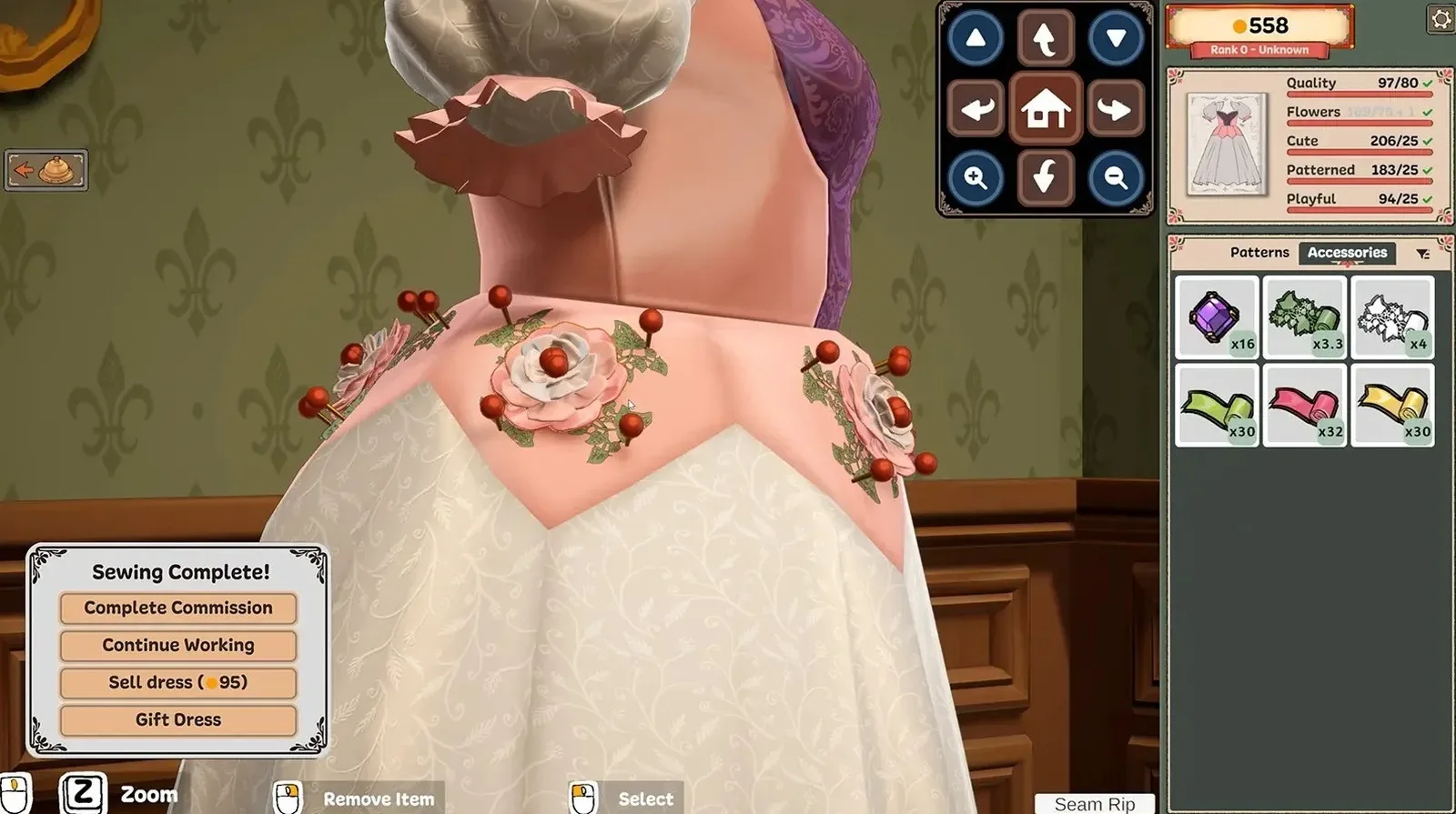
Cozy Lives describes Dressmaker as a crafting game inspired by real dressmaking. The stated process begins with selecting fabric, moves through cutting patterns, and ends with sewing the pieces into finished clothing.
That sequence matters. “Crafting” is an extremely broad game label that can mean anything from clicking a recipe in a menu to managing a complex production chain. Here, the available description points to clothing construction as the central activity. Fabric selection, pattern cutting and sewing are presented as the steps that turn a customer request into a garment.
Related coverage includes Dressmaker Surges Into Steam's Top Sellers With Overwhelmingly Positive Early Reviews.
The boutique setting adds a service element. The player is not simply making dresses in isolation; they are running a busy shop and producing work for townsfolk. In this context, the word sim, short for simulation, refers to a game organized around representing the routines and decisions of a particular activity—in this case, dressmaking and customer service—rather than an exact claim that every aspect of the trade has been recreated with professional precision.
Cozy does not necessarily mean consequence-free
The most mischievous part of Dressmaker’s pitch is the option to “sabotage” townsfolk. The supplied details do not spell out how that system works, what form sabotage takes, or what consequences it has. It would be premature to treat it as a full morality system, a branching story structure, or a competitive mechanic.
What can be said is that it introduces a different kind of choice into the usually gentle language of cozy games. “Cozy” generally signals a low-pressure mood, comforting presentation, and activities such as crafting, decorating, farming, or operating a small business. It does not mean every action must be sweet. Dressmaker’s premise leaves room for a player to be helpful, exacting, or a bit of a menace while still working within a relaxed crafting framework.
That tonal contrast is likely part of the hook. Making a garment correctly for a grateful local is satisfying; having the ability to add a little dramatic friction gives the boutique setting personality. It turns the customer order from a purely mechanical checklist into a possible social choice, even if the exact scope of that choice remains unclear.
Why the chart placement is worth watching
The game’s first-day showing does not automatically establish a long-term sales story. Store charts are fluid, early review pools are smaller than mature ones, and new releases often experience a concentrated burst of attention. Dressmaker’s current score and ranking should therefore be understood with the right amount of caution.
But the opening is still useful evidence of demand. It demonstrates that a game does not need to be broad in theme to be visible. A clear fantasy—be the dressmaker, run the boutique, make the outfit—can be easier for players to understand than an enormous feature list. The game’s description communicates its core loop in a few concrete verbs: choose, cut, sew.
Its performance also highlights an important distinction between a game’s apparent scale and its commercial visibility. Being a smaller or more focused project does not stop a game from reaching a large audience when its concept is immediately readable and its initial players respond strongly. For independent teams, that kind of launch attention can be especially valuable, given how precarious development finances can be; one recent industry account of a project’s narrow salary runway is a reminder that commercial momentum and studio stability are often closely connected.
That broader point should not be mistaken for a claim about Cozy Lives’ own finances or production circumstances. No such details are established here. The relevant takeaway is narrower: a top-10 Steam appearance can give a focused game substantial visibility at a moment when visibility is difficult to earn.
Fashion games still have room to surprise
Dressmaker’s rise is also a small victory for fashion-centered game concepts. Clothing design can be dismissed as a decorative extra in larger games, but it is plainly compelling enough to support an entire game loop when it is treated as the main craft rather than a side menu.
The appeal is not limited to the finished dress. The available description puts emphasis on the act of creating it: choosing the material, interpreting a pattern, cutting it out and sewing it together. That makes the garment a result of a process, not simply a cosmetic unlock. Pair that process with a local clientele and a shop to manage, and the game has a compact but legible role-playing premise.
For players deciding whether to keep Dressmaker on their radar, the known facts are encouraging but specific. It is a Steam game about running a dressmaking boutique, making clothing for townsfolk through a fabric-to-sewing workflow, and potentially undermining those customers instead. It has launched with a 96% positive rating and Overwhelmingly Positive reviews, and it briefly reached ninth among Steam’s global top sellers.
Everything beyond that—the depth of its systems, the range of garments, the effects of sabotage, and how the reception holds up over time—will need to be judged as the game’s player base and feedback develop. For now, Dressmaker has accomplished the difficult first stitch: it has made a very particular game idea feel like an event.