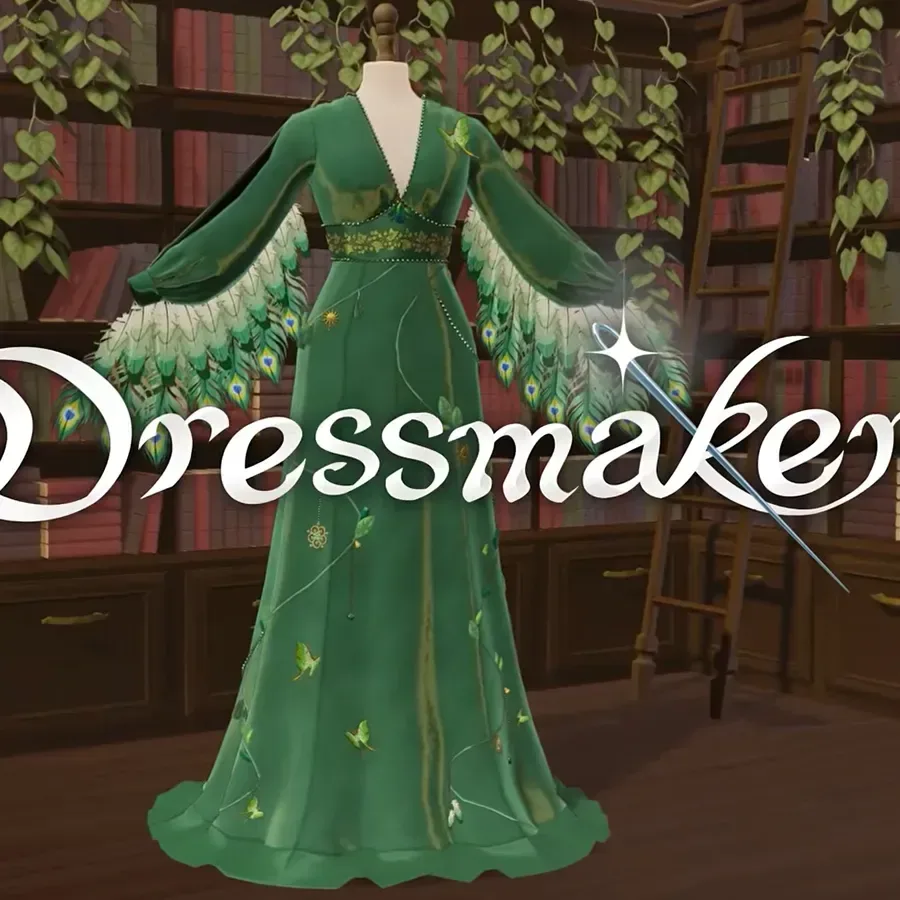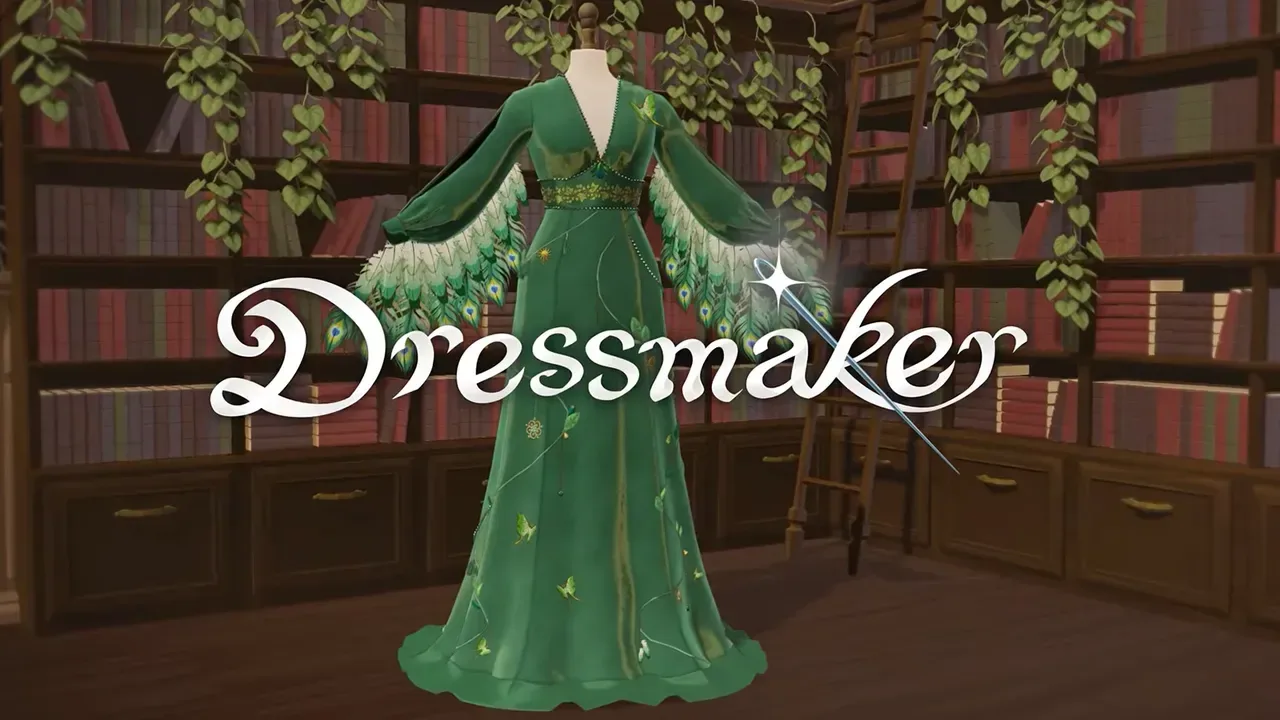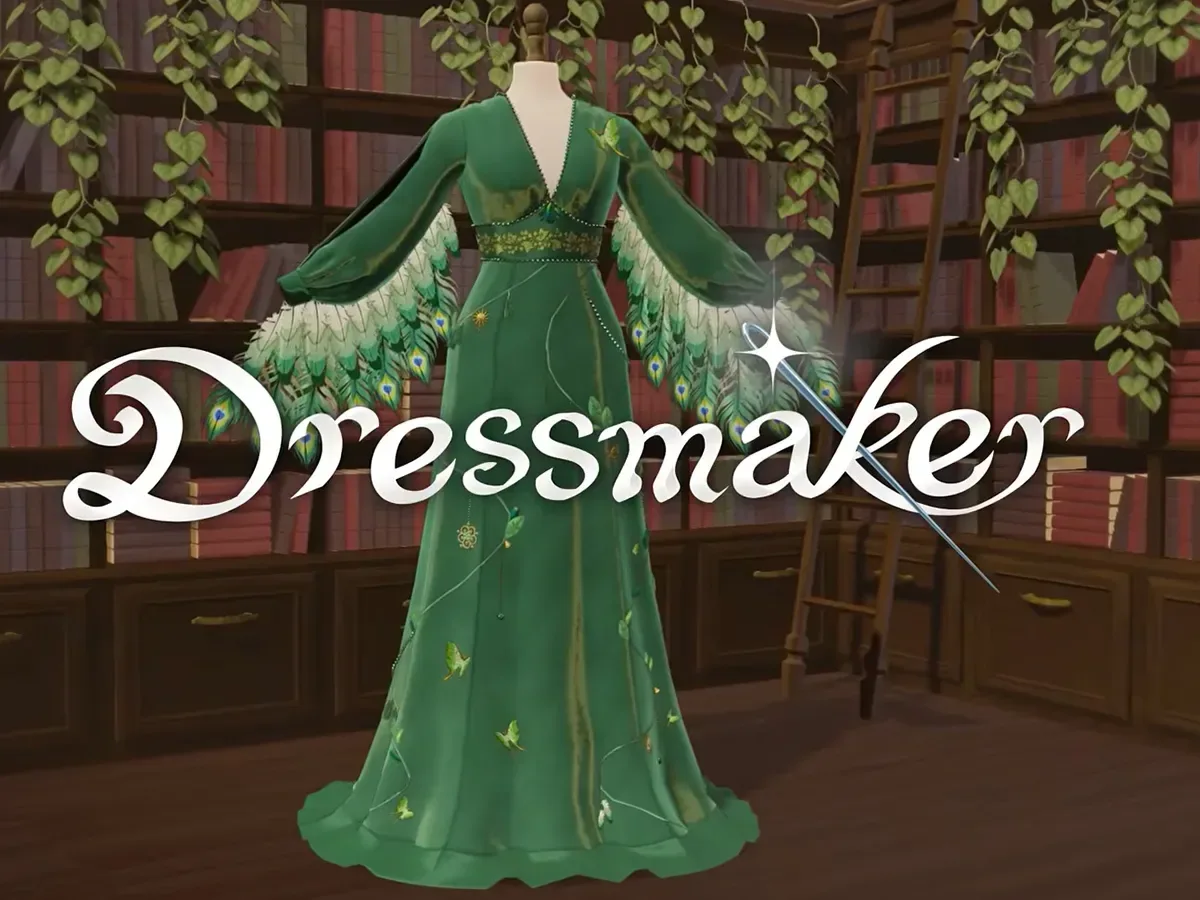
Dressmaker, the boutique-management game about designing and sewing gowns for a fictional town’s clientele, has entered Steam’s Top 10 best sellers shortly after release. As of September 24, it sat at No. 10 on the platform’s chart and carried an Overwhelmingly Positive user rating: 96% of 2,177 submitted reviews were positive.
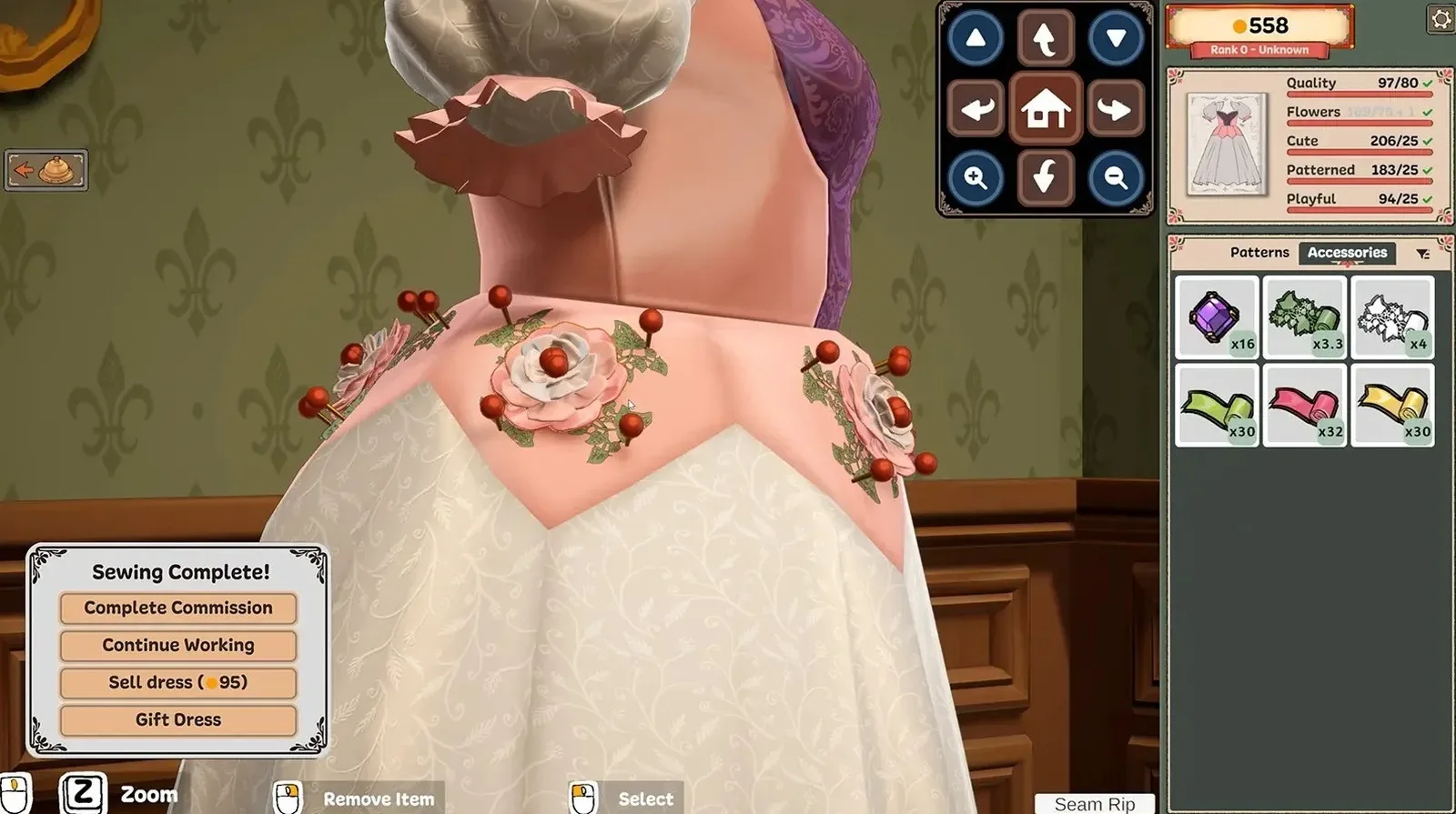
That is a notable result for a game built around a craft that large releases rarely put at centre stage. Dressmaker asks players to operate their own dress boutique, creating garments for customers rather than wielding weapons, racing cars, or grinding through a familiar blockbuster loop. Clips of players assembling ornate dresses by carefully stitching fabric have circulated widely on social media, helping turn its tactile-looking process into a highly shareable hook.
The game’s chart position also put it ahead of major releases including Diablo IV, and it briefly ranked above Marvel Rivals. A Top Sellers chart is a sales-ranking snapshot rather than a verdict on a game’s long-term popularity, but it remains an especially visible marker: it places a smaller, craft-led game alongside the most commercially prominent titles on Steam at that moment.
A boutique sim with a sharp little needle hidden in the pincushion
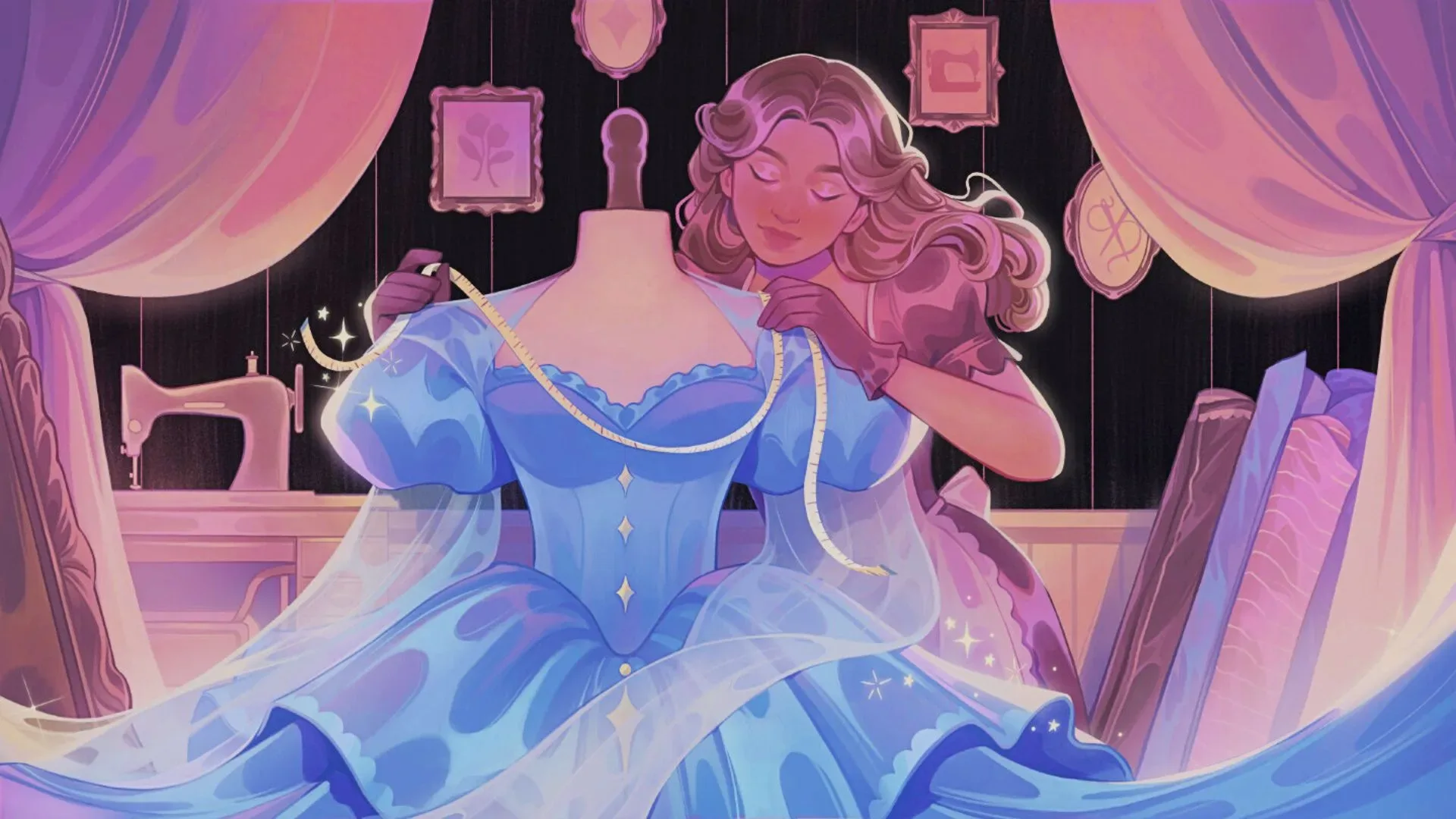
The basic premise is pleasantly specific. Players own and run a dress shop, design dresses, sew them, and serve the people of a fictional town. That focus matters because “dress-up game” can imply that clothing is merely a cosmetic menu. Here, the clothing work is the game’s central activity: fabrics are stitched into elaborate creations for a clientele whose needs shape the boutique’s day-to-day business.
Dressmaker is not confined to pure niceness, either. Players can choose to sabotage customers, adding a more mischievous option to what might otherwise be read solely as a calm creative simulation. The available details do not establish exactly how that system works or what consequences it has, but its presence gives the game a potentially comic edge. It suggests a boutique experience where customer service can be treated as a challenge, a joke, or perhaps an opportunity to make local fashion politics considerably messier.
That contrast is likely part of the appeal. “Cozy” is often used as shorthand for low-pressure games with warm visual or emotional tones. Dressmaker appears to embrace the creative, meticulous side of that label while refusing to make every interaction saccharine. Sewing a beautiful gown and quietly ruining somebody’s day are very different forms of self-expression, but the combination makes for an immediately legible social-media pitch.
Why the response has become a broader industry conversation
The game’s momentum has prompted discussion about audience targeting, particularly the perceived gap between games designed with a clear, specific community in mind and giant productions intended to appeal across as many groups as possible. Several social-media responses celebrated Dressmaker as a game that directly addresses women and creative players rather than treating either group as an afterthought.
Those reactions also pointed to accessibility in the practical hardware sense. One popular observation praised the idea of optimising a whimsical, craft-respecting game to run on the kinds of older laptops and PCs many people still use. The supplied information does not provide Dressmaker’s system requirements, so that claim should be understood as part of the online reaction rather than a confirmed technical specification. Still, it highlights an important distinction often lost in conversations about accessibility: a game can be approachable not only through its controls or theme, but also through the equipment needed to play it.
Related coverage includes Dressmaker Climbs Steam's Top Sellers Chart as Cozy Boutique Sim Finds Its Audience.
Optimisation means making software run efficiently with the hardware resources available to it. In games, that can involve managing processor work, memory use, graphics rendering, loading, and other technical demands. A title that performs well on less powerful machines can reach people who do not own current high-end hardware. It is not a guarantee of quality on its own, but it can materially change who gets to participate in a game’s moment.
The wider point raised by Dressmaker’s success is not that every game should pursue the same aesthetic or audience. A boutique sewing game does not need to displace action games, competitive shooters, or massive role-playing releases to justify its place. Its performance instead illustrates the value of making a game whose identity is easy to understand: its activity, mood, visual interest, and intended audience all read clearly from the premise.
That clarity can be particularly powerful online. A clip of a stitched gown communicates what Dressmaker is about in seconds. It is a compact visual story: fabric, construction, ornamentation, and a finished piece of clothing. Games do not have to be simple to be communicable, but an instantly recognisable action can make it easier for viewers to see why players are excited.
Specificity is not the same thing as small ambition
There is an unhelpful habit of treating “niche” as a synonym for limited. Dressmaker’s current Steam placement offers a useful correction. A game can have an unusually precise premise and still find a large audience; in fact, the precision can be part of its commercial strength. It gives people something concrete to rally around instead of offering a diluted version of several better-known genres.
That does not mean every narrowly targeted project will break through. Steam’s storefront is crowded, and a chart run depends on far more than a strong concept. Visibility, timing, a presentation that viewers want to share, and satisfaction among actual buyers all matter. In Dressmaker’s case, the review snapshot is an encouraging sign: 2,177 reviews is a meaningful pool of player feedback, while the 96% positive share indicates an unusually favourable reception at the time measured.
It is also worth separating the different signals involved. A viral clip can produce attention. A Top Sellers placement reflects sales performance at a particular point. User-review sentiment records how a subset of buyers chose to evaluate the game. They can reinforce each other, but they are not interchangeable. The important takeaway is that Dressmaker has all three working in concert right now: social visibility, chart placement, and strongly positive player feedback.
For players, the practical implication is straightforward. Anyone looking for a PC game where the core loop is fashion design and boutique operation rather than combat may have a new option worth watching. Anyone drawn to cosy games but wary of an entirely frictionless experience may also find the sabotage angle intriguing. Just do not assume that the word “cozy” tells the whole story; Dressmaker’s pitch includes creative handiwork, customer demands, and room for a little well-dressed chaos.
The teams behind the runaway dress shop
Dressmaker was developed by Cozy Lives and published by Free Lives, the Cape Town, South Africa-based independent studio associated with Genital Jousting and Terra Nil. That publishing connection makes the new game’s breadth of tone especially interesting: Free Lives’ catalogue is not defined by one genre or one mood, and Dressmaker continues that willingness to back a distinctive concept instead of chasing a uniform house style.
The present moment also arrives amid broader attention for unusual independent games that travel quickly through social feeds. Stray Dog: nobody cares, a Soulslike about a stray dog trying to rescue its master while carrying a rusty sword in its jaws, has similarly gone viral. The two games are not alike in subject or play style, but their visibility points to the same basic online dynamic: a concise, memorable premise can cut through a crowded release calendar.
Dressmaker’s premise is memorable for a more grounded reason. It takes the work of dressmaking seriously enough to make it interactive, visual, and central to the game, then adds boutique management and a dash of customer sabotage. The Steam chart result does not settle every argument about what games “should” target or how large productions should be made. It does, however, provide a timely reminder that an audience can be substantial without being universal—and that a carefully sewn gown can make plenty of noise.
For a different look at how games are continuing to test new modes and player preferences, see Arc Raiders’ planned PvE-only co-op matchmaking test.