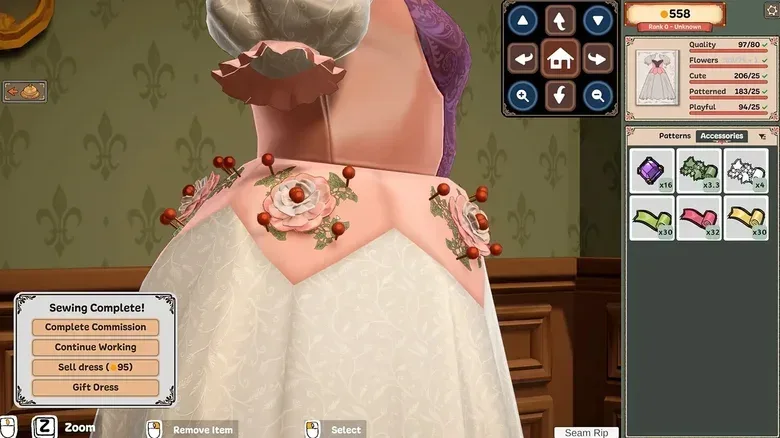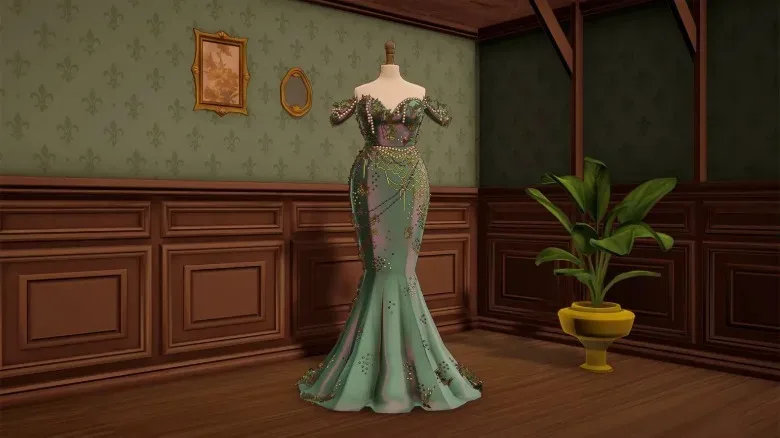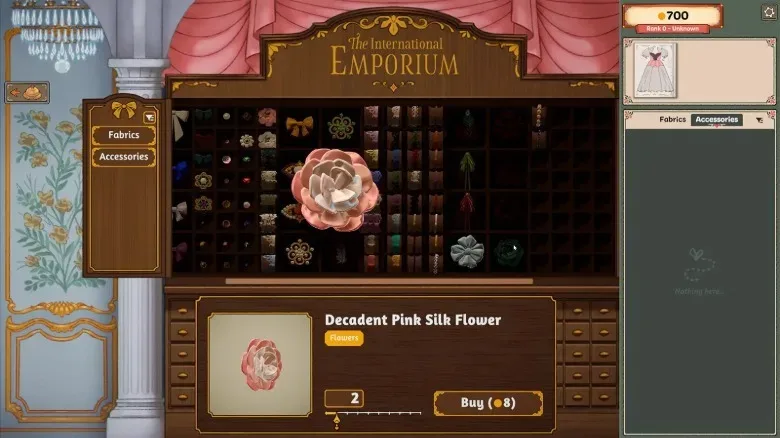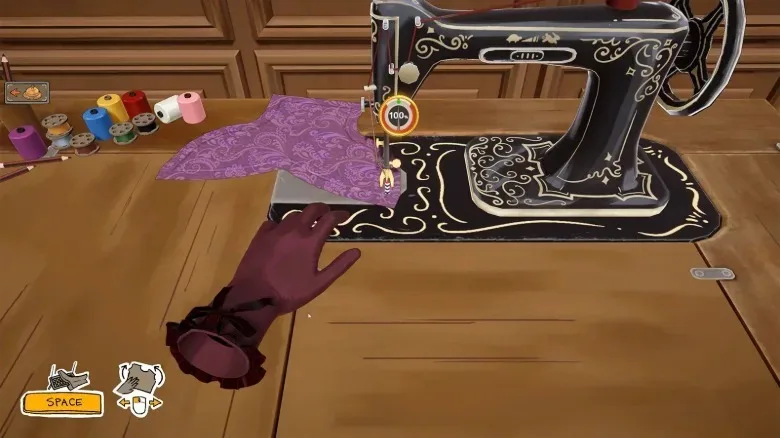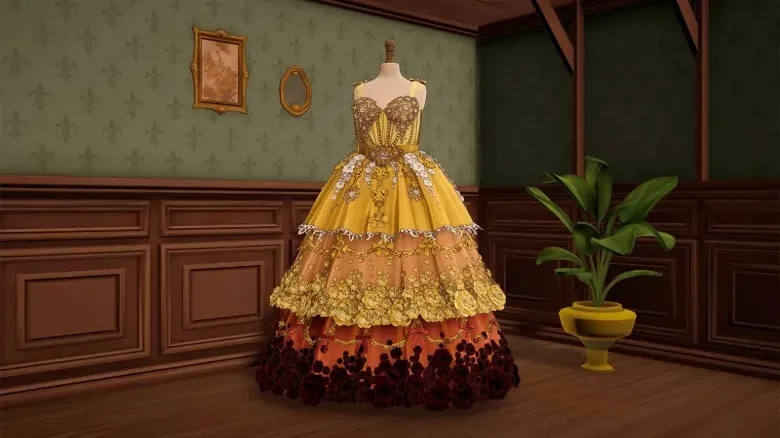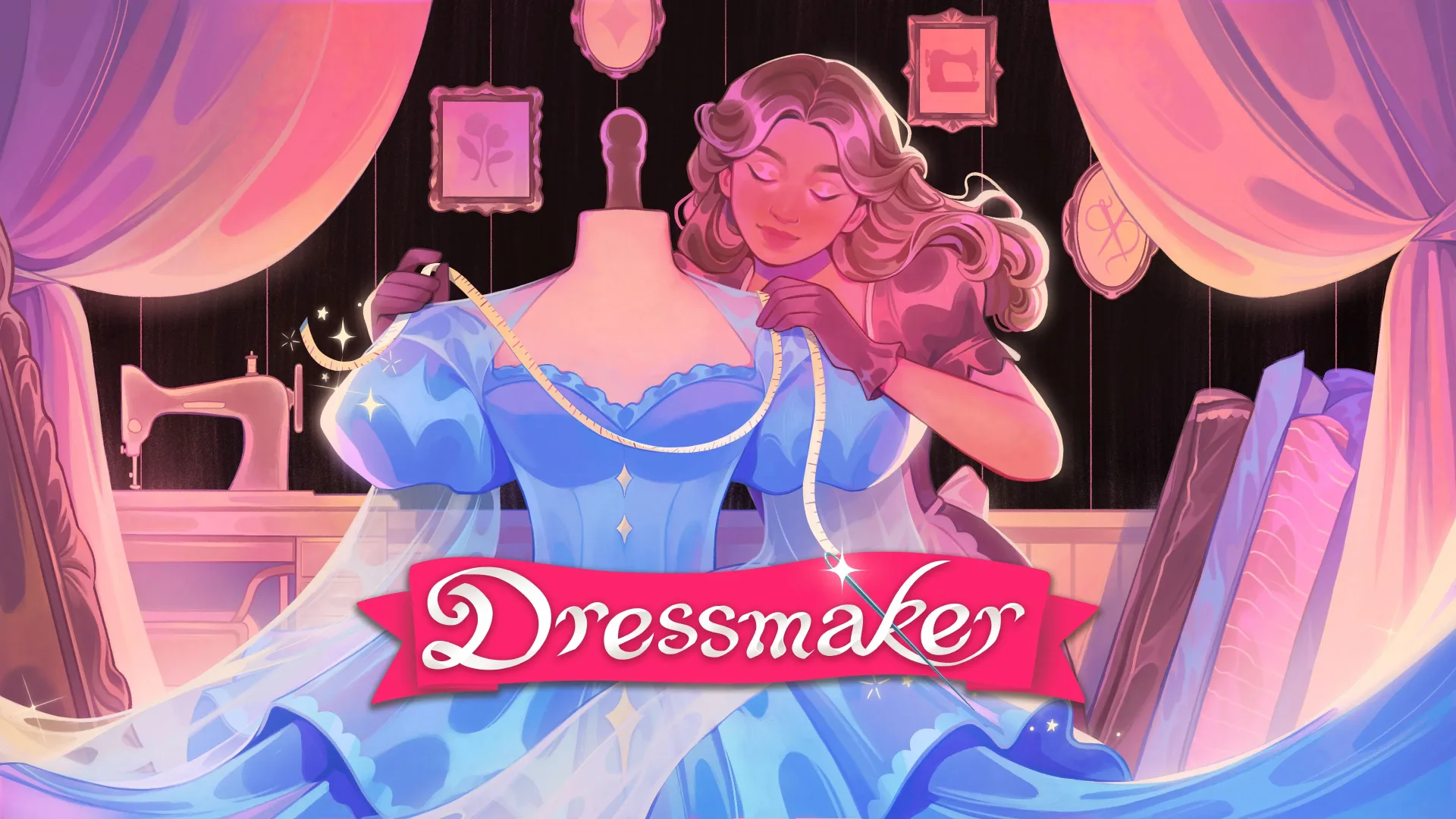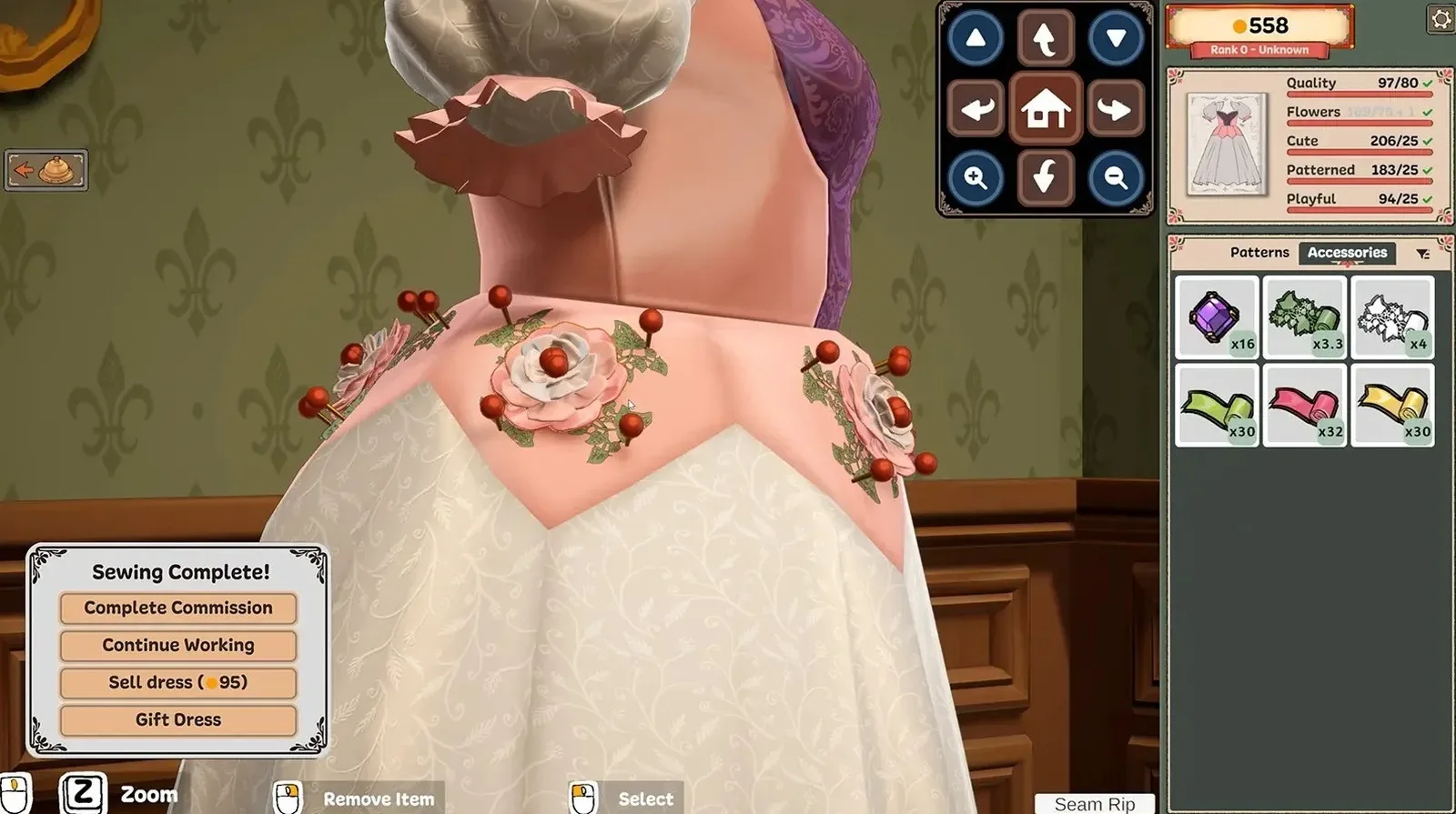
Dressmaker, the sewing and fashion-design simulation from Cozy Lives, has launched on Steam for PC and Mac. The game puts dress construction—not merely picking a completed outfit—at the center of its creative loop. Players design garments, select fabric for individual panels, cut out patterns, sew the pieces together and add finishing touches including trims, buttons and bows.
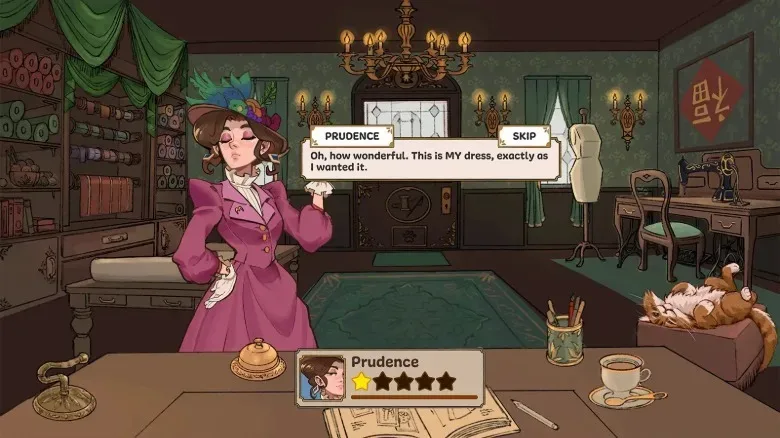
There is also a customer-facing side to the simulation. Players can make commissioned dresses for women in the game’s town, each with their own aesthetic preferences, or produce off-the-rack designs to sell. The premise is notably specific in a genre often grouped under the broad “cozy game” label: the goal is to translate parts of the dressmaking process into an approachable digital creative activity, while retaining meaningful links between flat fabric pieces and a finished garment on a mannequin.
Cozy Lives is a small team operating within Cape Town-based developer Free Lives. The core full-time group consists of Ruan Rothman, Sara Laubscher and Jonathan Hau-Yoon, with sound designer Jason Sutherland also contributing while working across several projects. Dressmaking specialist Sabrina Becker has served as the project’s vision holder, consulting on and assessing design decisions. Writer Kerstin Hall and composer Meydän are among the external contributors, while the wider Free Lives team has supplied art, design, production and community support.
From a small prototype to a full Steam release
The project began as a playable prototype in July 2025. Hau-Yoon initially built a basic version during a break after work on Terra Nil’s arid update. That prototype let users arrange and rotate pattern pieces on fabric, including relative to the grain line, cut them out and place the resulting pieces on a 3D mannequin.
That early work established the essential idea behind Dressmaker: a dress should not be a cosmetic item chosen from a menu, but the consequence of decisions made earlier in the process. Fabric placement matters because it determines what appears on the final 3D garment. Pattern arrangement matters because the game recognizes individual sections rather than treating a dress as one opaque model. The original prototype was shared on itch.io, then Free Lives approved further development in September 2025 after a period of evaluation.
Interest was visible before the full game existed. A social-media video of the early concept received more than 600,000 views across TikTok and Instagram. A more developed playable prototype, made by Hau-Yoon with Rothman and Laubscher over three weeks, reached roughly 30,000 downloads in its first month on itch.io. The team also saw players share their own dress creations and detailed feedback, while some creator videos passed one million views.
Those figures are useful context, but they do not automatically define a game’s eventual commercial outcome. Their more immediate significance is that they gave a small team evidence that the concept connected with an audience. For an independent project, that kind of response can help answer a question that matters before expensive production work begins: is there both interest in the idea and a realistic route to building it at the scale the studio can support?
What Dressmaker means by a sewing simulation
Dressmaker’s depth comes from maintaining a relationship between 2D pattern pieces and a 3D dress. A pattern piece is a flat fabric shape that becomes part of a garment when cut, stitched and assembled. In the game, the 2D version is used during fabric cutting, while the 3D version lives on the mannequin. The placement of a pattern on a fabric surface is intended to be reflected directly on the finished dress.
Related coverage includes Dressmaker Brings Detailed Sewing and Design to Steam.
That is a more complex promise than simply applying a texture to a 3D model. The team compares the task to UV unwrapping, a process in 3D graphics that lays a three-dimensional surface flat so artists can place images or materials upon it. In a typical graphics workflow, the main priorities are often reducing visible distortion and using texture space efficiently. Dressmaker has a different constraint: its flattened pieces also need to look plausibly like patterns a dressmaker might work with.
Laubscher has manually unwrapped garments to make that connection work. The game’s meshes—the geometric structures that define a 3D object—also have to be precise enough for the simulation to identify seams between panels, seam allowance and markings for seam allowance and grain alignment.
A few key terms behind the interface
- Grain line: the orientation of a pattern piece relative to the fabric’s grain. Dressmaker lets players rotate a piece to the grain line, or disregard it if material is limited.
- Seam allowance: extra fabric around the edge of a pattern piece, beyond the eventual stitch line. It gives the garment material that can be sewn together at its seams.
- UV unwrapping: a 3D-art technique that maps a three-dimensional surface into a flat layout so its textures can be placed accurately.
- Mesh: the collection of geometric surfaces that forms a 3D object, here including the dress and the mannequin it is displayed on.
In practical player terms, these systems are meant to make construction choices legible. A fabric is not only a color selected at the end; it is assigned to specific panels. A trim or bow is not the entire design process; it is a finish applied after the garment has been constructed. The appeal for players may be the ability to make expressive outfits without buying equipment, sourcing material or laying fabric out in a physical workspace.
Fit is treated as part of the design
Dressmaker also incorporates customer measurements and adjustable mannequins. Players take measurements for customers, then alter the mannequin and dress to match. The game does not present standardized sizing as a reliable universal system, instead building fit around the particular customer.
Technically, resizing creates another problem beyond changing the mannequin’s shape. The developers use a lattice to change the mannequin and dress sizes. A lattice is a deformable structure used in 3D work to alter an object’s form. If the team simply resized the 3D dress without changing the corresponding 2D pattern pieces, fabrics could look stretched. The 2D patterns therefore need to adapt alongside the resized dress to minimize stretching.
Some constructions remain difficult. Gathered edges, for example, complicate the attempt to keep the flat pattern and finished garment visually consistent. Rather than claim a perfect physical recreation, the developers describe an effort to handle those cases as effectively as possible. That caveat is important: Dressmaker is a simulation inspired by real garment construction, not a replacement for formal dressmaking instruction or physical fitting.
Still, putting measurements, pattern layouts, sewing and finishing in one loop gives the game a practical identity. It suggests the commissions will involve more than finding a dress that happens to match a customer’s taste. Fit, fabrics, panels and decorative decisions can all be part of the job. Off-the-rack sales, meanwhile, offer a separate use for designs made outside a specific commission.
The people and perspective behind the project
Dressmaker grew out of Hau-Yoon’s familiarity with Becker’s work and enthusiasm for clothing design. Becker previously worked in professional costume design before Ehlers-Danlos syndrome, a chronic illness, required a change in direction. Her knowledge of costume choices, historical accuracy, adaptations for fictional settings, mending and customization helped shape the project’s perspective on clothes as crafted objects rather than disposable visual assets.
Becker has described working around changing limitations, recognizing flare-ups and allowing recovery time when needed. That has meant accepting a slower pace and relying on a supportive team able to help when work needs to be redistributed. The development story is therefore not just one of a fashion theme being adapted into a game; it is also one of specialist knowledge being brought into game design through a collaboration structured around accessibility and support.
The game’s origins also reflect concerns raised around fast fashion, synthetic fibers and the declining familiarity with repair and customization skills. Dressmaker does not claim to solve those issues. Its contribution is narrower: it gives players a space to explore elements of custom clothing design virtually, without the cost, equipment and physical space that real-world sewing demands.
Why the small-team process matters
Free Lives is known for games including Broforce, GORN and Terra Nil, but the Dressmaker team describes a deliberately cautious approach to selecting projects. For a smaller developer, the critical task is not only inventing an appealing concept. It is finding one that can be scoped—defined in terms of features, time and resources—well enough to be completed by the available team and budget. A project that exceeds those limits can put a studio at risk.
That is why the Dressmaker path moved through multiple tests: an initial prototype, a social-media demonstration, an itch.io build and audience feedback before full production. The approach does not guarantee success, but it gives a team signals about both feasibility and player appetite before a larger commitment is made.
The studio has also invested in the South African development community through the Playtopia Foundation, Super Friendship Arcade and Maker’s Massive. It says it has spent R3 million on the Jam Dole, a stipend intended to give young South African developers time to prototype without giving up income or intellectual property. Projects including Get Yoked, Detective Turner, Feather’s Edge and Fossil Quest have come through that program in the past two years.
For players, that infrastructure is largely invisible once a game reaches Steam. Yet it helps explain how a very specific concept such as a technical dressmaking simulation can move beyond an experiment. Dressmaker’s launch arrives in a busy PC market, but its focus is clear: make a garment piece by piece, see the choices carry through to the mannequin, and turn those results into custom commissions or shop-ready designs. Readers looking for another newly released Steam project can also see how Mad Metal approached its PC launch with a very different kind of construction and destruction.