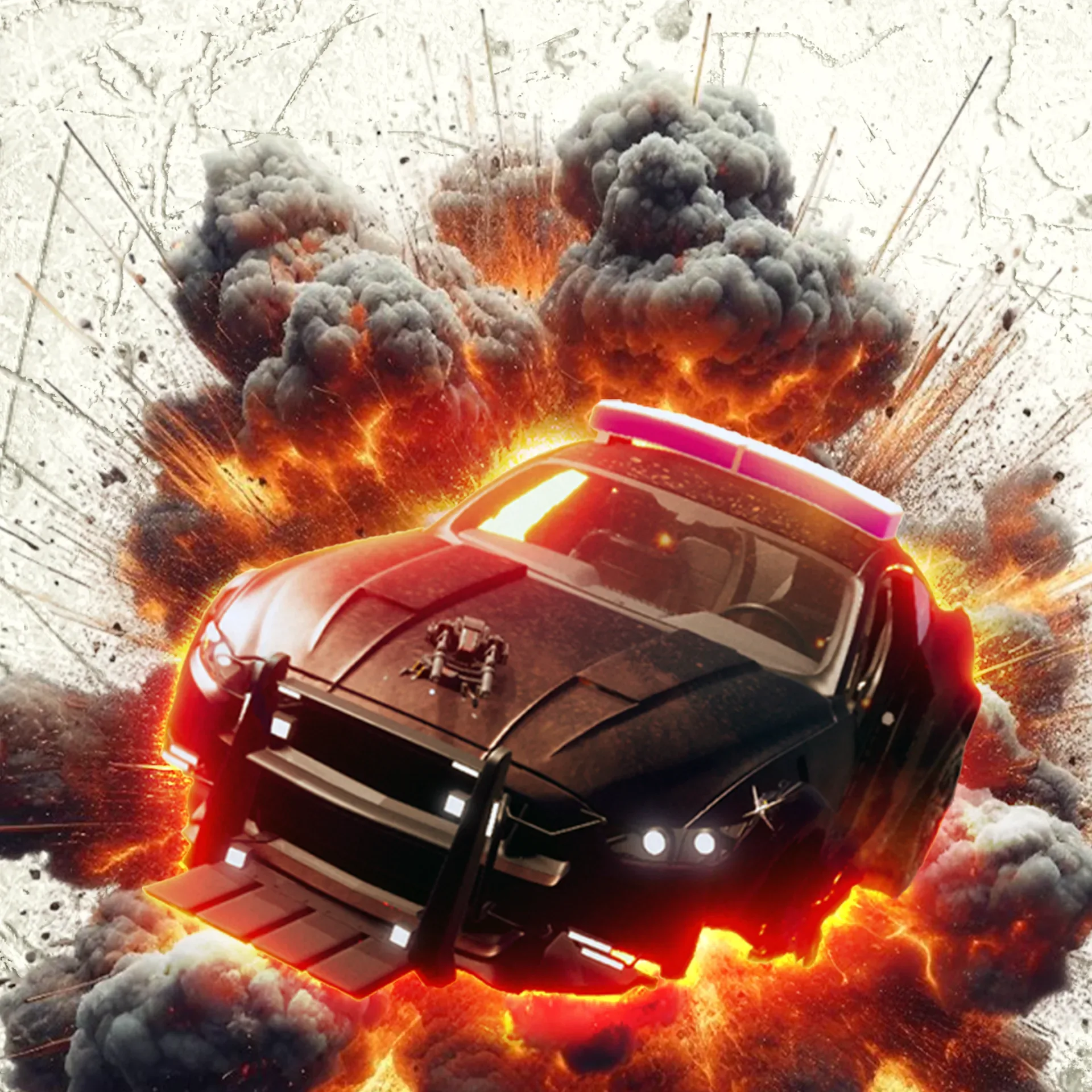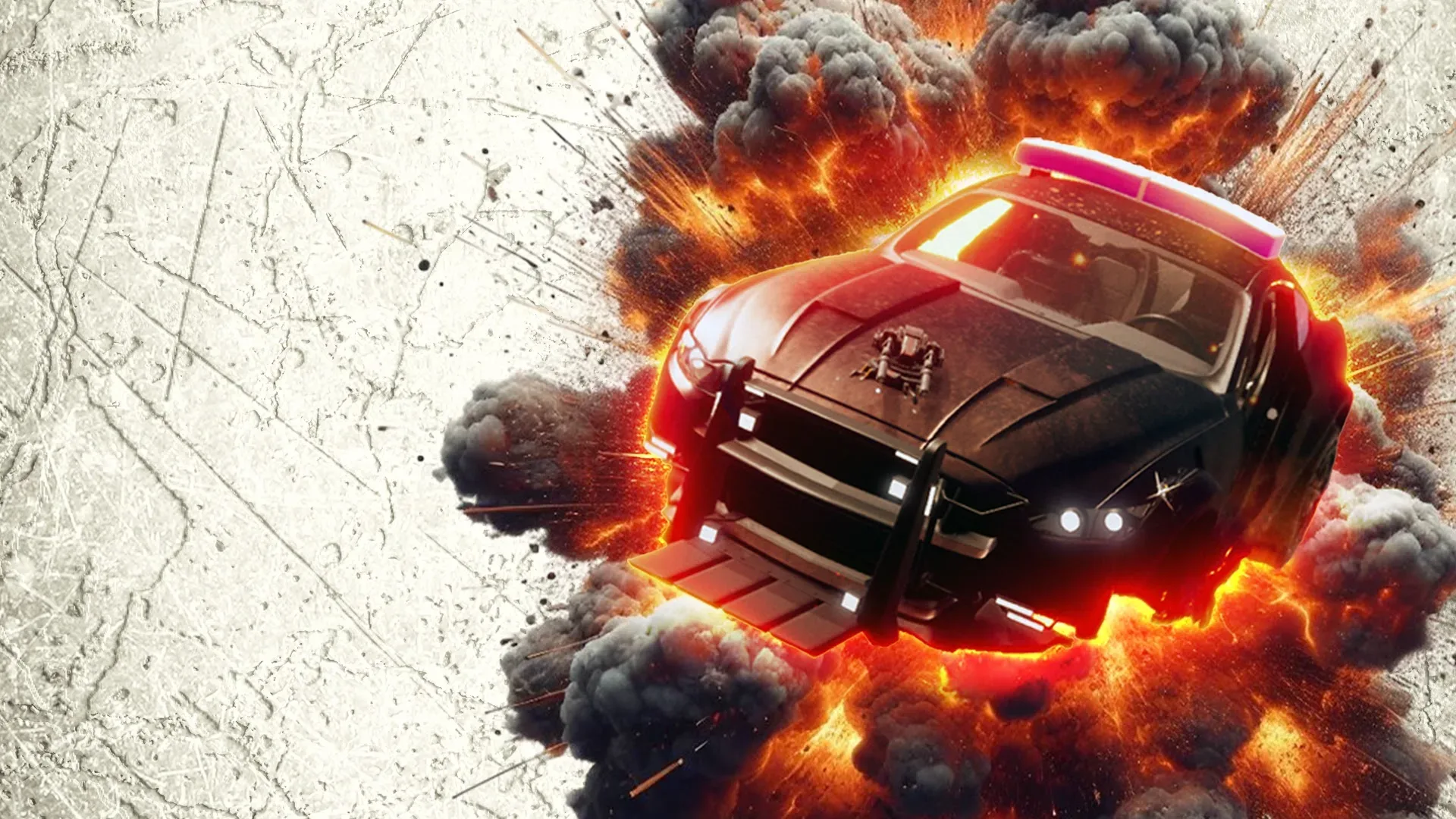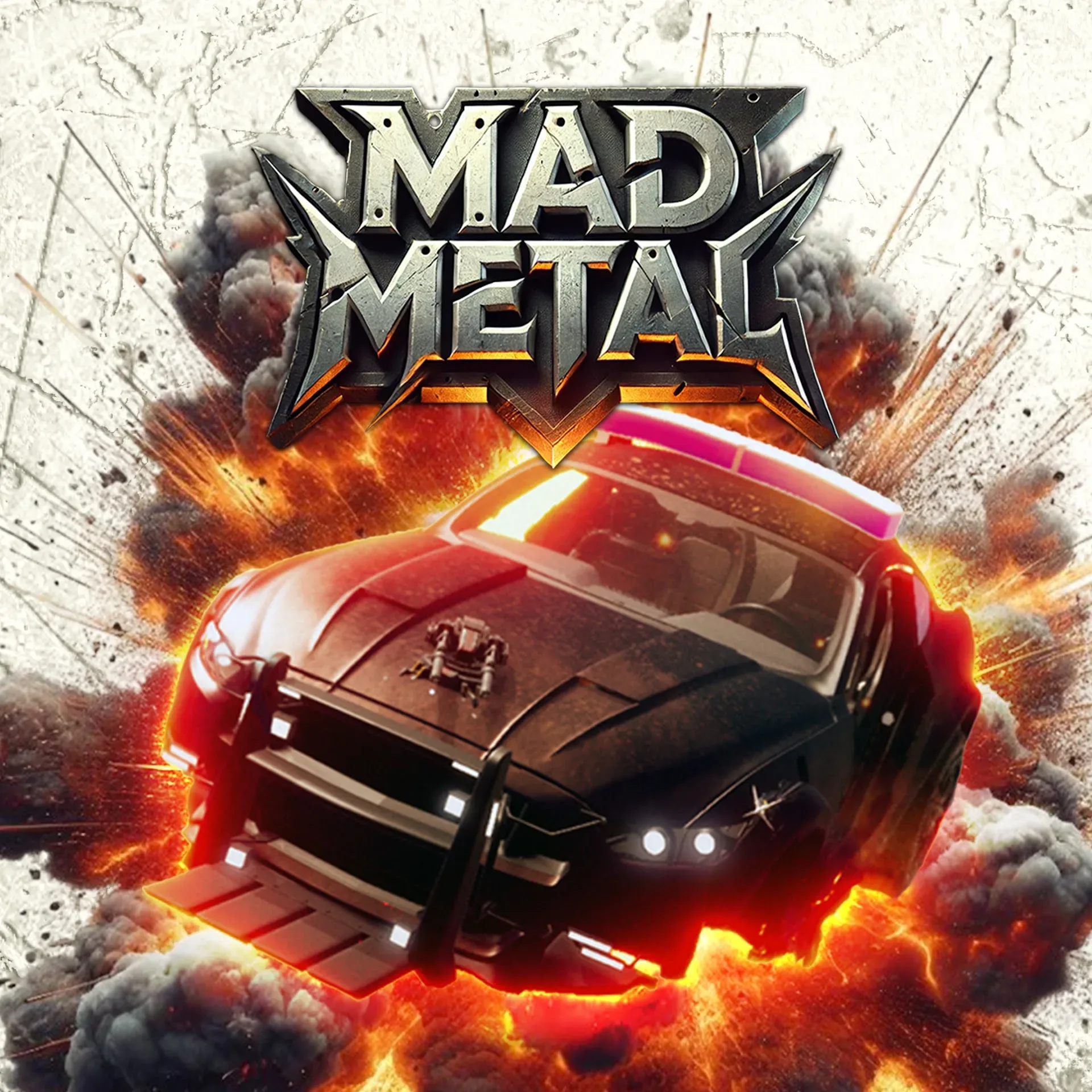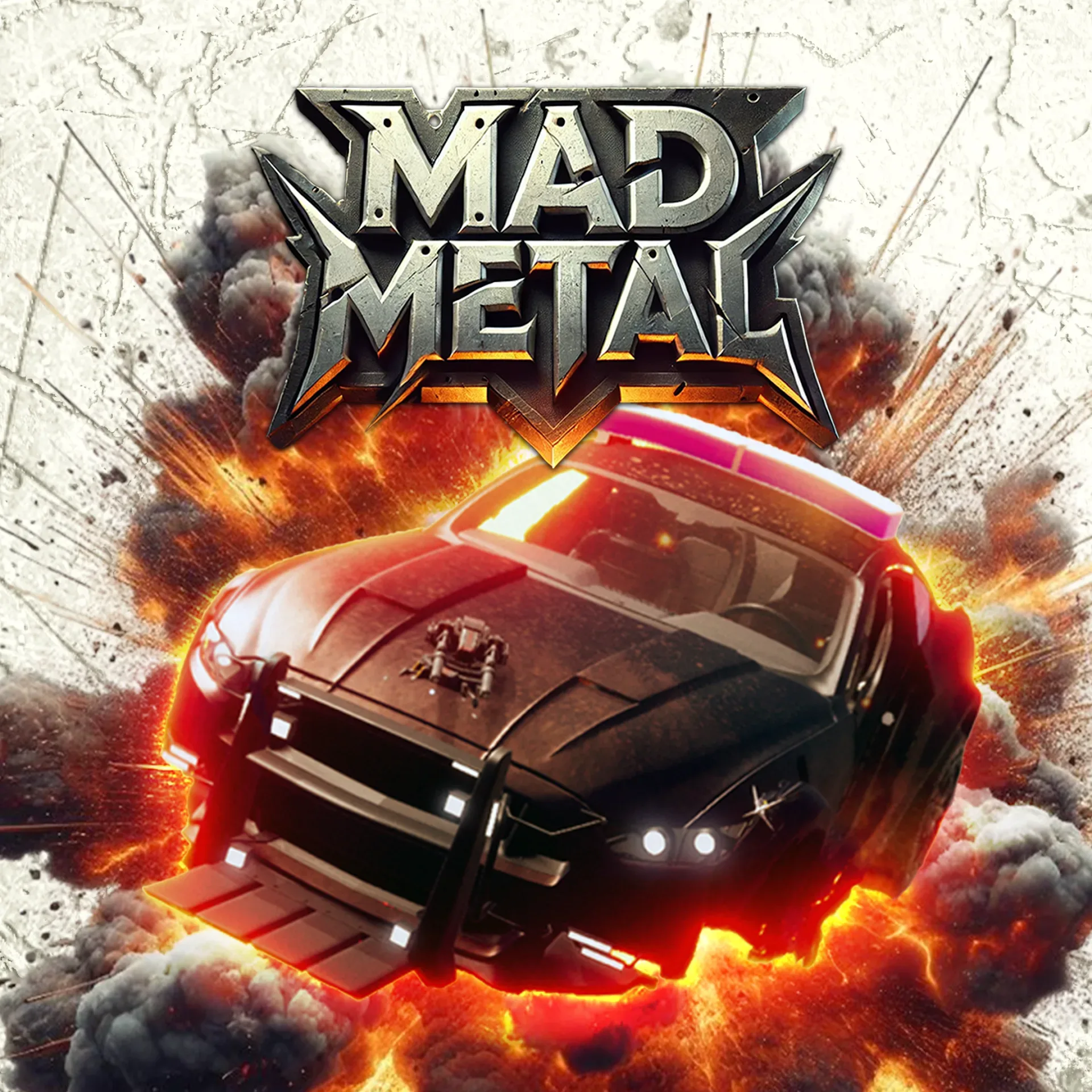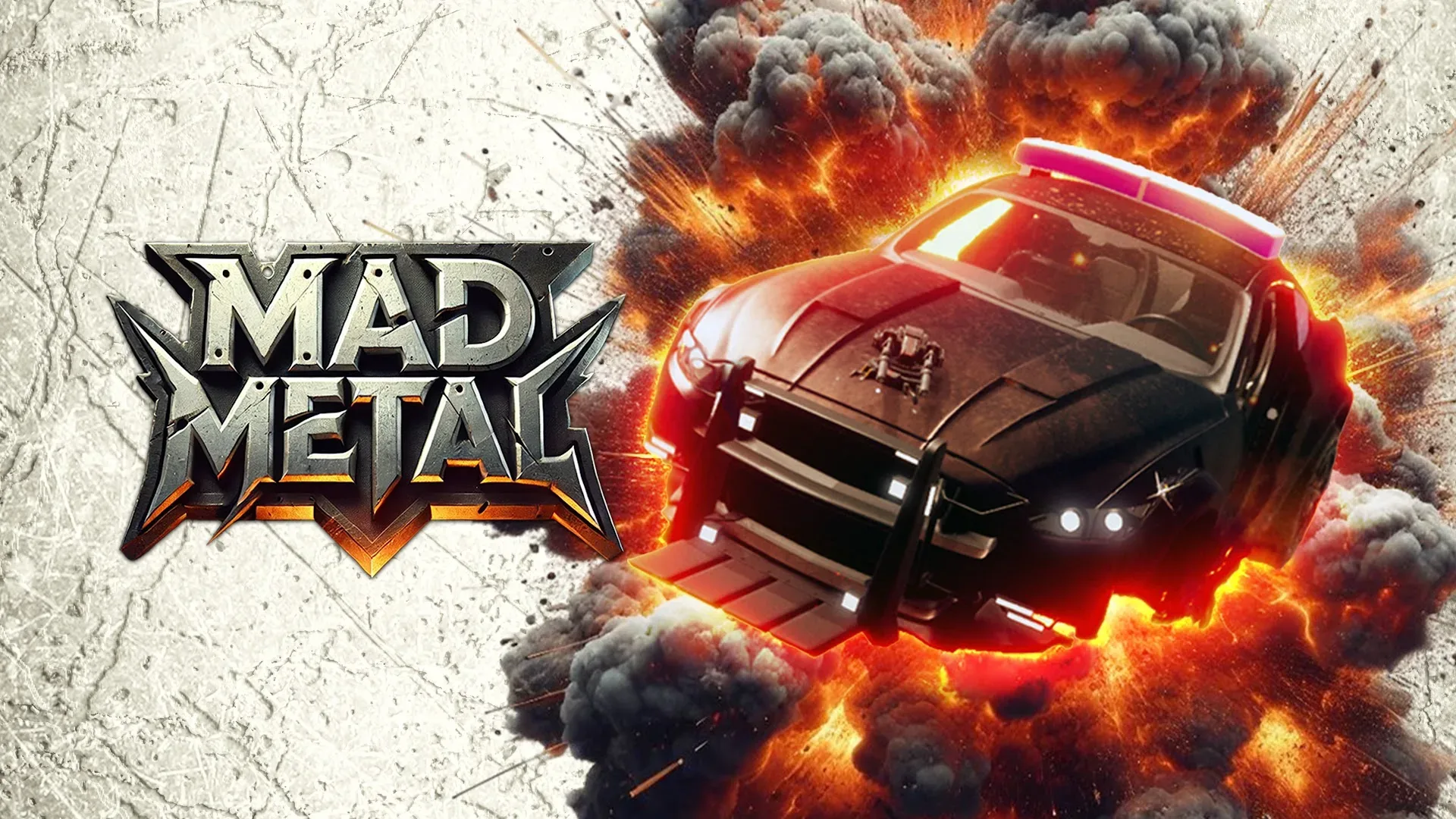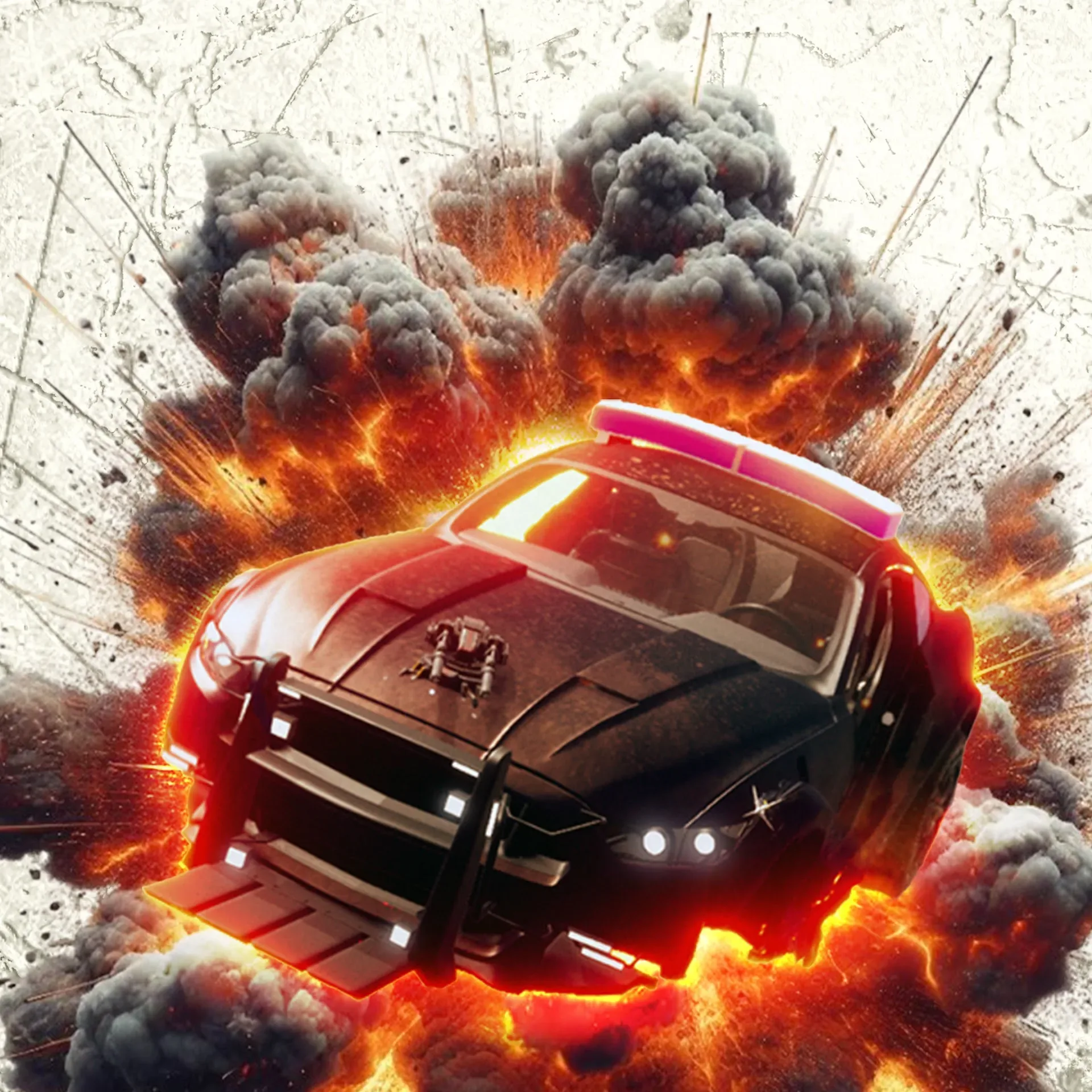
Mad Metal, the vehicle-combat shooter from Mad Mechs, is now available on Steam. Led by indie developer Hakim Elayday, the game centers on a combat idea that is more specific than simply winning a road battle: slow down the action, identify the part of an enemy vehicle causing the biggest immediate problem, and shoot that part off.
That system is called Dead Aim. It slows time during a chase so players can target individual components, including wheels, doors and fuel tanks. The premise is pleasingly direct: when another car is bearing down on you, the question is not only whether you can destroy it, but what needs to disappear first.
Mad Metal has launched at $14.99, with a 20% launch discount. It supports full gamepad controls and is playable on Steam Deck.
Dead Aim turns vehicle combat into target selection
Dead Aim is the defining mechanical hook. In ordinary real-time vehicle combat, driving, aiming, avoiding hazards and responding to incoming attacks all compete for attention at once. Slowing time creates a brief planning window. It lets a player stop treating an opposing vehicle as one large health bar and instead assess a set of meaningful parts.
The available examples explain the tactical logic. Removing a wheel could affect an enemy’s mobility. Targeting a fuel tank suggests a potentially high-value weak point. Shooting doors may change the state of a vehicle in a different way. Mad Metal’s enemies are assembled around the same basic ideas as the player’s own car, with wheels, tanks and drivers, so the game frames component damage as a shared rule rather than a special vulnerability reserved for opponents.
That symmetry matters. A system is easier to read when players understand that the parts on an enemy machine serve comparable roles to the parts they have chosen for themselves. It also gives the game a clear decision-making rhythm: use Dead Aim to find the most urgent component, make the shot, then deal with the consequences before the next vehicle closes in.
Analysis: the appeal here is not merely the spectacle of flying car parts. Component-based damage can make each threat feel situational. A vehicle that is still present but has lost a crucial component may demand a different response than one that has been eliminated outright. Whether that produces consistently satisfying encounters will depend on how clearly the game communicates damage and how varied those decisions remain across its modes, details that will emerge as players spend time with the release.
Three multiplayer formats, from survival to player invasions
Mad Metal arrives with three stated multiplayer structures. Extraction is a two-player mode built around escalating waves of enemies. The run culminates in a boss fight and an airlift, giving the mode a defined survival-and-escape structure rather than an endless score chase.
Related coverage includes Mad Metal Launches on Steam With Tactical Vehicle Combat.
In practical terms, “escalating waves” means the pressure is intended to increase as a match goes on. The airlift establishes a finish line: players must get through the boss encounter and reach extraction. That can make co-op coordination especially important, since both players are trying to preserve their vehicles through mounting danger rather than simply win a single isolated duel.
The game also includes open-world invasion. A player can enter another player’s game, then choose to arrive as either a friend or a foe. The key element is uncertainty. An incoming player is not automatically an ally or a guaranteed opponent, and that ambiguity can change how the host approaches the encounter.
Finally, Mad Metal offers 1v1 deathmatch for players looking for a more direct competitive contest. Ranked and unranked matchmaking use MMR, shorthand for matchmaking rating. MMR is a system used to group players of broadly similar skill. Ranked matchmaking generally places greater emphasis on the competitive ladder, while unranked play offers a less formal route into matches; both are described as matching people against similarly skilled opponents.
For people primarily interested in the game’s tactical targeting system, the modes provide different contexts for it. Extraction should make decisions about damage, survivability and cooperation central. Invasion puts social uncertainty into an open-world setting. Deathmatch strips the proposition down to player-versus-player combat. The common thread is that combat is designed around dismantling vehicles component by component rather than only reducing an opponent to zero.
An eight-mission campaign follows Jack
Alongside multiplayer, Mad Metal contains an eight-mission campaign with voiced narration. It follows a character named Jack in an America where machines abduct and convert people instead of killing them. Jack’s wife has disappeared, while his daughter remains somewhere out there.
The setup gives the campaign a personal stake within its machine-driven setting. The story is said to grow darker as Jack progresses, but the launch details do not spell out how the plot resolves, what the conversion process entails, or whether campaign missions introduce systems not used in the game’s other modes. Those are intentionally questions for the game itself rather than facts to assume from its premise.
What is clear is that the campaign is not presented merely as a string of disconnected races or arena matches. It has a named protagonist, narrated missions and a premise built around loss, search and an escalating threat. Players who prefer a structured solo path therefore have something distinct from the game’s competitive and cooperative offerings.
Nine base vehicles and more than 80 attachments
Mad Metal’s customization begins with nine base vehicles and expands through more than 80 attachments. The game includes a full Create Your Own Car builder, while progression also involves mid-run augments.
An attachment is a part added to a vehicle build; an augment is a temporary or run-specific modifier that can alter how that build performs while playing. Mad Metal describes its mid-run augments as capable of taking a vehicle in unexpected directions. The important distinction is between planning a car before action begins and adapting it while a run is already underway.
That structure has practical implications for players. The vehicle builder offers room to establish a preferred approach, while mid-run changes ask for flexibility. A plan that looks strong at the start may be altered by the augments that become available. Since enemy vehicles likewise consist of discrete elements, build choices and targeting choices are naturally connected: how a player equips a car influences what it can do, while Dead Aim determines which part of an opponent gets disrupted first.
There is no need to oversell the breadth of the builder beyond what is known. Nine foundations and 80-plus attachments establish a substantial set of stated options, but individual attachment functions, balance and unlocked progression paths have not been detailed here. Prospective players should treat the numbers as the scale of the announced customization pool, not as a guarantee that every combination will support a completely different playstyle.
Steam Deck support and a collaborative soundtrack
Mad Metal supports Steam Deck play with full gamepad controls. For PC players weighing where and how they want to play, that means the game is explicitly positioned for controller use as well as a desktop Steam setup. Those assembling or refreshing a PC desk setup may also find our look at the Logitech G502 X Plus and what its deal means for PC players useful, although Mad Metal’s stated Steam Deck and gamepad support makes a controller-focused setup especially relevant here.
The soundtrack was produced with Scarlet Moon’s Jayson Napolitano. Singer-songwriter Stefani Keogh appears alongside musicians Frank van ’t Ende and Idem Grey. The credited collaborators give the game a defined musical team, though no track list or further soundtrack-release details have been specified.
What players can take from the launch details
Mad Metal’s pitch is unusually focused for a vehicle shooter. Its headline concept is not just speed, weapons or car customization in isolation. It is the ability to pause the rush of combat long enough to choose whether a wheel, a fuel tank, a door or another essential element is the right target.
That concept is supported by a campaign, two-player Extraction, open-world invasions, 1v1 deathmatch, skill-based matchmaking and a customization system spanning nine base vehicles and more than 80 attachments. Players interested in solo narrative can follow Jack’s eight missions; co-op players can tackle wave-based extraction; and competitive players have ranked and unranked routes into matches.
Mad Metal is available now on Steam for $14.99, with its listed 20% launch discount.