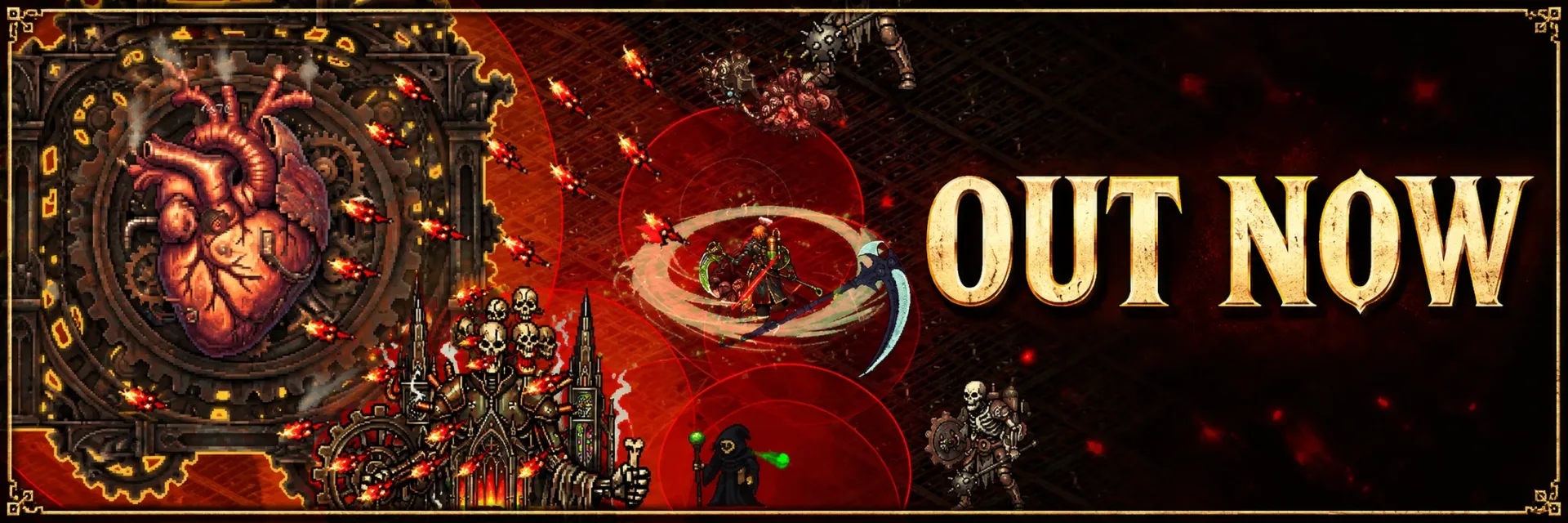
CODEX MORTIS reaches version 1.0 on September 24, 2026, bringing its Early Access run to an end with a major expansion of both its multiplayer options and its dark-magic buildcraft. The isometric survivors-like deckbuilder from GROLAF, published by CRUNCHFEST, is set to launch its full version on Steam for Windows, native Linux and Steam Deck at $3.99.
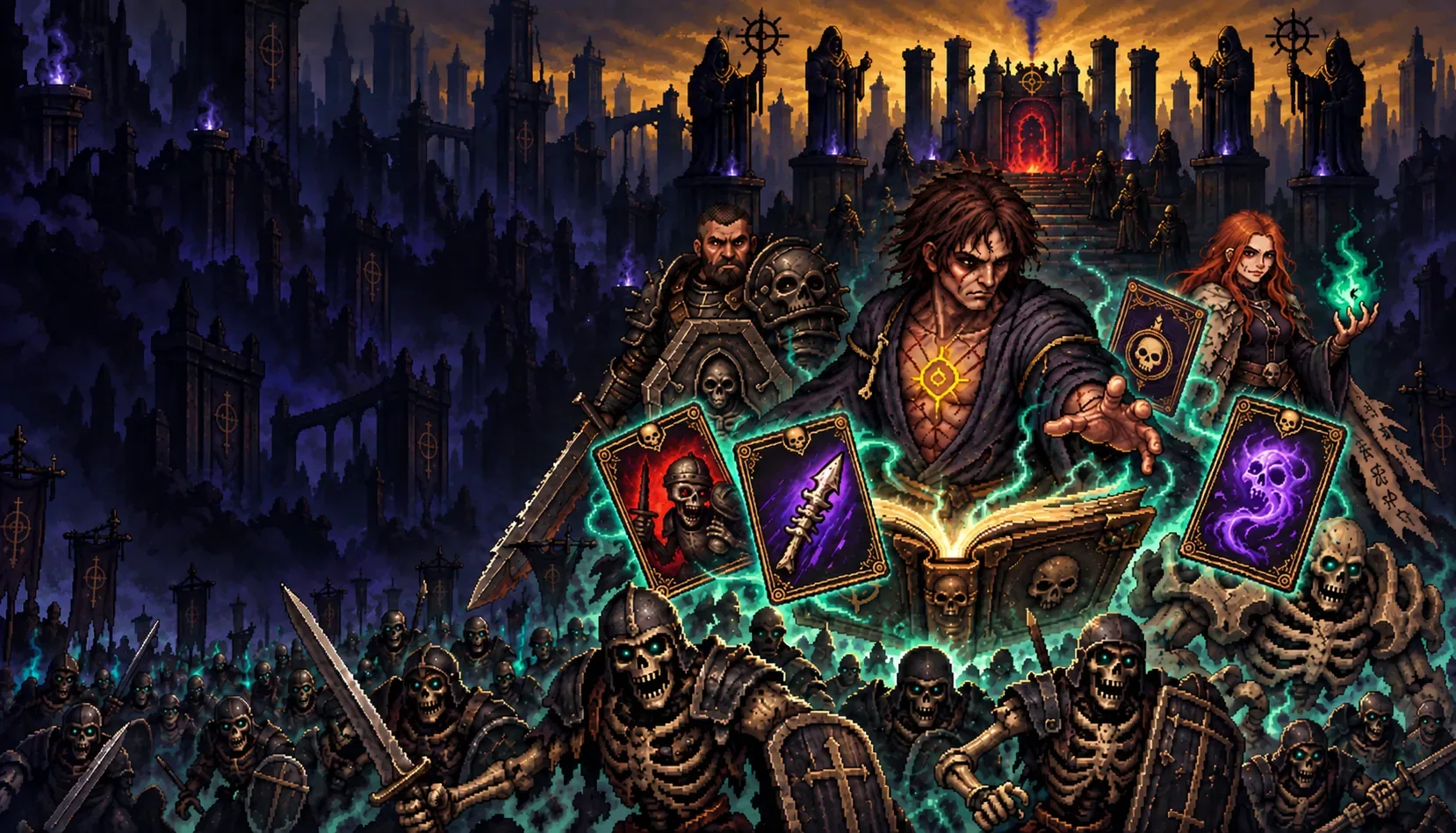
The headline addition is online co-op for two to four players. But this is not simply a case of putting several necromancers in the same room and hoping nobody accidentally summons a customer-service queue. Version 1.0 also grows the game to 200 spells, 10 schools of dark magic and 31 playable heroes, while adding four Apocrypha levels, platform support features and a revised foundation for each run.
For a game built around combinations, that broader roster matters. The new content increases the number of possible links between a chosen hero, the spells in a deck and the mutations produced when magical schools overlap. The result is a fuller launch package focused less on a single prescribed build and more on making the player’s chosen pile of forbidden nonsense work under pressure.
Online co-op arrives without replacing local play
CODEX MORTIS supports online sessions hosted or joined through Steam. Players can browse friends’ games, share a code or use a password to lock a lobby. Importantly for roguelite runs that can collapse because real life briefly demanded attention, the update includes mid-run rejoining for a disconnected player.
Local co-op remains in place, so version 1.0 offers solo play, local multiplayer and online multiplayer across its modes. Story, Survivor and Apocrypha can all be played alone or with groups of two to four players.
What does “survivors-like” mean here? It describes an action format centered on surviving escalating enemy pressure while accumulating powers during a run. CODEX MORTIS combines that structure with bullet-hell elements—meaning players must navigate dense patterns of incoming attacks—and deckbuilding, where the cards selected before and during a run shape the abilities available. Co-op adds a practical new dimension to that formula: teams can bring different magical specialties and pursue combinations across several characters rather than relying on one all-purpose build.
The supplied details do not specify exactly how enemy scaling, rewards or spell selection change with player count. Still, the ability to form a group around distinct schools makes the new online option especially relevant to the game’s stated focus on inter-school synergies.
Five new schools bring the total to 10
The full release doubles CODEX MORTIS’ schools of dark magic from five to 10 and expands the overall spell selection to 200. Its five newly introduced schools have clear thematic identities:
- Harvest: scythe-focused magic concerned with culling the living.
- Death Knight: close-range swordplay, heavy cleaves, blades falling from above, spectral armor and war cries.
- Spiritism: forbidden rites alongside spirit turrets and sacrificial urns.
- Desolation: sand shades and harmful zones that punish living enemies.
- Apothecary: dark alchemy built around elixirs and blight.
Every school can combine with every other school, creating additional synergies and mutations. In this context, a synergy is an interaction where abilities or effects complement one another in a way that is more useful than treating them as isolated tools. A mutation refers to a changed or enhanced expression of an ability resulting from those combinations. The release information establishes the breadth of that system but does not enumerate individual mutation outcomes.
That distinction is worth making because a large spell number alone says relatively little. Two hundred isolated effects can make a game feel crowded; two hundred spells designed to cross-pollinate can make repeat runs meaningfully different. CODEX MORTIS is explicitly pitching the latter, with the schools acting as the connective tissue between individual cards and a hero’s intended role.
The five new schools also suggest different tactical approaches without forcing all builds into the same range. Death Knight centers on direct melee pressure, for example, while Spiritism’s turrets indicate a more placed or persistent source of damage. Desolation’s damaging zones imply space control, and Apothecary’s elixirs and blight point toward alchemical effects. Harvest meanwhile supplies an identity grounded in scythe attacks. Those are thematic and mechanical directions described for the schools, not guarantees that any one is stronger than another.
Twenty new necromancers join the roster
Version 1.0 adds 20 necromancers, bringing the playable roster to 31 heroes. Many of the newcomers are designed around two or three schools, giving character selection a direct relationship to the expanded magic system.
Two examples outline how that can work. Ravena Bloodscythe combines Blood Magic and Harvest. Seraphon Wraithblade uses Harvest, Death Knight and Soul Magic. The latter is particularly illustrative of the three-school approach: a hero can begin with a defined identity while retaining room for deck choices that stress one discipline, bridge several disciplines or seek unusual mutations from their overlap.
For new players, a hero constructed around a small number of schools may provide a clearer first direction than immediately trying to parse the entire 10-school catalog. For returning players, the larger roster creates more starting points for experimentation. Neither approach requires a claim that there is a single correct deck; the game’s update instead frames cross-school interaction as a central reason to keep testing combinations.
Four Apocrypha levels, including a 600,000-HP boss
The update adds four Apocrypha levels: The Garden of Returned Flesh, The Golden Rot, The First Mercy and The Road to Blood Bath. Each of the four can also be played in Survivor mode.
The Road to Blood Bath is the one with the numerical warning label. It culminates in a three-phase boss carrying 600,000 HP. HP, or hit points, is the amount of damage an enemy can sustain before defeat. A multi-phase boss is one that changes or progresses through several stages during the fight, rather than presenting only one uninterrupted encounter. The available information does not detail the boss’s attacks or phase transitions, so prospective players should not read the health figure as a full difficulty forecast. It does, however, signal that the level is intended to end on a substantial endurance test.
Making these locations available in Survivor mode is a useful structural detail. It means the new spaces are not limited to a single specialized mode, letting players revisit their themes and encounter environments within another established way to play.
A rebuilt run structure sits underneath the 1.0 update
The launch follows a final Early Access overhaul that made CODEX MORTIS fully isometric and standardized the beginning of every run around a player-built deck. “Isometric” describes the elevated, angled game view used to display the action and surrounding arena. In practical terms, it is a presentation change tied to how players read enemy movement, attack effects and available space during a chaotic fight.
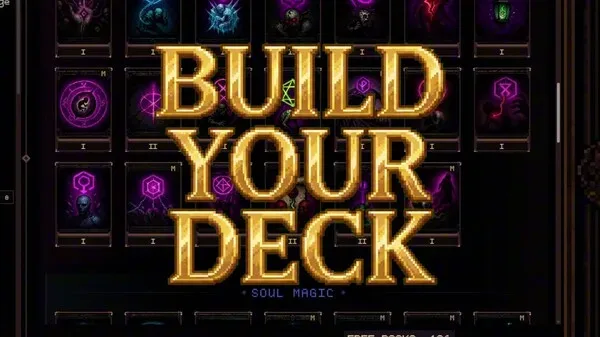
The standardized deck start is equally important to the game’s identity. Rather than beginning a run from a wholly unspecified set of options, players start from a deck they built themselves. Souls earned in battle can buy booster packs, which expand the pool of cards available for future deck construction.
This creates a persistent progression loop around deck options rather than merely advancing one run at a time. A booster pack here means a purchase that broadens the cards a player can use in later decks. The supplied information does not identify the contents, odds or cost of individual packs, but it does establish that battle-earned Souls feed back into future build variety.
That setup also makes the larger selection of heroes and magic schools more consequential. More schools and spells affect the possibilities within a run; more available cards affect the range of decks a player can prepare before it begins. The 1.0 content expansion and the revised deck foundation are therefore closely connected rather than separate bullet points on a launch list.
Steam Deck, ultrawide and language support round out the release
Beyond the new modes and magic, the 1.0 notes list ultrawide display support, full controller support and localization in 28 languages. The game is Steam Deck Verified, and it supports Windows, Linux natively and Steam Deck through Steam.
Those details are less dramatic than a boss with 600,000 HP, but they matter to the ways players can actually approach an action-heavy game. Full controller support addresses an input preference that can be especially relevant for portable play, while ultrawide support accommodates wider PC display setups. Steam Deck Verified is Valve’s compatibility designation for the handheld, not a statement that the game is exclusive to that device.
Readers looking for another game-world update with a dark fantasy angle may also want to see the news on Castlevania: Belmont’s Curse.
The development documentary puts AI use on the record
CRUNCHFEST is also releasing a 15-minute documentary alongside the 1.0 launch. It follows CODEX MORTIS’ development as an AI-driven project, including discussion of a custom engine designed to be driven by AI and an instruction file described as “angry user mode.”
The documentary is also set to cover a streamer-driven moment that brought the game to 322 concurrent players on SteamDB, as well as development stories involving a difficult boss and a fast interface rebuild. These are accounts of the project’s creation and community visibility, rather than new gameplay promises.
The AI-development framing is notable because it is specific: the accompanying film is positioned to discuss workflows and project anecdotes rather than treating “AI-driven” as a catch-all label without further explanation. It does not, from the supplied information, provide a technical breakdown of the engine or a complete account of which tasks involved AI. Players interested in that aspect will need the documentary itself for those particulars.
CODEX MORTIS 1.0 launches at 10:00 AM PT / 19:00 CEST on September 24, 2026. With online co-op, a 31-hero roster, 200 spells and a deck system designed to persistently widen players’ options, the full release gives its necromantic roguelite premise a considerably bigger spellbook to throw at the living.