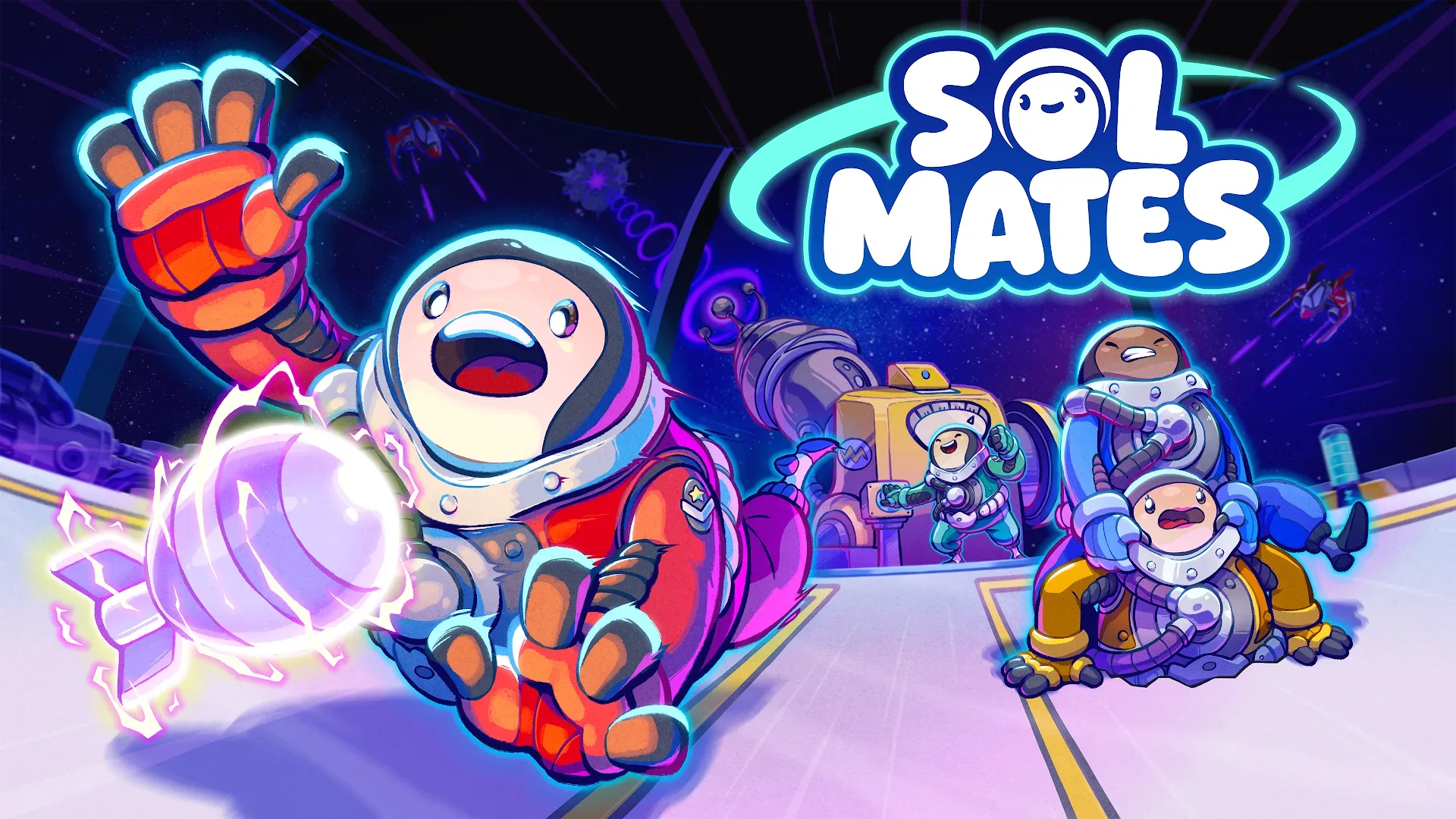
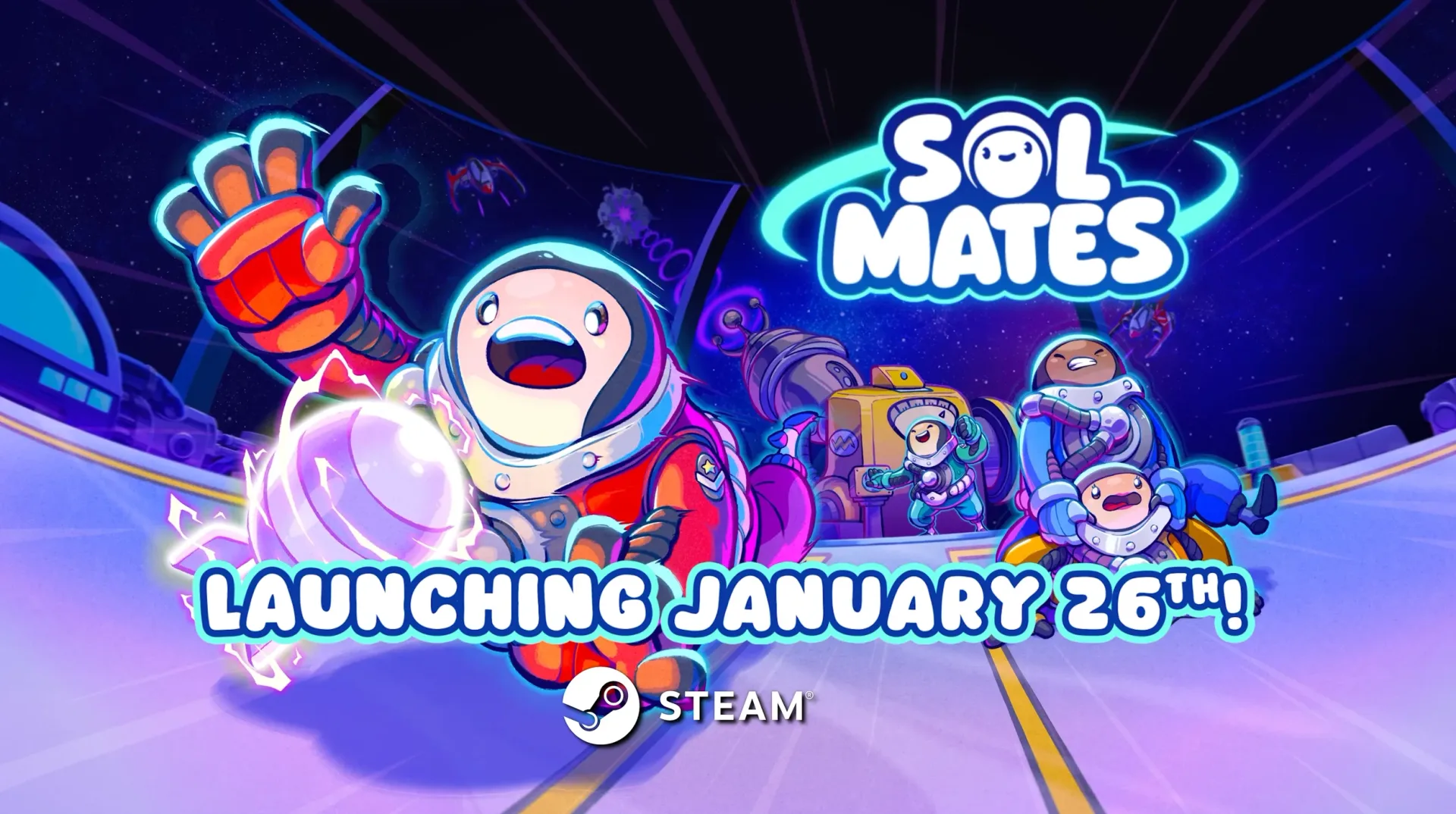
Space is famously inhospitable, but Sol Mates appears determined to make it socially complicated as well. Daruma Games’ cooperative roguelike party game is scheduled to launch for PC via Steam on January 26, 2027. It supports one to four players in both local and online co-op, while a free demo and a release-date trailer are already available.
The central pitch is an interstellar odd-jobs agency operated from a single spaceship. That framing leaves room for the kind of work that sounds routine right until something catches fire: crews face pirate attacks, black holes and strange assignments from clients, all while trying to maintain the vessel that is carrying them through the danger.
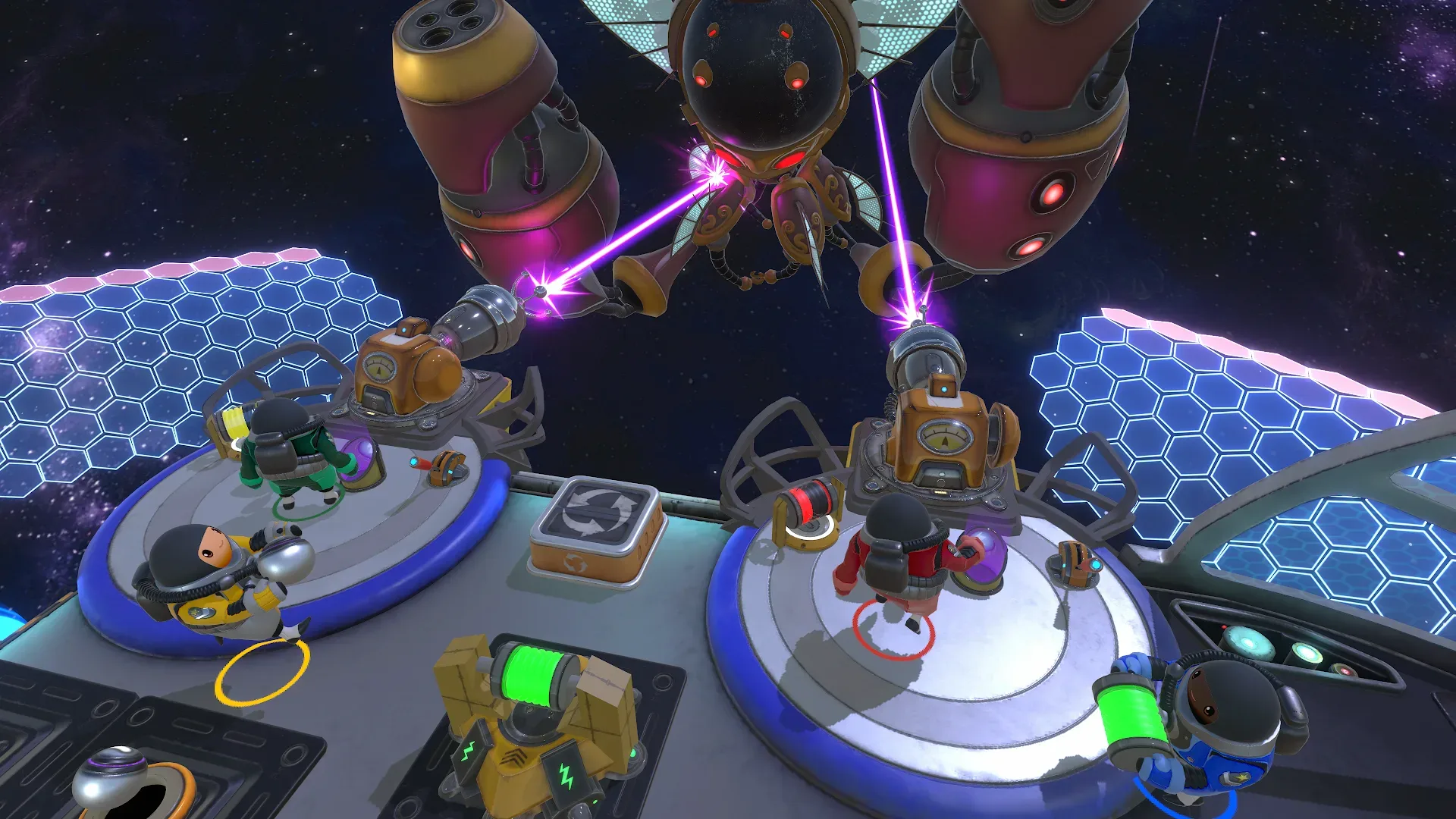
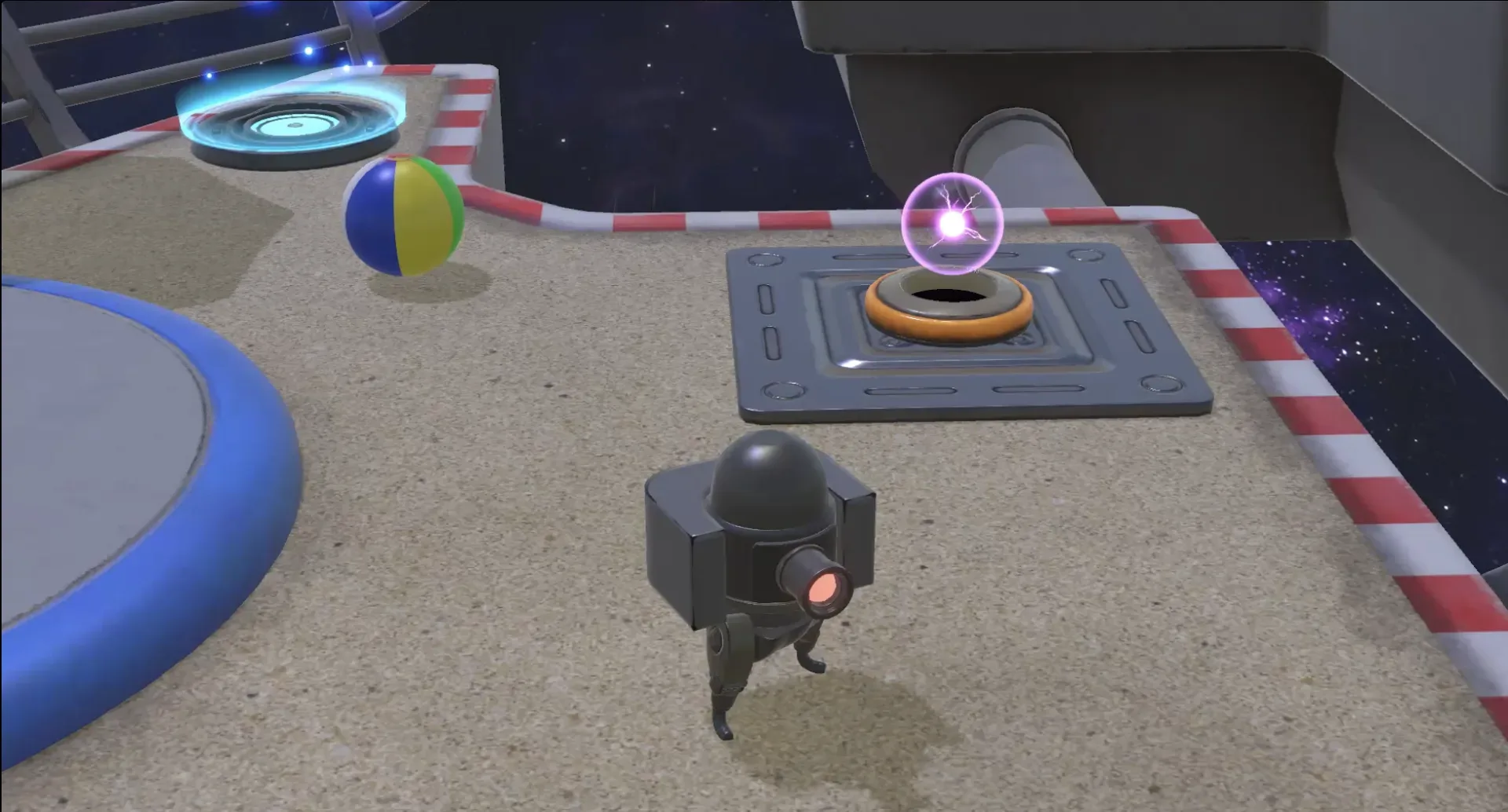
Rather than positioning players as isolated heroes, Sol Mates builds its action around a shared workplace under extreme pressure. One crewmate may need to load weapons, another charge batteries, and someone else put out fires before a minor shipboard disaster turns into a very short voyage. The promised chaos is therefore not merely about shooting at threats; it is about deciding what needs attention first, communicating that priority, and carrying it out while conditions continue to change.
A space job where every station matters
The playable ship is the game’s organizing idea. Its stations give the team a series of practical responsibilities rather than a single, fixed combat role. Loading guns and restoring battery power may sound like supporting tasks, but they become essential when the crew is under attack or the vessel is failing. Firefighting adds another urgent problem that can pull players away from whatever they had intended to do next.
That setup should make moment-to-moment teamwork the point of the experience. In a four-player group, a successful response can depend on players dividing their attention effectively. In a smaller group—or alone—the same set of demands may place more responsibility on each person. The game is built for one through four players, so its design has to accommodate a solo pilot as well as a full couch or online crew.
It is also a premise with clear room for comic mishaps. A crew can know exactly what must be done and still lose time getting to the right station, disagreeing about the immediate danger, or discovering too late that another system has become the bigger problem. Daruma Games describes Sol Mates as a chaotic party game, which suggests that such recoveries and near-disasters are intended to be part of the fun rather than a detour from it.
What “roguelike” means in Sol Mates
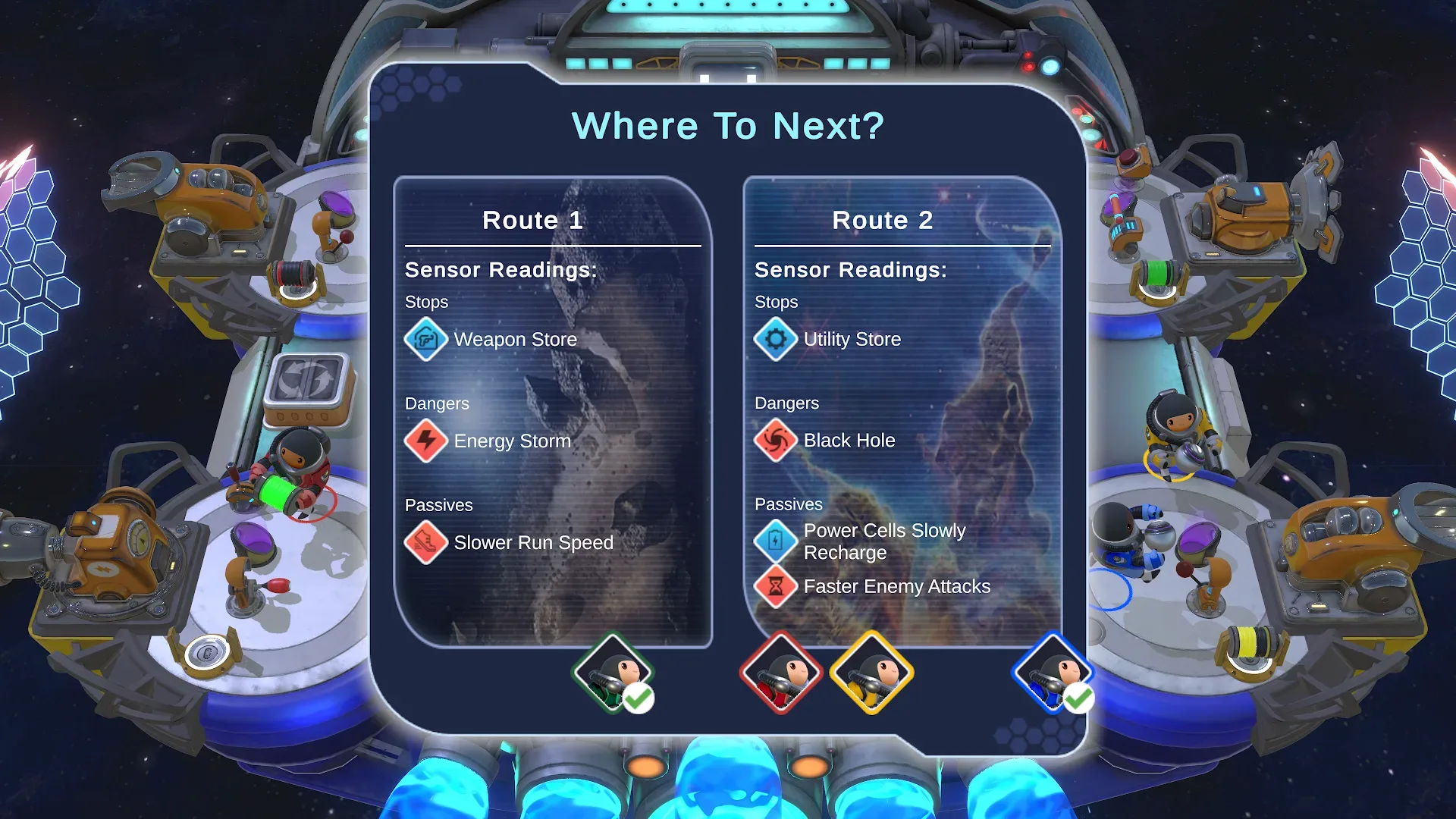
Sol Mates combines its co-op action with roguelike runs and narrative decisions. In broad terms, a roguelike run is an individual attempt through a changing sequence of challenges rather than one completely fixed campaign path. Here, the important supplied detail is that teams vote on story choices between missions and chart their course. Those choices mean the crew’s route and the tale produced by a run can differ from one attempt to the next.
That distinction matters for a social game. The match does not end when the latest emergency is resolved; it also includes decisions about where to go and what the agency should do next. Voting makes the group’s preferences part of the structure. It can encourage discussion, speedy consensus, or the familiar co-op spectacle of four people confidently choosing a path before discovering they had wanted different things.
Related coverage includes Sol Mates Sets January 2027 Steam Launch for Chaotic Four-Player Space Co-Op.
Daruma Games says no two runs tell quite the same story. That is a statement about the combination of routes and decisions, not a promise that every possible sequence of events will be wholly unique. Still, it identifies the intended replay loop: manage the present crisis, finish a job, choose the next direction, and see how that decision changes the circumstances facing the ship.
The game also lists unlockable weapons, ammunition types, spacesuits, ships and alien species. Unlocks can give repeated runs a sense of longer-term progression by expanding what players can use or encounter. The announcement does not detail how each unlock is earned, whether they affect gameplay in identical ways, or how they interact with the run structure. Players should treat those specifics as questions for the demo and future information rather than assumptions.
The “Juice” system and adjustable pressure
Among the announced features is a difficulty-scaling system called Juice. The name fits a game that appears happy to let its crew become overwhelmed, but the crucial stated function is difficulty scaling. In practical terms, that means Sol Mates is intended to offer a mechanism for adjusting the intensity of its challenges.
The announcement does not explain the settings, thresholds or exact effects of Juice, so it would be premature to claim that it changes enemy strength, emergency frequency, ship durability or any other particular variable. What can be said is that scaling difficulty is especially relevant to a game accommodating player counts from one to four and aiming at both local and online groups. Different teams bring different levels of coordination, experience and tolerance for disaster. A configurable pressure system could help crews find a suitable level without changing the central cooperative premise.
For players who enjoy party games for laughter and communication more than punishing execution, this could be an important feature to watch. For groups looking for escalating ship-management panic, it could equally offer a way to turn up the strain. Until fuller details are available, Juice is best understood as a named difficulty tool rather than a fully explained mode.
Built for couch co-op and online crews
Daruma Games co-founder Loren Weng connected the project directly to the studio’s affection for 1990s couch co-op. “We grew up in the 90s and couch co-op is the genre of our childhoods,” Weng said. “We set out to make a hilarious game for you and your friends to navigate the perils of space and relive those epic sci-fi movie moments together, whether that’s in-person or online.”
That emphasis explains why local and online multiplayer sit side by side in the announced feature set. Local co-op is designed for players sharing a physical space and reacting to problems together, while online co-op extends the same crew concept to friends who cannot meet in the same room. Neither format is presented as secondary: Sol Mates explicitly supports both for up to four players.
The one-to-four-player range is also a useful detail for anyone deciding whether to follow the game. A regular quartet is not a requirement, and a group does not need to wait for a full lobby to try the demo. The gameplay premise may create different workloads depending on crew size, but the supported range means prospective players can approach it as a solo game, a two-person co-op option, or a full party activity.
There is a broader PC co-op calendar taking shape around the same period, including games shifting out of development milestones such as Wizdom Academy’s move out of Early Access. Sol Mates distinguishes itself within that wide field through its single-ship focus, occupational sci-fi framing and decision-driven run structure—not through a claim that every crew will encounter the same route.
Steam Deck support and language plans
Sol Mates will support Steam Deck, Valve’s handheld PC device. For prospective players, that means the game is intended to be playable on the platform as well as on PC through Steam. It does not, on its own, specify performance targets, control layouts, display settings or any other technical detail, so those are matters to check closer to launch.
The planned launch languages are English, Simplified Chinese, Japanese and Brazilian Portuguese. Listing those languages at announcement provides a clearer indication of the audiences the game intends to support from release. It does not establish the scope of localization beyond the language list, such as whether every type of content will receive identical treatment, but it is useful information for groups deciding whether the game will suit their players.
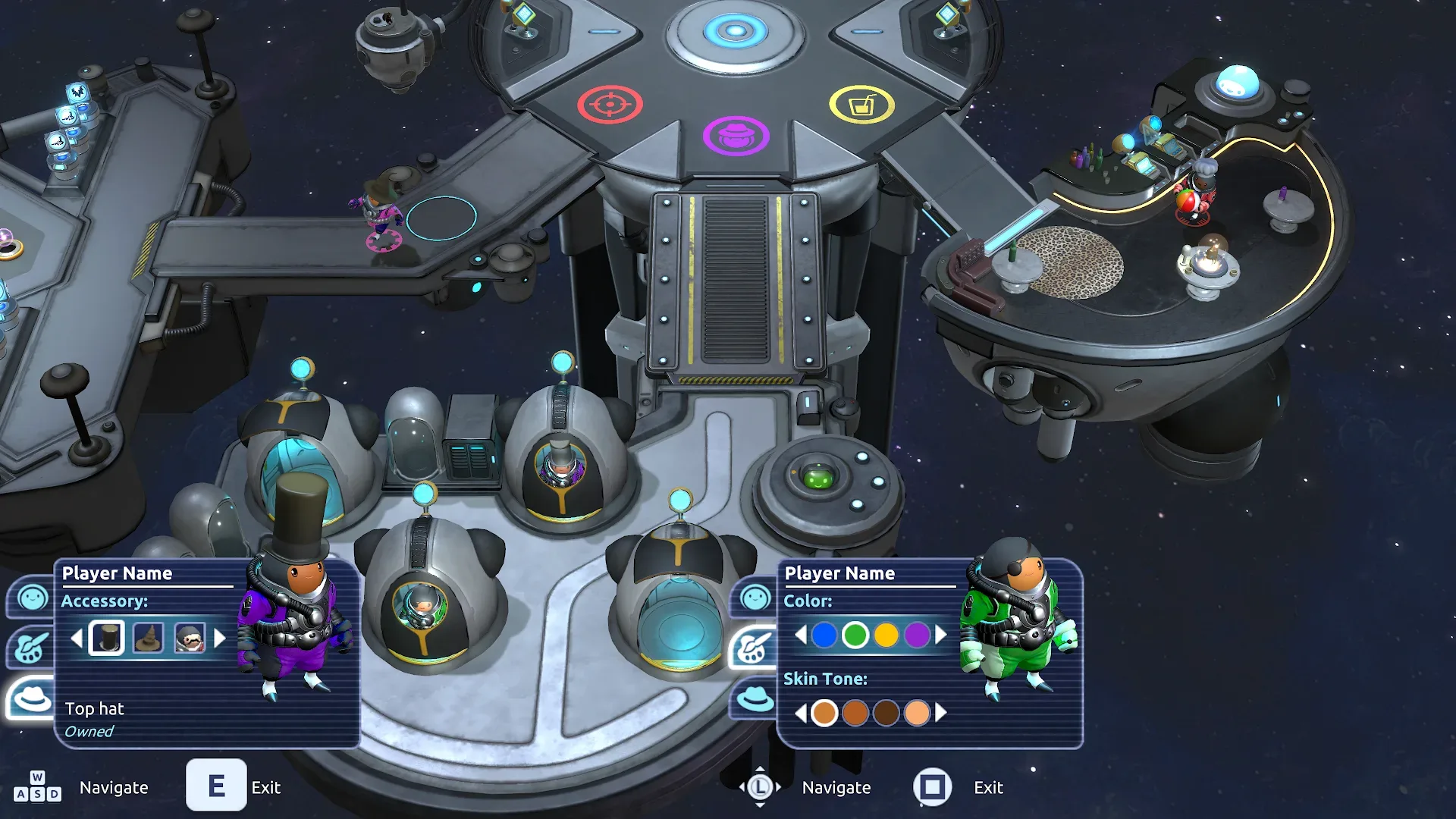
Cosmetic options are also described as extensive. Cosmetics generally refer to visual customization rather than an explicitly stated competitive or functional advantage. The announcement gives no catalog of looks, pricing model or unlock criteria, but spacesuits, ships and alien species are among the types of unlockable content named for the game. It is reasonable to expect personalization to be part of building a crew identity; it is not reasonable, based on the current information, to infer more detailed systems behind it.
What interested crews can do before January
The immediate option is the free demo on Steam. A demo is particularly useful for a co-op game because it gives a prospective group a chance to assess the basic rhythm together: whether the division of ship duties is satisfying, whether their communication style fits the pace, and whether they want the disruption of pirate ambushes and onboard fires in their regular game night. The announcement confirms that a demo exists, without specifying its content or duration.
Players can also wishlist Sol Mates on Steam ahead of its January 26, 2027 release. The release-date trailer offers another official look at the game’s premise, although footage should not be treated as a complete technical specification or a substitute for the final release.
For now, the clearest picture is of a co-op space game that places every player aboard the same problem-prone ship, then asks the crew to keep it flying while making decisions that affect the next stage of the journey. If Daruma Games can make battery charging, gun loading and emergency firefighting feel equally vital—and equally funny—Sol Mates could give groups a lively new reason to test who stays calm when the spaceship starts burning.