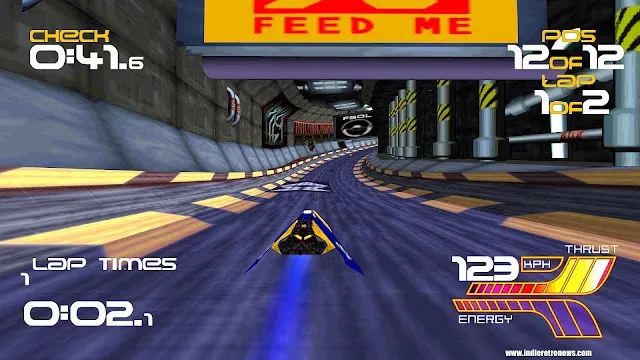
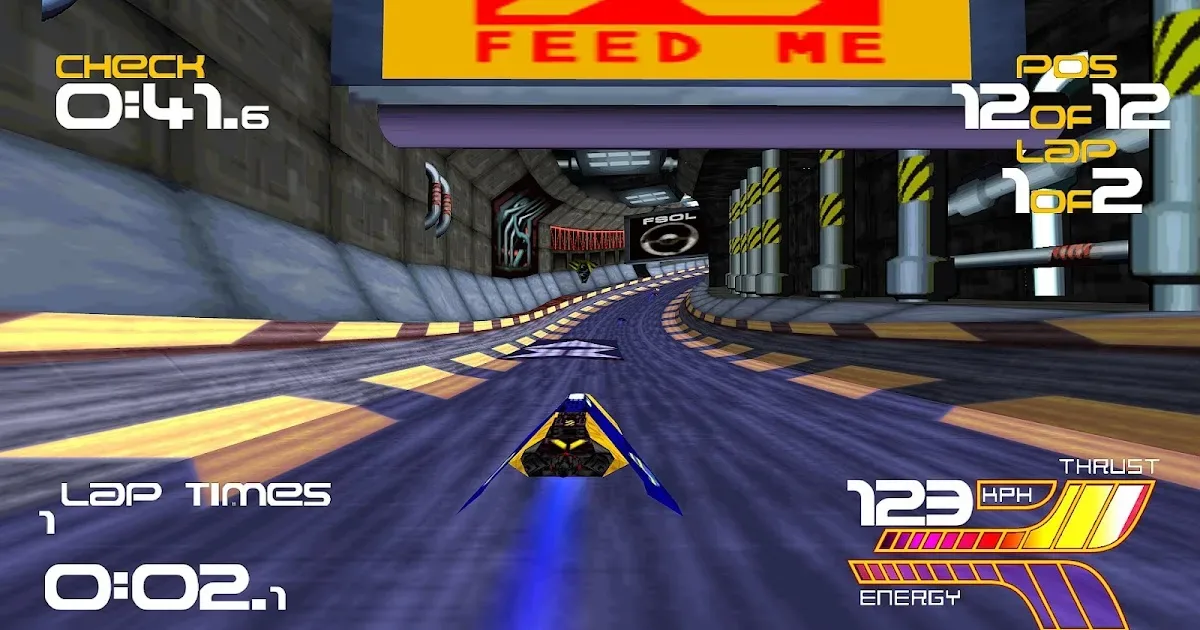
Wipeout 2097/XL, a non-commercial AmigaOS 3 port of the PlayStation anti-gravity racer, has been rebuilt from a source decompilation and is aimed squarely at unusually powerful modernized Amiga configurations. The project is credited to Arcziii, also known as arczi84, with AI assistance. It does not turn every classic Amiga into a Wipeout machine: users need a PiStorm setup driven by a Raspberry Pi 3, Raspberry Pi 4, or Compute Module 4 and running Emu68, alongside several graphics, memory and audio prerequisites.
The release is notable not simply because it puts a celebrated PlayStation game on AmigaOS 3, but because it illustrates the increasingly hybrid nature of retro computing. The operating system and machine identity are Amiga; the performance depends on substantial accelerator and graphics expansions. That distinction matters for anyone approaching the port as an installation project rather than assuming it will run on an unexpanded period system.
A native AmigaOS 3 rebuild, not bundled game data
The port was rebuilt from a decompilation of the original PlayStation code. Decompilation is the process of translating a compiled program back into a form developers can study and rebuild. In preservation and porting projects, that can make it possible to adapt game logic to a different operating system or hardware environment without relying on an original console at runtime.
That technical route also does not mean the game’s copyrighted assets are included. Wipeout 2097/XL requires the user to supply an original U.S. PlayStation copy of Wipeout XL, identified as disc SCUS-94351, or a matching digital BIN/CUE image. A BIN/CUE pair is a common disc-image format: the BIN file contains the disc data, while the CUE file describes the disc’s track layout. The downloadable port package itself contains no copyrighted game data.
That separation has a practical consequence. A functioning Amiga configuration alone is not enough; prospective players must have the correct game disc or corresponding image ready before installation. It also makes this a community-maintained compatibility effort rather than a newly licensed re-release.
The hardware checklist is the real entry ticket
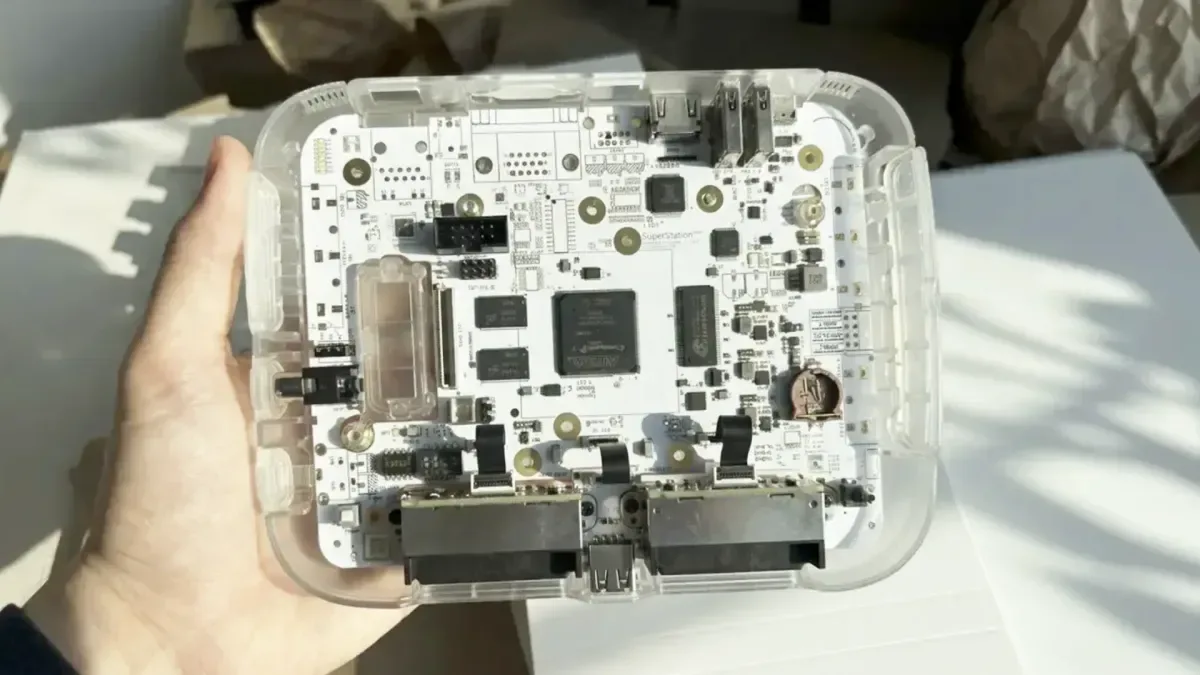
Wipeout 2097/XL needs an Amiga using PiStorm hardware with a Raspberry Pi 3, Pi 4 or CM4 under Emu68. It also calls for RTG graphics in a 32-bit screen mode, approximately 64 MB of free RAM, and a working AHI sound subsystem.
Each item addresses a different part of what a fast 3D racer needs:
- PiStorm is the expansion-based foundation specified for this build. The project expects it to be paired with one of the supported Raspberry Pi models.
- Emu68 is the required environment named for the PiStorm setup. It is part of the stated configuration, not an optional tuning choice in the project requirements.
- RTG, short for retargetable graphics, is needed here in a 32-bit screen mode. In plain terms, the port expects a modernized Amiga graphics path capable of displaying the game in that color-depth mode.
- Free RAM means memory that remains available after the operating system and other running components have taken their share. The approximately 64 MB figure is a working requirement, not merely the physical memory installed in the machine.
- AHI is the audio subsystem the port requires. It must be active for the game’s sound to function through the expected path.
This is a demanding list by classic Amiga standards, but it is also refreshingly explicit. Prospective users can assess their configuration before treating the download as a quick experiment. In particular, someone with PiStorm but no suitable RTG configuration, insufficient free memory, or inactive AHI support has a setup task to solve first.
Related coverage includes Wipeout 2097 Rebuilt for AmigaOS 3 With PiStorm-Powered Native Port.
Two render builds, with MiniGL reported faster
The project offers two specialized rendering versions rather than a single universal executable. The xl-ogles version uses ogles2.library and supports MSAA, while xl-minigl uses minigl.library version 29.
Rendering is the stage in which software turns 3D game data into the image shown on screen. Different rendering libraries can affect compatibility, image treatment and speed, which is why the two builds are presented as choices tied to the user’s software stack rather than as cosmetic editions.
The ogles build supports MSAA, or multisample anti-aliasing. Anti-aliasing is a technique intended to reduce visibly jagged edges along geometry. Its presence may appeal to players prioritizing a smoother-looking presentation, provided their graphics setup is appropriate for that build.
The MiniGL build has been measured as roughly 10 frames per second faster. Frames per second, commonly abbreviated FPS, describes how many complete images are displayed each second. A higher number can make a rapid racing game appear more fluid and can improve the consistency of visual motion. The result is a meaningful reason to try xl-minigl first when performance is the priority, although the available information does not establish a universal frame-rate target or guarantee the same difference across every individual configuration.
In short, users are not simply selecting “best graphics” versus “best speed.” They are choosing a renderer that must fit their installed libraries, then weighing MSAA support against the reported MiniGL performance advantage. That is familiar territory for enthusiasts who maintain expanded retro systems: configuration is part of the experience.
What remains compelling about Wipeout 2097
Known as Wipeout XL in the U.S., Wipeout 2097 centers on the F5000 AG racing league. Players pilot armed, high-speed futuristic craft across gravity-defying tracks set around the world. Its racing is built around more than clean cornering: weapons are part of the contest, turning position, track knowledge and item use into overlapping concerns.
The game remains closely associated with the mid-1990s visual and music culture that shaped its identity. Its distinctive aesthetic was a major point of praise, and its licensed soundtrack included acts such as The Chemical Brothers and The Prodigy. At release, Wipeout 2097 was also acclaimed for improving control, graphics and gameplay over the first Wipeout.
That legacy helps explain why a port like this has value beyond the technical novelty. Wipeout’s extreme speed and 3D track design put pressure on a platform’s rendering and input response, while its presentation relies on interface elements, typography, sound and motion all landing together. A port that is able to preserve the game’s full package on a modernized Amiga environment gives owners another way to engage with a defining PlayStation-era racer.
An HD texture pack is included
The package includes NR74W’s HD texture pack, initially made for DuckStation. The pack updates elements including the HUD, fonts, weapon icons and title screens with higher-resolution artwork.
A texture pack replaces the image surfaces mapped onto in-game objects and interface components. Here, the stated focus is especially visible: the heads-up display, textual elements, weapon indicators and title screens are among the parts overhauled. That can make the game’s on-screen information more visually modern while leaving the fundamental game data requirement intact.
This is worth separating from a remake. The evidence describes a port with an included high-definition texture package, not a new game or an official redevelopment. The underlying appeal is still Wipeout 2097’s original racing design, adapted to AmigaOS 3 and presented with optional modernized visual assets.
A useful benchmark for PiStorm owners
The release arrives in a context where not all Wipeout options on the platform have produced equivalent results. Caffeine OS includes an RTG version of Wipeout, but reports indicate that version could run very slowly with PiStorm or fail to start. Wipeout 2097/XL therefore stands out as a project designed around a particular modern expansion path and explicit rendering-library choices.
That does not make it a universal answer for every Amiga enthusiast. It is a hardware-specific project with dependencies that should be treated as mandatory. Yet it is a strong example of why source decompilation has become important to preservation-minded ports: old game code can be adapted for environments never imagined by its original commercial release.
AI-assisted decompilation and rebuilding also remain a fast-moving and sometimes contentious area of preservation work. For broader context on how AI has changed the incentives and pace around reverse-engineering communities, see this look at decompilation culture and AI. In this case, the direct result is a demanding but potentially compelling route to run Wipeout XL on an enhanced AmigaOS 3 machine—provided the owner brings the right hardware, software components and original game data.