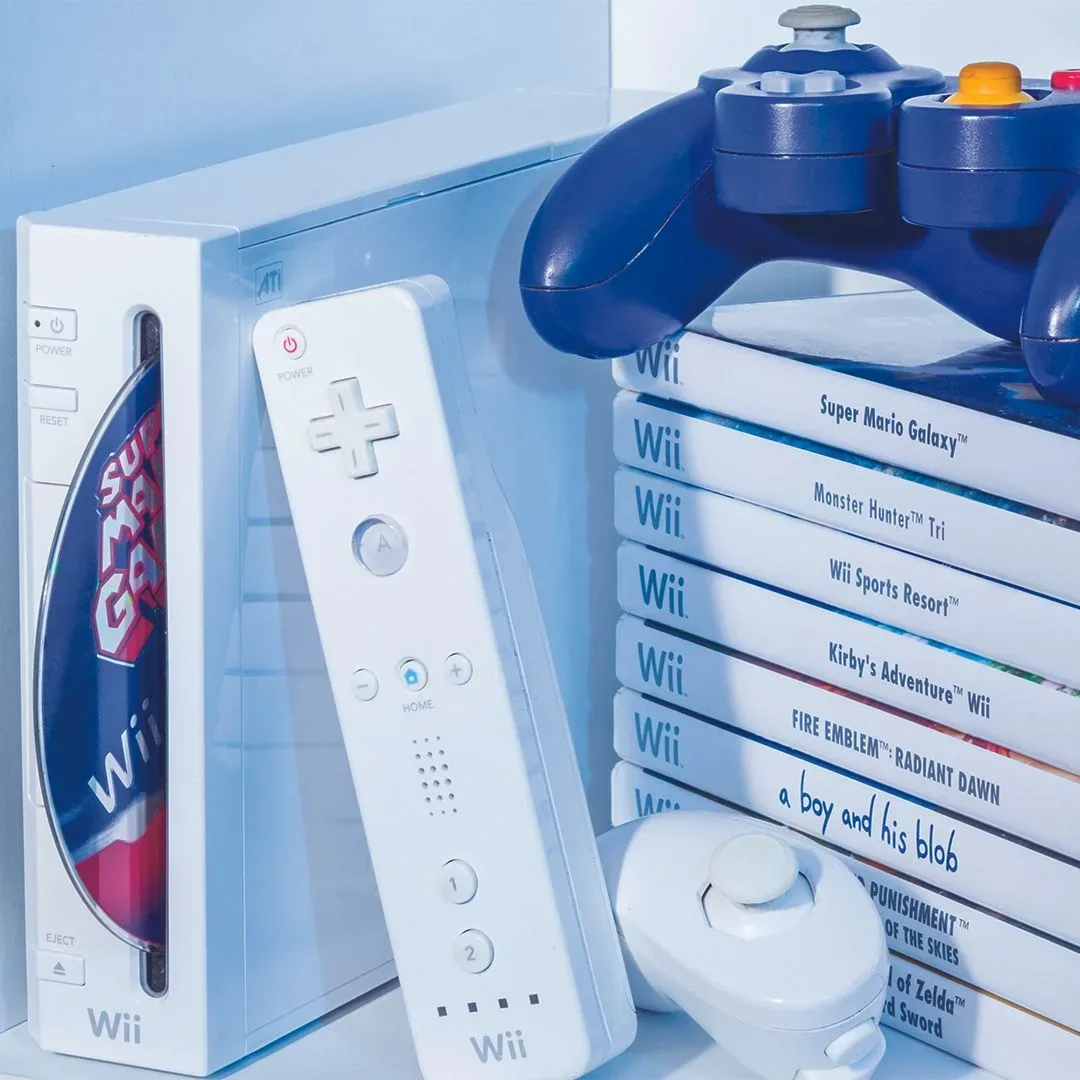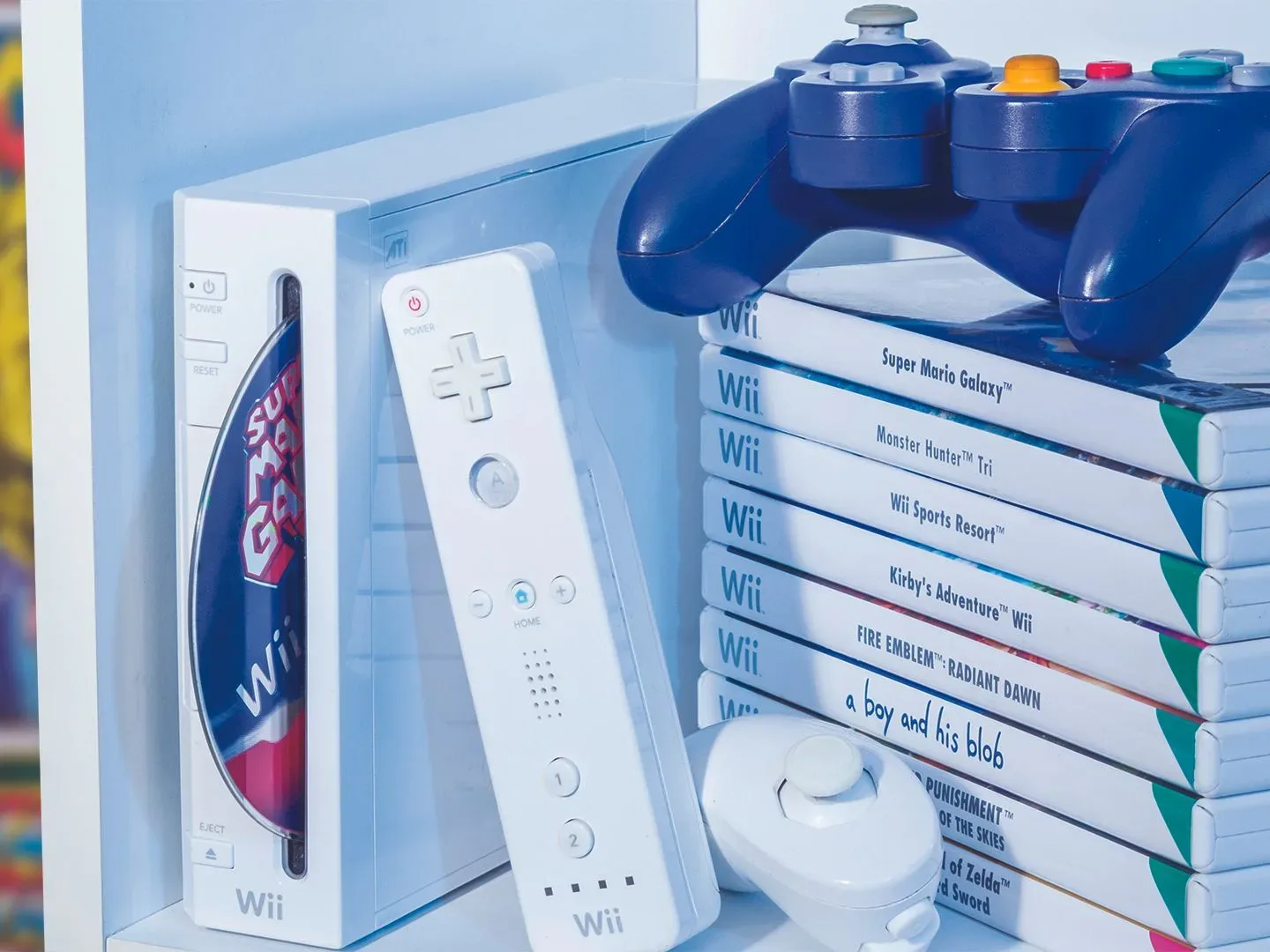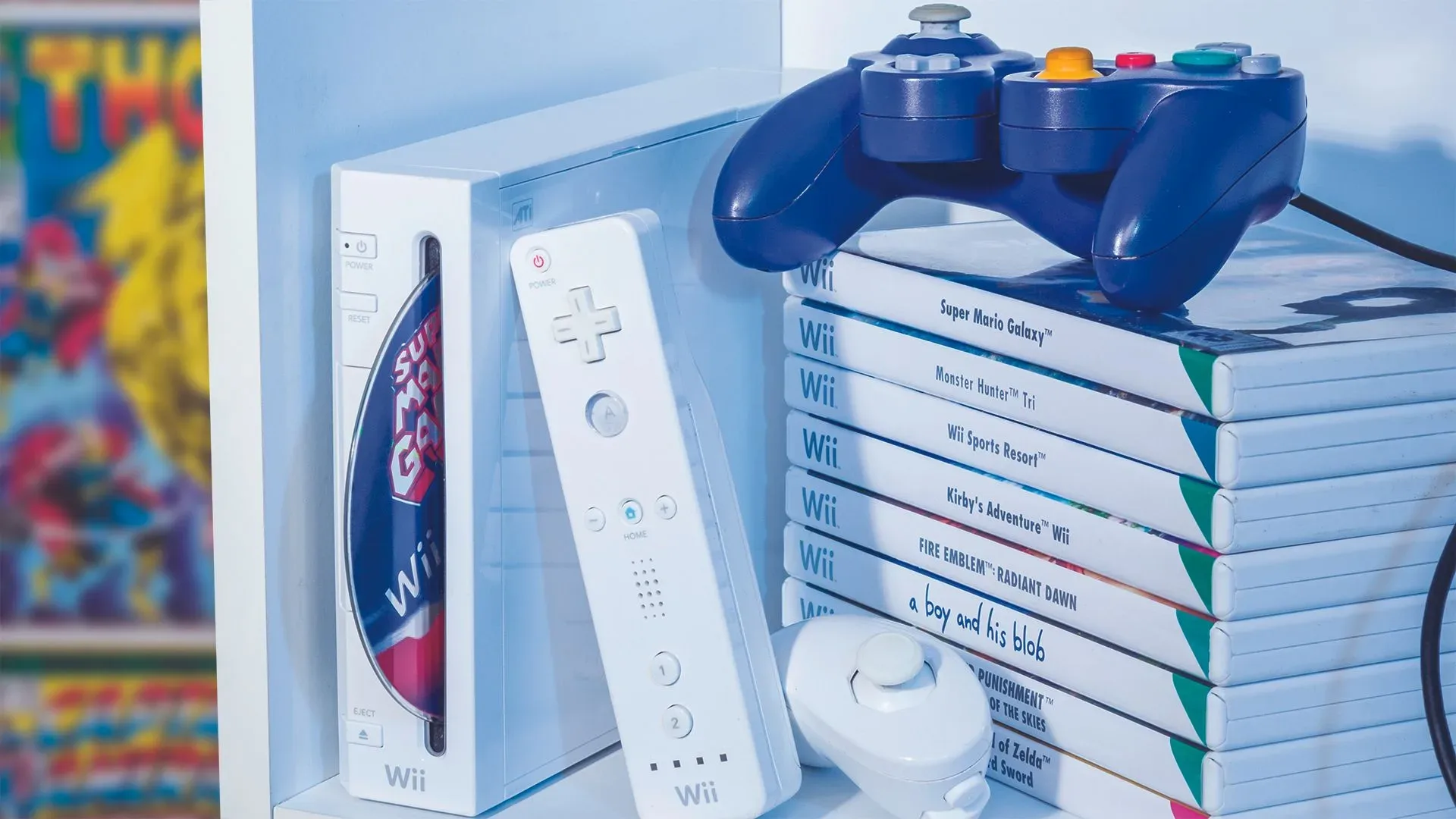
There comes a point in every console generation’s life when its fans must confront a mildly upsetting reality: the machine they still describe as “one of the newer ones” has accumulated enough dust, discontinued accessories, and difficult-to-replace cables to qualify as history. For Wii and PlayStation 3 owners, that moment appears to be arriving with the confidence of a mandatory system update.
Viewers of GameCenter CX, the long-running Japanese television series built around comedian Shinya Arino attempting to conquer older games, have weighed in on the matter. Their verdict was emphatic: Wii and PS3 belong in the retro conversation.
The result is not merely a semantic victory for shelves full of white plastic consoles and glossy black towers. It is a reminder that “retro” has never been a clean technical category. It is a moving line, pushed forward by time, nostalgia, preservation concerns, changing hardware habits, and the unmistakable sensation of realizing that a game’s online services vanished years ago.
A show about old games asks a newly old question
GameCenter CX began in 2003 and has produced more than 400 episodes across 23 years. Its enduring premise is simple and magnificent: Arino, often with help from staff, takes on games that are difficult, strange, famous, forgotten, or all four at once. Failure is part of the entertainment. So is the sense that older games have a particular personality: sometimes charming, sometimes brutally designed, and occasionally eager to send the player back to the opening screen for a mistake made 40 minutes earlier.
The program has generally spent most of its time with games from the 1980s and 1990s. Trips into the 2000s have been less common. A loose benchmark associated with the show is that a retro game is at least 20 years old, though its own history shows that the definition has never behaved like a rule enforced by a cartridge-polishing tribunal. Earlier episodes could spotlight Super Nintendo titles that were only around a decade old at the time.
That flexibility matters. Retro is partly about age, of course, but it is also about cultural distance. A console can feel retro when its design philosophy has become unfamiliar, when its peripherals are no longer standard household objects, or when revisiting its games means navigating formats and services that the industry has since abandoned.
During an August YouTube stream, the program’s producers put the Wii-and-PS3 question to viewers. The first poll found 71% in favor of including the platforms under the retro umbrella. After Arino played a selection of Wii and PS3 games, the question returned. This time, 17,000 viewers backed the idea that both systems should be considered retro.
It is hard to imagine a more fitting way to settle the matter than by playing the games themselves. Hardware dates and category labels can fuel arguments forever; a controller in hand has a tendency to make a generation’s particular quirks immediately visible.
Related coverage includes PS3 and Wii Are Joining the Retro Conversation as Japanese Fans Revisit the 20-Year Rule.
Why this generation feels like the border of the modern era
For many players, Wii, PS3, and their Xbox 360 contemporary represent a firm dividing line. Before them lie game eras that feel comfortably historical: local multiplayer as a default, memory cards, simpler online ambitions, and physical media with fewer strings attached. Starting with this generation, console gaming became much more recognizably connected to the present.
Online multiplayer became routine rather than novel. Downloadable content became a regular part of game releases. Patches could alter a game after it had shipped. Microtransactions became increasingly visible. Digital storefronts changed what a console library could contain and how players could acquire games. These developments did not all begin on Wii, PS3, or Xbox 360, but their widespread normalization makes the period feel like a bridge into the industry people still recognize today.
That is precisely why some fans resist the retro label. If a machine had online accounts, downloadable games, updates, HD output, and a familiar controller layout, can it really sit beside systems defined by cartridges, CRT screens, and the ritual of blowing dust out of places one absolutely should not blow dust out of?
The answer is probably yes, but with an asterisk large enough to require its own entertainment center. “Modern” technology can age, too. Early console online infrastructure now carries the same period-specific character once reserved for dial-up sounds and memory-card management. A downloadable patch is a normal feature in current gaming; a patch for a 2006-era console is now an artifact of how an earlier version of connected gaming worked.
Physical discs also complicate the divide in the most pleasingly collector-friendly way. Wii and PS3 libraries were built substantially around boxed games, even as digital distribution grew. That places them in a transitional position: recent enough to have modern service expectations, old enough that the disc, case, manual, and sometimes bizarre bonus insert remain central to how many people remember owning the games.
The Wii’s wonderfully ironic promotion
The Wii occupies a particularly funny place in this discussion because it helped popularize retro gaming for a wide audience during its own heyday. Its Virtual Console service created an accessible route to older titles, packaging past generations for a new audience browsing from a system menu rather than hunting through secondhand shops.
When the Wii Virtual Console launched in 2006, Super Mario 64 was among its early offerings. At that point, Nintendo 64’s landmark platformer was only 10 years old. By the standards now being debated, that is a remarkably short journey from current-ish classic to officially recognized history.
The comparison does not prove there is one universal timetable. It does show how quickly the definition moves. If a 10-year-old title could anchor a prominent retro-download service in 2006, it is not especially strange that console generations approaching two decades of cultural distance are now receiving the same label.
And the Wii itself has plenty of traits that already read as period pieces: motion-control enthusiasm, sensor-bar logistics, the gentle glow of the Disc Channel, and a console identity so distinctive that one can practically hear the menu music after reading this paragraph. Its physical design and social role were products of a very specific moment. That is retro territory, whether or not everyone is emotionally prepared to sign the form.
PS3 preservation makes the label more than a joke
The PS3’s place is arguably even more consequential for preservation-minded players. Its library includes disc releases, digital-only games, downloadable expansions, updates, network functions, and hardware features tied to a console architecture unlike the systems that followed. Treating the platform as retro does not mean treating it as obsolete. It means recognizing that its software, hardware, and player culture belong to a distinct era worth documenting and maintaining.
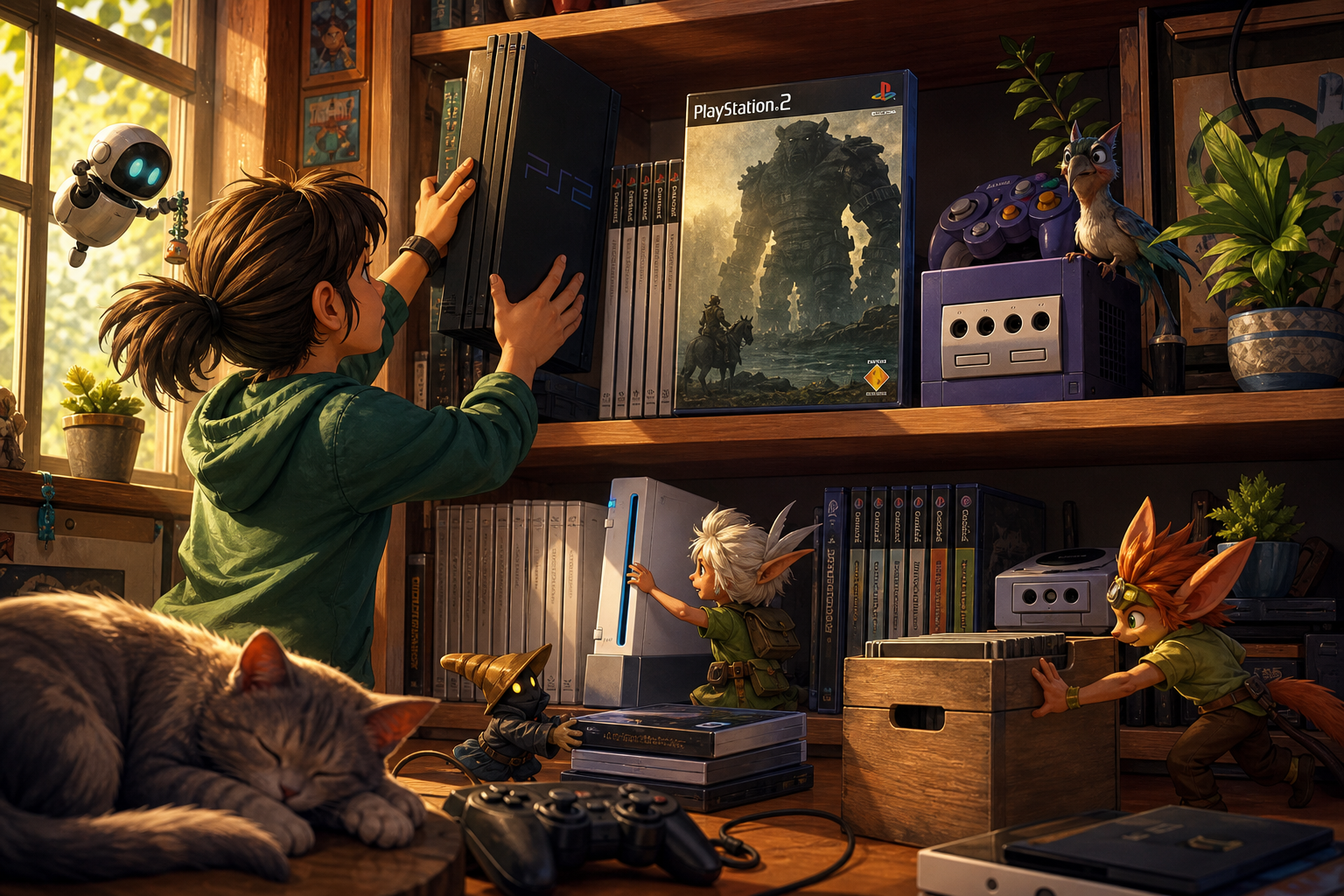
That distinction matters for collectors. A retro library is not only a stack of discs. It is also the condition of those discs, the reliability of the console, the controller batteries, the cables, storage media, manuals, region considerations, and the practical question of where all this equipment can safely live. Anyone setting up a Wii, PS3, or earlier machine can benefit from a few sensible precautions; our guide on safe shelf placement for PS2, GameCube, and Wii libraries is a useful starting point for giving aging hardware room to breathe.
There is no requirement for a retro console to be primitive. A PS3 may still feel technologically capable, and the Wii can still turn a room full of people into competitive bowling professionals for 20 minutes. Neither quality cancels out the years that have passed. Retro is not a declaration that something is bad, irrelevant, or incapable of delight. Often it is the opposite: a signal that a generation has lasted long enough to be revisited on its own terms.
The 20-year rule is useful, not sacred
A 20-year guideline has obvious appeal. It is easy to remember, gives discussions a stable reference point, and reflects enough elapsed time for hardware and game design to look meaningfully different. Yet the poll also demonstrates why any exact cutoff will always be slightly ridiculous. Console generations overlap. Launch dates differ by region. Late releases can appear years after the hardware arrives. A game can be culturally retro before it reaches a calendar milestone, while another may feel startlingly current long after the number says it should be wearing a tiny historical plaque.
Rather than treating “retro” as a locked door, it may be better understood as a broad neighborhood. The Wii and PS3 have moved in. Xbox 360 is standing nearby with a box of cables, waiting to see whether anyone objects. The 1980s and 1990s classics remain foundational residents, but the neighborhood has expanded because the passage of time does not ask permission.
The Japanese audience response makes one point especially clear: the argument is no longer whether people can feel nostalgic for Wii and PS3 games. They plainly do. The more interesting question is what the retro label can help people do—revisit important games, preserve hardware, record a transitional era of online consoles, and make peace with the fact that the machine once described as “next-gen” may now need a careful cleaning and a dedicated shelf.
That is not a tragedy. It is the natural lifecycle of beloved gaming hardware. Still, if someone calls the PS3 retro in front of you and you instinctively reach for a glass of water, that reaction is also historically valid.