Nintendo’s portable business did not begin with a single revolutionary machine. It developed through experiments in toys, electronics, software and industrial design. The company repeatedly tested how much hardware players really needed, then supported each successful idea with recognizable characters, approachable games and a steady stream of compatible software.
This account follows Nintendo from its hanafuda-card origins through the Nintendo DS era. The focus is not simply on sales or famous games, but on the decisions that made each generation distinct: affordable monochrome hardware, cartridge continuity, practical redesigns, improved 2D performance and, eventually, a touch-driven system designed to reach people who did not think of themselves as traditional players.
1. From hanafuda cards to electronic toys
Nintendo began in Kyoto in 1889 as a maker of hanafuda playing cards. Its later move into toys was not an overnight transformation but a broadening of what the company considered entertainment. The 1966 Ultra Hand, developed during the company’s toy expansion, became an important example of Nintendo turning a simple physical idea into a mass-market product. That experience mattered because portable games would eventually depend on the same principle: a clear interaction that made sense before the player read a manual.
The company’s electronic direction gathered momentum during the 1970s. Gunpei Yokoi became an important figure in this transition, working on electronic toys before leading the development of Game & Watch. His design philosophy emphasized using established, inexpensive components in new ways rather than automatically chasing the most powerful specification.
Game & Watch established several habits that would reappear in later handhelds. Each unit was easy to understand, self-contained and visually distinctive. The line also demonstrated that Nintendo could make a small screen feel like a complete play space. It did not yet have interchangeable software, but it created the company’s early portable identity and helped Nintendo develop experience in compact displays, controls, production and mass-market presentation.
2. Game Boy chose balance over spectacle
Nintendo released Game Boy in Japan on April 21, 1989, followed by North America in July 1989 and Europe in September 1990. Nintendo R&D1 developed the system under Gunpei Yokoi and Satoru Okada. Its design was deliberately less ambitious than the color-focused hardware offered by competitors such as Atari Lynx and Sega Game Gear. The screen was monochrome, the hardware was comparatively modest and the system used interchangeable cartridges.
That decision should not be reduced to a claim that Nintendo ignored technology. Game Boy’s design balanced manufacturing cost, battery demands, physical durability, screen size and the ability to support a large software library. A more technically elaborate machine could offer richer graphics, but a portable platform also had to be practical to carry and affordable enough to reach a broad audience.
The cartridge format gave Game Boy a future beyond its launch software. Players could move between puzzle games, platformers, role-playing games and licensed releases without replacing the hardware. That distinction separated Game Boy from the fixed experience of a dedicated electronic toy and made Nintendo’s portable business look more like its console business.
3. Tetris expanded the audience
Tetris was one of the most important early software partners for Game Boy because its appeal did not depend on Nintendo characters or an elaborate adventure premise. The rules were immediate, the controls suited a small handheld and short sessions worked naturally around portable play. Its presence helped demonstrate that Game Boy could appeal to people who were not already Nintendo platform fans.
The significance of Tetris was therefore broader than its role as a launch-period game. It showed how a simple, repeatable design could make the hardware useful in situations where a large console was inconvenient. That helped define handheld gaming as its own category rather than a technically weaker version of home gaming.
Nintendo’s software strategy also relied on variety. First-party games provided recognizable anchors, while external publishers filled the catalog with role-playing games, action titles, puzzles and adaptations. The result was a platform that could serve children, commuters, experienced players and people who only wanted a quick game. Tetris gave that broad audience an especially clear reason to try the machine.
4. Revisions kept Game Boy alive
Nintendo extended Game Boy’s life through hardware revisions rather than immediately discarding the original design. Game Boy Pocket was introduced in Japan in 1996 as a smaller version, making the system easier to carry. In Japan, Game Boy Light followed in 1998 with a backlit display. These models addressed practical objections without abandoning the cartridge library or the familiar controls.
This approach reveals a recurring Nintendo pattern. A successful platform could be refined in response to real limitations while preserving the investment made by players and developers. The company did not need every revision to redefine portable gaming. Sometimes a smaller body or more visible screen was enough to make an established system relevant again.
Pokémon became another major force during this period. First released for Game Boy in Japan on February 27, 1996, the series turned collecting, trading and long-term progression into a social phenomenon. Its effect was not limited to one title: Pokémon strengthened demand for the hardware, gave players a reason to discuss and exchange games, and helped Game Boy remain culturally prominent as competitors pursued more advanced displays.
5. Game Boy Color refreshed the platform
Nintendo introduced Game Boy Color in Japan on October 21, 1998. It added a color display while retaining the identity and much of the software continuity of the original line. Calling it a completely new platform misses the point: Game Boy Color was a bridge between generations, giving developers a more expressive target while preserving the value of existing Game Boy games.
The compatibility relationship had an important limitation. Game Boy Color hardware could play original Game Boy software, but some Game Boy Color releases required the newer system and could not run on the original monochrome Game Boy. That made the transition less disruptive for players and publishers than a clean break would have been, while still giving developers room to create software that demanded color hardware.
Game Boy Color also showed how Nintendo could use software to make a hardware refresh feel meaningful. New games could use color, improved presentation and larger ambitions, while familiar franchises continued to provide a dependable entry point. The company was extending a platform rather than asking its audience to forget it.
6. Game Boy Advance returned to powerful 2D
Nintendo launched Game Boy Advance in Japan on March 21, 2001, as the successor to Game Boy Color. Its wider screen, stronger hardware and backward compatibility with Game Boy software positioned it as a substantial technical step while keeping the cartridge-based handheld tradition intact. The system was especially well suited to games built around the kind of scrolling, sprites and menus associated with the Super Nintendo era.
Game Boy Advance’s identity came from the relationship between legacy and renewal. Players could access older Game Boy software, but new releases were not merely small-scale experiments. Nintendo and its publishing partners produced platformers, role-playing games, strategy games and remakes that treated the hardware as a serious continuation of the company’s portable business.
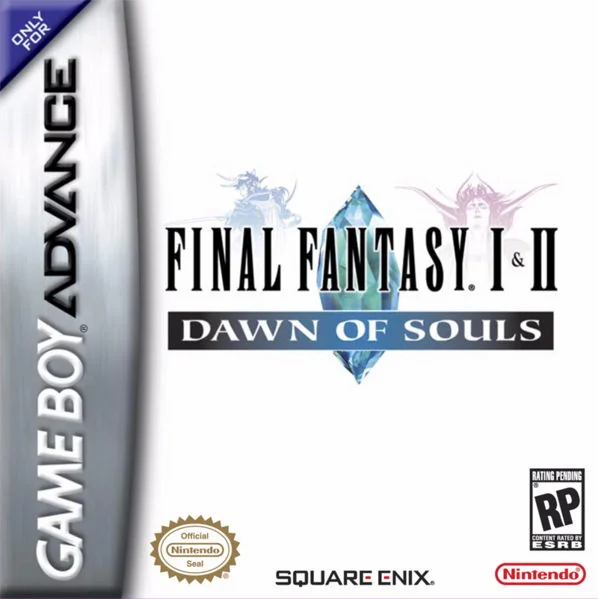
The system also supported games that had not previously been widely available outside Japan. Collections such as Final Fantasy I & II: Dawn of Souls and later Final Fantasy IV Advance, Final Fantasy V Advance and Final Fantasy VI Advance made the handheld an important home for revised versions of classic role-playing games. These releases combined historical preservation with new localization, presentation or content decisions, depending on the title and region. Final Fantasy Tactics Advance likewise showed that the system could support substantial strategy design rather than only short-form arcade-style play.

7. SP, Micro and the value of multiple forms
The Game Boy Advance SP, released in Japan on February 14, 2003, changed the physical experience without changing the underlying software platform. Its clamshell shape made the screen and controls easier to protect during transport, while its front-lit display addressed one of the most persistent complaints about earlier Game Boy screens. The redesign also included a rechargeable battery. Nintendo released the SP in other regions during March 2003.
The redesign showed that portability involved more than reducing size. It also meant making the device easier to use in ordinary conditions. The SP’s shape protected the screen when closed, and its lighting made the display more practical in places where the original Game Boy Advance could be difficult to see.
Nintendo later released Game Boy Micro in 2005, a much smaller Game Boy Advance model aimed at a different audience. It was compatible with Game Boy Advance software but did not provide the broader backward compatibility of the original Advance hardware. It was therefore not a universal replacement. Instead, it demonstrated Nintendo’s willingness to serve different preferences within one generation: some players valued a larger screen and legacy access, while others wanted the smallest possible device.
The e-Reader was another experiment in the Game Boy Advance period. It used cards carrying printed data patterns to add content or features to compatible games. The idea did not become the central future of Nintendo handhelds, but it illustrates the company’s interest in connecting physical objects, cards and software before the DS would make touch and wireless interaction more prominent.
8. Nintendo DS broke the expected successor pattern
Nintendo announced Nintendo DS at E3 in May 2004. Its defining features were two screens, a touch screen, voice recognition and wireless communication. Nintendo did not present it simply as a conventional Game Boy Advance replacement. The name and concept signaled a new direction, one that could coexist with the established handheld line while testing different ways to interact with games.
Nintendo’s 2005 annual report described the DS as a response to a difficult market environment and emphasized intuitive controls. The company’s stated ambition was to narrow the gap between experienced players and people who had little familiarity with games. A stylus, microphone and second screen could make an interaction more direct than a traditional collection of buttons, although developers still had to use those features thoughtfully.
The early software push mixed established characters with experiments. Super Mario 64 DS offered a familiar franchise in a portable form, while WarioWare: Touched! made the touch screen itself part of the attraction. These games did not represent the entire DS catalog, but they helped explain why the system was not merely a faster Game Boy.
Nintendo’s strategy also extended beyond conventional action and role-playing software. Training applications, wireless communication and touch-oriented games helped the company address players who might not have been attracted by a traditional button-heavy handheld. This was a documented change in audience strategy, not simply a specification upgrade.

9. The transition was overlapping, not instantaneous
Nintendo’s Japanese release announcement set the DS launch for December 2, 2004, at 15,000 yen including tax. The regional sequence began with North America on November 21, 2004, followed by Japan on December 2 and Europe on March 11, 2005. Keeping those dates separate matters because the handheld market did not change everywhere at the same time.
The DS retained a Game Boy Advance cartridge slot. That gave the new system access to an existing software base and made the transition less abrupt for players who already owned Advance games. It also gave Nintendo and retailers a bridge between the established handheld business and the new DS software format, which used smaller DS cards.
Compatibility had a clear boundary. Nintendo’s support documentation explains that standard DS systems can play Game Boy Advance games but cannot accept original Game Boy or Game Boy Color cartridges. Game Boy Advance multiplayer features and some accessories also do not function through the DS in the same way they did on Game Boy Advance hardware. The DS therefore connected directly to the most recent branch of Nintendo’s portable history rather than becoming a universal machine for every earlier cartridge format.
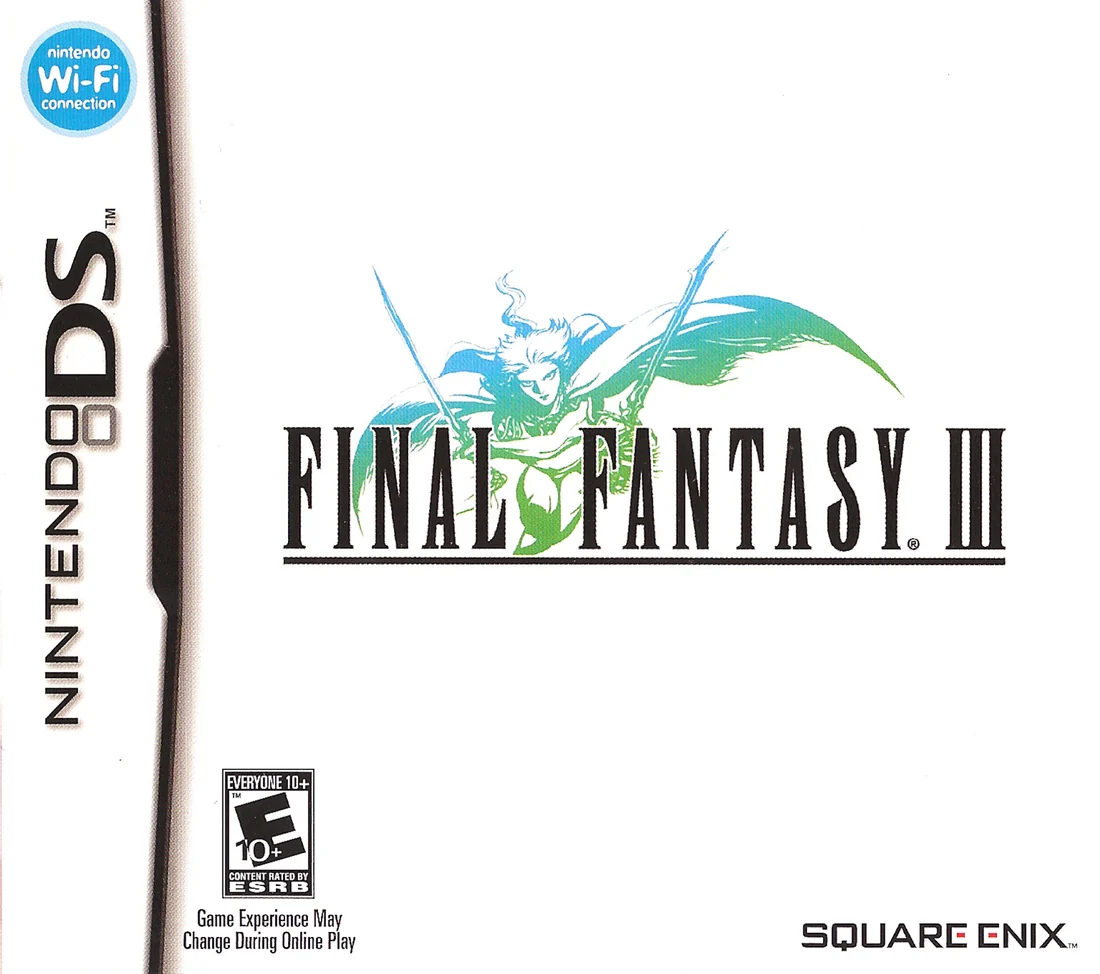
The DS catalog broadened the kinds of games associated with Nintendo handhelds. Phoenix Wright: Ace Attorney used the screen and interface for courtroom investigation and dramatic player input. Final Fantasy III demonstrated how a large role-playing production could be rebuilt for the system’s capabilities. These releases sat alongside training software, wireless games and other experiments aimed at audiences beyond established handheld enthusiasts.
10. The lasting pattern from Game Boy to DS
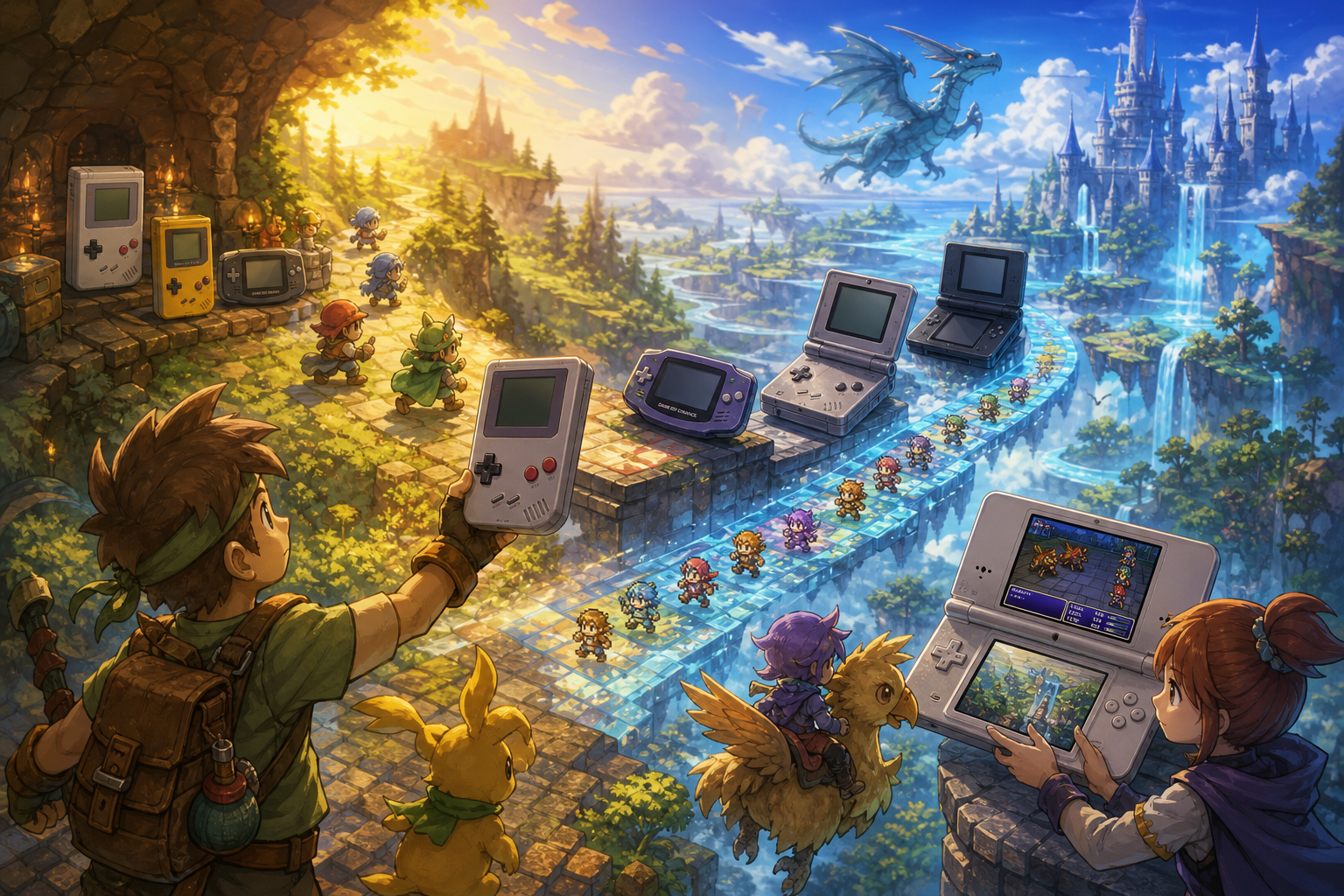
Nintendo’s handheld history from Game Boy to DS is best understood as a sequence of tradeoffs followed by carefully chosen breaks. Game Boy accepted monochrome graphics and modest hardware in exchange for practicality, battery efficiency, cartridges and a long software life. Game Boy Color preserved that foundation while adding color. Game Boy Advance increased power and screen width without abandoning the older library. The DS then challenged the assumption that the next handheld had to be a conventional Game Boy successor.
People were important, but no single executive explains the whole period. Gunpei Yokoi’s work on electronic toys and Game & Watch helped establish Nintendo’s portable design culture, while R&D teams, software developers, regional organizations and corporate leadership shaped the later systems. The documented story is a collaborative one, not a tale of one person inventing every successful decision.
The legacy continued beyond the period covered here. The DSi expanded the DS concept, the 3DS added stereoscopic depth and other features, and the Switch merged portable and home-console roles. Those later machines make more sense when viewed against the earlier pattern: Nintendo often protects a successful software ecosystem, then introduces a new interface or form factor when the company sees an opportunity to redefine who the hardware is for.
The Game Boy-to-DS era remains significant because it turned portable gaming into several things at once: a durable cartridge platform, a home for classic role-playing games, a social space built around trading and wireless play, and an accessible form of entertainment for newcomers. Its success came from the interaction of hardware decisions, software support, regional planning and timing rather than from any single specification or mascot.
Nintendo’s handheld business grew by resisting a simple definition of progress. Sometimes progress meant a smaller body, a better-lit screen or compatibility with an older library. At other times it meant two screens, touch input and software designed for people who had never wanted a traditional game system.
From hanafuda cards and Ultra Hand to Game & Watch, Game Boy, Game Boy Advance and Nintendo DS, Nintendo repeatedly turned constrained hardware into a recognizable play experience. That combination of practical engineering, strong software and selective experimentation is the central thread connecting the company’s earliest portable products to its later handheld successes.