Dragon Quest III may finally be heading into Sega Mega Drive/Genesis territory—unofficially. A developer using the name junkatana has begun work on a fan-made port of the role-playing classic for Sega’s 16-bit console. Early material is limited, but the project is already notable for attempting something the game’s original release history never did: put this particular Dragon Quest adventure on a Mega Drive controller.
Dragon Quest III first arrived in Japan in 1988 on Famicom, before reaching North America in 1991 under the name Dragon Warrior III. It is closely associated with Nintendo hardware, beginning with the Famicom/NES and later returning through compilations and remade editions on Nintendo platforms. The Mega Drive, despite launching in Japan in the same year as Dragon Quest III, was not among its official homes.
That makes the fan project more than a routine re-release concept. It is an effort to recast an 8-bit-era game for a different piece of period hardware, with the apparent goal of giving it a more elaborate 16-bit presentation rather than merely reproducing the Famicom/NES version unchanged.
What the early footage appears to show
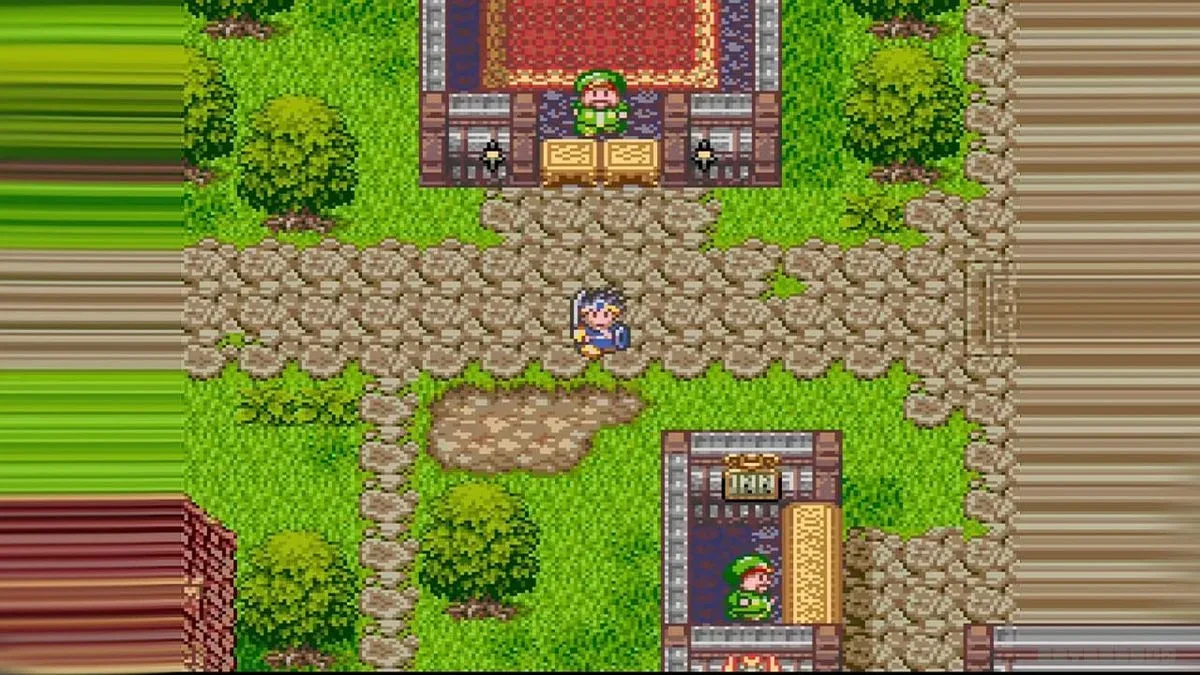
The publicly seen footage amounts to roughly 15 seconds, so there is far too little to treat it as proof of a complete game, a release plan, or even a finished technical direction. Still, the visuals shown appear closer in spirit to the 1996 Super Famicom remake than to the original 8-bit edition.
That distinction matters. A straight port generally seeks to move the same game from one platform to another with minimal changes. This project instead appears to be incorporating revised visual work, potentially creating a Mega Drive interpretation of Dragon Quest III rather than a one-to-one conversion. The footage has been compared in overall look and feel to Chrono Trigger, though that should be read as a broad visual impression, not an indication that it shares that game’s assets, engine, or design.
In practical terms, the attraction is easy to understand: Dragon Quest III designed around Sega’s controller and rendered in a 16-bit-oriented style is a compelling alternate-history proposition for retro fans. It asks a simple question—what might one of the most important Famicom RPGs have looked like had it appeared in Sega’s library during that era?
Reported changes go beyond graphics
The project is described as adding or revising several elements:
- A new save system
- New shops
- A new castle and inn
- Sound improvements
Those details suggest that the work is not limited to character sprites and backgrounds. Save functionality is particularly consequential in a long-form RPG. A save system is the structure that records player progress—such as party status, inventory, location, and story advancement—so a new implementation could affect how naturally the game fits its target hardware and how convenient it is to play.
Related coverage includes Dragon Quest III Is Being Ported to Sega Mega Drive.
Likewise, new shops, a castle, and an inn imply that the team is touching the game’s locations and services rather than simply translating existing map data. At this stage, however, the scope of those additions is unclear. “New” could mean newly built representations for the port, expanded content, altered layouts, or another kind of revision. Until the developer shares more extensive footage or technical documentation, it is best not to assume how much of Dragon Quest III has been recreated or redesigned.
Sound improvements are also worth watching closely. Audio work on a port can range from new music arrangements to improved effects, playback adjustments, or a replacement sound driver—the code responsible for handling music and sound effects. No specific method has been established here, but sound is one of the areas where a hardware-specific reinterpretation can develop its own identity.
Why a Mega Drive version is an interesting retro project
Dragon Quest III’s original identity is inseparable from the Famicom/NES era. Its 1988 Japanese launch placed it firmly among the foundational console RPGs, and its North American release as Dragon Warrior III followed in 1991. Revisiting it on a rival console from the same broad generation creates a different kind of preservation-and-experiment project: not preserving an existing Mega Drive release, but imagining one that never existed.
The Mega Drive/Genesis is the appropriate focal point because it is the stated target platform, even if the console’s regional naming remains split. It was known as Mega Drive in Japan and many other regions, while Genesis was the name used in North America. Fans searching for updates may encounter either label, but they refer to the same Sega hardware family in this context.
There is a broader appeal in these sorts of projects as well. Retro development often means working under the constraints of older systems: limited storage, memory, graphics resources, and audio capabilities compared with modern machines. A project can be visually inspired by later 16-bit work without automatically reproducing every detail of that work. The final result, if it progresses, will depend on what the developer chooses to retain, reinterpret, or newly create for the platform.
That platform-specific character is precisely what separates a fan port from playing an existing version through a different controller or display setup. The potential appeal is not merely that Dragon Quest III could be accessed in another format; it is that its look, interface, sound, and systems may be shaped around the Mega Drive environment.
AI questions remain unanswered
One uncertainty hanging over the project is whether artificial intelligence tools are involved in its development. The available material does not establish how much, if any, AI assistance has been used. The featured image associated with the video has prompted some suspicion that AI editing may have been involved, but that is not evidence of AI use in the game itself.
It is important to separate those questions. AI-generated or AI-modified promotional art, if present, would not necessarily demonstrate that AI was used for programming, sprite work, writing, music, map design, or any other part of the port. Conversely, developers can use AI-assisted tools for limited tasks without that defining the creative or technical authorship of an entire project. No firm conclusion is available from the currently described footage.
For a project like this, a source-code release or detailed development notes would be more useful than visual speculation. Source code is the human-readable programming material from which software is built. If released, it could help technically minded community members understand what has been made, how it runs on the target hardware, and whether the project is a ground-up effort, a conversion built from existing materials, or something in between.
Until then, the responsible description is straightforward: it is an unfinished, unofficial Dragon Quest III Mega Drive/Genesis port with a short early showcase and a stated set of planned or implemented changes. Its eventual scope, technical approach, and distribution remain unconfirmed.
What fans should watch for next
The next meaningful update would be longer gameplay footage. A few seconds can demonstrate art direction, but it cannot establish whether a role-playing game’s essential systems are in place. Exploration, menus, dialogue, combat, saving, and transitions between locations would all reveal much more about the project’s state.
Clearer information about the new shops, castle, inn, and audio changes would also help distinguish a visual remake-style effort from a more ambitious redesign. And because this is an unofficial work based on an established commercial game, enthusiasts should avoid treating it as an official Sega or Dragon Quest release unless that status changes through a direct, verifiable announcement.
For now, the port is an intriguing piece of retro development rather than a finished product. It joins the kind of enthusiast work that keeps old hardware in active conversation decades after its commercial life, much like the technical ambition behind this Amiga AGA rebuild of Starforce. Dragon Quest III’s proposed move to Mega Drive hardware is especially eye-catching because it revisits a historic Nintendo-associated RPG through the lens of its longtime console rival.