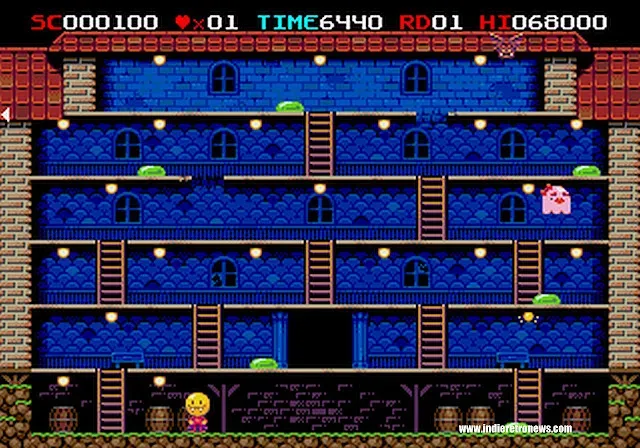
There are plenty of video-game vampires who solve problems with claws, spells, enormous swords, shape-shifting, or the occasional ethically questionable amount of bite-based violence. Darkula, the star of Mega Darkula, has a more practical concern: somebody has made Deviland Park far too bright. His solution is not a grand battle for the fate of the world. It is to get moving, climb ladders, negotiate hazards, and unscrew every offending light bulb in sight.
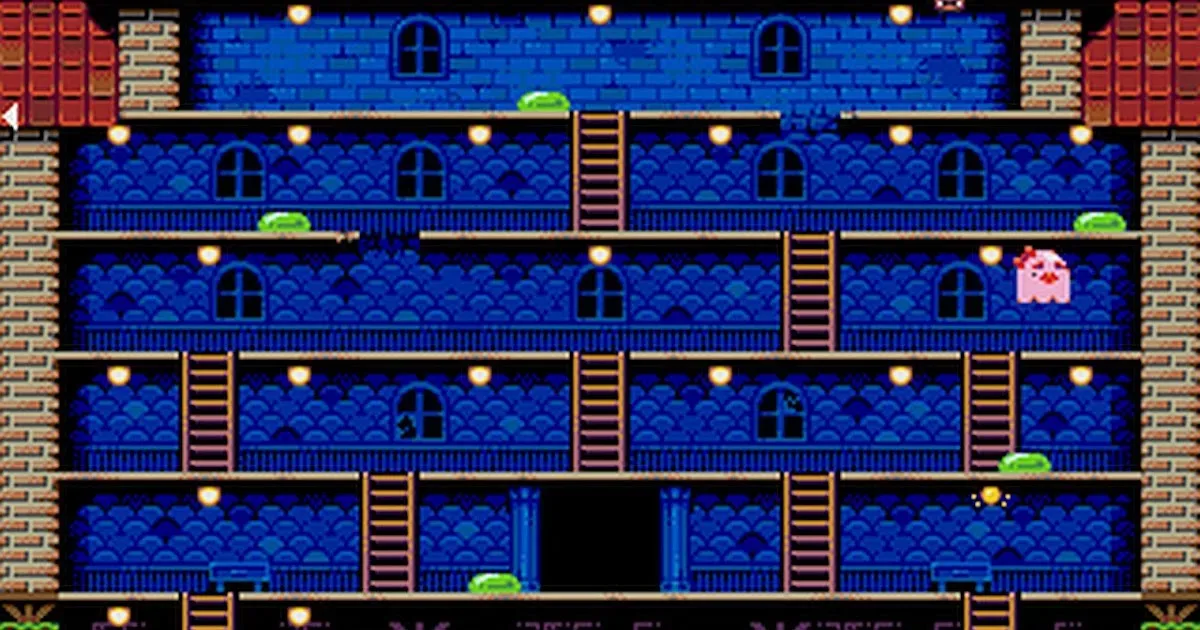
Mega Darkula is an upcoming Sega Mega Drive adaptation by Playonretro of Locomalito’s original game, and a demo is now available. It frames its arcade action around Deviland Park, an amusement park established by legendary monsters. The problem, at least from a vampire’s point of view, is that darkness has faded from the grounds beneath an aggressively dazzling collection of lights. Restoring the proper spooky atmosphere means clearing each stage bulb by bulb.
That deliberately focused premise points to a game built less around combat and more around execution. Darkula has no combat abilities, so direct confrontation is not an option. Players instead have to use movement, timing, ladder climbs and route choices to reach the lights while avoiding the dangers placed throughout the park. For an arcade-style game, that limitation is an important part of the hook: the objective may be simple to explain, but getting to every target safely is where the challenge lives.
A vampire platformer without a fight button
Many retro action games make their intentions obvious immediately: clear rooms of enemies, acquire a stronger attack, and push onward. Mega Darkula takes a different route. Its central task is environmental—turning off the lights—and Darkula’s inability to fight means players must read a stage rather than overpower it. The character’s survival depends on understanding where to run, when to jump, which ladders offer a safe approach and when a risky shortcut is actually a bad idea in a cape.
That makes the game’s structure sound especially suited to players who enjoy repeat attempts and incremental improvement. A run can be about simply surviving long enough to learn a layout, but it can also be about identifying a cleaner path between bulbs or trimming wasteful movement. The stated design approach is easy to pick up but difficult to fully master, a classic arcade ambition that is often more meaningful when a game gives its players a sharp, legible goal.
In Mega Darkula’s case, the goal is unusually visual. Every bulb removed changes the immediate purpose of the level. Instead of just reaching an exit, players are cleaning up a luminous insult to monster-kind. It is a wonderfully specific arcade objective, and it keeps the game’s vampire theme tied directly to its mechanics rather than merely using spooky décor as a backdrop.
Built for Sega’s 16-bit hardware
This is a dedicated version for the Sega Mega Drive, known as the Sega Genesis in North America, rather than a generic retro-styled release simply borrowing the look of the era. The development team has divided its work across several specialists with connections to the project’s particular identity. Richard Fhager, whose credits include Downbringer, has reimagined the visuals in 16-bit form. Moonwatcher is responsible for the console coding, while Gryzor87, the original composer, provides the chiptune soundtrack.
Those credits matter because an adaptation like this has to preserve more than a premise. A game designed around exact movement and hazards needs a responsive feel, clear visual information and music that can carry repeated runs without becoming an unwanted extra obstacle. The available details point to a project attempting to give the original concept a natural home on Mega Drive hardware, with a specifically remade graphic presentation and soundtrack support from the original composer.
Related coverage includes Mega Darkula Brings a Light-Smashing Vampire Adventure to Sega Mega Drive.
The Mega Drive remains a particularly fitting machine for games that want to emphasize quick arcade decisions. Its library has no shortage of high-energy platformers and score-driven action games, but Mega Darkula’s non-combat structure gives it a distinct angle within that tradition. Its premise may be comic—an upset vampire conducting a one-creature anti-light campaign—but the design asks for discipline. A missed jump, mistimed climb or poorly considered route can matter precisely because Darkula cannot simply eliminate whatever is in the way.
That combination of playful theme and exacting play is a familiar strength of the wider homebrew and independent retro scene. Developers working with older hardware are not limited to reproducing familiar genre templates; they can also make an unusual mechanical constraint the entire point of a game. Mega Darkula’s decision to turn an apparently minor act, unscrewing bulbs, into the organizing principle for a platform challenge is the sort of compact idea that can reward close level design.
Six stages, two bonus levels and a tougher return trip
The current build includes six main stages and two bonus levels. It also includes a second loop intended to raise the pressure after players complete the initial run. Second loops have long been an effective way for arcade-minded games to separate completion from mastery: seeing the ending or reaching the first clear is one achievement, while surviving a more punishing repeat is another challenge entirely.
For score-focused players, that structure suggests room to keep returning even after the basics are understood. The game’s route-planning emphasis naturally invites questions that go beyond “Can this stage be cleared?” Which bulb order reduces danger? When is it worth taking a more exposed route? How consistently can a player preserve a run once the hazards become familiar? The supplied details do not specify scoring systems, lives, continues or the exact changes made in the second loop, so those particulars remain unknown. Still, the presence of the loop establishes a clear goal for players seeking a sterner test.
Bonus levels also fit the game’s old-school arcade framing. They provide space to vary the pace from the principal stages and can give an already compact game a different rhythm between tense navigation challenges. What their specific rules or objectives are has not been detailed, but their inclusion means the six-stage count is not the whole package in the current build.
Why the demo matters
A demo is particularly useful for a game whose appeal rests on the feel of movement and the clarity of its routes. Screenshots can show off Fhager’s 16-bit interpretation and a description can explain the bulb-removal objective, but neither can fully communicate the timing demanded by a jump, the speed of a ladder climb or the pressure created by hazards around a key target. The demo gives curious Mega Drive players a way to engage with the project’s fundamental proposition: can a vampire with no offensive tools turn careful navigation into satisfying arcade action?
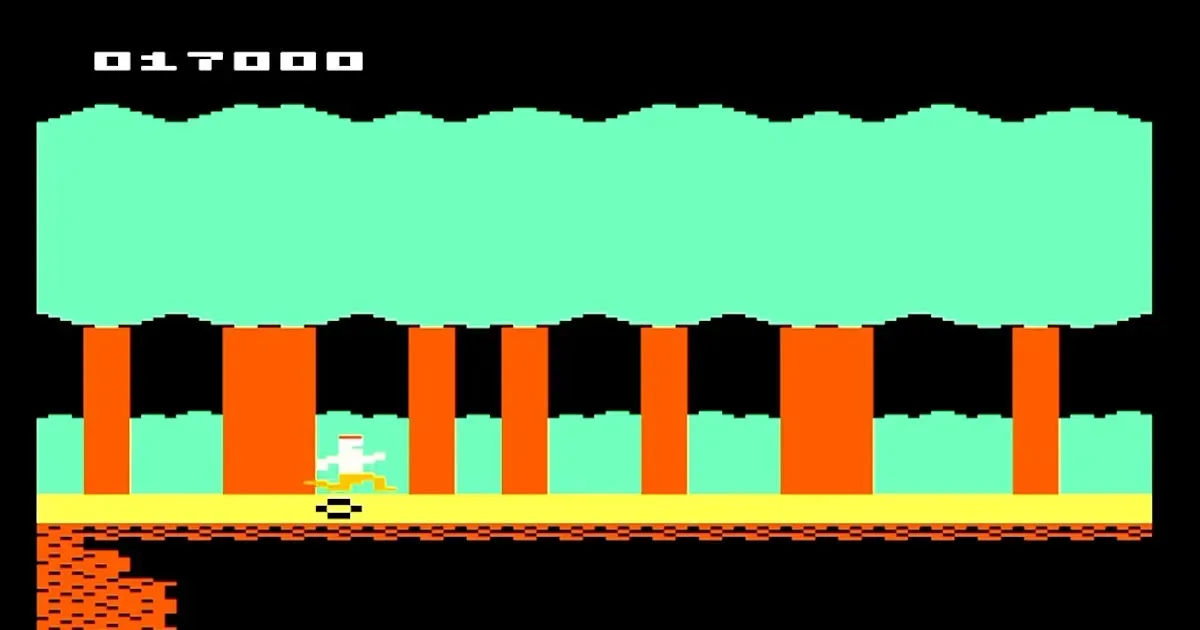
It also arrives at a time when interest in newly made games for older systems remains lively. From cartridge releases to ports and hardware-aware originals, retro platforms are continuing to receive projects that treat their constraints as creative starting points. Recent retro coverage has included projects reaching even less commonly targeted machines, such as a VIC-20 + 35K fan port of Pitfall II: Lost Caverns. Mega Darkula belongs to that broader current while aiming at one of the best-known 16-bit consoles.
For now, the concrete picture is straightforward. Playonretro is preparing Mega Darkula for Sega Mega Drive; it adapts Locomalito’s original vampire game; and it asks players to darken Deviland Park through agile, carefully planned stage play rather than combat. With six main stages, two bonus levels, a harder second loop, reworked 16-bit art, Mega Drive coding by Moonwatcher and chiptunes from Gryzor87, it is positioned as a concise but demanding arcade challenge. The demo offers the first opportunity to see whether the park’s lights are as easy to remove as Darkula would like.