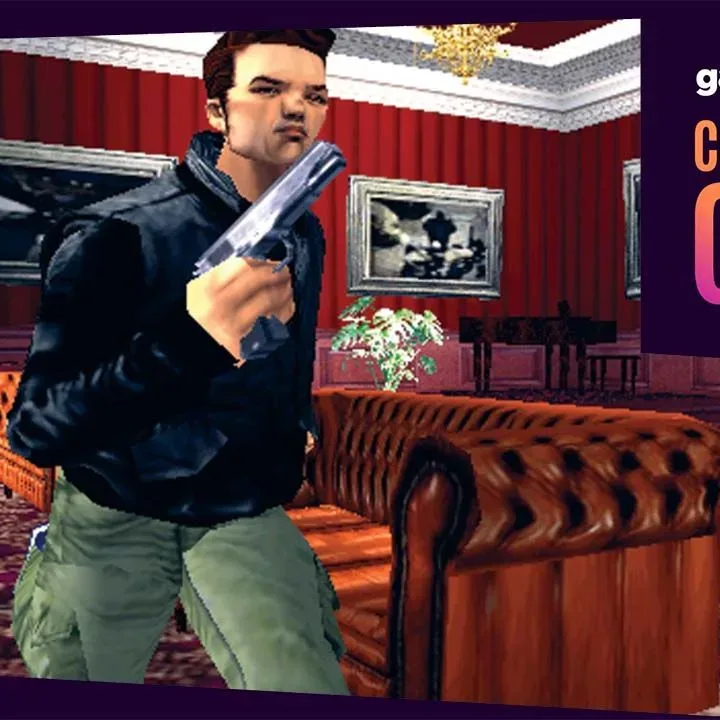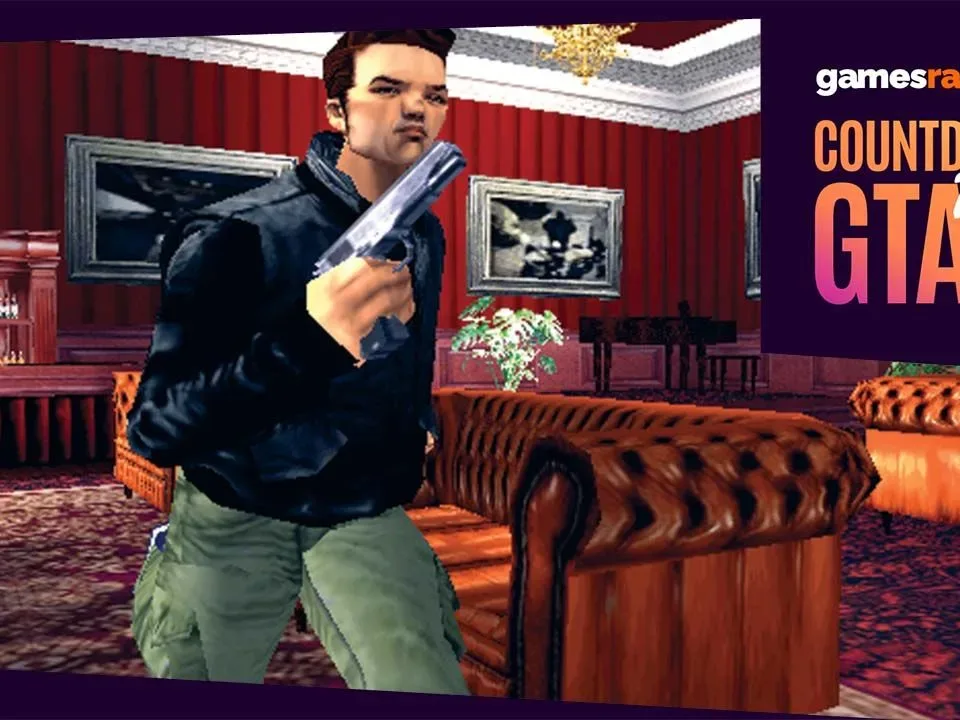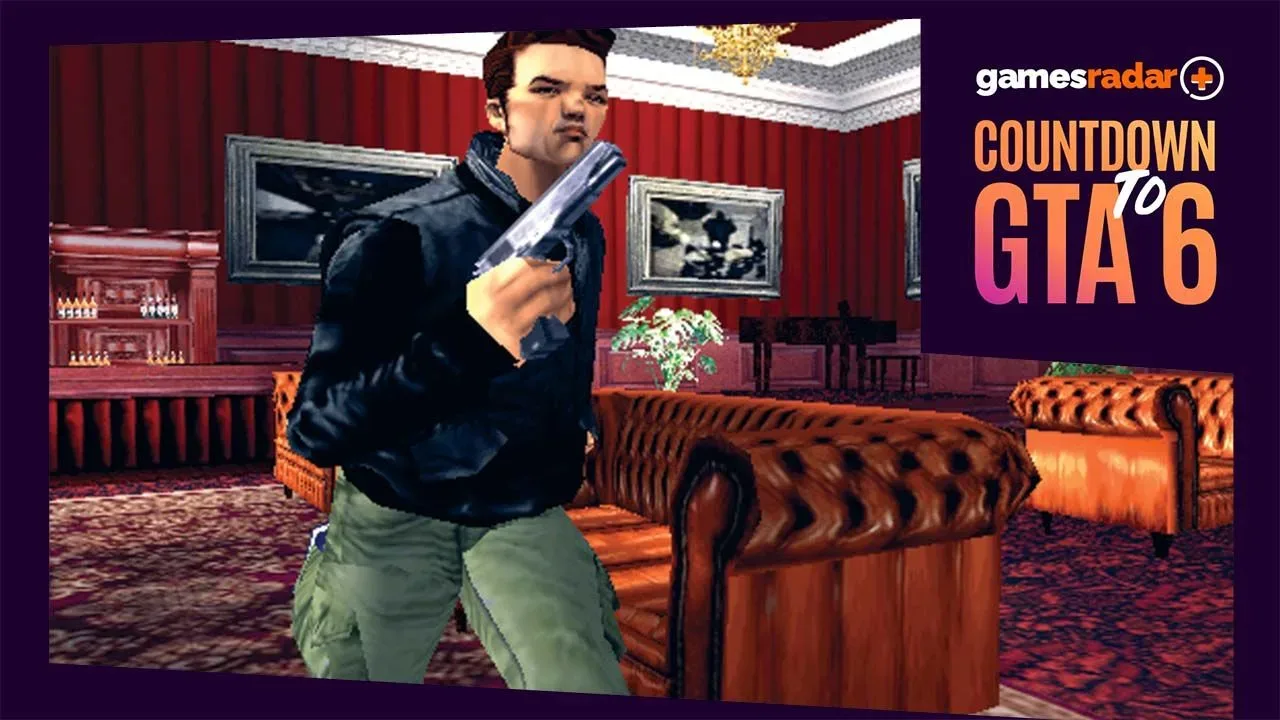
Before Grand Theft Auto 3 became a landmark for 3D open worlds, the idea had to survive a much smaller proving ground: a Dreamcast demonstration with cars moving through a city and pedestrians on its streets. Aaron Garbut, Rockstar North co-studio head and art director, has described that prototype as the turning point that convinced doubters inside DMA Design that its GTA ambitions could actually work.
It is a useful reminder that GTA 3’s leap was not simply a matter of moving an established series from a top-down perspective into 3D. The team had to prove that a dense city could support free movement, vehicle theft, missions, pedestrians, traffic, weather, and player-caused mayhem without dissolving into technical rubble. Today, phrases such as “open world,” “streaming,” and “dynamic systems” can sound like standard genre vocabulary. At the time, DMA was trying to combine them in a particularly unforgiving setting: a compact city intended to work both at driving speed and during careful exploration on foot.
The Dreamcast prototype was basic, Garbut has said, but it got to the key point in a matter of weeks. A player could take a car and drive it around the test city. That was enough to demonstrate the central fantasy. Rather than asking colleagues to imagine a seamless urban sandbox from a design document, the demo made the proposal tangible: this could be a place where a player did not merely follow routes, but chose one.
For more background on that early proof of concept and its role in the series’ shift, see this account of the Dreamcast demo.
For more context, explore GB Operator Restock Returns a Practical Bridge Between Game Boy Cartridges and Modern PCs.
A prototype built to settle an argument
DMA Design had moved into a new Edinburgh office after years in Dundee, at a moment when the industry was rapidly embracing 3D. The group behind the earlier 3D game Body Harvest felt ready to take GTA in that direction. Not everyone was persuaded. GTA 2 had experimented with a tilted camera, but a fully navigable, fast-moving urban simulation seemed like a much bigger proposition.
That skepticism was reasonable. A city game asks a machine to handle more than scenery. Roads must accommodate traffic. Pedestrians must populate spaces. Vehicles need to feel different enough to be worth stealing. Missions have to coexist with incidental events. And the player can turn in an arbitrary direction at an arbitrary time, including directly toward the system’s weak spot.
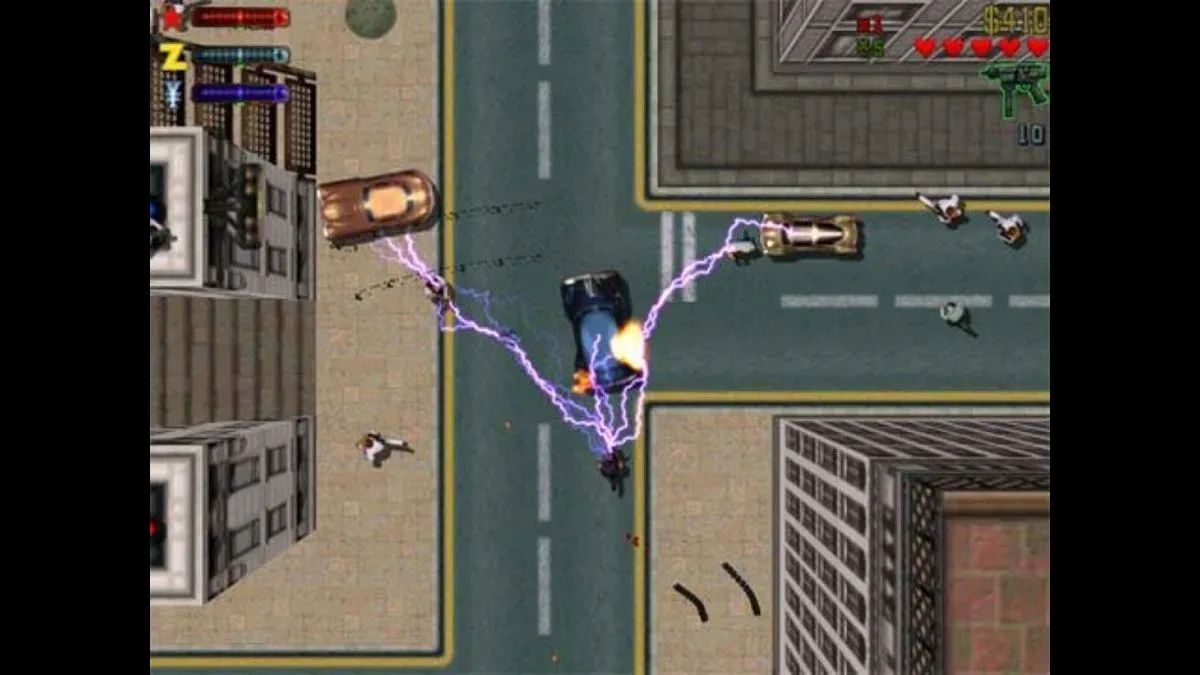
Garbut has characterized the young team as confident, inexperienced, and excited by the perceived possibilities of 3D. That mix can be risky, but it also matters in creative work. The team was not trying to recreate the old GTA games feature for feature. It held onto essentials such as the criminal antihero, multiple mission-givers, Wanted levels, and Pay ’n’ Spray, while deliberately discarding an arcade-style destruction score that no longer suited the more immersive camera and city.
That distinction explains much of GTA 3’s identity. The earlier games’ “pinball scoring,” as Garbut described it, treated chaos as an abstract point chase. GTA 3 could instead make chaos part of a place. A police pursuit, an accident, a stolen car, and a mission could all feel like events in Liberty City rather than entries on a scoreboard. The goal was a functioning “playset” first: a world that could generate opportunities before the designers layered a story on top.
What streaming meant for Liberty City
The technical heart of that playset was streaming. In game development, streaming is the process of loading and removing assets as they are needed rather than holding an entire game world in memory at once. It is the unglamorous machinery behind the illusion that a large environment remains available without a disruptive loading screen every few blocks.
GTA 3’s problem was especially awkward because its city was meant to be dense and continuous. Garbut contrasted the project with games structured around manageable loading sections, broad empty areas, or experiences optimized chiefly for high-speed traversal. DMA wanted streets that could be driven through quickly but also examined close up, without spacing major areas apart simply to make the technology easier.
The solution required close cooperation between art and code. Garbut said the art team manually divided the world to make the best use of available memory and to get data from the disc quickly enough. The programming team built the streaming system itself. The work even extended to placing files in particular sequences on the DVD so data for nearby world areas would be physically grouped on the disc.
That last detail is a sharp illustration of technical constraint shaping a game’s art. It is not just that memory had limits; the speed at which information could be retrieved also governed what could appear around the player. “Granular” in this context means working at a fine level of detail, down to data layout on the physical media. Liberty City’s apparent continuity therefore depended on decisions that players would never see directly.
Of course, the illusion could occasionally show its seams. Garbut recalled the rare moment when geometry might appear just in time to meet a vehicle. Yet the larger achievement was that the system opened up scale and detail within its operating limits. If the nearby world fit in memory and could be read from the drive fast enough, the team could construct a much broader city experience than a strict sequence of isolated arenas would allow.
A city has to survive the player, too
Streaming was only one problem. An open world is a collection of systems that can collide in combinations no scripted sequence can fully predict. Garbut’s example is delightfully destructive: a pileup around a corner could be exploding at the same moment an intense mission is running. The game needs to maintain traffic, pedestrians, physics, effects, mission logic, and player interaction without allowing one surprise to topple everything else.
This is what developers mean when they discuss systems in open-world games. A system is a reusable set of rules—traffic behavior, police response, vehicle damage, weather, pedestrian activity—that operates beyond a single cutscene or bespoke mission. The payoff is emergent possibility: a player’s unscripted actions can create memorable incidents. The cost is that every system competes for performance and must remain stable when another system behaves unexpectedly.
GTA 3’s design challenge was not merely to place activity on a map. It was to make that activity responsive enough that the player could disturb it. That remains a practical yardstick for assessing open worlds. A large map may be visually impressive, but size alone is not the same as interaction. Garbut’s recollection puts the emphasis on the latter: keeping the world alive while allowing real interference with it.
Cars turned the city into a toybox
Rockstar North’s approach, Garbut says, begins with the place and then moves upward into the “toys” that make the place playable. In GTA 3, the cars were the essential toy. The city became substantially more convincing when vehicles began moving through it, and the project’s momentum became clearer as different vehicle types acquired their own behavior.
Garbut remembers spending hours skidding a car around and watching its suspension react to kerbs. That is a small anecdote with a major design implication. Vehicle physics need not be a perfect real-world simulation to be effective. For GTA 3, cars needed to feel physical, dramatic, and varied enough that driving itself was entertaining. Trucks, sports cars, and other vehicles having different tuning gave players reasons to experiment even outside a mission.
In practical terms, the vehicles joined traversal and spectacle. They helped players cross Liberty City, but they also supplied the basis for chases, crashes, escapes, and chain reactions. One burning car triggering further explosions and eventually bringing down a police helicopter is exactly the kind of escalating event that a systems-driven city can produce. It also shows why individual departments cannot work in isolation: art, vehicle behavior, effects, mission design, and the wider world simulation all have to reinforce one another.
Garbut describes this process as a creative whirl in which one team’s work pushes the next team to make something stronger. The important qualifier is that early versions can be rough. A new feature may only look promising “if you squint,” but its arrival changes what everyone can build next. GTA 3’s cars did not just complete a checklist item. They demonstrated that the world had become a place worth playing in.
Liberty City was an impression, not a replica
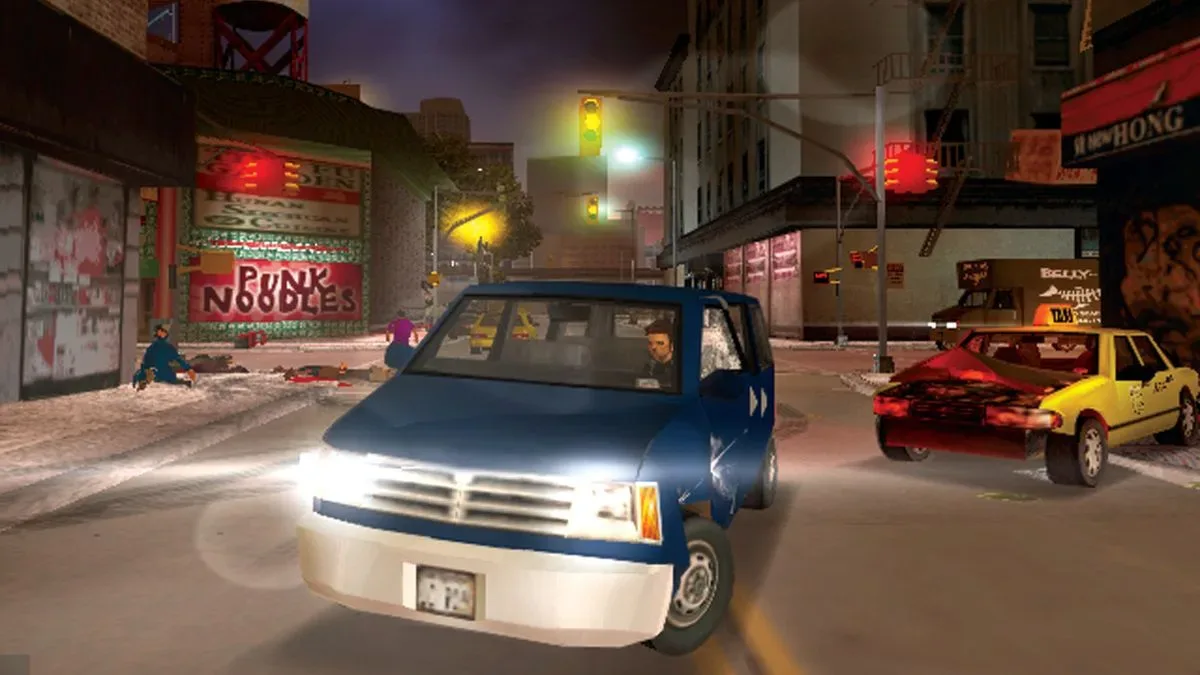
The technical breakthrough would have meant far less without a persuasive mood. Liberty City drew on New York, but it was not designed as a literal recreation. Garbut had visited only a couple of times and the studio initially lacked tools now taken for granted, including internet access and Google Maps. The visual reference pool included a small collection of 35mm photographs, old films, and television.
That distance guided the art direction. Rather than chase glamour or exhaustive architectural accuracy, the team pursued an exaggerated impression: damp roads, concrete, litter, dark water, rain, and grey urban spaces. Dynamic weather and time of day strengthened that impression. The result also made smart use of the PlayStation 2 era’s limitations. When precise detail is constrained, atmosphere can do substantial work.
There is a valuable creative lesson in that choice. Fidelity is not identical to believability. A game can feel coherent because its lighting, weather, color, and environmental texture consistently communicate a point of view. Liberty City’s mood supported its crime story and its characters while letting the developers make a fictional city with more control than a strict real-world replica might allow.
Garbut has said that the focus from GTA 3 onward was the impression of a location rather than exact reality. The series’ satirical view of America fits that method: it filters recognisable cultural imagery through a deliberately warped fictional lens. In Liberty City, that lens was built partly from creative necessity and partly from the team’s screen-informed understanding of New York.
A rough foundation that kept growing
Garbut does not present GTA 3 as a finished ideal viewed through nostalgia. He describes it as comparatively simple and lacking refinement by later standards, while still taking pride in its consistency and charm. Some decisions, including a silent main character, were revisited quickly. Vice City arrived a year later to critical acclaim, already building on what GTA 3 had taught the team.
That willingness to reassess is perhaps the clearest legacy of the project. GTA 3 established a development method—create the place, make it inhabitable, provide compelling toys, then expand the possibilities—that Garbut says continues at Rockstar North. The game’s lasting importance lies not only in its individual features, but in how those features were made to work together: a streamed city, reactive systems, physical vehicles, and an art direction focused on mood.
Garbut likens the process to “roughing in” a piece of art: establish the fundamental structure, then refine it. GTA 3 was as resolved as the team could make it at the time, he says, but it was also a foundation. Squint at that first 3D Liberty City and the later sophistication may not yet be visible in detail. The underlying ambition, though, is unmistakable: build a city that feels alive enough for players to make their own trouble in it.