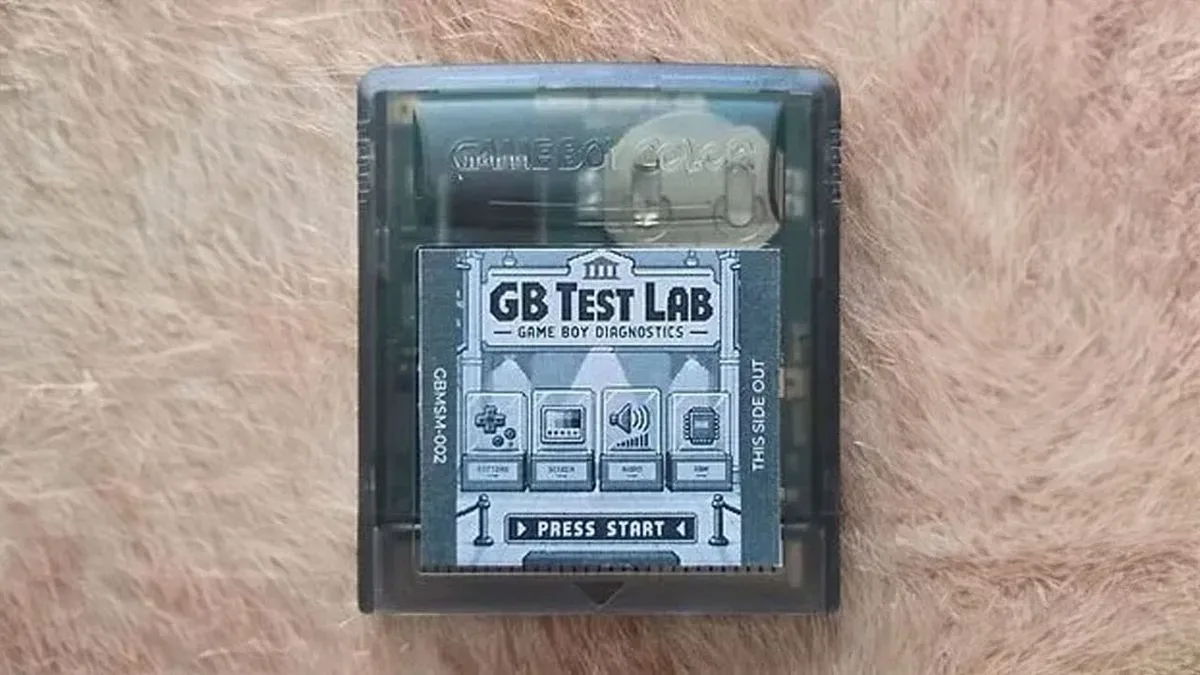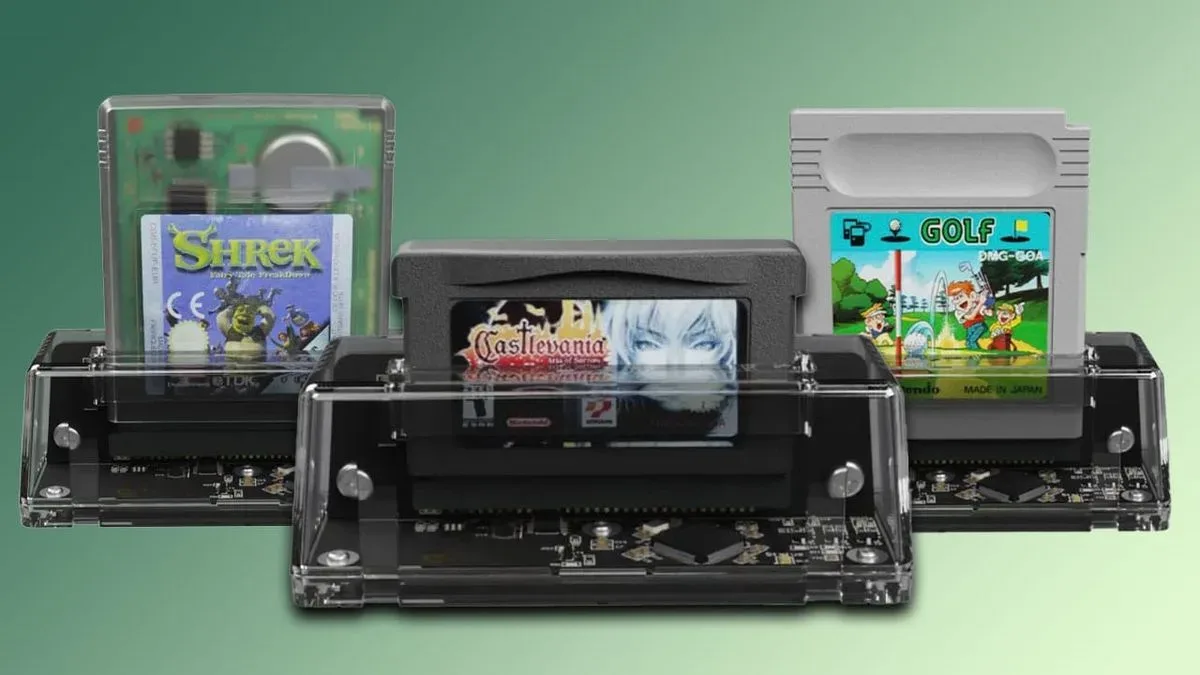
Epilogue’s GB Operator is back in stock through the company’s own store, returning a compact option for people who still play, preserve, or scrutinize Game Boy cartridges. Priced at $59.99—listed at roughly £45—the device sits between original physical software and contemporary hardware: insert a cartridge, connect the GB Operator to a compatible computer, and use the cartridge through that setup rather than leaving a long-running save locked to a handheld system.
That basic idea has several practical branches. Cartridge playback on a PC may be the immediate attraction, but the GB Operator is also positioned around save backup, cartridge checks through Epilogue’s mobile app, writing GB Studio projects to cartridges, and repurposing a Game Boy Camera as an 8-bit webcam. The device is compatible with Windows 10 or newer and macOS 12 or later. Epilogue also supports use on Linux, Steam Deck, ROG Ally, and Raspberry Pi.
What the GB Operator is for
The GB Operator is best understood as a cartridge utility as much as a way to play. A Game Boy cartridge is physical media, but a player’s progress is data stored on that media. For owners of older games—especially lengthy RPGs—that distinction matters. Being able to back up a save means preserving a copy of progress that may otherwise exist only on one aging cartridge.
A save backup is simply a copied version of the game’s stored progress. It is not the same thing as creating a new save inside a game, and it should not be confused with a save state, a term commonly used for a snapshot of a game at a particular instant. The supplied product details describe backing up saves, alongside PC cartridge play. Either way, the central appeal is continuity: players can keep using the cartridge and its existing data while adding a modern route for accessing or safeguarding that data.
That makes the device particularly relevant to people with established collections and existing saves. A player does not need to abandon an original cartridge just to play on a computer, nor does the cartridge have to be treated solely as a display item. The hardware keeps the physical game in the process.
Counterfeit checking is a notable use case
Among the more distinctive functions is cartridge authenticity checking through Epilogue’s mobile app. Counterfeit Game Boy games are a real consideration in the second-hand market, and Pokémon cartridges are specifically identified as an area where convincing fakes can appear. A tool that helps examine a cartridge can be useful before someone commits to a used purchase—or when they want more confidence about an item already on the shelf.
It is important to describe that function accurately. A counterfeit check is an assessment aid, not a promise that every question around provenance, condition, or value has been settled. Buyers considering a pre-owned cartridge still have reasons to inspect the item itself, confirm it works, and weigh the seller’s information. The practical advantage here is that the GB Operator can contribute another form of evidence using the cartridge’s own data and behavior.
For Game Boy collectors and players, this is where a cartridge device can become more than an occasional accessory. It can serve a repeatable role when examining potential purchases, then a separate role at home for preservation and play. Its compact form factor also makes it more portable than a dedicated console setup, provided the user has a compatible host device.
Related coverage includes GB Operator Restock Brings Game Boy Cartridge Tools Back to Epilogue.
Compatibility broadens the use cases
The stated compatibility list covers conventional desktop and laptop operating systems as well as smaller or portable systems. Windows 10 and later and macOS 12 and later are the headline requirements, while Linux support makes the GB Operator relevant to users who do not rely on either of those platforms. Steam Deck, ROG Ally, and Raspberry Pi support extends that flexibility to handheld PCs and compact single-board computing setups.
That range is worth separating from any claim that every platform delivers an identical experience. Compatibility means the device can be used on those systems; individual owners should still consider their preferred screen, controls, storage habits, and setup before buying. Someone focused on periodic save backups may prioritize a desktop computer and organized files. Someone who wants cartridge play while travelling may care more about whether their existing portable PC fits their routine.
The restock also lands in a broader PC-gaming environment where different ways of accessing games continue to coexist. Services that curate digital games, such as Pantaloon’s Playbill subscription initiative, represent one end of that spectrum. The GB Operator occupies a very different niche: it is designed around a user’s own physical Game Boy cartridges and the saves attached to them.
Beyond playback: GB Studio and Game Boy Camera functions
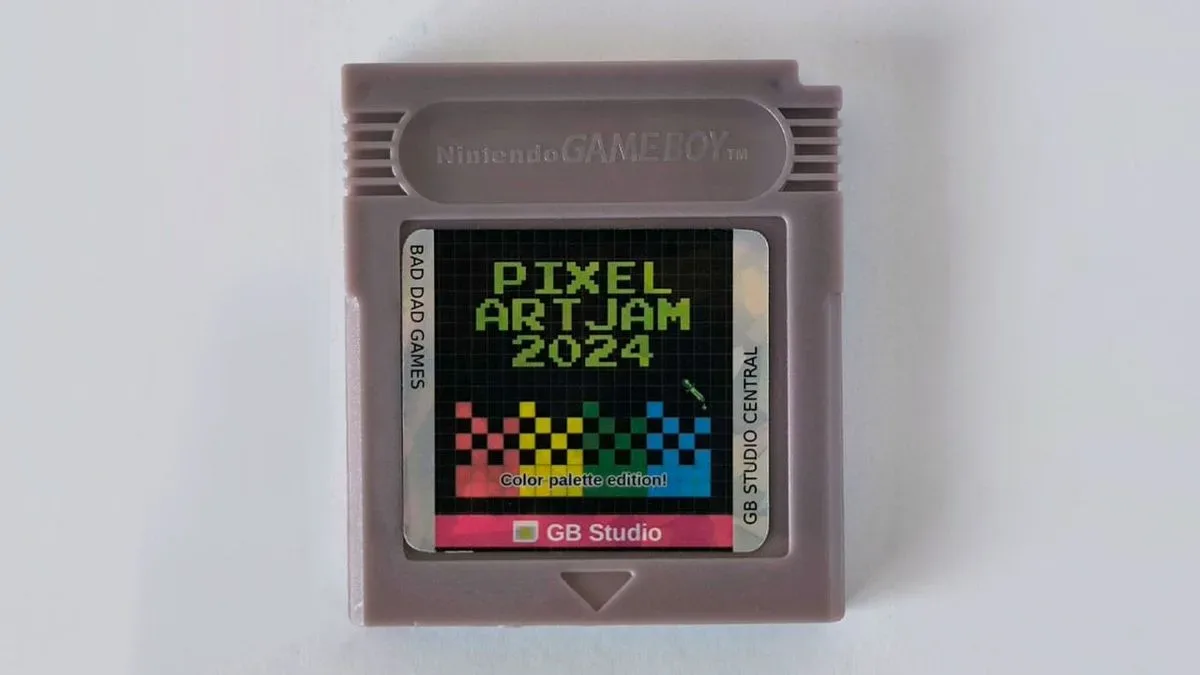
The GB Operator’s additional features make it potentially useful to hobbyist creators as well as cartridge owners. GB Studio is a game-development tool associated here with the ability to write a user’s own projects onto cartridges through the GB Operator. In plain terms, that gives a creator a pathway from making a Game Boy-style game to placing it on cartridge media.
That capability is distinct from playing a commercially released cartridge. One is about reading and using a game that is already on a cart; the other is about writing a creator’s own game project to a cartridge. Both involve the same physical format, but they answer different needs. The former helps players revisit their library, while the latter points to contemporary creation around Game Boy-compatible hardware.
There is also an unusually playful peripheral feature: using a Game Boy Camera as an 8-bit retro webcam. The Game Boy Camera’s visual character is the point rather than high-fidelity video. It gives owners a way to bring a recognizable piece of older hardware into a modern computer use case without pretending it is a substitute for a conventional camera.
How it fits beside Epilogue’s other hardware
Epilogue’s product line goes beyond the Game Boy-focused model. The company also offers the larger SN Operator for playing and backing up SNES cartridges, and it is working on a 64 Operator for Nintendo 64 games. That progression makes the GB Operator part of a wider effort to connect cartridge-based libraries with newer computers.
For a buyer, the key distinction is format. The GB Operator is the relevant unit for Game Boy cartridges; the SN Operator addresses SNES cartridges; and the 64 Operator remains a future product in development. Anyone with libraries across systems should avoid assuming that one device automatically covers all cartridge families.
The current GB Operator restock is therefore straightforward news with a useful practical angle. It puts a relatively low-cost tool back on sale for people who want to play original Game Boy cartridges on a modern device, create backups of their progress, make use of the supported authenticity-checking workflow, or experiment with Game Boy Camera and GB Studio functions. Units are expected to ship at the end of October.
What prospective buyers should consider
- Primary goal: Decide whether the main need is cartridge play, save backup, authenticity checking, GB Studio cartridge writing, or Game Boy Camera use.
- Platform: Confirm access to Windows 10 or later, macOS 12 or later, Linux, Steam Deck, ROG Ally, or Raspberry Pi before treating compatibility as a purchase decision.
- Cartridge format: The GB Operator is for Game Boy cartridges; SNES collections require the separate SN Operator.
- Data care: A backup is most useful when it is kept in a place the owner can find later. Owners preserving important saves should plan their file organization rather than treating the first copy as the whole job.
- Used-game checks: Treat counterfeit detection as one helpful part of evaluating a second-hand cartridge, not as a replacement for inspecting the game and its condition.
At $59.99, the GB Operator is not merely a nostalgia device. Its value is in making physical cartridges more usable in the present: playable through a modern system, less isolated from backup workflows, and potentially easier to evaluate when buying used. For a Game Boy library with saves worth keeping, those functions are considerably more meaningful than novelty alone.