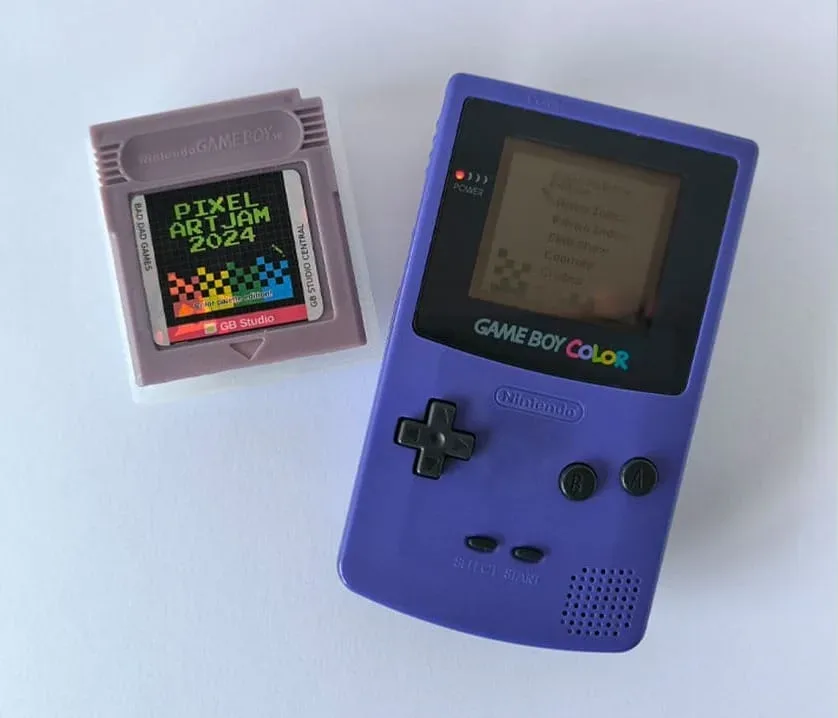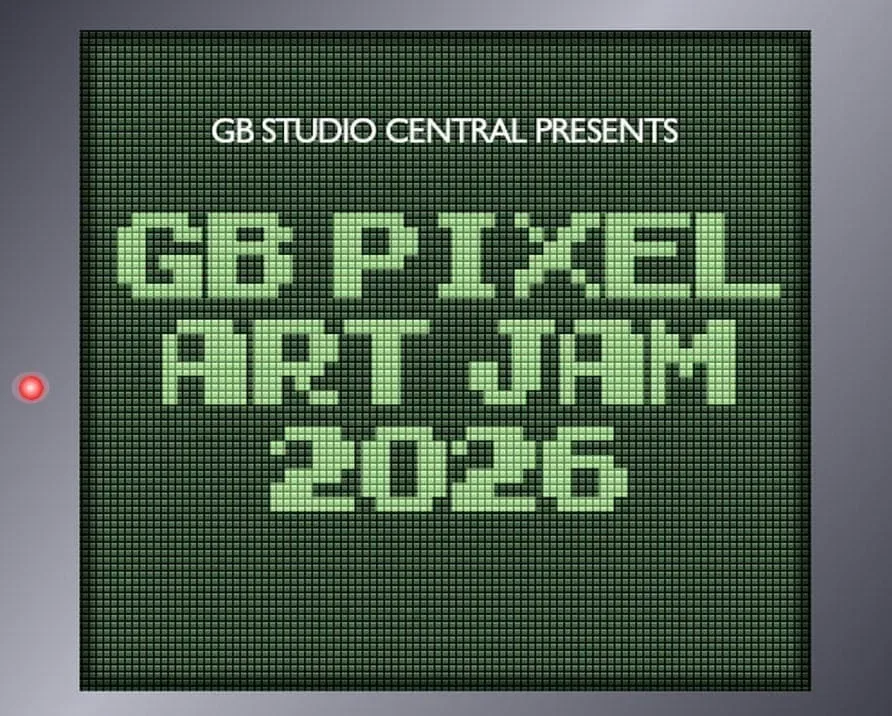
The fourth Game Boy Pixel Art Jam is scheduled for the weekend of October 10–11, inviting artists to build a single Game Boy-sized pixel-art image under a 48-hour deadline. The event is being organized by Philip Hunt and the GB Studio Central Team, continuing a community project that began in 2023.
It is a deliberately compact challenge. Participants will receive the theme only when the jam begins, then create an image measuring 160 pixels wide by 144 pixels high. That is the exact display resolution associated with the original Game Boy, so the format is not merely retro-styled artwork placed inside a convenient frame: every entry is intended to fit the handheld’s familiar screen dimensions.
Artists at any skill level can participate, from people making their first pixel-art piece to experienced practitioners. The unknown prompt, fixed canvas and short schedule give everyone the same starting point. They also put the emphasis on decisions: what can be communicated clearly with a small number of pixels, a limited amount of time and no chance to prepare a finished response before the theme appears?
A small canvas with a serious deadline
A pixel art jam is a time-limited creative event in which participants make work to a shared brief. In this case, the jam’s limitations are central to its appeal. A 160-by-144 image contains 23,040 individual pixel positions. That may sound like a lot until an artist tries to establish a readable character, setting, lighting and focal point within it. Every placement has proportionally more weight than it would on a much larger digital canvas.
Pixel art is often misunderstood as simply drawing at low resolution. It is more accurately a discipline of clarity and intentional simplification. Forms need to read quickly. Color relationships need to separate one object from another. A silhouette frequently needs to carry a character or creature before viewers can appreciate smaller details. On a Game Boy-scale image, an artist may have to decide whether a handful of pixels should become a face, a hand, a highlight, an environmental clue or empty space that improves the composition.
The 48-hour limit matters for the same reason. It discourages endless refinement and rewards a workable plan. Entrants will need to interpret the prompt, settle on an idea, block out a composition, revise it and submit it within two days. The event does not promise that every image will be elaborate; it offers a focused framework in which a concise visual idea can succeed.
That accessibility is one reason the organizers see the jam as a potential first event for newcomers. Hunt said the earlier jams showed that the combination of a low barrier to entry, a brief time commitment and technical restrictions could make participation less intimidating for people who had never joined a jam before.
“The low barrier of entry, short time commitment, and some technical restrictions that challenge creativity, means it has been the first jam experience for some,” Hunt said.
Related coverage includes Fourth Game Boy Pixel Art Jam Set for October Weekend.
The theme stays secret until the clock starts
The theme has not been disclosed ahead of the October weekend. That choice is a practical fairness measure rather than a bit of ceremony. If the brief were known in advance, entrants could develop concepts, test compositions or even make substantial portions of their work before the official start. Revealing it at the opening of the jam means the allotted 48 hours are meaningful for every participant.
There is another creative upside to the surprise. A late reveal asks artists to respond rather than execute a long-held plan. Some may take a literal route, while others may pursue humor, mood, character design or an unexpected interpretation. The shared theme creates a thread through the final gallery, but the fixed screen size leaves ample room for radically different approaches.
For prospective entrants, the practical preparation available before the prompt is mostly about process rather than subject matter. Artists can make sure they are comfortable creating at 160 by 144 pixels, decide which drawing software they want to use and think about how they will keep their work organized over a fast weekend. None of that solves the eventual prompt, but it removes avoidable friction once the timer begins.
The size also provides a useful check while working: if the core idea cannot be understood at the target resolution, adding detail may not solve the problem. Simplifying a silhouette, improving contrast or moving an important feature can be more valuable than adding another decorative element. Those are not rules imposed by the jam, but they are the sort of visual trade-offs its constraints bring to the surface.
Qualifying images are intended for a playable ROM collection
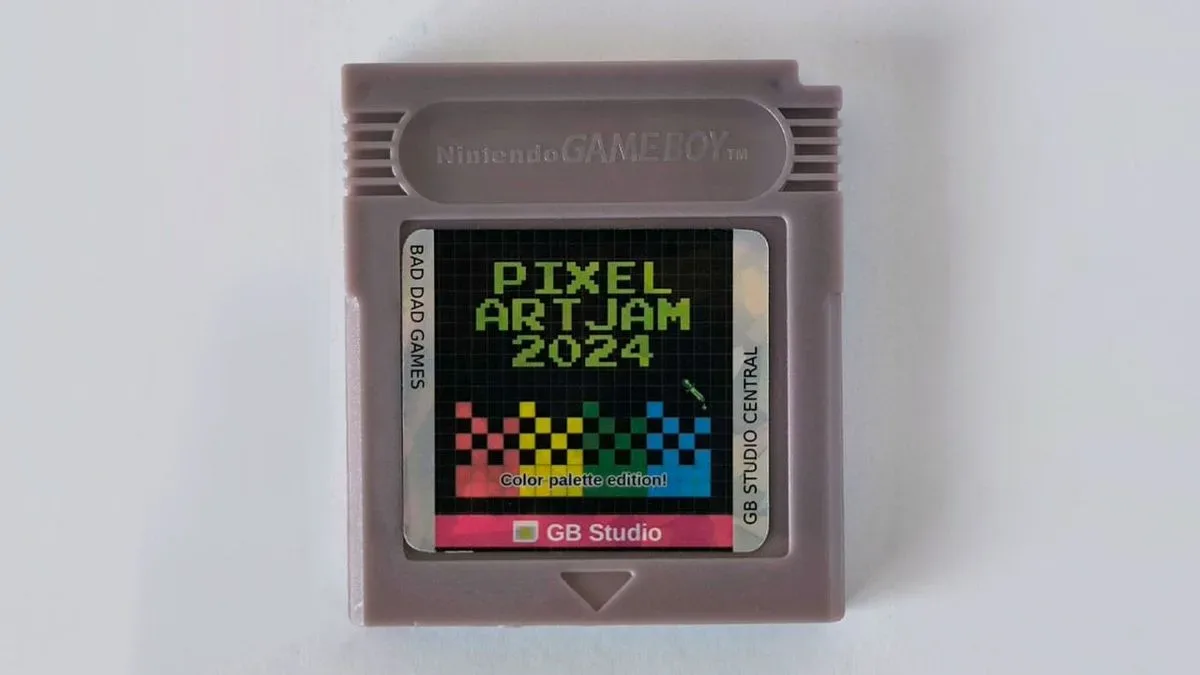
The project has an unusual afterlife beyond an online gallery. The organizers aim to compile qualifying submissions into a Game Boy-playable ROM collection. A ROM is a digital file representing software or data designed for a particular system; in this context, it would package the submitted images into a form that can be viewed with Game Boy-compatible software.
That makes the final collection a presentation format as much as an archive. Rather than seeing the art only as individual files on a modern screen, viewers can encounter it through the visual frame and resolution for which it was made. The collection can be used in an emulator, meaning software that recreates the behavior of another device so a Game Boy-oriented ROM can run on contemporary hardware.
There is also an intended physical route. The compiled images may be available on a cartridge at cost price through InsideGadgets. No timing has been promised for the ROM collection or cartridge, however. Hunt stressed that the organizing work is voluntary and that real-life commitments can affect schedules.
“Our goal is to create a Game Boy playable ROM collection of all the qualifying entries,” Hunt said. “We don’t promise when, as we volunteer our time and sometimes life gets in the way, but it will happen.”
That uncertainty is worth keeping in view. The October jam has a defined date and submission window; the later compilation is an objective, not a guaranteed delivery on a specified day. For entrants, that means the immediate commitment is the creation of an image during the weekend, while the ROM serves as a planned collective showcase rather than an instant reward.
Why the Game Boy frame still works for community art
The Game Boy format gives the event a concrete identity without requiring participants to build a game. The work is still image-making, but its destination is a device-oriented screen rather than an unlimited digital workspace. That distinction keeps the undertaking approachable. There is no stated need to design levels, program interactions or produce a full software project; artists are being asked to make one image that answers the theme.
At the same time, the eventual ROM gives the entries a shared home. A collection can place works by many contributors alongside each other, exposing how different artists approached the same constraints. One response may lean on a strong central figure, another on a landscape, and another on visual comedy or pattern. The limited dimensions make those differences especially legible because no entry can rely on sheer scale.
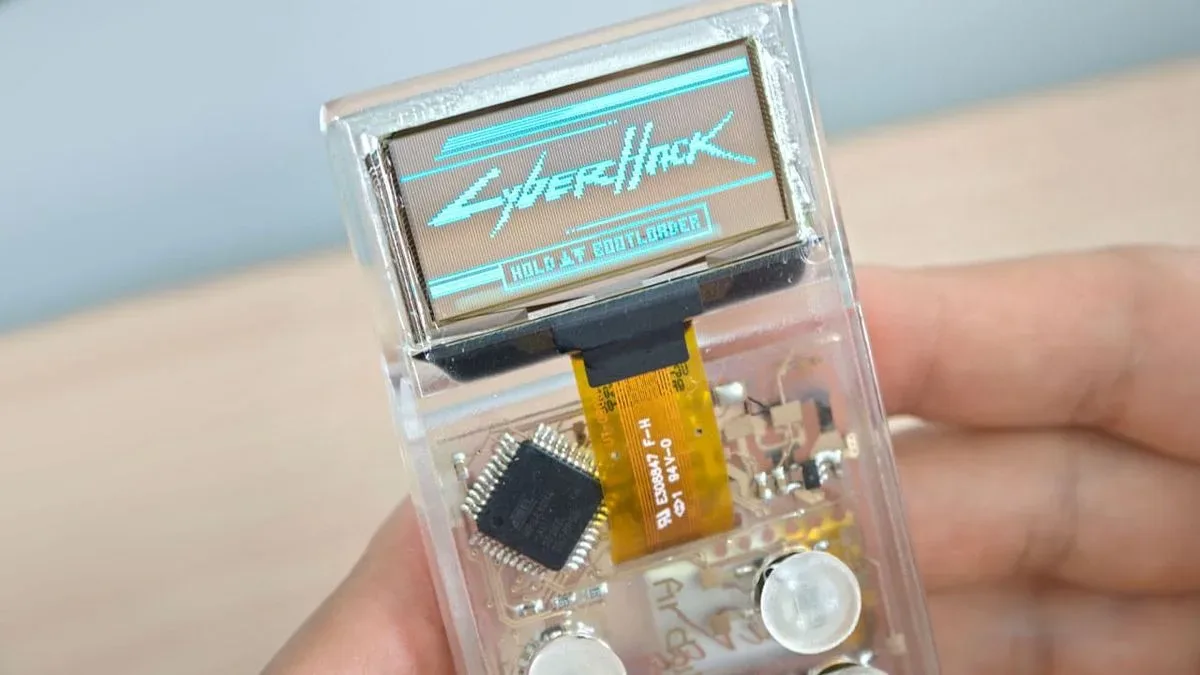
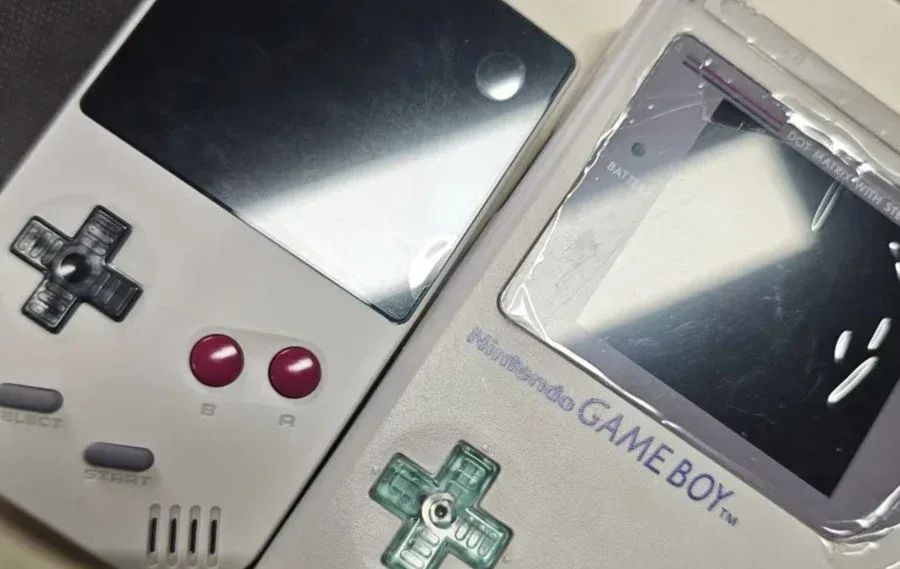
Modern retro-hardware projects continue to find new angles on old handheld ideas. For example, a transparent OLED handheld concept illustrates how contemporary makers still use portable gaming hardware as a space for experimentation. The Pixel Art Jam approaches that impulse from the creative side: not by redesigning a machine, but by asking artists to work within one of gaming’s most recognizable display boundaries.
Hunt said the popularity of the first event was unexpected, and noted that promoting each new jam can be stressful even as the number of participants grows. That volunteer-led nature helps explain both the modest format and the careful language around the compilation schedule. This is a community project built around a constrained, achievable contribution from each artist rather than a large commercial production.
Previous work reached European events
Artwork from the previous year’s jam has been displayed at events across Europe. That gives this year’s participants a meaningful possibility: an image made in a single weekend could later be seen outside the original online event. It is not a promise of individual exhibition, and entrants should not treat it as one, but it demonstrates that the collection can travel beyond the initial submission page.
The prospect is particularly fitting for pixel art, a medium built to survive at small scale. A successful image should remain readable whether it is encountered in a ROM collection, through an emulator or as part of a wider event display. The same economy that makes the format challenging can make it memorable: a strong pose, clean visual hierarchy or clever use of the 160-by-144 frame can communicate far more than the canvas first appears to allow.
What participants can expect
- When: October 10–11.
- Time limit: 48 hours after the event begins.
- Canvas: 160 by 144 pixels, matching the original Game Boy display resolution.
- Theme: Held back until the start of the jam.
- Who can join: Amateur and professional pixel artists alike.
- Planned follow-up: A Game Boy-playable ROM collection for qualifying entries, with no promised release timing.
- Possible formats for the collection: Emulator-compatible download and a cartridge offered at cost price through InsideGadgets.
The fourth Game Boy Pixel Art Jam’s core proposition is refreshingly clear: wait for the theme, make one image in two days, and make it fit a screen that leaves no room for visual indecision. For artists curious about a first jam, its boundaries may be more inviting than restrictive. For seasoned pixel artists, those same boundaries offer an exacting little stage on which technique, composition and imagination have to work together.