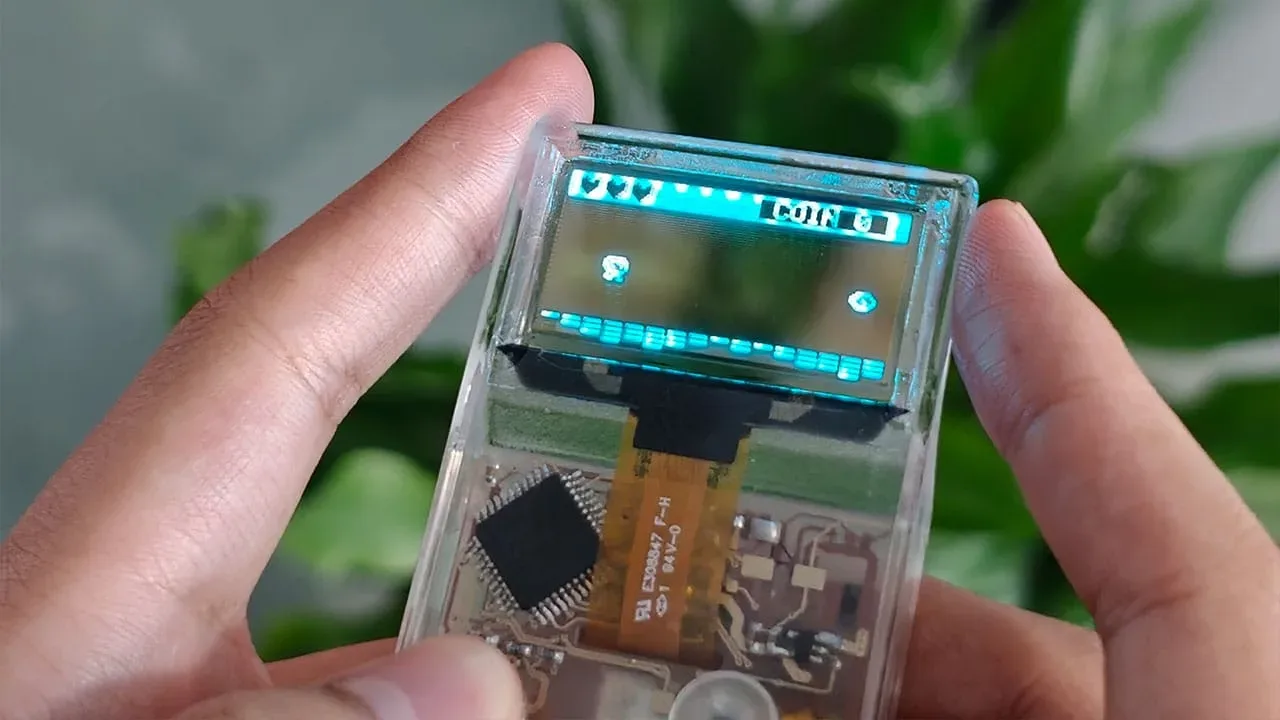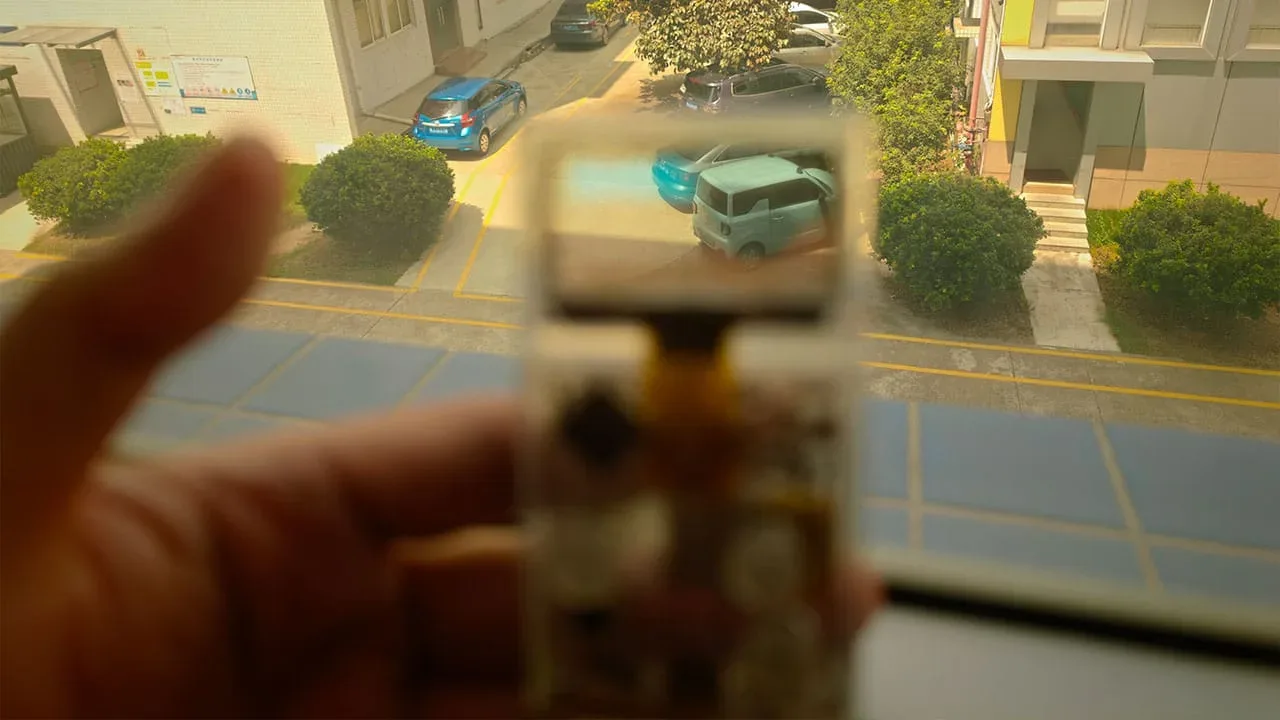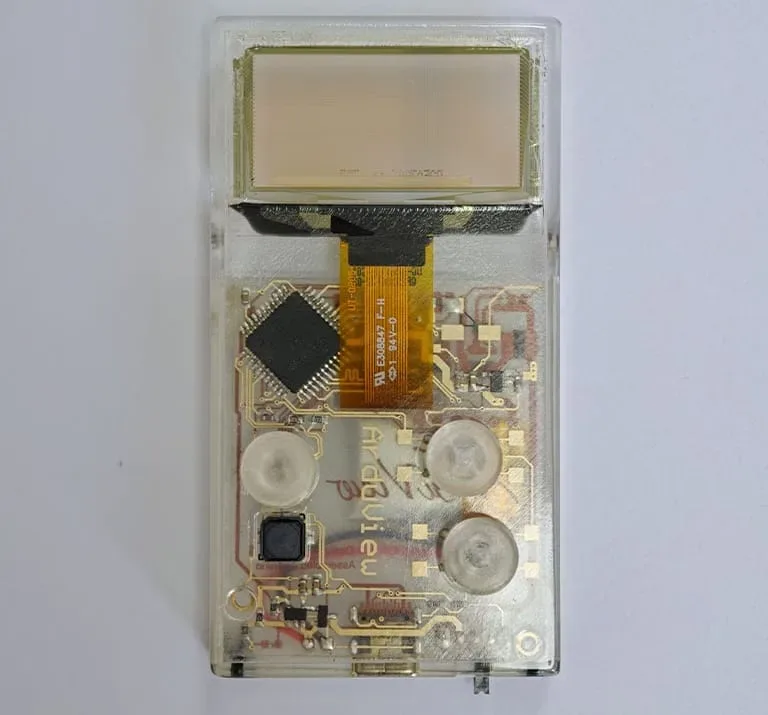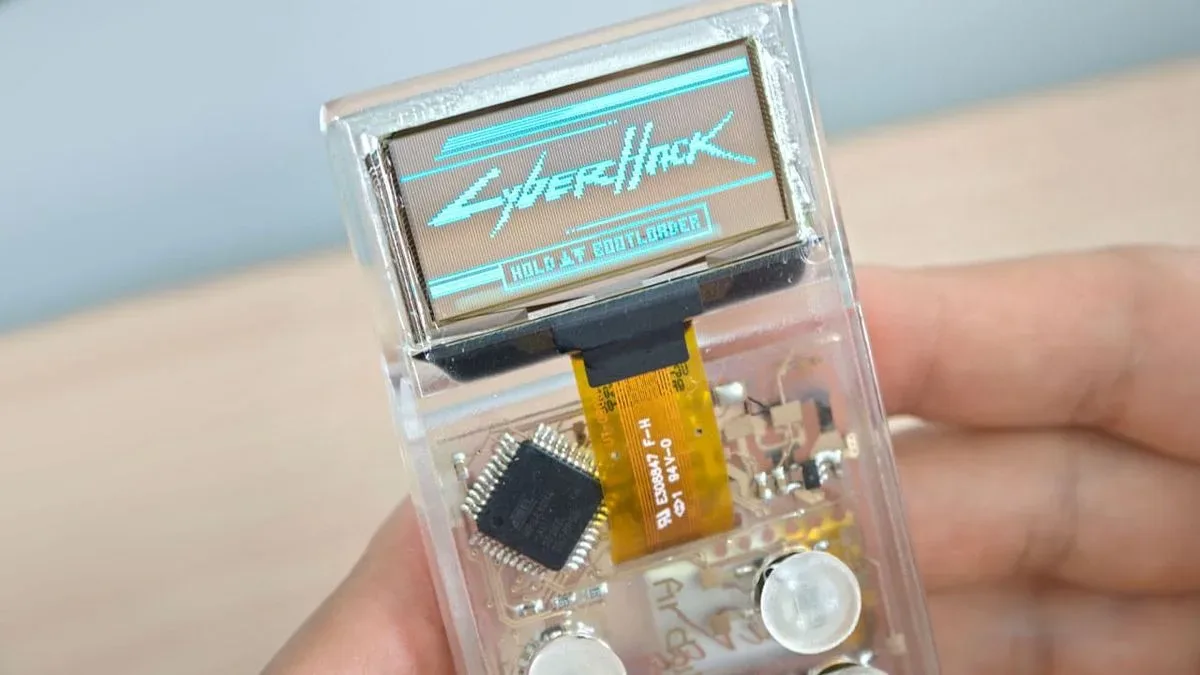
The usual transparent handheld is only telling half the story. A clear shell exposes some electronics, perhaps a ribbon cable or a sliver of board, but the display remains a solid visual wall through the middle of the machine. Arduview is taking a more ambitious route: its creator describes it as a fully transparent handheld game console, with a clear enclosure, transparent circuit board and see-through OLED screen intended to let players look directly through the device.
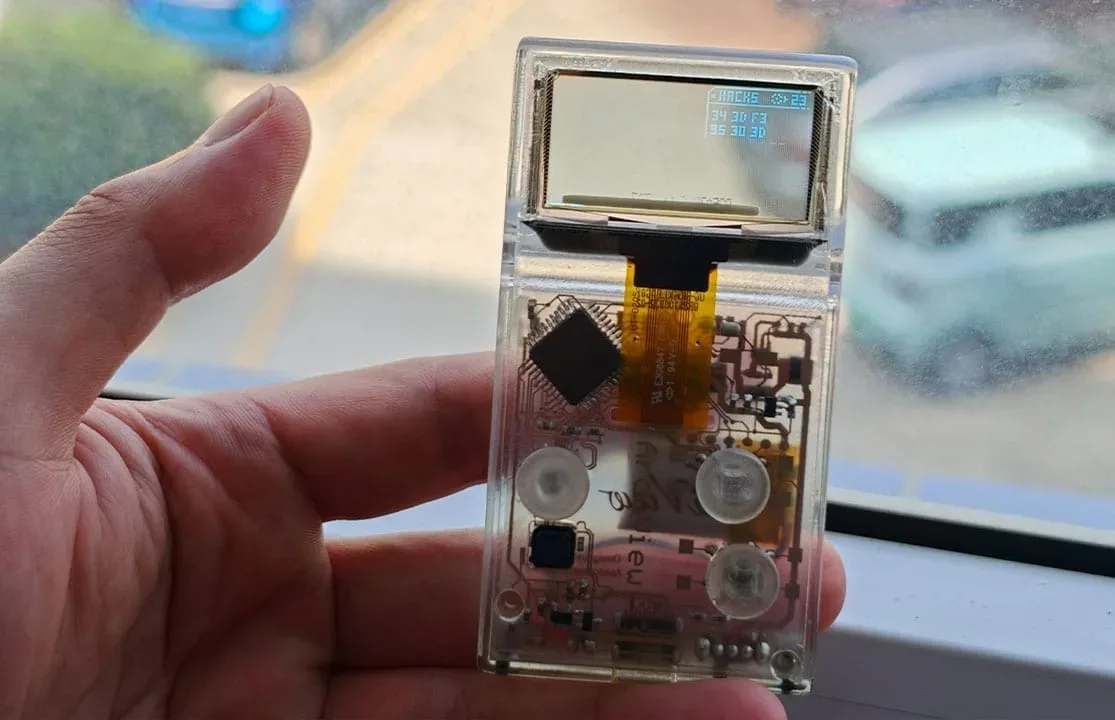
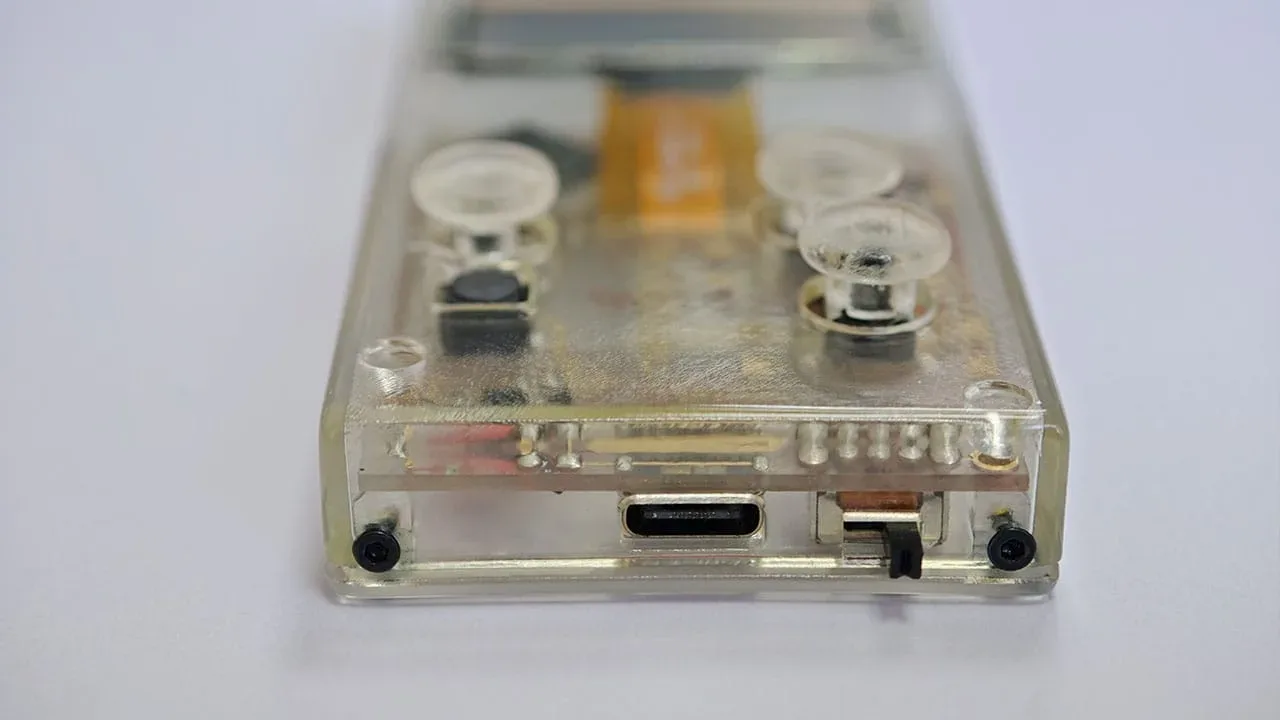
That distinction is the entire pitch. Rather than merely putting components behind translucent plastic, Arduview turns the components into the object’s visual identity. The board, chip, copper flex cable, button domes and USB port are deliberately visible. It is a pocket console that treats the engineering normally hidden inside a handheld as part of the design, not something to disguise.
What Arduview is claiming
Arduview has been presented as the first fully transparent handheld console. That is the project’s stated claim, rather than an independently established industry classification, but the feature set described explains why the wording is more specific than “clear handheld.” The casing is transparent, the board is transparent, and the OLED display is meant to be transparent too.
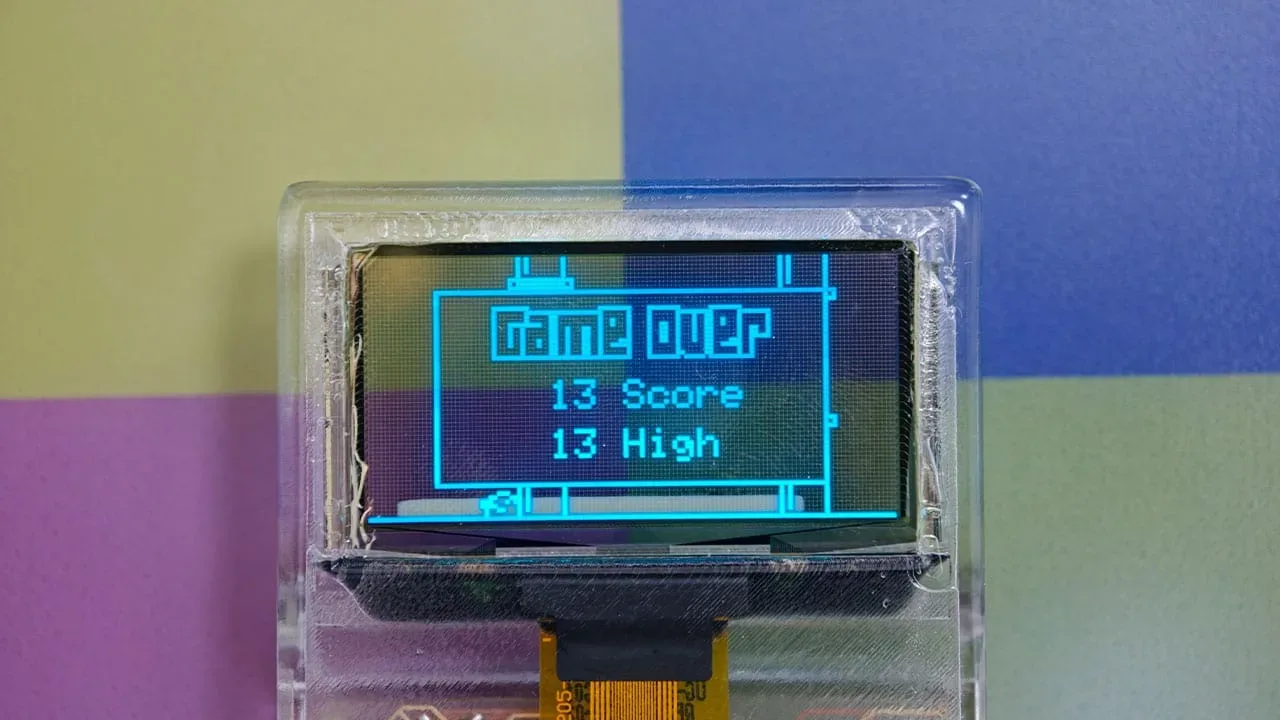
OLED, short for organic light-emitting diode, is a display technology in which pixels create their own light. In this case, the notable detail is not simply that the system uses OLED, but that the display is said to preserve the console’s look-through effect. Conventional handheld screens are commonly the opaque point that breaks any attempt at a truly see-through design. Arduview’s stated objective is to avoid that interruption.
Its transparent construction also serves a practical creative purpose. Louis Huang, Arduview’s founder, says the project grew out of work with fellow students at Babson College in Massachusetts. The idea is that the console should invite opening, inspection and tinkering rather than be a sealed mystery box. The visible hardware makes that invitation unusually literal: users can see the pieces they may want to understand before ever reaching for a tool.
Small, light and based on Arduboy
Arduview is said to weigh 50 grams and hold 400 games. Those are the core specifications currently attached to the project, though details such as battery life, dimensions, controls, game-loading workflow and display performance have not been provided here. The low stated weight is especially important to the concept: a device built around visual transparency could feel less like a conventional mini console and more like a compact electronic artefact, provided it remains comfortable to hold and use.
The system uses Arduboy, an open-source gaming platform associated with compact, simple games and maker-friendly software. “Open source” means the software’s underlying code is made available for people to examine, adapt and build upon under its applicable terms. For a device framed as a tinkerable console, that matters more than it would on a locked-down platform. Owners interested in making software can potentially move beyond the supplied library and engage with the platform’s code and tools.
That does not mean every owner needs to become a programmer. The reported setup is deliberately direct: no app store and no Wi-Fi are required just to play. Switch it on and play. In an era when many portable devices start with account prompts, downloads and network requirements, the approach emphasizes immediacy. The value proposition is both old-school and distinctly maker-oriented: a machine that is ready for games but does not conceal its own structure or shut out curiosity.
Why the visible parts matter
Transparent hardware is often treated as nostalgia, recalling crystal plastic shells and the appeal of seeing a hint of what sits underneath. Arduview pushes beyond that surface-level callback. Its exposed board, chip and cabling are not incidental details glimpsed through a colored casing; they are the visual centerpiece. In effect, the console asks the player to see circuitry as an arrangement of purposeful parts.
Several of those parts have straightforward roles:
- Circuit board: the physical platform that connects electronic components and routes signals between them.
- Chip: an integrated electronic component that handles computing tasks within the device.
- Copper flex cable: a flexible connector used to carry electrical signals between parts of compact hardware.
- Button domes: the contact elements beneath buttons that register presses and help produce their tactile response.
- USB port: the physical connection used for compatible wired functions.
On most handhelds, players only care about these pieces when one fails. Arduview’s design makes them visible during ordinary use. That can encourage a more informed relationship with the machine, particularly for people who enjoy electronics, homebrew software and repair culture. It also creates a higher standard for execution. A fully visible interior has nowhere to hide messy assembly, distracting reflections or awkwardly placed components. The layout has to function as hardware and as presentation.
A design built for curiosity, not a closed ecosystem
Arduview’s lack of an app store is not merely a missing storefront. It signals a different idea of what a small handheld can be. Large platform ecosystems typically place discovery, purchases, updates and account services at the center of the experience. Here, the reported focus is a stored game library and software that users can explore through the Arduboy ecosystem.
For players, that means the appeal will depend less on a constant stream of commercial releases and more on whether they value compact games, the existing library and the ability to experiment. For technically curious users, it presents a potentially approachable object: the internal design is visible, and the associated software platform is open source. Those are separate forms of openness, but together they give the handheld a clear identity.
There is an important limit to keep in mind. A machine being designed to be opened and tinkered with does not automatically tell us how easy repairs, modifications or replacement parts will be in practice. Nor do the available details establish how robust a transparent OLED or board will be in day-to-day use. Those are questions that need real-world assessment once more units are available. Transparency is compelling visually; durability, controls and legibility will determine how well it works as a gaming device.
What has been confirmed, and what remains unknown
The currently reported facts are concise: Arduview is an Arduboy-based handheld with a claimed 400-game capacity, a stated weight of 50 grams, a transparent shell, board and OLED screen, and a design philosophy centered on visibility and tinkering. Initial units are shipping this month to Founders, while a Kickstarter campaign is planned for 2027.
That schedule means prospective backers should distinguish between the project’s current hardware claims and details that have yet to be demonstrated publicly. The available information does not specify a Kickstarter launch date, price, broader shipping plan, technical specifications beyond the points above, or a final retail configuration. Likewise, no hands-on evaluation has yet established how the transparent screen appears under different lighting, how the buttons feel, or what playing for an extended period is like.
Those unknowns are not an indictment; they are simply the boundaries of what is currently known. They matter because Arduview is making an unusually visual promise. A transparent screen may look remarkable in photographs, but a gaming handheld also has to make its games easy to see. A 50-gram device may be strikingly light, but its button placement and balance will still matter. And open-source roots may be valuable, but newcomers will benefit most if the path from curiosity to creating something is understandable.
Why this concept fits the homebrew-minded handheld audience
The project sits naturally alongside the wider interest in hardware modding and independent game creation. Its use of Arduboy places it in a world where games and devices can be approached as things to learn from, not just consume. That broader spirit is visible in projects that preserve and extend unusual systems, including the homebrew afterlife surrounding Atari Jaguar modding.
Arduview’s contribution to that conversation is aesthetic as much as technical. It makes the normally private anatomy of a console public. Instead of asking players to imagine the logic and connections beneath a polished case, it keeps those elements in view. For some people, that may be the device’s biggest attraction even before considering its game library: it offers a reminder that a handheld console is built from understandable physical pieces.
For now, Arduview is best viewed as an emerging maker-focused handheld with a distinctive stated design and limited confirmed specifications. Founders are due to receive the first units this month, and the planned 2027 Kickstarter should provide a clearer picture of its wider rollout. If its transparent OLED, visible board and lightweight body translate effectively from concept into everyday play, it could offer a genuinely unusual alternative to the many pocket devices that keep all their interesting bits behind black plastic.