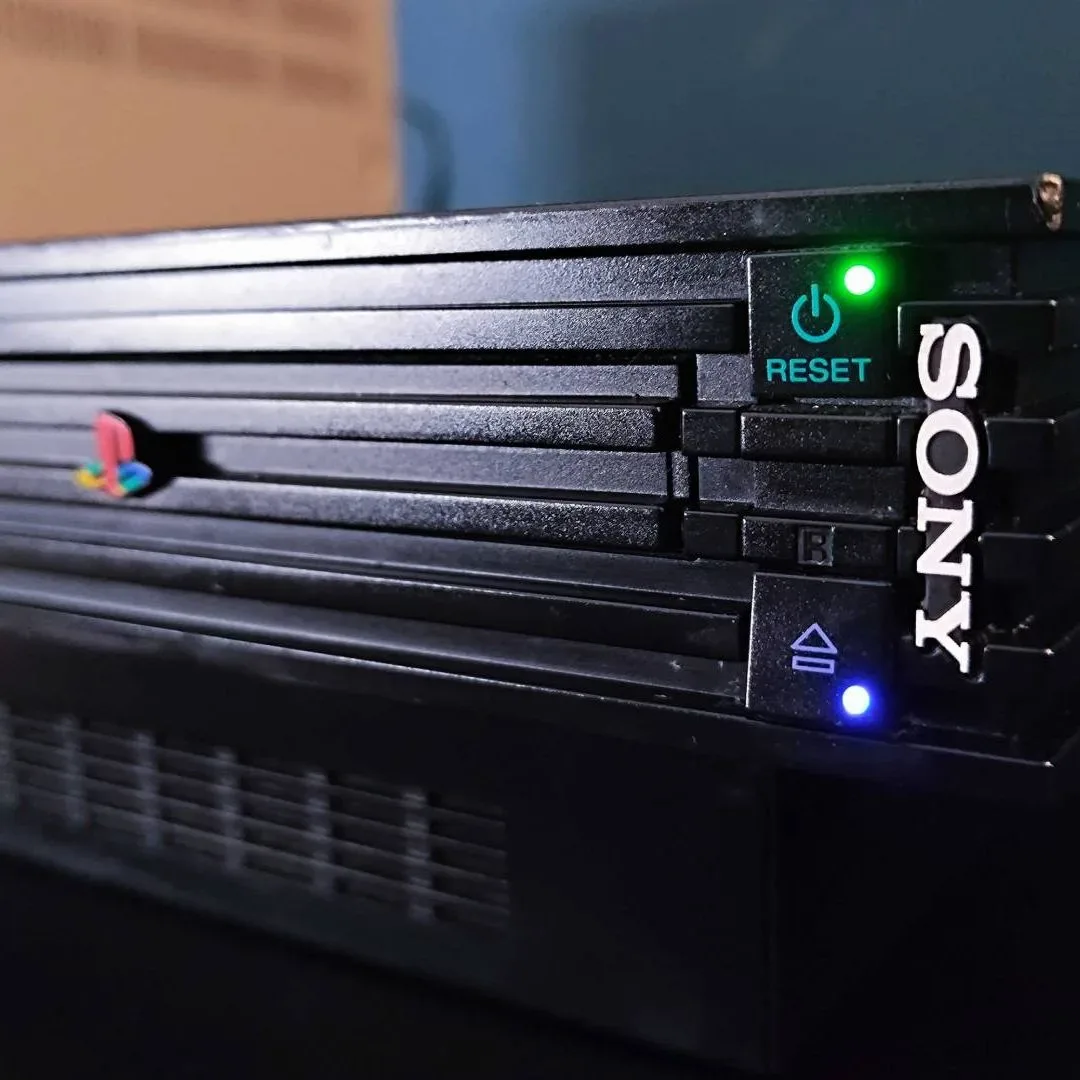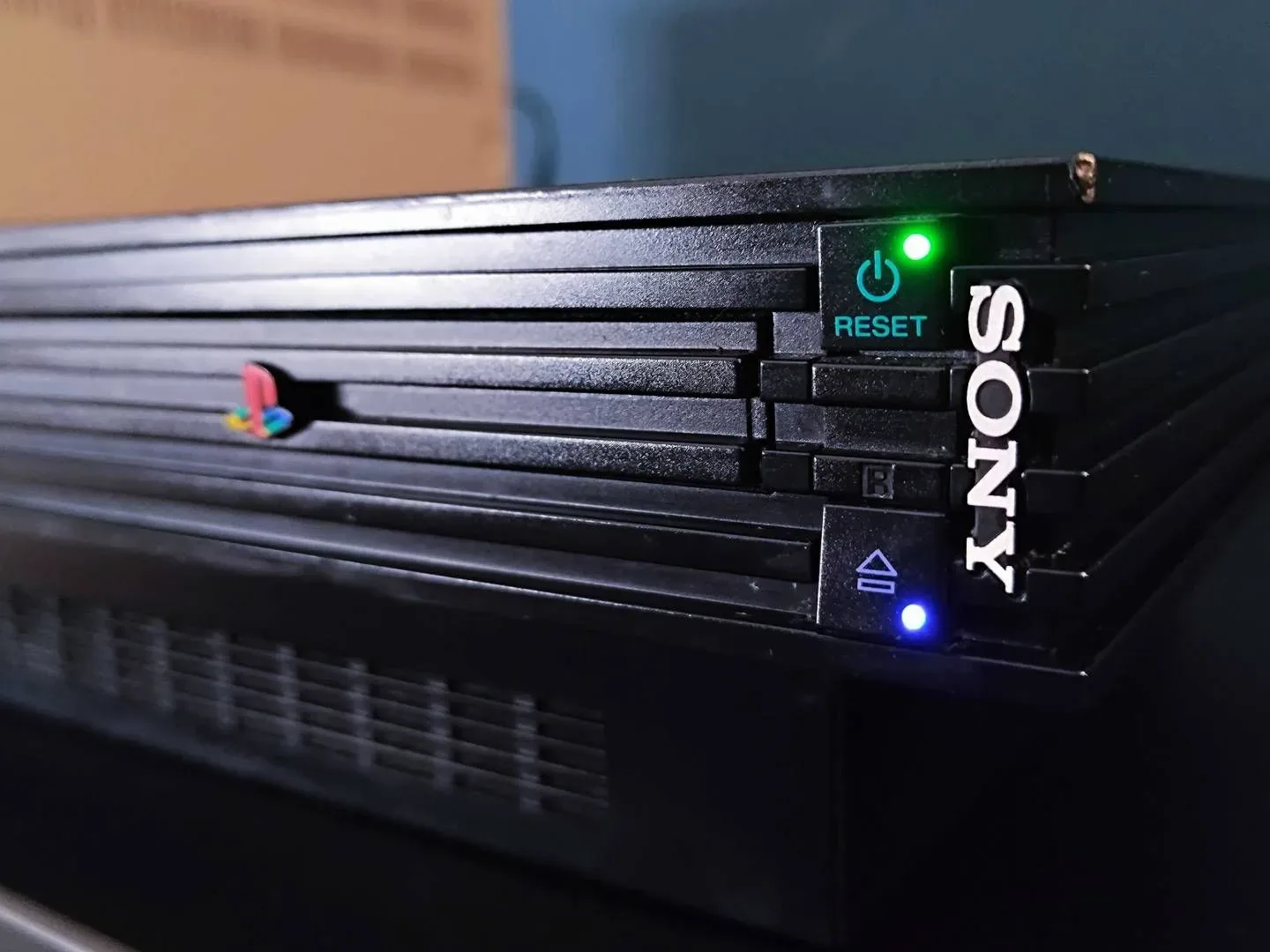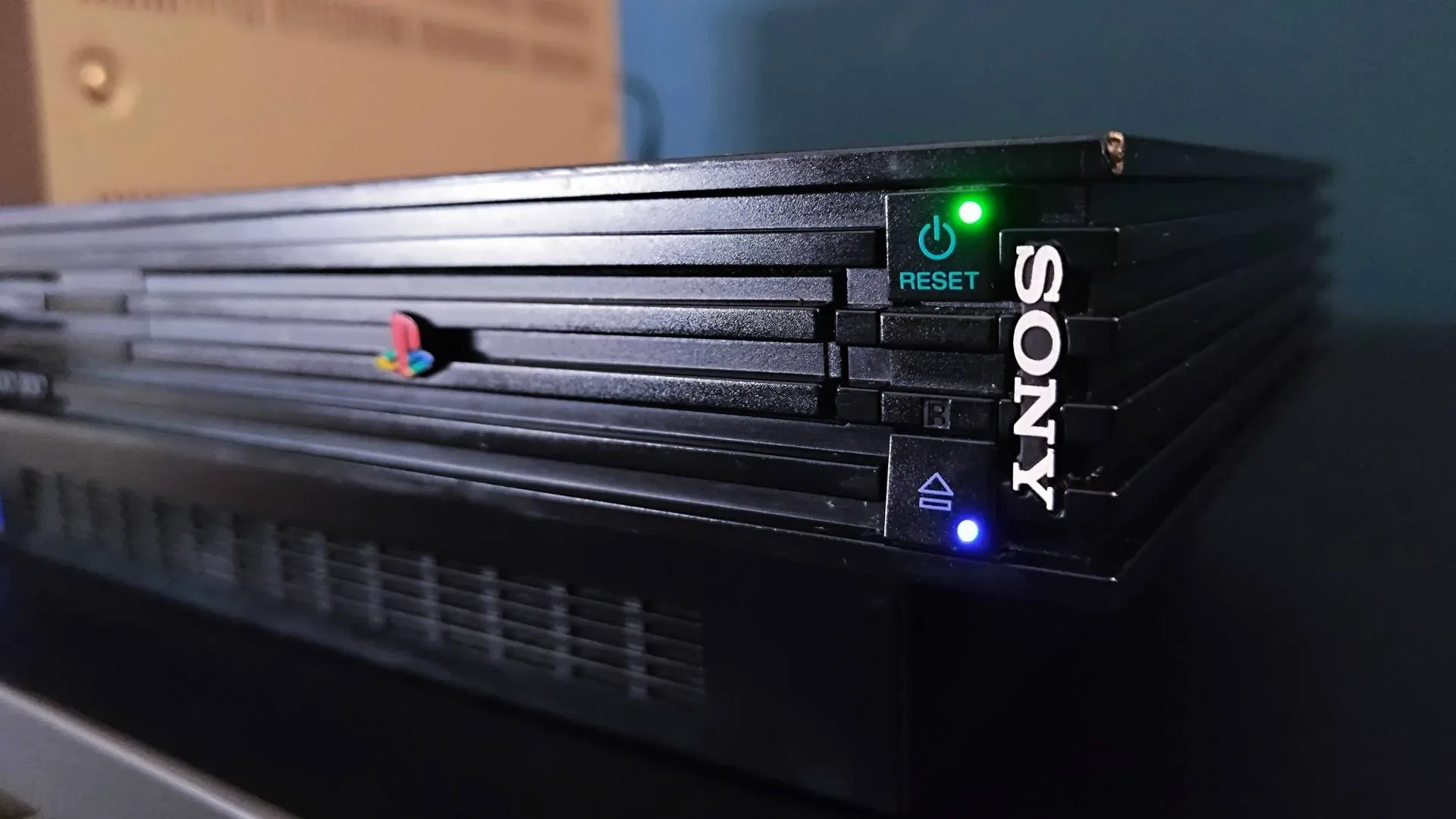
One of the PlayStation 2’s most closely guarded hardware mysteries has been opened up. Developer DiscoStarslayer says the console’s MechaCon security chip has now been dumped following four years of work, with fellow modder Libby credited for finding the exploit that made the breakthrough possible.
It is a significant moment for PS2 hardware preservation rather than a new game release or a consumer product announcement. The MechaCon is tied to the console’s disc drive and its anti-piracy measures. Having its contents preserved gives developers material that can be examined rather than treated as an entirely opaque part of the original machine.
“After 4 years of effort, I’m happy to announce that one of the final secrets of the PS2 has been broken wide open!” DiscoStarslayer wrote, describing a process involving decapping, optical dumping and, ultimately, a software solution.
What the PS2 MechaCon does
MechaCon is the shorthand used here for a chip that governs important disc-drive behavior on the PlayStation 2 while also participating in the system’s security design. That dual role helps explain why it has mattered to the hardware-modding community for so long: disc systems are not simply mechanical readers. Their operation can be bound up with checks and control logic that determine how the console handles media.
The new development is specifically that the chip has been dumped. In hardware preservation, a dump is a recovered copy of data or code contained in a component. Preserving that material does not automatically create a finished mod, an emulator update, or a drop-in replacement for a failing drive. It does, however, turn previously inaccessible information into something developers can study.
That distinction is important. A technical breakthrough can be foundational long before it becomes a feature that an ordinary PS2 owner can install or use. The immediate achievement is knowledge and preservation; the possible downstream work includes better understanding of the original hardware, future hacks, and emulation improvements.
A process that moved from physical analysis to software
DiscoStarslayer described the work as involving decapping, optical dumping, and a final software-based solution. Those phrases describe different parts of an unusually demanding research path.
- Decapping is the physical removal of a chip’s outer package or protective layer so the silicon inside can be examined.
- Optical dumping refers to recovering information by examining the chip optically, rather than relying only on its normal operating interfaces.
- A software solution, in this context, means the eventual breakthrough was not solely dependent on repeating a physical extraction procedure. It points to a method rooted in software after the extensive hardware analysis.
The announced result was not a one-person effort. DiscoStarslayer explicitly thanked Libby for finding the exploit from the optical dumps. That credit matters because it clarifies the chain of work: physical analysis generated difficult-to-use material, and the exploit supplied the path that turned it into a successful result.
Related coverage includes PS2 MechaCon Security Chip Finally Dumped After Four-Year Modding Effort.
DiscoStarslayer also called the project a personal “white whale,” an apt description for a technical obstacle that remains unresolved for years despite focused effort. The PS2 has been around for 26 years, and the MechaCon’s eventual dump shows how a console can remain an active research target long after its commercial lifespan.
Why preservation is the immediate win
For a mature console platform, undocumented components can limit every project that needs to accurately reproduce, interpret, or work alongside original behavior. A preserved MechaCon dump gives other developers a basis for investigation. They can study its contents, compare their understanding of the system against the hardware, and potentially use the findings in later projects.
This does not mean every unanswered PS2 question is now settled. Nor does it establish that a particular emulator or mod has already incorporated the discovery. What it does mean is that a component once described as one of the system’s last major secrets is no longer inaccessible in the same way. That is a durable gain for the community, because preserved technical information can be revisited as tools and expertise improve.
It also strengthens the broader case for examining original hardware before age, wear and scarcity make that work harder. A disc-drive-related chip is especially relevant on an aging disc-based console, where the condition and reliability of mechanical parts can become a practical concern for owners. The recovered data may offer developers more room to devise approaches that are compatible with how the original PS2 expects its drive hardware to behave.
The optical drive emulator possibility, explained
The most intriguing potential application raised by the breakthrough is a proper PS2 optical drive emulator, usually abbreviated to ODE. An ODE is hardware intended to take the place of an original optical disc drive, providing an alternative to the console’s aging mechanical drive hardware and allowing numerous games to be loaded without swapping physical discs.
Many disc-based consoles already have ODE modifications, but the PS2’s drive and security behavior create their own technical requirements. A successful dump of the MechaCon could give developers information needed to understand those requirements more fully. That makes a PS2 ODE a compelling possibility, not a confirmed product or guaranteed outcome.
That caution is worth keeping front and center. There are already several ways to run games on a PS2 without using a disc, so this discovery does not suddenly make disc-free play possible for the first time. The prospective value of a more complete ODE route would be another hardware option, potentially one designed around replacing the original optical-drive function more directly.
For owners who still prefer original discs, the news does not diminish the value of the physical library or require a change in how they use their systems. Instead, it expands the technical foundation on which preservation-minded alternatives may be built. In the long term, more options can matter when individual consoles have different needs, drive conditions, and preferred setups.
What this means for homebrew and emulation
Homebrew refers to software made independently for a platform rather than released through its original official publishing process. Better documentation and understanding of the PS2’s hardware can help developers make more informed decisions when building or improving that kind of software.
Emulation is the effort to reproduce a system’s behavior in software on another device. It benefits from accurate knowledge of how original components operate. The MechaCon dump does not promise immediate compatibility gains or performance changes, but it gives emulator developers a new primary hardware reference to investigate. Where previous assumptions were necessary, direct examination may now be possible.
The practical lesson is that reverse-engineering work often advances in layers. First comes access to a difficult component. Next comes interpretation. Then developers may test ideas, discover limitations, and build tools or hardware around what they have learned. The PS2 community has reached the first of those milestones with the MechaCon; the consequences will depend on what later projects make of it.
Readers interested in how this kind of long-tail platform work can develop across a smaller handheld ecosystem can also explore Neo Geo Pocket and Pocket Color modding history, flash carts, link cables and homebrew. The systems differ, but the common theme is that patient community research can keep older hardware understandable and useful long after official support has ended.
What has changed—and what has not
Changed
- The contents of the PS2’s MechaCon chip have been preserved.
- Developers now have material to study for future hardware research, hacks and emulation work.
- The result follows four years of effort, including physical chip analysis and an exploit credited to Libby.
Still to come
- No completed PS2 ODE is established by this breakthrough alone.
- No specific emulator change, consumer device, release timing, or compatibility claim has been announced here.
- The community still needs to analyze the recovered contents and turn that understanding into practical projects.
That is still a major shift. The PS2 remains a platform with a large technical legacy, and the MechaCon was a particularly consequential missing piece because of its relationship to the disc drive and security checks. With the dump now preserved, future developers have a clearer route to investigate one of the machine’s most difficult components—one painstakingly opened through physical research, optical work, and a key software exploit.