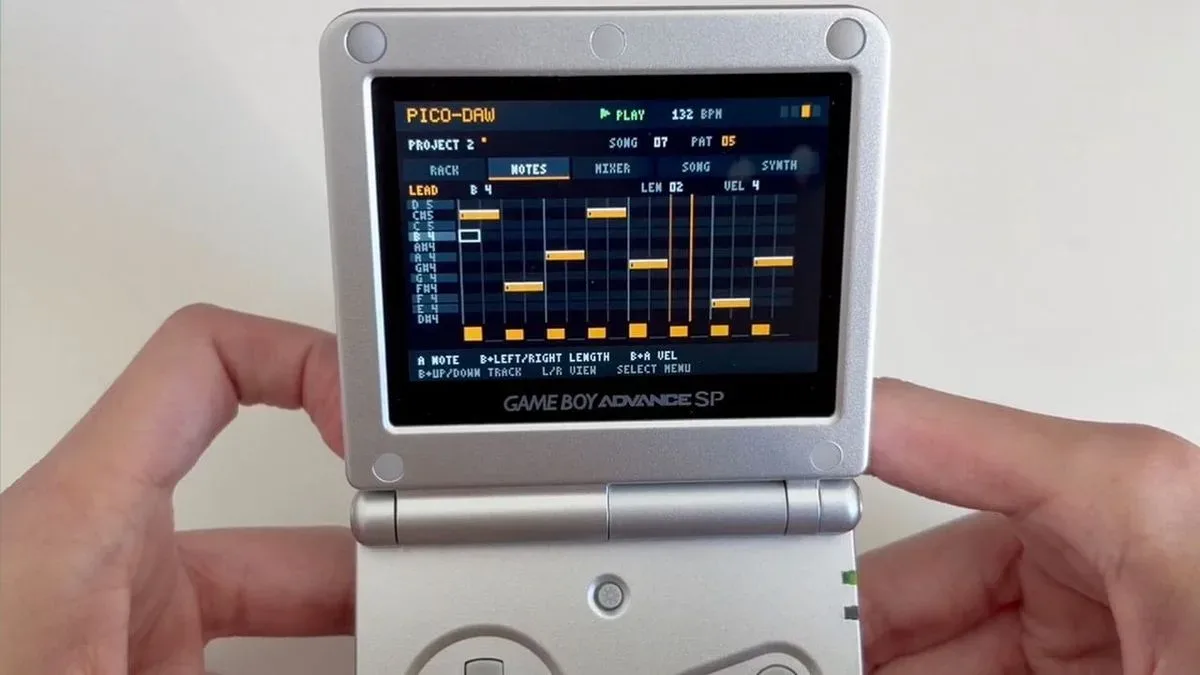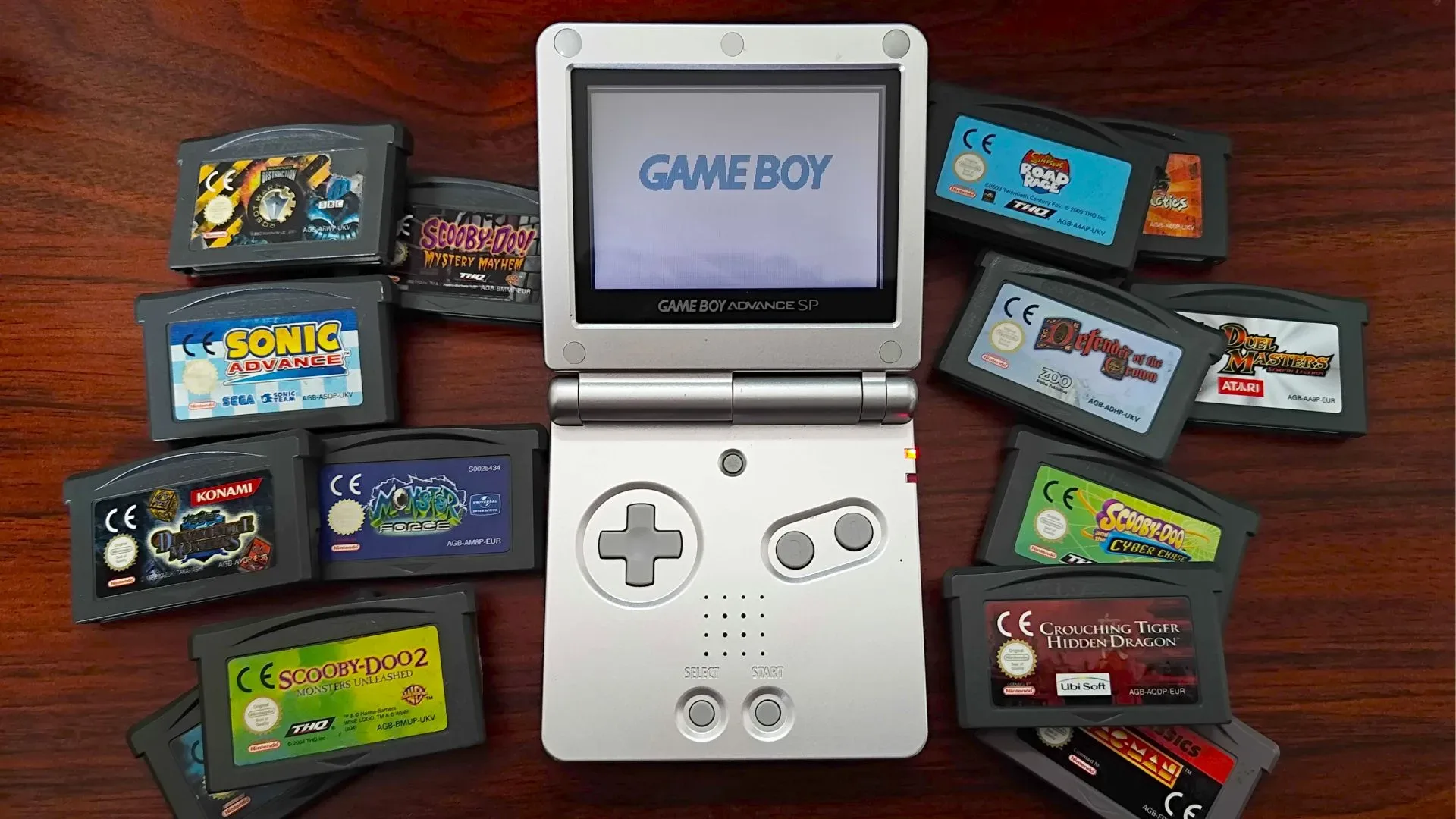
A clamshell handheld styled after the Game Boy Advance SP is the latest project shown by Taki Udon, and its stated ambition is unusually clear: make an FPGA-based portable with physical cartridge support work at roughly $100. The device, referred to as the FPGBA SP, is still a prototype and not a confirmed retail product. But the combination of its form factor, cartridge slot and proposed price makes it one of the more interesting ideas currently floating around the retro handheld space.
Taki Udon says the project has made substantial progress, confirming that it plays real cartridges. A standard, non-clamshell FPGBA model is also being considered. The most important caveat is the one prospective buyers should keep front of mind: this is described as a passion project, not a launch announcement, and there is no confirmed release date, final specification or final price.
What the latest prototype shows
The newly shared footage shows the clamshell prototype running Pokémon Ruby/Sapphire, putting the attention squarely on Game Boy Advance use. That matters because the project had previously appeared running Diddy Kong Racing for Nintendo 64, a demonstration that suggested broader technical ambitions but did not necessarily define the handheld’s eventual purpose.
Showing a Game Boy Advance title in the more recent clip makes the name FPGBA SP easier to read: this appears to be a device being shaped around the GBA experience, in a folding design that recalls the original SP. The confirmation of physical cartridge support is equally central. Many contemporary GBA-inspired handhelds use software emulation and loaded game files rather than original cartridges. This prototype is aiming at a different proposition: a modern portable that can accommodate an existing cartridge library.
“We’ve been making a lot of progress on FPGBA SP,” Taki Udon said, adding that it plays real cartridges and that a regular FPGBA is under consideration. The stated goal remains “around $100.”
That number should be treated as a target rather than a promised MSRP. Hardware development is full of trade-offs between design, components, manufacturing and reliability, and none of the final details needed to judge the target have been confirmed. Still, $100 is the figure that gives this otherwise early-stage project real potential to reshape the conversation.
Why FPGA is the key word here
FPGA stands for field-programmable gate array. In this discussion, it refers to a device designed to reproduce a console’s hardware behavior at a hardware level, rather than relying solely on conventional software emulation. That distinction is why FPGA systems appeal to players who want an experience closer to original hardware while also using their own game cartridges.
It is not a magic label that settles every practical question. A finished handheld would still need a solid physical design, dependable cartridge compatibility and a price that actually lands near the stated goal. Yet an affordable FPGA portable with a GBA focus would sit in a notably different place from the many lower-cost emulation handhelds currently available.
Related coverage includes Taki Udon's FPGA GBA SP Prototype Aims for a Price Below $100.
There is already a market for cartridge-capable FPGA hardware. The Analogue Pocket is an established option for players who want to run original Game Boy Advance cartridges. The prospective appeal of the FPGBA SP is therefore not that it would be the first device with that broad idea, but that it may pursue it in a dedicated SP-like shell and at a much lower target price.
A price gap, if the target holds
The present alternatives illustrate why the $100 target has attracted attention. The Konkr Pocket Advance, an Android-based Game Boy Advance-style handheld from Ayaneo, starts at $129.99. For buyers who simply want a folding, GBA-inspired device, the Anbernic RG SP is available for under $60. But the two products represent different approaches from the proposed FPGBA SP.
- FPGBA SP: a prototype aiming for FPGA-based operation and support for real cartridges at around $100.
- Konkr Pocket Advance: an Android-based GBA-style handheld starting at $129.99.
- Anbernic RG SP: a lower-priced clamshell alternative using an emulation-based approach, available for under $60.
For someone who already owns Game Boy Advance cartridges, the cartridge slot is more than a nostalgic extra. It could determine whether a handheld is a companion to a physical library or a separate software-based machine. For someone who does not collect or play original cartridges, a cheaper emulation device may remain the more practical choice. The prospective FPGBA SP’s opportunity is to narrow the cost gap between those two kinds of product.
That is also why the “around $100” goal is consequential rather than merely eye-catching. A device that costs substantially more could still be useful and impressive, but it would compete more directly with existing premium FPGA options. Reaching the stated figure would make its hardware approach and cartridge support accessible to a broader segment of retro players—assuming the final product reaches market with those features intact.
Potential beyond Game Boy Advance, but no promises
The earlier appearance of the prototype running Diddy Kong Racing has raised the possibility that the project could do more than Game Boy Advance duties. Discussion around the device has included potential MiSTer cores, which are hardware configurations used to reproduce different systems, including Nintendo 64. However, that possibility should not be mistaken for a confirmed feature list.
What has been demonstrated in the latest material is a clamshell device running Pokémon Ruby/Sapphire and a stated ability to play physical cartridges. The previous Nintendo 64 demonstration is compelling context, but it does not establish what software or systems a finished FPGBA SP would support, how it would perform, or whether such functions would even be included in a commercial version.
That restraint is important. Prototype footage can show that work is progressing, but it cannot answer the purchase questions that matter most: battery behavior, display quality, cartridge compatibility across a wider library, controls, durability, manufacturing scale and final retail availability. None of those details have been established here.
The clamshell appeal is more than aesthetics
The SP-inspired format is part of the project’s potential appeal. Folding handhelds have become a familiar sight in the retro device market, but pairing the clamshell shape with an FPGA design and physical cartridge capability would give the FPGBA SP a specific identity. It would not just imitate the look of an older handheld; it would try to provide a hardware-centered route to playing the games people still own.
A regular FPGBA could extend that idea to players who prefer the original Game Boy Advance’s non-folding shape. At this stage, though, it is only being considered. It should be viewed as an indication of the project’s direction, not evidence that two distinct products are on the way.
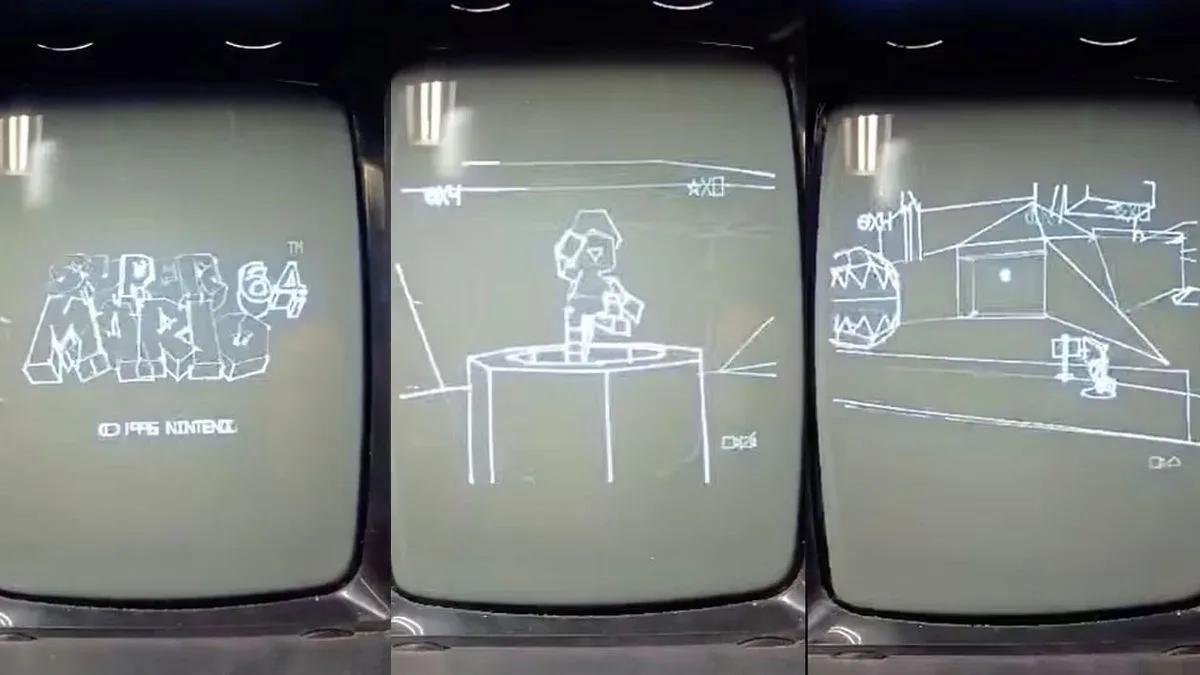
The prototype also arrives during an active period for unusual retro hardware experiments. A recent wireframe homebrew experiment that put Super Mario 64 on Vectrex is another reminder that old-game enthusiasts continue to explore hardware in unexpected ways. The FPGBA SP is more practical in intent, but it similarly reflects a scene in which classic systems remain a platform for new technical ideas.
What to watch before getting excited
The right response is cautious interest. The evidence so far supports a working prototype, real-cartridge capability, a Game Boy Advance focus and an approximate $100 aspiration. It does not support treating the FPGBA SP as a product that can be ordered, a finished replacement for existing hardware, or a guaranteed low-cost FPGA handheld.
- Look for a formal product confirmation. A prototype is not a release commitment.
- Separate the target price from a final price. “Around $100” is an ambition at this point.
- Wait for final specifications. The latest demonstration does not establish a full compatibility list or complete feature set.
- Distinguish GBA priorities from broader possibilities. The Nintendo 64 footage is intriguing, but Game Boy Advance cartridge play is the clearest currently stated focus.
If Retro Remake can turn the concept into a retail device without losing the cartridge slot, FPGA emphasis or low-price objective, the FPGBA SP could offer a distinctive alternative in a crowded handheld market. Until then, it is best understood as a promising work in progress: a familiar clamshell idea with a potentially uncommon mix of physical media support and affordability.