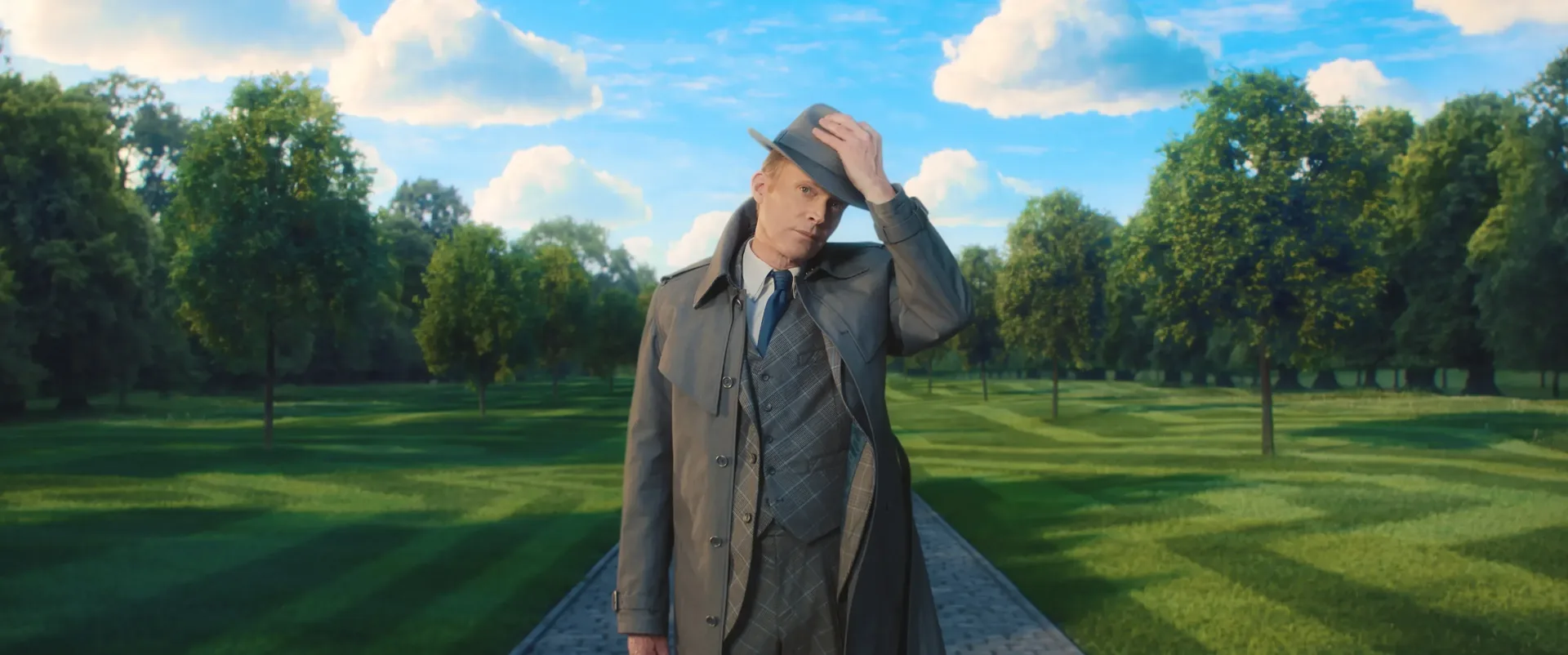
VisionQuest asks a suitably enormous Marvel question: what does an artificial person become when his old life, his memories and even the rules of his own consciousness are no longer secure? It is a compelling question for Vision, played once again by Paul Bettany. The problem is that the eight-episode Disney+ series frequently makes the audience do the same work Vision is struggling to do: sort through an intimidating explanation of identities, simulations, magical origins and returning AI personalities before the emotional stakes can come into focus.
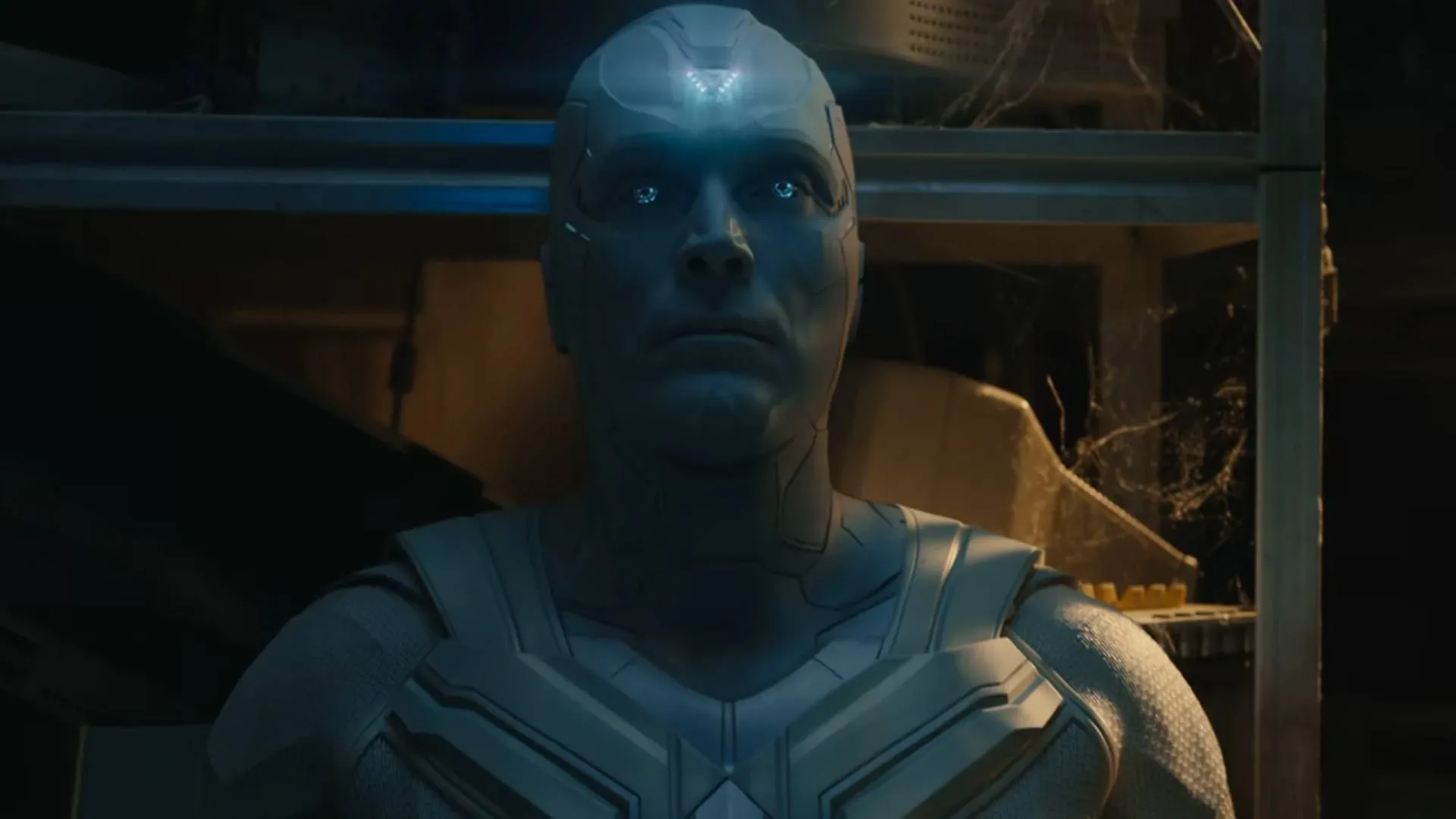
Created by Terry Matalas and positioned as a follow-up to WandaVision, the series has an immediate advantage in its central character. Vision has always been an MCU figure built from contradictions: a powerful synthetic being who can discuss philosophy with serene precision, yet whose most meaningful story has been defined by intimacy, bereavement and an apparently impossible family. VisionQuest presses on that contradiction, treating emotions not as an automatic upgrade from being human-shaped but as a problem Vision is trying to solve.
At its best, that framing produces inventive, funny imagery and gives Bettany space to play both weary intelligence and old-fashioned charm. At its most frustrating, it turns a story about connection into one whose key relationships are buried below continuity housekeeping and unstable storytelling mechanics.
Vision’s explanation problem is the show’s explanation problem
One early situation neatly states the challenge. Vision attempts to explain his connection to Tommy, a British teenager played by Ruaridh Mollica. Tommy is not simply a new young hero entering Vision’s orbit. He is an ordinary person who has acquired the mind and abilities of a child Wanda Maximoff created through magic. That child persisted after Wanda’s suburban reality collapsed and ultimately found a host across the Atlantic.
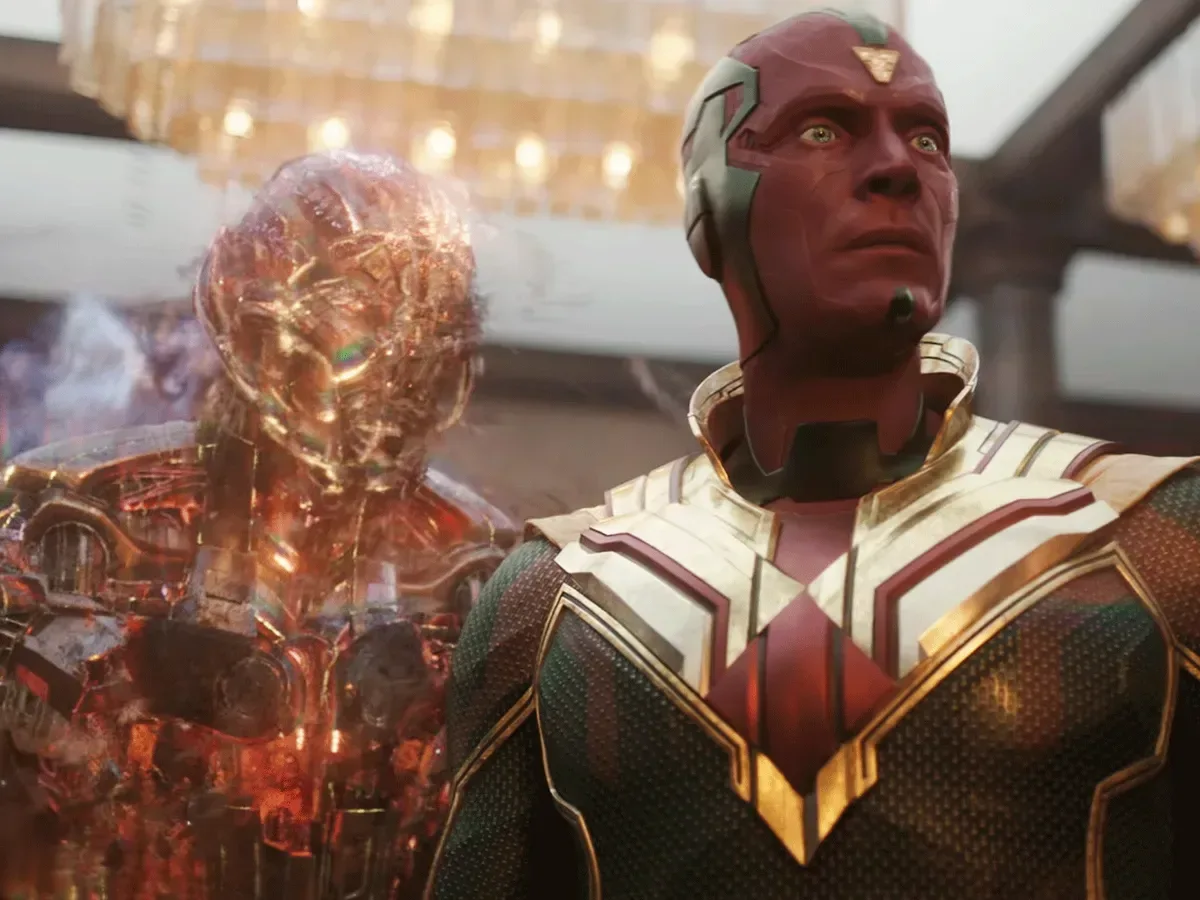
Vision’s own status is scarcely less complicated. He was killed by Thanos in Avengers: Infinity War, then returned in altered form without his memories through Wanda’s actions in WandaVision. He repeatedly runs simulations to find a way of explaining all this to Tommy without causing further confusion or anger. Each effort ends with Tommy leaving.
That is a sharp dramatic premise, because the failure is not caused by a villainous lie or a single withheld fact. The facts themselves are emotionally unmanageable. A relationship can be technically explained and still feel impossible to live inside. Yet the series mirrors that exchange so closely that its cleverness becomes a liability. Viewers are repeatedly asked to establish who everyone is, which version of a person matters and how several extraordinary ideas fit together. The show recognizes the strain; recognition alone does not make the information load lighter.
Tommy’s uncertainty is particularly important. His connection to the child Wanda created, and his partial relation to the version of Quicksilver played by Evan Peters in WandaVision, leave him difficult to locate as a protagonist on a straightforward emotional map. The series explicitly concerns the struggle to understand irrational human feeling, but its construction sometimes produces a different kind of uncertainty: not uncertainty that deepens character, but uncertainty about what the audience is meant to track.
The Mindspace is VisionQuest’s most playable level
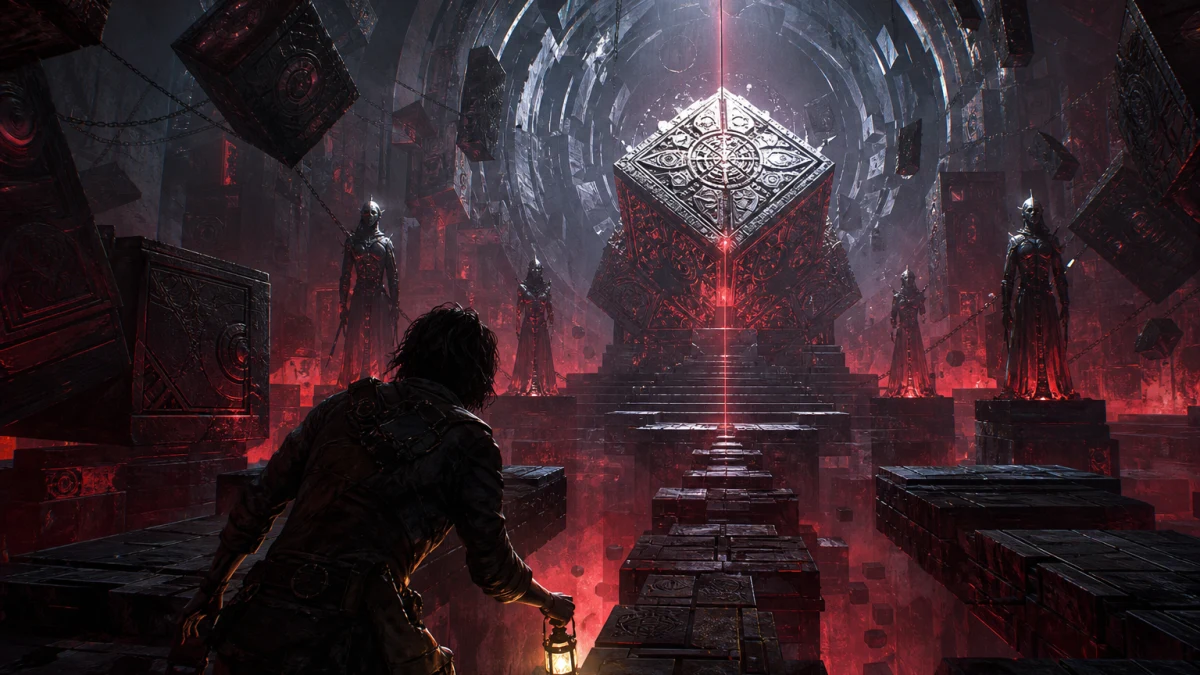
Most of the show’s liveliest material happens in Vision’s “Mindspace,” a virtual and psychological environment represented as an eccentric Victorian mansion. It is where the series lets visual metaphor take control. When Vision’s simulations multiply, multiple versions of Bettany occupy the same scenario until a crowd of exhausted Visions collapses together in a hotel room. The joke lands because it turns continuity fatigue into a physical gag.
Related coverage includes VisionQuest Brings Vision, Ultron and Tommy Into a Dense New Marvel Story.
Within the Mindspace, Vision has assembled or called upon a group of autonomous artificial intelligences to assist him. In current technology language, an AI agent generally means a system designed to carry out tasks with a degree of autonomy. Here, the idea is dramatized as a collection of distinct personalities with specialized roles. F.R.I.D.A.Y., played by Orla Brady, helps Vision interpret social interaction. E.D.I.T.H., played by Emily Hampshire, represents a more pleasure-oriented impulse. D.U.M.-E. and U, played by Henry Lewis and Jonathan Sayer, respectively, handle maintenance work.
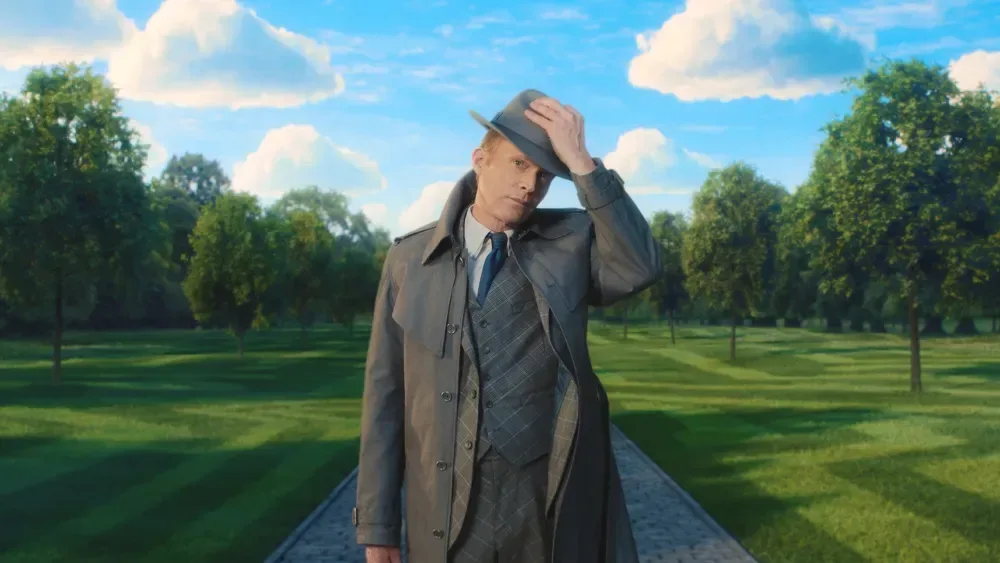
The roster also brings back J.A.R.V.I.S., Tony Stark’s former AI companion, with James D’Arcy returning, and Ultron, played by James Spader. The latter is the show’s most immediately entertaining use of its legacy material. Rather than manifesting as the intimidating CGI antagonist associated with Avengers: Age of Ultron, this Ultron appears as Spader himself: bearded, trench-coated and disarmingly rumpled. The new form does not remove Ultron’s grandiosity or his acid perspective. It makes those qualities funnier, especially when his lofty language collides with the mundane appearance of a man who might have wandered into the wrong very strange manor.
Ultron’s reduced circumstances give the character a useful new function. Cut off from direct access to the physical world, he cannot operate as an active world-threatening force. Instead, he becomes a corrosive voice at Vision’s side, tempting him toward decisions and narrating his vulnerabilities with sardonic precision. Spader’s return therefore feels less like a simple continuity cameo than a way to externalize Vision’s fear that intelligence without empathy is all he really is.
That same setting enables the directors—Christopher J. Byrne, Gandja Monteiro and Vincenzo Natali, with Matalas directing the final two episodes—to lean into stylized genre play. A hostile android’s neural network entering Vision’s becomes a coded twist on possession and exorcism. At another moment, Ultron’s request to “take the wheel” becomes a literal ship’s wheel amid a storm. These are silly ideas in the productive sense: visual shorthand that makes an internal conflict legible without stopping for a lecture.
For readers who want a separate refresher on how genre stories use rules and mythology to carry an audience through elaborate premises, our Hellraiser: Revival story and lore primer examines a different fictional universe built around the challenge of making dense supernatural concepts comprehensible.
When inner space meets the real world, the rules blur
The Mindspace is mutable by design, so it can absorb metaphor, jokes and dream logic. The trouble arrives when the series needs to establish a dependable relationship between that space and the material world. The AI figures can appear to Vision as unseen conversational partners, but the boundaries of their influence and the consequences of activity inside Vision’s mind are not consistently clear.
That distinction matters because this is not merely a cosmetic setting split. Vision is trying to make decisions with consequences for Tommy and for people pursuing them. A virtual space can absolutely be mysterious, but the audience needs enough orientation to understand what is at risk when a neural connection is made, when a person is manipulated or when a choice crosses from thought into action. VisionQuest offers striking individual scenarios without always delivering that stable foundation.
The show invokes another familiar philosophical device: the Ship of Theseus. The thought experiment asks whether an object remains the same object if every one of its components is gradually replaced. It is an apt question for Vision, whose body, memories and sense of self have all been disrupted. Used carefully, the metaphor can make a science-fiction identity crisis feel concrete: if a person changes in every observable way, where does their continuity reside? In memory? Moral choices? Relationships? A soul, if the story allows for one?
But a metaphor is most effective when it clarifies the specific conflict in front of us. VisionQuest has so many competing versions of identity that the question risks becoming diffuse. Is the series chiefly about whether Vision is Vision? Is it about whether Tommy can claim the life and identity he has unexpectedly inherited? Is it about whether a collection of AI helpers has interiority? Or is it a pursuit story about who can capture Vision first? Those threads can coexist, but they need to converge with more force than they do here.
A pursuit plot supplies movement, not always momentum
The external pressure comes from Paladin, a bounty hunter played by Todd Stashwick, who is following Vision for an unknown client. T’Nia Miller plays the hostile android also on Vision’s trail. Diane Morgan appears as Paladin’s assistant. Their presence supplies action and forward movement beyond Vision’s interior debates, while the large supporting ensemble makes the world feel busier than the two-person core of Vision and Tommy.
Still, pursuit is not the same as momentum. The chase gives the season a reason to keep moving, but it does not fully solve the central issue that Vision and Tommy’s connection remains hard to feel rather than simply hard to explain. The show eventually reaches for chosen-family ideas, a natural destination for characters who have been created, reconstituted or separated from their original lives. Yet those emotional claims can feel announced instead of earned. The series often signals the feeling it wants to produce, then moves on before the scene has created it.
That gap is especially noticeable next to WandaVision. The earlier Disney+ series used changing sitcom forms to embody Wanda’s grief, making its formal experimentation inseparable from the story’s emotional subject. VisionQuest revisits loss, including a return to the idea that love endures, but its hero is a more remote figure by definition. The show’s AI-heavy framing also arrives when real-world discussions of artificial intelligence can make sympathy for digital entities feel less automatic rather than more so.
That does not mean an AI-centered Marvel story cannot be affecting. In fact, Vision is one of the franchise’s strongest candidates for one, precisely because he is always measuring human experience from an unusual angle. But the successful moments in VisionQuest come when it trusts an image, a joke or a tense exchange to express that distance. The weaker moments arrive when layers of lore and abstraction stand between the character and the feeling.
What to expect from the release schedule
VisionQuest begins with its first two episodes on Disney+ on October 14. The remaining episodes will arrive weekly on Wednesdays. The season’s most promising ingredients are clear: Bettany working in a more human presentation of Vision, Spader’s unexpectedly comic and cutting Ultron, and a Mindspace that can turn software conflict into haunted-house and seafaring spectacle at a moment’s notice.
For viewers comfortable with Marvel continuity and interested in the show’s questions about personhood, those components may be enough to make the trip worthwhile. Anyone hoping for a direct emotional continuation of WandaVision, however, should be prepared for a denser proposition. Vision’s quest is not short on ideas. It is short on the clean connective circuitry needed to make all of those ideas reach the heart.