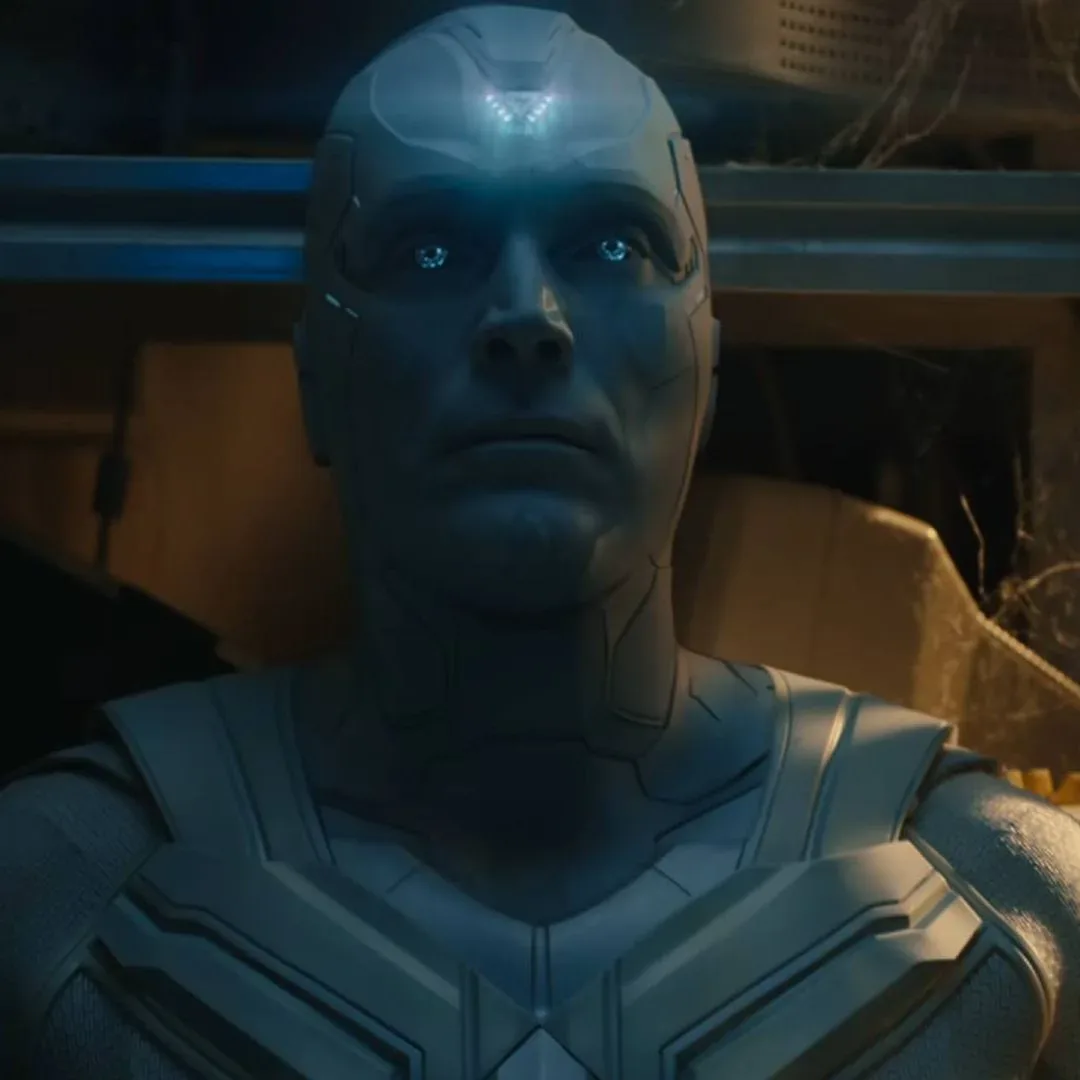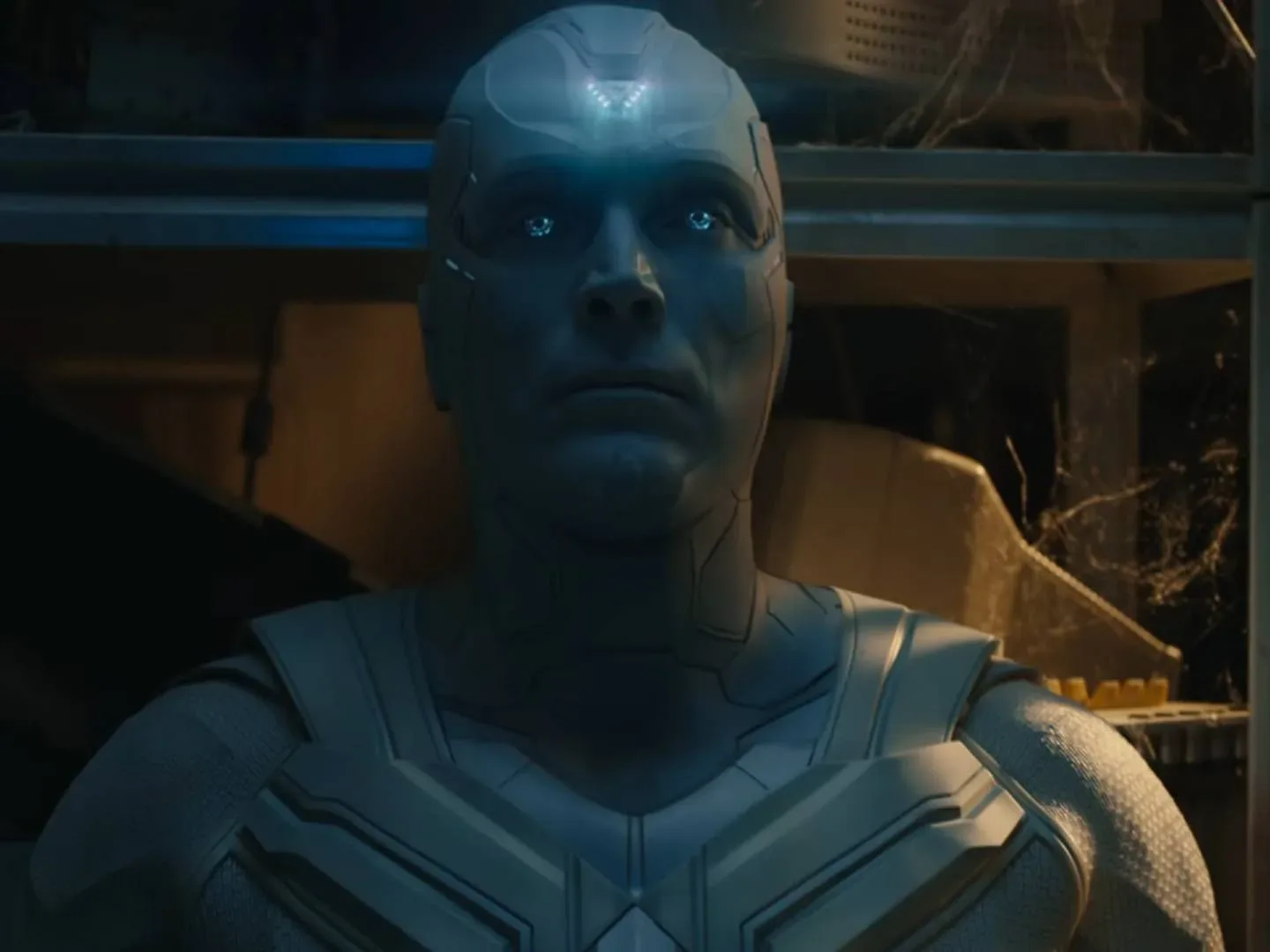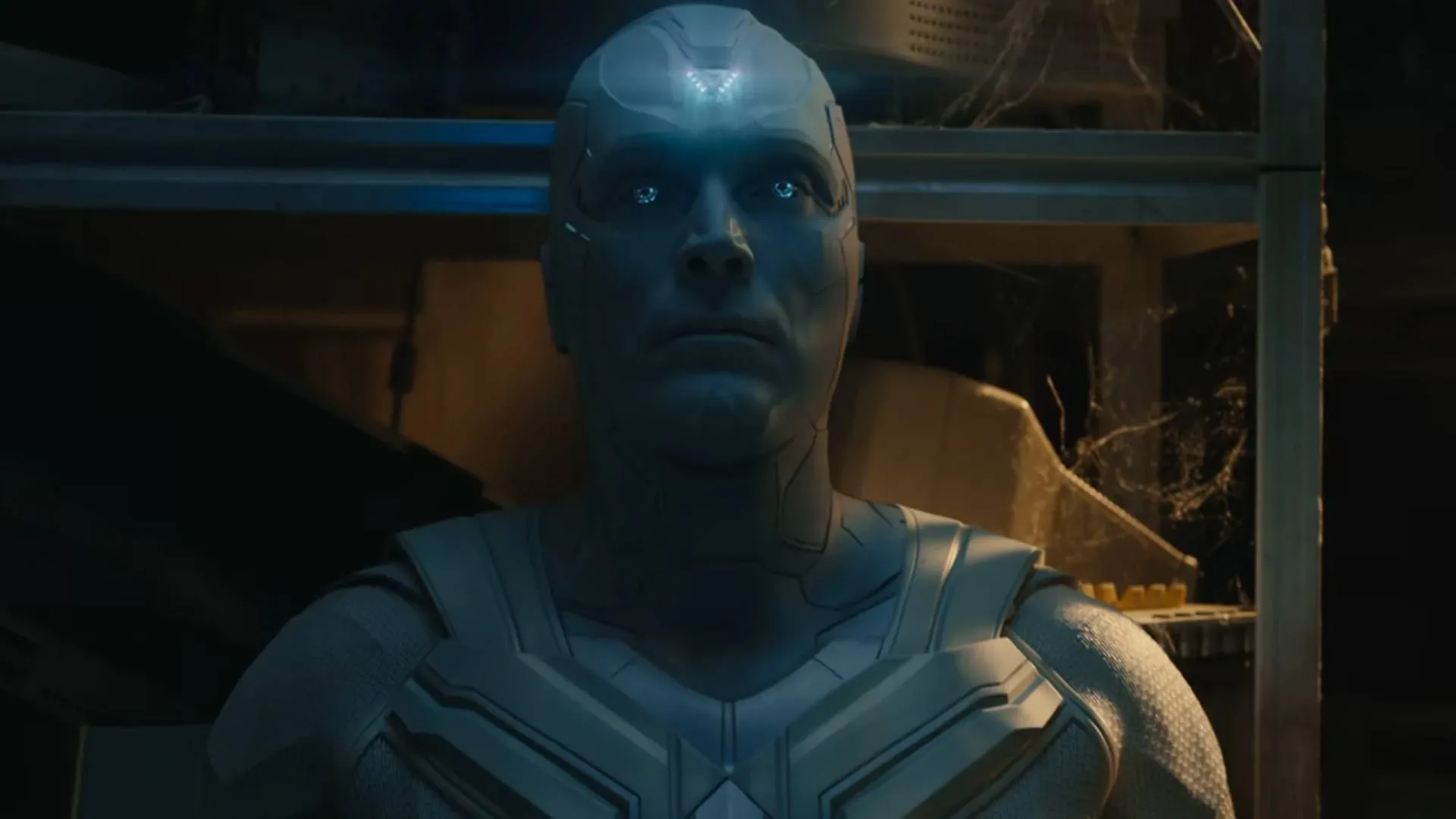
VisionQuest is not leaving Ultron’s metal nightmare body in storage. The Marvel series will include substantial robot action when it arrives on Disney+ on October 14, but showrunner Terry Matalas has made clear that Ultron taking human form is an intentional dramatic choice, not merely a way to avoid visual-effects work.
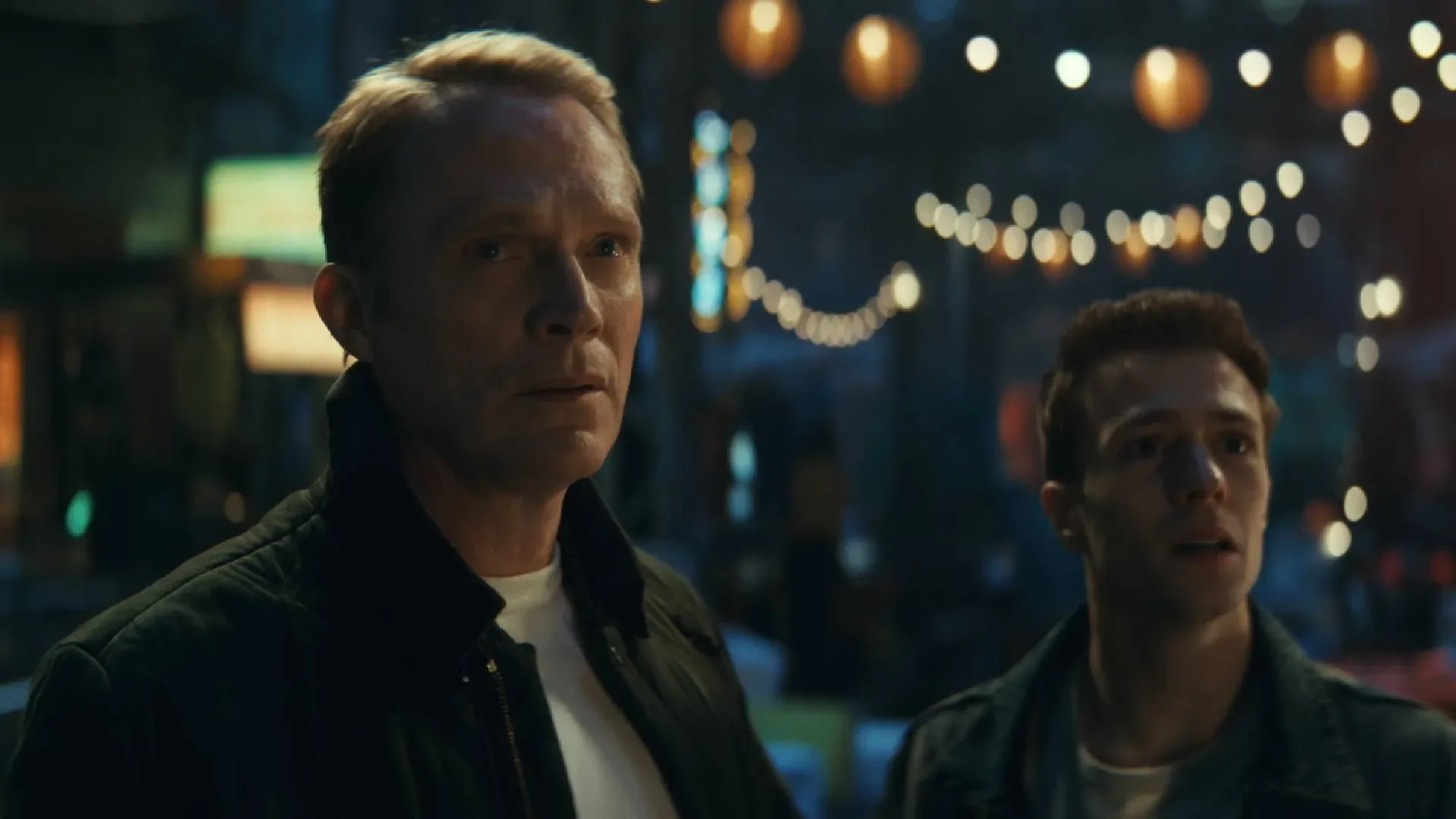
That distinction matters because Ultron’s return brings James Spader back into the orbit of Paul Bettany’s Vision, two characters whose history is inseparable even when their personalities, goals, and definitions of life could hardly be more different. Matalas has framed the show’s interest in them less as a simple superhero rematch and more as a strained father-and-son dynamic. A human-looking Ultron gives Spader and Bettany the space to play that tension face-to-face, in ways an all-digital character may not.
Fans should not read that as a signal that the series is abandoning the villain’s familiar robotic identity. Matalas has said viewers will get plenty of Ultron in robot form. The human presentation, then, appears to be another tool in the show’s storytelling kit: a way to place one of Marvel’s most chilling artificial intelligences in an environment that is designed, at least on the surface, to feel domestic and welcoming.
Why a human Ultron matters to VisionQuest
Ultron has always been more unsettling than a standard mechanical threat because he does not act like a machine in the simplistic sense. He is angry, vain, contemptuous, funny in an uncomfortable way, and intensely interested in humanity despite his frequent wish to erase it. Spader’s performance helped give the character that volatile personality. A glare, a pause, or a minor change in expression can communicate irritation and calculation before the dialogue needs to say anything at all.
Matalas’s explanation is straightforward: he wants audiences to see Spader perform opposite Bettany. There is a practical production reality to rendering a CGI robot continuously, but he has emphasized that the priority is creative rather than financial. A physical actor’s face can register the tiny emotional shifts that make an encounter feel intimate, especially in a scene where the point is not simply whether the heroes can stop a dangerous machine.
That is an important tonal clue for VisionQuest. Ultron is not apparently being positioned only as a distant threat that arrives for an explosive set piece. The premise described so far puts him close to Vision, within a household arrangement that could turn every conversation into a pressure test. The series can still make room for gleaming armor, destruction, and the menacing silhouette associated with Ultron, while allowing the character’s menace to surface through speech and silence.
Matalas has pointed to the final exchange between Vision and Ultron in Avengers: Age of Ultron as a key inspiration. That scene carried a reflective, almost philosophical charge amid a much larger battle. It treated the two synthezoids as connected creations with radically different conclusions about what the world deserves. If VisionQuest is extending the ideas found there, its emphasis on their relationship could be more significant than any individual fight.
A father-and-son conflict built into Marvel’s artificial life
The father-and-son wording is especially revealing. Ultron and Vision are not family in a conventional human sense, yet their origins make the label meaningful. Ultron is tied to Vision’s creation, and the two have long functioned as opposing branches of a shared technological and philosophical lineage. Ultron’s bleak worldview and Vision’s capacity for empathy make them natural foils. Their connection can be personal without being uncomplicatedly affectionate.
That perspective also leaves room for the show to examine why Vision might invite this particular danger into his life. The available details say Vision asks the artificial intelligences under his roof to assume human appearances in pursuit of “happy home” energy. It is an evocative notion: beings defined by code, hardware, memories, and borrowed voices being asked to participate in a version of family life.
But a comfortable home is a difficult aspiration when Ultron is part of the household. The character’s presence naturally creates a question that the show seems eager to exploit: can a place be safe just because it looks safe? A human face, a shared table, and the language of family do not automatically erase the history or capacity for violence attached to the person—or program—standing in the room.
The domestic angle could distinguish VisionQuest from a more conventional return-of-the-villain story. Rather than separating emotional material from the action, it allows the two to feed each other. An argument between Vision and Ultron may carry as much weight as a robot confrontation because their conflict is rooted in competing beliefs about identity, agency, and the value of people.
FRIDAY, EDITH, and JARVIS join the household
Ultron and Vision will not be the only artificial intelligences given human form. Orla Brady is part of the cast as FRIDAY, Emily Hampshire plays EDITH, and James D’Arcy returns as JARVIS. That line-up makes the premise larger than one creator and one creation. It gathers multiple recognizable AIs from the Marvel screen universe and asks them to operate in a new social structure.
JARVIS carries particular resonance as Tony Stark’s longtime AI assistant, later associated with the chain of events that led to Vision. FRIDAY also has a powerful connection to Tony Stark’s final moments. Matalas has indicated that the series will explore that history, suggesting that the show’s household will not be insulated from the legacy of loss attached to the people who made and relied upon these systems.
EDITH adds another piece to that technological inheritance. Together, these figures represent different roles that AIs have played: assistant, caretaker, surveillance system, companion, and, in Ultron’s case, catastrophic adversary. Making them human-looking does not mean those distinctions disappear. It may instead make them more visible, as each one has to negotiate identity beyond a voice in an earpiece or an interface responding to a command.
The casting also supports the idea that performance is a central priority. Brady, Hampshire, D’Arcy, Spader, and Bettany can occupy scenes as characters rather than solely as voices attached to effects. That does not diminish the spectacle inherent in a Marvel series; it suggests the spectacle has a character-driven purpose. When the robotic forms do appear, they may hit harder because the audience has spent time with the personalities behind, beside, or within them.
Robot action remains part of the promise
For viewers concerned that a human-form Ultron could mean a less recognizably Ultron-focused series, Matalas has directly pushed back on that assumption. The showrunner has promised robot action and confirmed that the intimidating robot version of the character will be seen. The series is therefore not choosing between actor-led drama and mechanical menace. It is aiming to use both.
That balance is sensible for a story about Vision. Vision himself exists at the intersection of the human and the artificial, capable of extraordinary physical power while also defined by his curiosity, gentleness, and complex emotional life. A series centered on him has reason to explore forms of embodiment: what it means for an intelligence to have a body, what shape it chooses, and whether looking human changes how it is treated or understood.
Ultron complicates every one of those questions. His human form may create opportunities for unsettling proximity; his robotic form retains the iconography of an enemy built for intimidation. The contrast can underscore the fact that appearance is not character. A polished, human-facing exterior may invite conversation, but it does not guarantee trust.
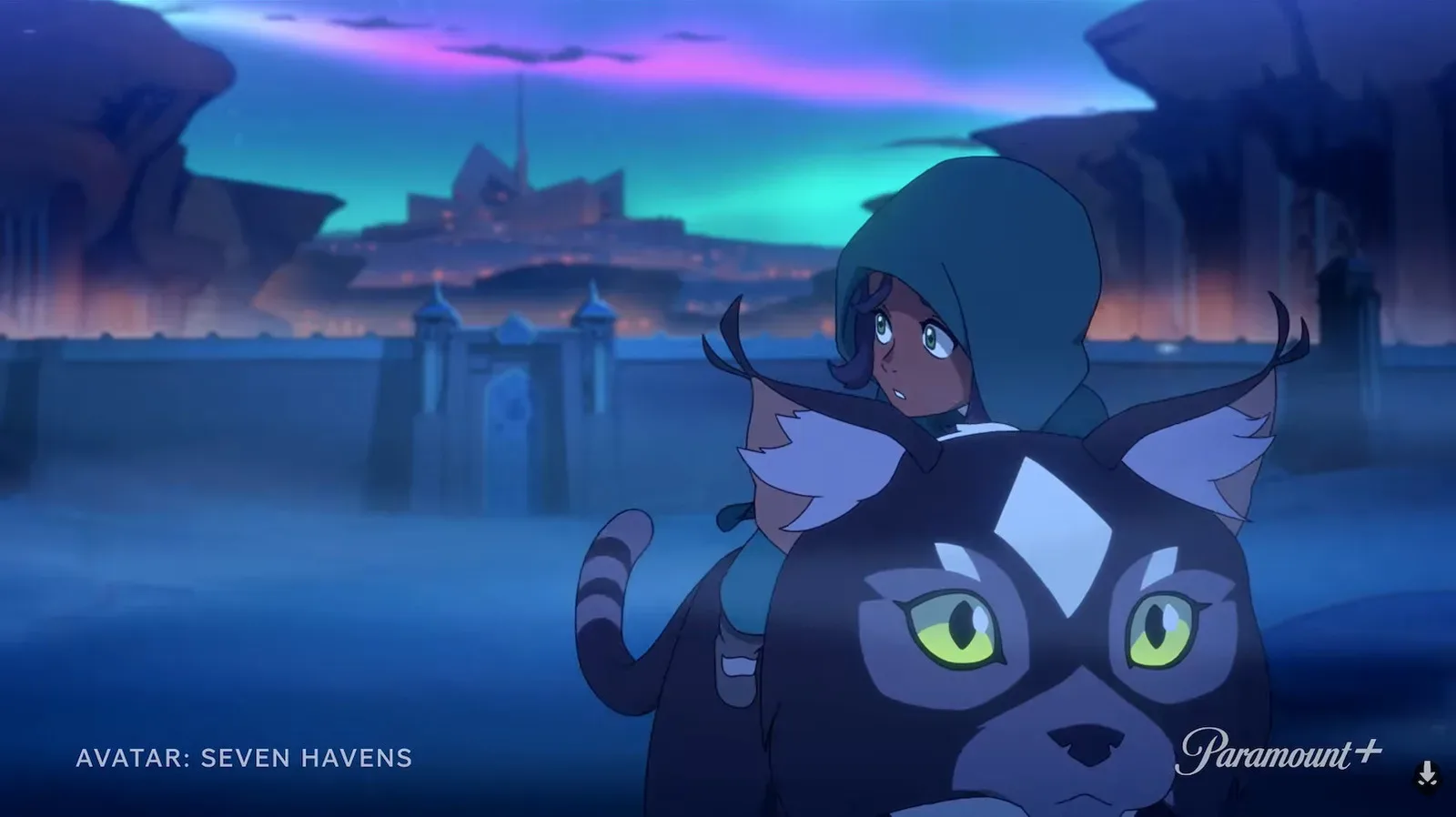
There is broader genre interest in this kind of premise, too. Science-fiction television often finds its strongest material when cosmic or technological stakes become personal and contained. Marvel audiences looking for another genre series can also keep an eye on the evolving animated-TV landscape, including the setup explored in Avatar: Seven Havens’ trailer and its fractured-world conflict. In VisionQuest, though, the immediate fracture may be inside one very unusual home.
What the October 14 premiere sets up
VisionQuest arrives October 14 with a premise that turns Marvel’s AI history into a family drama with a looming metal shadow. Its returning characters bring heavy history with them: Tony Stark’s legacy, Vision’s unusual origin, Ultron’s destructive ambitions, and the question of whether artificial minds can define themselves apart from the humans who made them.
The most notable takeaway is not that the series has found a workaround for a computer-generated character. It is that Matalas wants the audience to watch Spader and Bettany directly engage with one another. Ultron will still have his robot form and the show will still deliver robotic action, but the human guise is designed to make the conflict closer, more expressive, and potentially more unnerving.
A home full of AIs seeking a version of happiness is already a curious setup. Add Ultron to the guest list, and it becomes clear that VisionQuest is unlikely to mistake a pleasant domestic atmosphere for actual peace.