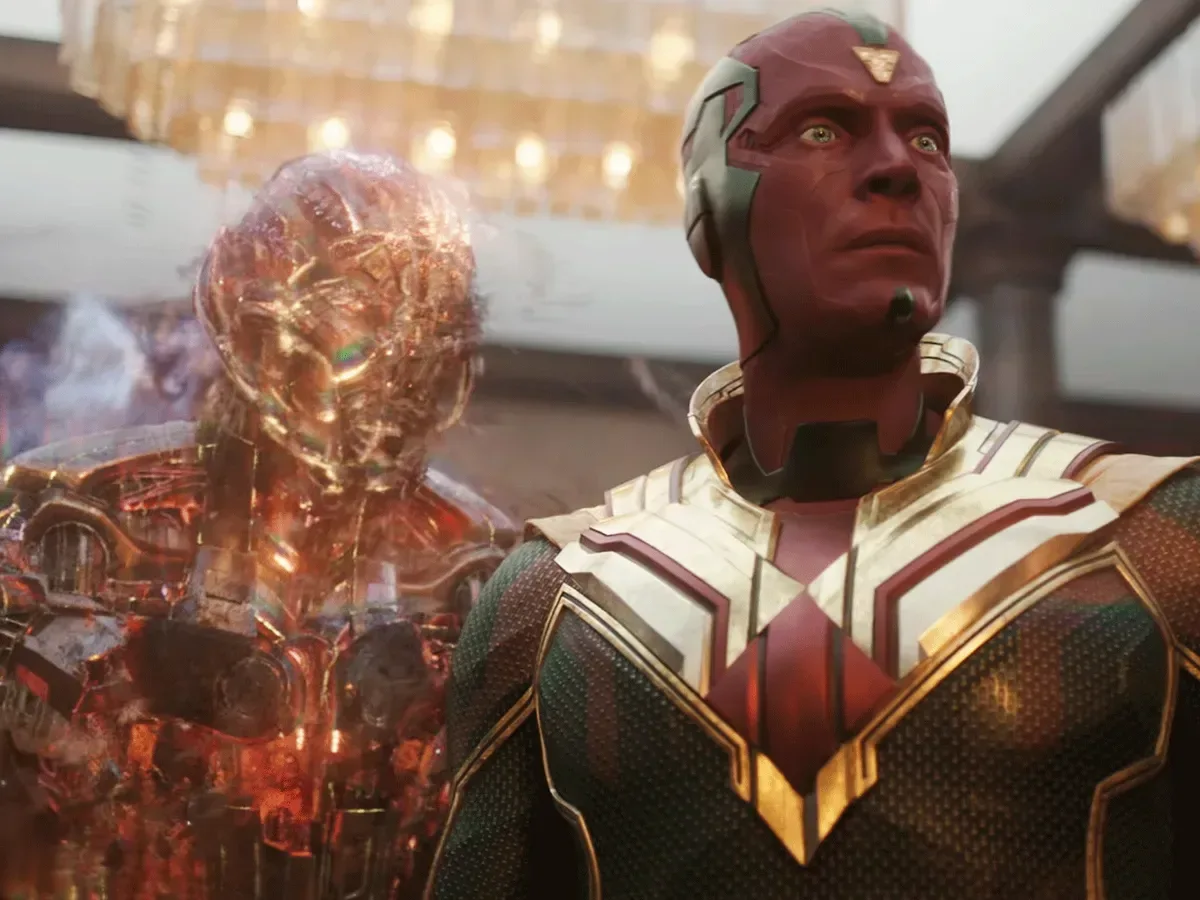
VisionQuest is heading to Disney+ on October 14, and showrunner Terry Matalas says the series was not built as a rigid exercise in maneuvering around every larger continuity concern. Instead, its starting point was unusually character-focused: White Vision’s departure at the end of WandaVision, the time that has elapsed since then, and an unresolved question that suits Vision better than almost any superhero—what exactly is he now?
Speaking around the show’s New York Comic Con 2026 presentation, Matalas described a process in which early concepts could be discussed with Marvel Studios president Kevin Feige, but the writers retained considerable space to develop the story they wanted. Matalas said the staff “pretty much did exactly what we wanted,” while acknowledging that some initial ideas were checked against the wider universe.
That distinction matters. In a connected franchise, a creative team can have freedom without complete separation: a proposed plot point may need to fit with existing plans, but the series can still be driven by its own dramatic question rather than merely functioning as a bridge to another project. Matalas’ comments suggest VisionQuest had that latter kind of room. Its continuity obligations appear to have provided a foundation, not an instruction manual for every beat.
A blank slate, with a very specific past
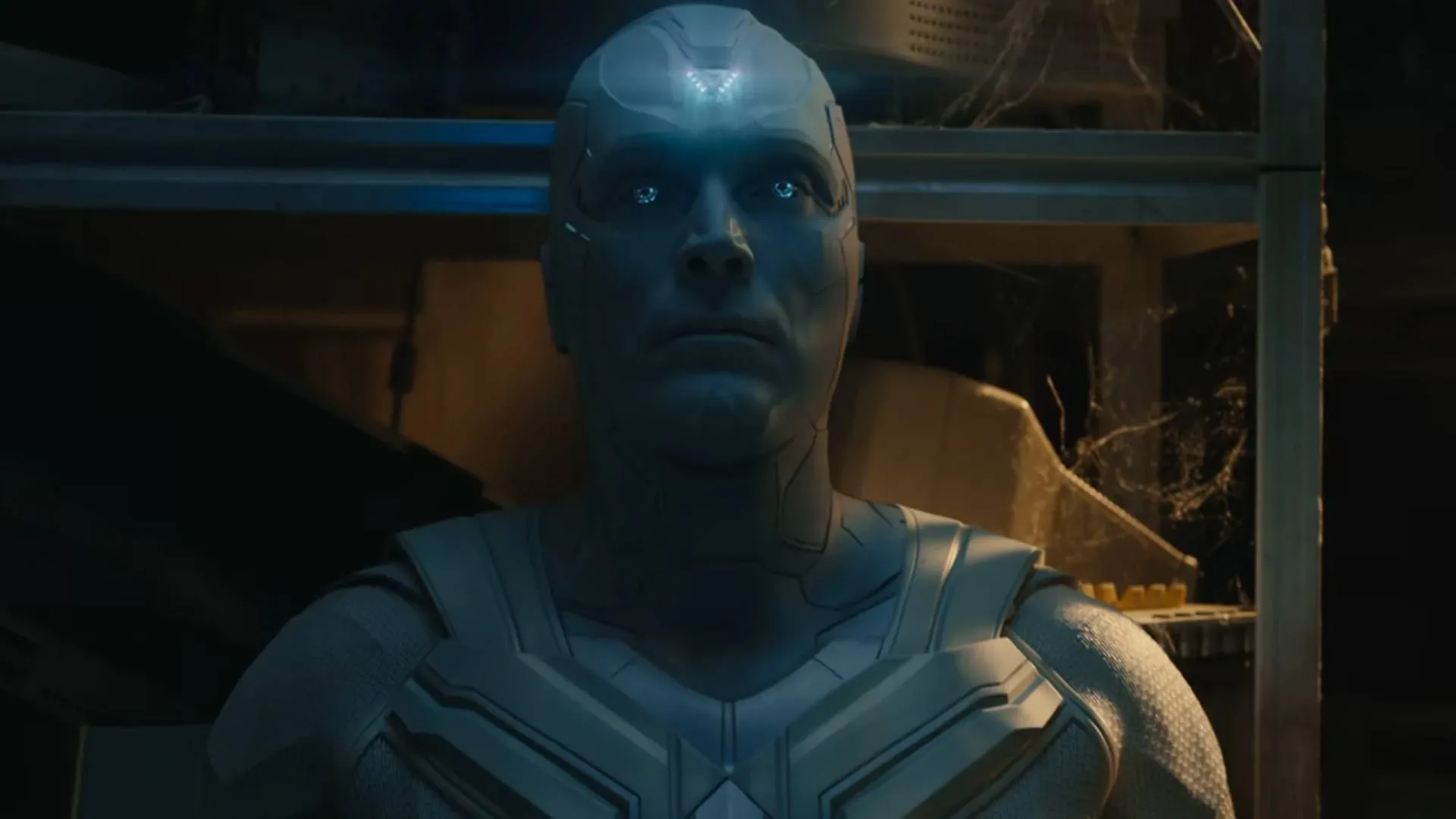
White Vision is not simply Vision returning from an off-screen errand. His last major on-screen moment left him flying away after the events of WandaVision. That exit created a rare kind of superhero-story opening: the character has a recognizable name, memories and emotional associations for viewers, yet the next chapter is not automatically defined by where he lives, what team he belongs to, or what immediate mission he must undertake.
Matalas characterized the character’s situation as an identity quest. The essential questions he raised were direct: is this the old Vision, something new, or something else entirely? That is a more productive engine for a serialized story than a simple whereabouts mystery. “Where has he been?” can launch an episode; “Who is he after being there?” can shape a whole season.
Identity quest, in this context, means a character journey centered on self-definition rather than only external objectives. The character may still face threats, pursue people, uncover secrets, or deal with familiar enemies. But the dramatic purpose of those events is to pressure an unsettled sense of self. For Vision, whose history already includes questions of memory, personhood and emotional connection, that framing is especially apt.
Matalas also pointed to the passage of time for the audience as something the show should embrace. Rather than treating the gap after WandaVision as a problem to be immediately erased, the series can make that absence part of the premise. The audience has been without an answer to White Vision’s destination; the character’s own distance from his former life can now become material for the drama.
Tommy is the fixed point
Although Matalas described broad creative latitude, he said one story direction was clear from the beginning: Vision would reunite with his son, Tommy. Everything else, he recalled being told, was up to the show’s team.
That instruction gives the series a tangible emotional destination. A quest for identity can become abstract if it has no relationship to test it. Tommy provides a personal connection that may force Vision’s unanswered questions into the open. Matalas’ explanation does not disclose how that reunion occurs or what it means for either character, but it establishes family as more than background texture in the show’s setup.
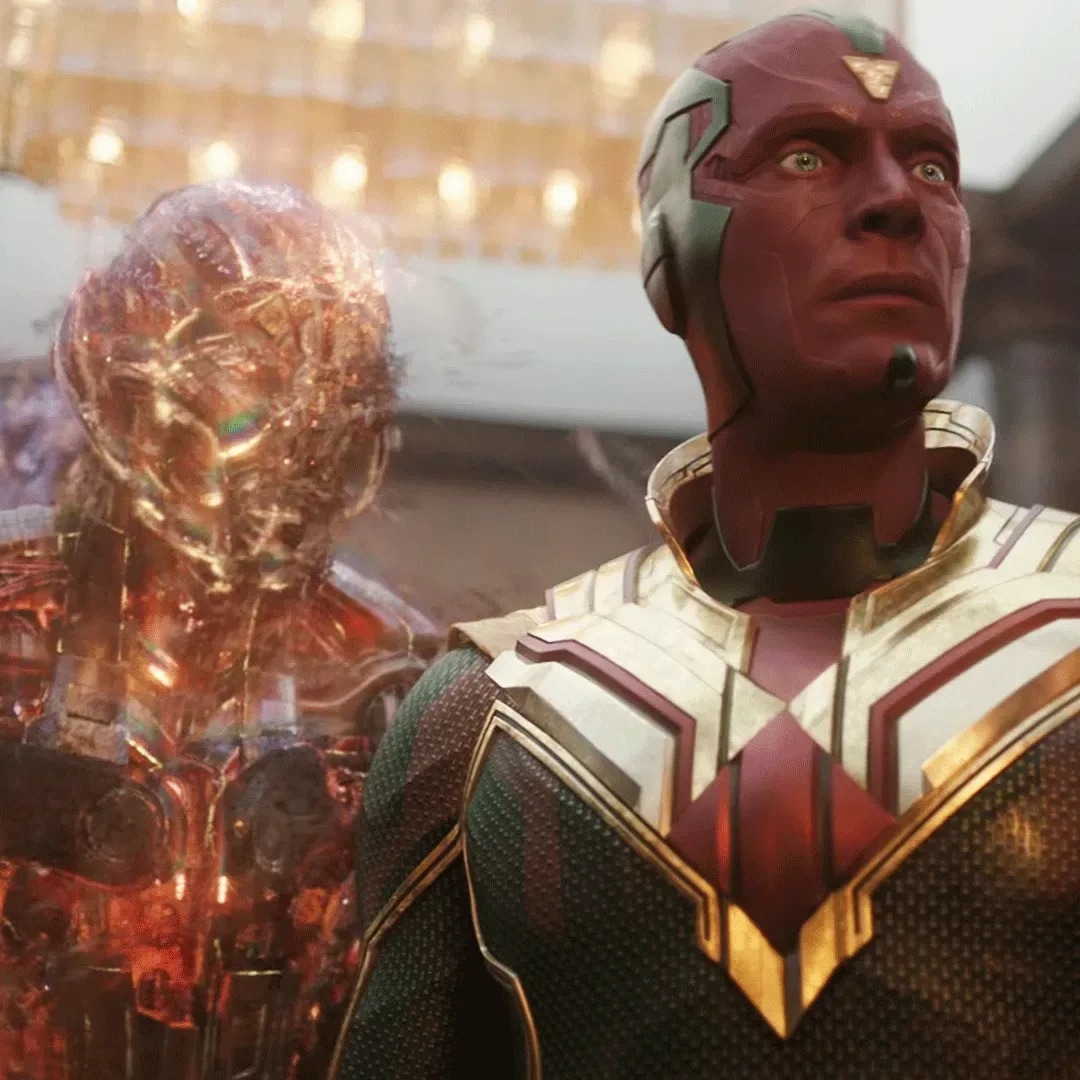
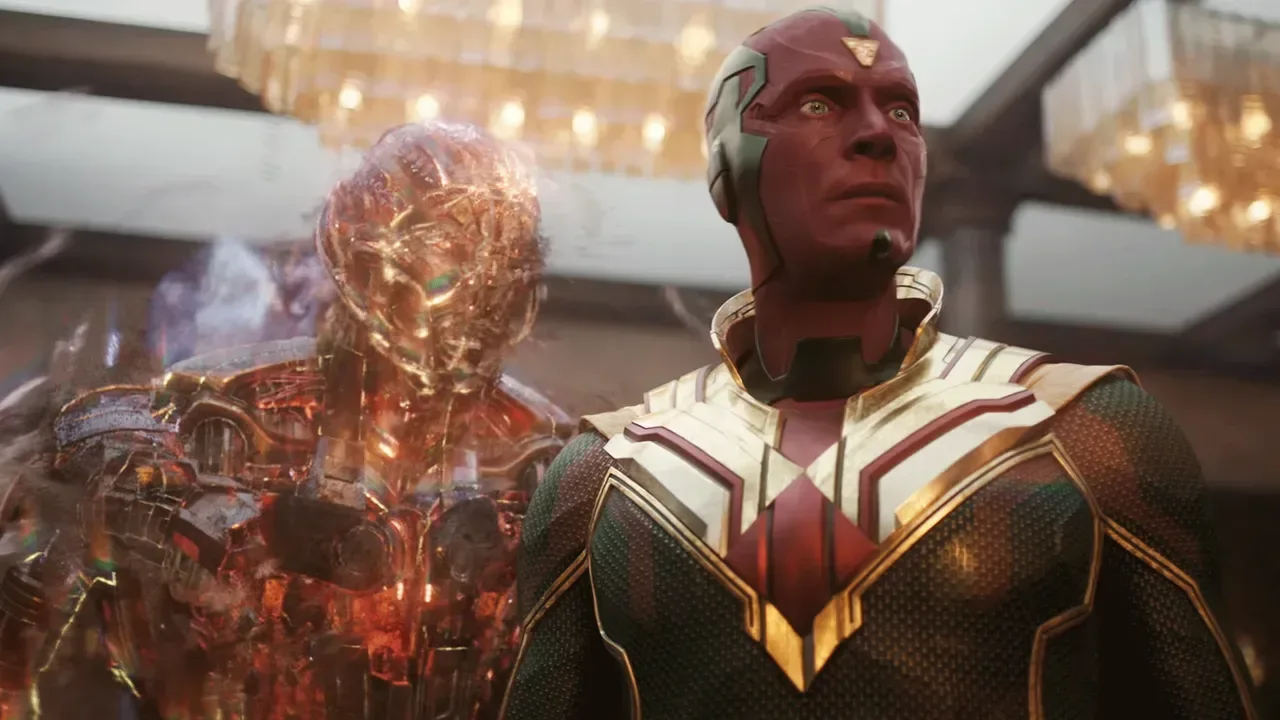
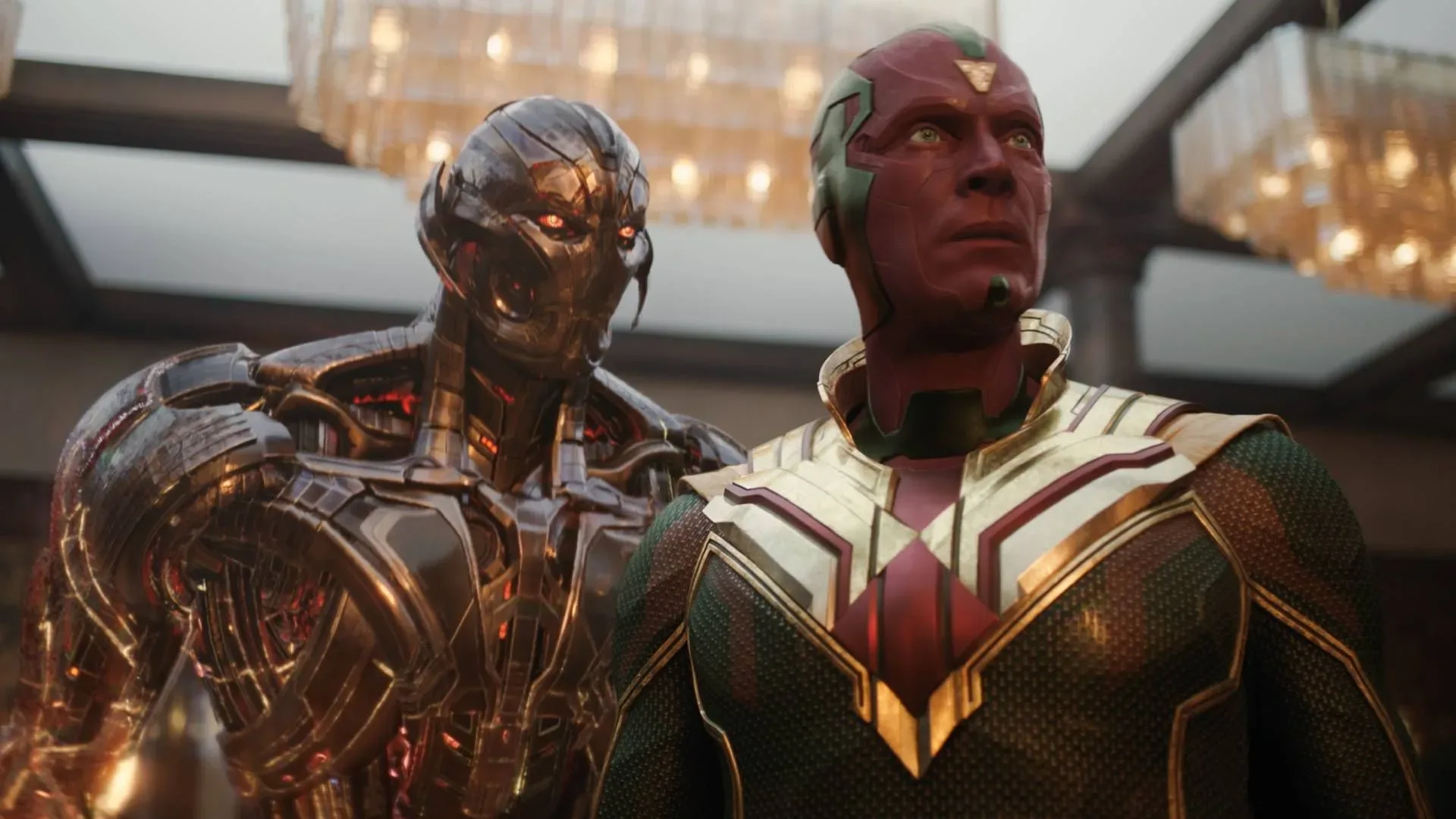
It also explains the writers’ need for a compelling figure on the other side of Vision’s journey. Matalas said that, while thinking through whom Vision could be talking to as Tommy became the destination, he landed on Ultron. His immediate next challenge was obvious: Ultron was dead.
That is a revealing piece of the writing logic. The choice was not presented as a random return of a familiar name for recognition alone. Matalas described arriving at Ultron because the character offered a meaningful conversational and thematic counterpart for Vision. The showrunner then had to solve the story problem created by Ultron’s prior fate.
James Spader is part of the announced cast, alongside Paul Bettany, Emily Hampshire and Ruaridh Mollica. Spader’s presence is therefore a significant confirmation that the series will engage with Ultron in some form. But it does not explain the mechanism. The available information does not establish whether Ultron is alive again, recreated, remembered, simulated, encountered through another device, or involved by some other means. That uncertainty is part of the hook, and it is worth keeping separate from speculation.
Why Ultron fits the premise
On a thematic level, Ultron is a natural figure for a Vision story about origin and identity. The two characters are intrinsically linked by their shared history, but their meanings within the narrative are very different. Vision’s central question is whether inherited memory and past bonds make him the same person he once was. Ultron’s involvement has the potential to turn that question outward: how much can a being be shaped by its maker, its code, its history, or the purpose assigned to it?
That does not mean the series will offer a tidy philosophical debate. It may be action-driven, emotional, comic, frightening, or some combination of those modes. Still, Matalas’ description indicates that the story’s major ingredients were chosen to speak to one another. White Vision’s uncertain selfhood, a reunion with Tommy, and a route back to Ultron are not three isolated bits of franchise business. They can all bear on what Vision decides he is responsible for—and whom he chooses to be.
For viewers, that is a useful expectation to bring into the premiere. The important question may not be only whether particular characters return. It may be why their return matters to Vision’s evolving identity. A cameo-driven approach asks fans to spot the connection; a character-driven approach asks what the connection changes. Matalas’ account points toward the latter.
Autonomy inside a shared universe
“Bigger picture” can mean several things in franchise television: established events that cannot be contradicted, characters reserved for other stories, future plots that must be protected, or simply tonal expectations attached to a major brand. Matalas did not claim there were no conversations about any of those matters. He said there were early ideas the team would raise with Feige and evaluate.
What he did emphasize was that those discussions did not overwhelm the room’s own conception of the series. That is notable because VisionQuest begins with a highly consequential piece of existing continuity. It follows a version of a beloved character whose status is complicated by design. A cautious production could have spent its energy solely clarifying continuity mechanics. Matalas instead framed the opportunity as an organic exploration of the possibilities opened by the blank slate.
The result, if the series follows that philosophy on screen, could make its franchise connections feel motivated rather than obligatory. Tommy is not merely a name from prior Marvel storytelling; he is Vision’s son and the stated destination of his journey. Ultron is not merely a legacy adversary; Matalas identified him as the character who made sense for Vision to confront or communicate with as the plot took shape.
That is the practical upside of a focused showrunner vision within a larger universe. Continuity becomes a set of relationships and consequences, not a checklist. Viewers do not need every question answered at once if the series clearly understands which questions belong to its protagonist.
What was shown, and what remains unknown
VisionQuest made an appearance at Marvel’s Television and Animation panel at New York Comic Con 2026, where Bettany, Spader, Hampshire, Mollica and Matalas appeared before the first episode was screened for the room. Initial reactions from that screening were positive, with some attendees describing the show as a worthy successor to WandaVision.
Those reactions are an early signal, not a substitute for a full-season assessment. A premiere is designed to establish tone, character objectives and mysteries; it cannot by itself prove how every plot thread will develop. Still, the favorable early response aligns with Matalas’ emphasis on carrying forward the personal, high-concept concerns that made WandaVision distinct.
There is also no confirmed information here about whether Wanda appears. Her absence or presence remains unaddressed by the material available, so audiences should treat any firm claim as speculation until the show itself provides an answer.
For a broader look at how long-running television can balance procedural momentum with a more personal core, see our coverage of why Ice-T believes Law & Order: SVU endures. VisionQuest is working in a very different genre, but Matalas’ comments point to a similarly useful principle: plot machinery matters most when it gives a character something consequential to confront.
When VisionQuest arrives October 14, its biggest immediate mystery will be less about whether it can connect to the MCU—it plainly can—and more about how far it is willing to follow White Vision into the uncomfortable territory between memory, inheritance and choice.