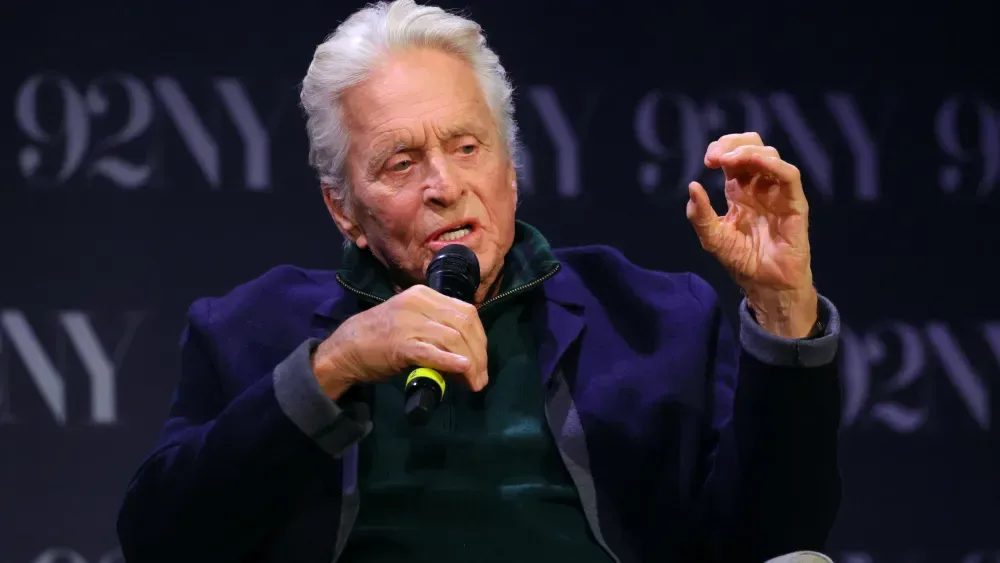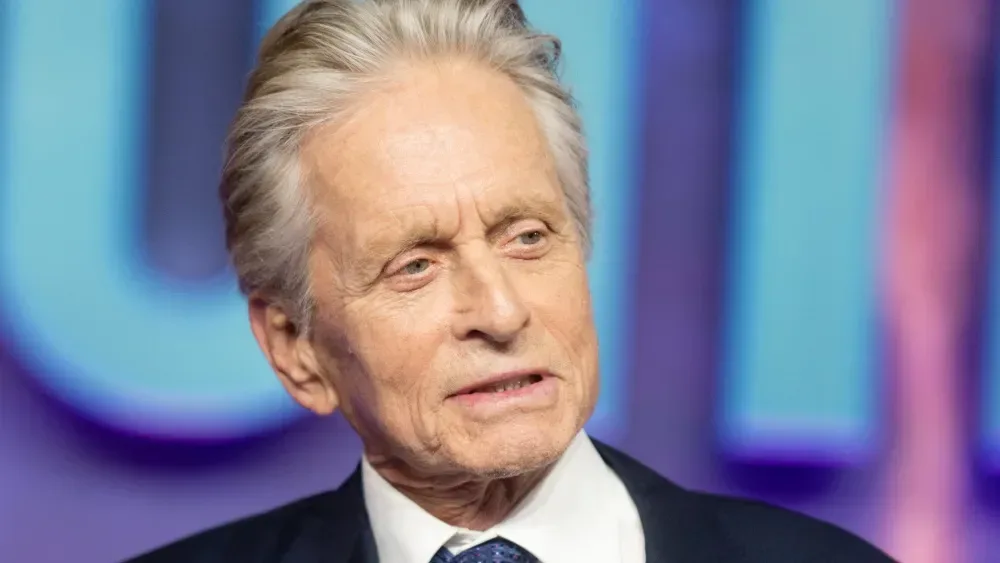
Michael Douglas used a television appearance to revisit two very different parts of the story told in his memoir, One Helluva Ride: a risky account of paying for college by transporting marijuana and a forceful response to the contemporary “nepo baby” debate.
The actor and producer was discussing the book’s wide span, which covers his progression from the early stages of his career to major awards recognition. Douglas has won the Best Picture Oscar as a producer of One Flew Over the Cuckoo’s Nest and the Best Actor Oscar for Wall Street. But the conversation also centered on his recollections of working outside Hollywood while he was young, including a job at a Mobil gas station in Connecticut, where he said he earned a “Mobil Man of the Month” designation at age 20.
Those stories became the route into a broader question: what does it mean to grow up with an exceptionally famous parent, and where should the public draw the line between an inherited opening and an individual career?
Douglas describes a dangerous college-era scheme
Douglas said his memoir addresses “sex, drugs and rock and roll,” and recounted transporting marijuana across the United States during his college years. He framed the episode as a way he tried to cover educational expenses after turning 21.
For more context, explore 100 Bullets: The US of Anger #4 Sets Lono Against a Militia as Elton Finds Trouble in a Garage.
In his telling, Kirk Douglas gave him a $10,000 check and told him he was on his own financially. Michael Douglas said he still had several years of tuition ahead of him. He described using two soft leather Italian suitcases that had been Christmas gifts from his father, claiming each could carry 22 kilograms of marijuana. He said he would return east to visit his mother with the two cases and only the clothes he was wearing.
Douglas referred to the period as “BD: Before Dogs,” a reference to drug-detection dogs. The anecdote was shared as a personal recollection rather than a recommendation. Transporting controlled substances, particularly at the scale Douglas described, can carry serious legal and personal consequences; the story’s central point is the extraordinary risk embedded in his youthful effort to make money, not a model for financing school.
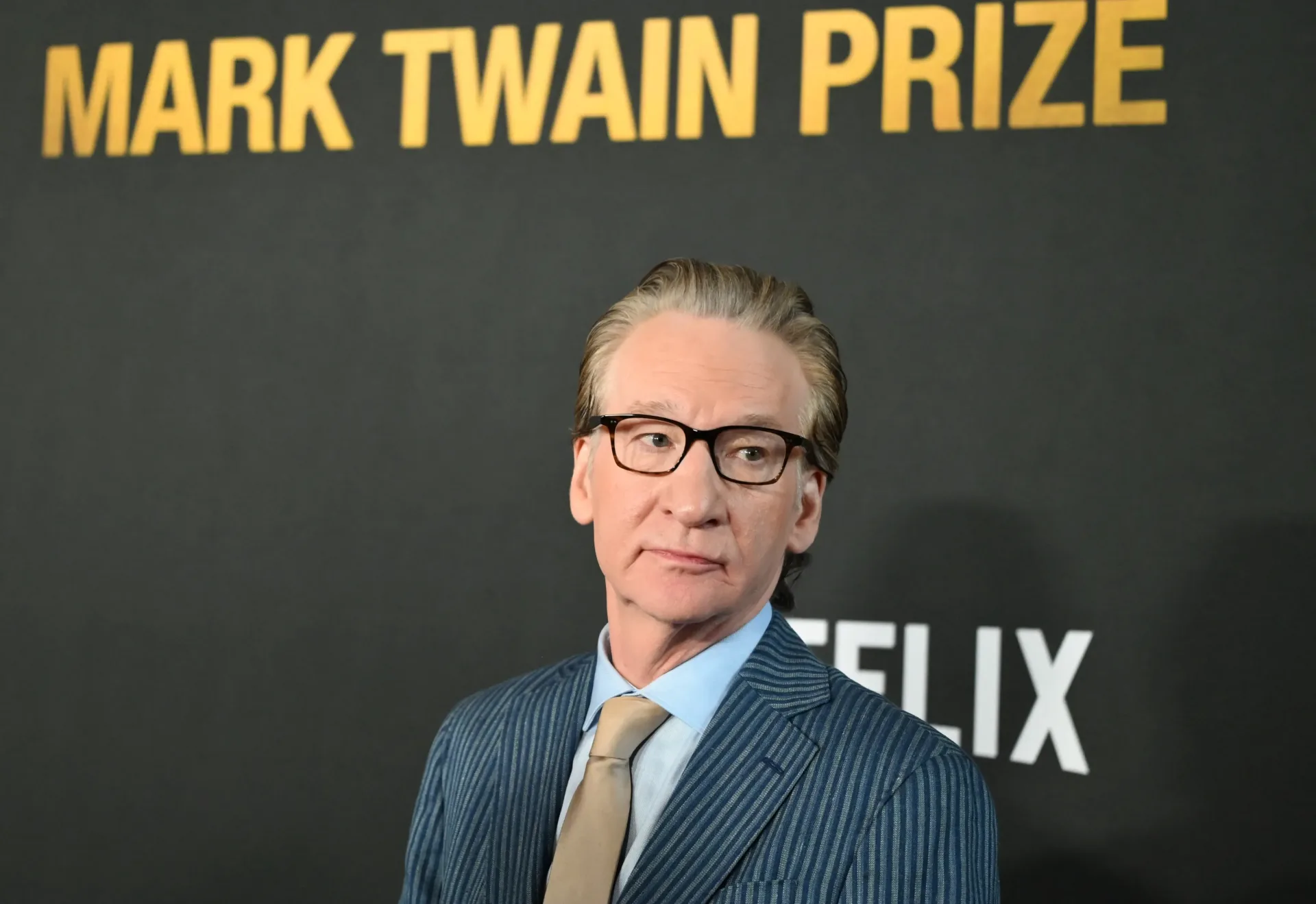
The exchange also involved Bill Maher’s observation that buying marijuana in one place and selling it elsewhere could create a substantial margin. Douglas agreed that the East Coast–West Coast divide made that proposition particularly meaningful at the time. Neither the discussion nor the memoir anecdote changes the fact that laws, enforcement, and penalties vary by jurisdiction and have evolved over time.
For readers interested in the fuller discussion of Douglas’s memoir, cannabis story, and the family-business argument, this related report provides additional context.
Why the suitcases matter to the larger memoir story
The suitcases are an unusually vivid detail because they connect Douglas’s family background to his account of self-reliance in a way that is neither simple nor tidy. They were gifts from Kirk Douglas, a celebrated actor, but Michael Douglas’s recollection turns them into props in a hazardous off-screen hustle. That contradiction is part of what makes the story notable.
Douglas did not present himself as someone entirely separated from privilege. The account plainly includes a sizable check from a father who was already a major entertainment figure, as well as the famous surname that would always be associated with him. At the same time, he emphasized that he worked ordinary jobs and sought ways to support himself.
That tension is also central to modern arguments over industry connections. A person can have access to money, recognition, introductions, or a family example while still working hard. But the existence of hard work does not automatically erase the value of those advantages. Douglas’s comments do not resolve that larger dispute so much as show why it remains contentious: family background can be both meaningful support and an insufficient explanation for a long career.
Douglas’s case against the “nepo baby” label
When the discussion moved to his gas-station work, Douglas directly addressed the term “nepo baby.” The phrase generally refers to a person whose family connections are believed to have delivered an unusual professional advantage, especially in fields with public-facing careers such as film, television, fashion, and music.
Douglas argued that families steering children toward an existing business is not unique to entertainment. He invoked the familiar “and sons” naming convention used by family businesses and asked why show business should receive special criticism.
It is a straightforward argument for normalization: parents in every sector may hope their children continue the work they built. In that framing, Hollywood is being treated differently for a practice that is ordinary elsewhere.
There is, however, an important distinction within the debate. Family succession is common in businesses of many kinds, but entertainment careers can depend on opportunities that are especially scarce and visible: auditions, financing, meetings, creative partnerships, publicity, and the attention of gatekeepers. Critics of nepotism are often less concerned with whether a parent wants to help a child than with whether access is being mistaken for a level playing field.
Douglas’s response focuses on the first point: the parental impulse to pass on a business. The criticism associated with the label focuses on the second: whether the resulting access should be openly acknowledged. Those positions can coexist. A family may reasonably want to help its children, while audiences may reasonably recognize that help as an advantage.
A career that includes producing as well as acting
Douglas’s remarks are also notable because his career is not confined to one side of the camera. His memoir’s awards milestones include producing One Flew Over the Cuckoo’s Nest, which won Best Picture, and acting in Wall Street, which brought him Best Actor recognition.
That distinction matters in a conversation about connections. Producing and acting are separate professional roles, even though both belong to the same industry. A producer is associated with moving a project toward the screen, while an actor performs a role in it. Douglas’s achievements in both areas complicate any attempt to reduce his professional identity to a single inherited association.
It does not make his father’s influence irrelevant. Kirk Douglas’s stature is inseparable from the public backdrop of Michael Douglas’s early life. But the career record described in the memoir encompasses work in multiple capacities and award recognition attached to separate films and disciplines.
The practical lesson in the dispute over access
The “nepo baby” discussion can become unproductive when it treats two claims as mutually exclusive: that an individual worked for their success, or that they benefited from family proximity to a powerful industry. Douglas’s comments underline how both can be true at once.
His gas-station story supplies an example of labor outside entertainment. The college marijuana story, meanwhile, is an account of an illegal and high-risk decision he says he made while trying to finance his education. And his broader career includes high-profile achievements as both producer and actor. These facts help explain why he objects to a label that, in his view, compresses a full working life into a parent’s fame.
Yet the label persists because public conversations about opportunity are rarely only about talent or effort. They are also about the resources that allow someone to withstand setbacks, gain entry, or be taken seriously sooner than others. Douglas’s answer is that family businesses naturally create family pathways; the opposing view is that transparency about those pathways is necessary, particularly in an industry where access can be decisive.
That is why the segment lands beyond a single celebrity’s recollection. Douglas offered an unvarnished story about a perilous college-era choice and a clear defense of intergenerational professional support. Together, they present a life story shaped by both personal initiative and unmistakable proximity to Hollywood power—exactly the combination that keeps the “nepo baby” argument alive.