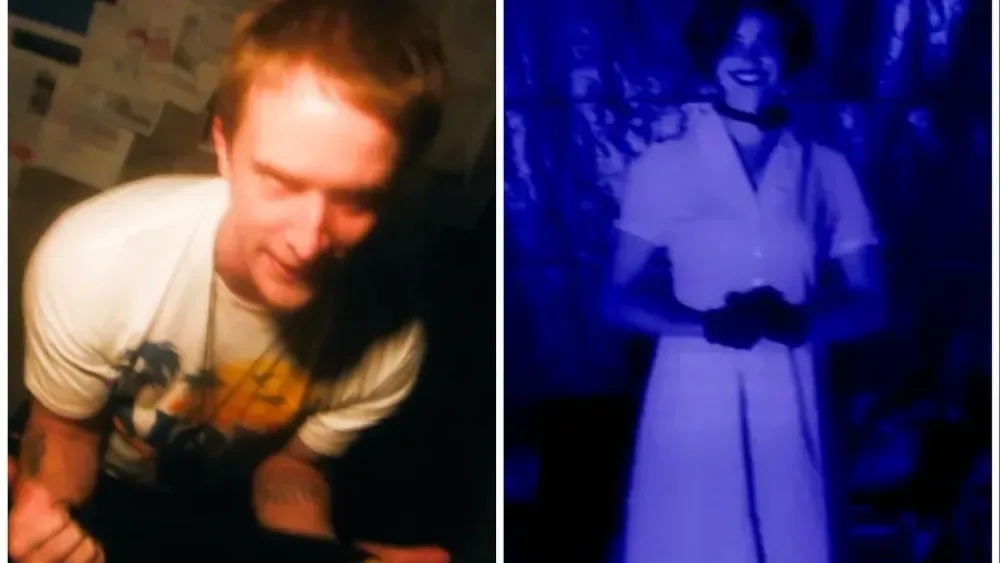
For most theater, the audience is part of the machinery. Laughter spreads. A sudden silence becomes communal. Even an awkward pause can be softened by the awareness that other people are also sitting through it. Candle House’s The Pineapple removed that safety net entirely: its recently completed North Hollywood run staged 76 performances for exactly 76 ticket holders, one participant at a time.
That is a remarkably literal use of the term immersive theater. The participant was not merely invited into a carefully dressed venue or allowed to choose between a few optional interactions. The production placed one person in scenes with a four-person cast and built its story around direct questions, physical staging, improvisation and an unfolding alien encounter. Tickets cost $247, and nearly all performances sold out through word of mouth during the Sept. 15 to Oct. 5 run.
There are no immediate plans for The Pineapple to return. That makes its details easier to discuss, though one feature should remain protected: the production had multiple possible endings, and its creators asked participants not to reveal the specific resolution they received. The core premise, however, is now clear. It was an intensely personal horror-comedy about UFO belief, loneliness, consent, family and the bizarre cultural signals extraterrestrials might mistake for humanity’s defining traits.
A show where “audience participation” means you
The Pineapple began before its audience member stepped through the door. After signing up and waivers, the participant was positioned as someone answering a classified ad from a UFO believer who needed help with a ritual intended to bring aliens into the open. Text messages arrived on the day of the encounter, including a specific set of coordinates and instructions for reaching an unmarked entrance at the correct time.
Inside, the premise became tactile and deliberately uncomfortable. The participant’s phone, shoes and other belongings were removed; a safe word was explained; and consent was recorded. The setting included the UFO enthusiast’s makeshift bedroom, conspiracy material connected across the walls, and tools used to extract pineapple juice. In other words, it was less a conventional set than a private space the attendee had been asked to enter and inhabit.
From there, the experience reportedly moved through personal questioning and increasingly strange encounters. Participants could be asked about family, past relationships and religious affiliation, with the understanding that their answers might return later in the narrative. The cast included Rett Keeter, Cece Kelly, Ian Michaels and Candle House founder Evan Neiden. Their work depended on a script-improvisation balance: the show had an authored scenario and planned structure, but the individual’s replies could shape its emotional texture.
Spoiler warning: the show’s science-fiction thread was never solemn for long. Its alien visitors appear to have reached a wildly incorrect conclusion about human culture, treating beach imagery and Jimmy Buffett’s “Margaritaville” as essential Earth customs. An alien baby ultimately takes the form of a pineapple. Participants left wearing a plastic flower lei, a souvenir that makes much more sense once the production’s tropical absurdity has entered the room.
The result sounds like an impossible mixture: secret-location theater, body-horror-adjacent imagery, confession, abduction anxiety, slapstick social pressure and tiki décor. But that collision is the point. Horror and comedy can work as a pressure-release system. A frightening setup makes a laugh sharper; a ridiculous detail makes the next uneasy beat harder to predict. Instead of separating the participant’s emotional responses into clean genres, The Pineapple appears designed to make them overlap.
Related coverage includes ‘The Pineapple’ Turns One-Person Theater Into Tiki Horror.
What alternate-reality theater means here
Neiden describes Candle House’s approach as “alternate reality theater.” In practical terms, that refers to a performance that asks someone to cross a threshold into a temporary fictional logic, rather than simply observe a story from a seat. The invitation, messages, unclear location and procedures at the door all function as part of the work. They are not just marketing or administrative steps; they help establish the reality the participant is entering.
This differs from a standard play in a crucial way. In a conventional theater, a viewer can react internally, whisper to a companion, or disengage for a moment without materially changing the scene. Here, silence, hesitation, answers and willingness to play along are themselves usable dramatic material. The participant is not cast as an actor playing a role, exactly, but neither are they a passive spectator. They arrive as themselves.
That distinction also explains why the personal questions matter. The objective is not simply information gathering for shock value. The format attempts to convert a real person’s emotional associations into stakes within a fictional world. A passing reference to a relationship or a relative can become more potent than a prewritten detail because it belongs to the person standing in the room. It is an effective theatrical tool, but it also calls for unusually clear boundaries.
Candle House reportedly used a safe word that would end the experience, and Neiden said its use has been rare. That does not make the show universally suitable. A single-audience-member production can feel especially exposed because there is no crowd to blend into and no companion to silently check for reassurance. The show included forms of physical contact, including kissing, massage and spooning, as well as restraints and blindfold-like elements during its run. Anyone considering a future production in this mode should read all available content and participation information, take consent procedures seriously, and remember that opting out is a legitimate choice rather than a failure to “get” the art.
The practical challenge of consent in interactive work
Consent is not just a box to tick at the beginning of participatory theater. In a production built around surprise, uncertainty and shifting power dynamics, it has to coexist with the audience member’s ability to remain oriented enough to make choices. A safe word is one safeguard. Advance waivers and plainly communicated expectations are others. The format’s power partly comes from a participant agreeing to enter an unfamiliar social situation, but that power is only defensible when a participant retains a meaningful way to stop.
There is a useful creative tension in that arrangement. A story can encourage surrender to its rules without demanding that someone abandon personal agency. The best version of the model is not “you are trapped in our fiction”; it is “you have chosen to play in a fiction that can respond to you.” The Pineapple leaned hard into that unstable border, even using recorded consent as an element in the dramatic action.
Alienation, chosen family and the joke beneath the dread
Under its pulpier imagery, the production’s premise points toward recognizable human concerns. Its central UFO seeker is described as someone who has spent a life feeling abandoned and alone before deciding his real family must be from space. That is funny in the exaggerated language of alien-contact obsession, but it also provides a path toward themes of belonging, forgiveness and chosen family.
The word “alienation” fits twice. There is literal alien contact, of course, but there is also the social meaning: the feeling of being outside ordinary connection. The participant has been selected, isolated and pulled into a stranger’s private mythology. The production makes that isolation uncomfortable, then offsets it with gags involving pineapples, leis and an off-kilter idea of beach culture. The comedy does not erase the loneliness at the center of the setup; it makes the loneliness more approachable.
That tonal flexibility has roots in the kind of short-form speculative storytelling associated with The Twilight Zone, which Neiden has identified as a major influence. Such stories can offer a pointed moral, a disorienting premise, or simply a weird scenario allowed to stay weird. The Pineapple seems to have embraced all three possibilities at once. Its narrative could be baffling, and that ambiguity was apparently a feature rather than a flaw. Not every encounter needed to resolve into a clean explanation as long as the participant left with an intense, distinct memory.
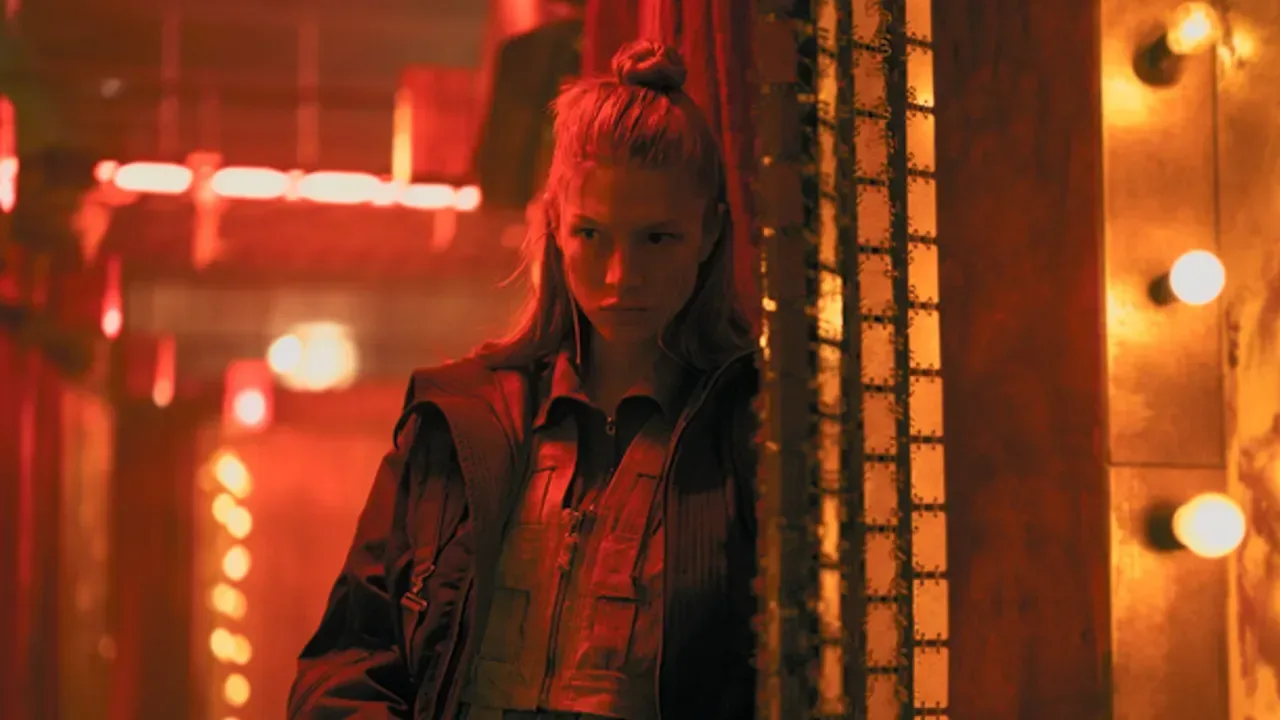
There is a sci-fi throughline worth noting for readers who enjoy uncanny future worlds in other media. The premise of an outsider trying—and failing—to understand human behavior has long been one of speculative fiction’s most flexible tools. It can make familiar rituals appear absurd while leaving room for empathy. For another recent neon-noir variation on identity and artificial persons, see our coverage of the Blade Runner 2099 trailer and its missing Replicant case.
From phone calls to a room in North Hollywood
The Pineapple was not Candle House’s first experiment in making a participant feel personally implicated in a story. The company built much of its reputation through remote, interactive experiences, particularly work delivered by phone. Those productions dispense with the physical set but retain the key idea: an actor speaks to one person, and the story listens back.
Two phone projects remain available: Claws and Lennox Mutual. In Claws, a caller takes the role of a hotline counselor speaking with a teenager who believes a monster is locked in his closet. It runs for just under an hour. Lennox Mutual is described as a more whimsical, bureaucratic experience that can unfold in one session or extend across many calls. Neiden said Claws has run for six years and Lennox Mutual for four.
Telephone performance sounds modest until you consider what a voice can do when it has a listener’s full attention. There is no shared auditorium, camera angle or visible stagecraft to remind a caller that they are consuming an entertainment product. The participant supplies a setting from their own surroundings, and the ordinary intimacy of a phone call becomes dramatic infrastructure. That makes the format comparatively accessible—only a phone is needed—but it can also be emotionally direct.
The company has explored realism as well as the fantastic. Its prior work has included a two-part phone experience involving a death-row prisoner facing lethal injection, and another scenario involving a salesman caught in a shooting at an office. Other projects went further into the surreal, including Moonlight Serenade, in which someone who has named a star is contacted by the government of the settlement on that star, and Good Morning, a radio-station story set in the fictional Ohio town of Jubilee that shifts from nostalgia into a parable about xenophobia and colonization.
That range clarifies why calling Candle House a horror company would be incomplete. Horror is one method, not the entire mission. The common thread is the direct address: a participant is given responsibility, information, attention or emotional leverage that makes the fiction feel unusually close. The phone pieces make that intimate scale available beyond one city; The Pineapple pushed it into a live setting with more bodies, objects and physical risk.
Why a 76-person run can still be a major success
Measured by conventional theater standards, a run limited to 76 attendees might look tiny. Measured against its actual design, it was exact. Each performance required a whole cast and a space for one person, making the project inherently high-overhead and difficult to scale. The ticket price, $247, reflects that uncommon arrangement, though it also naturally confines the experience to a small group of people able and willing to spend heavily on a high-intensity night out.
Scarcity was not merely a sales angle. It was baked into the art. No two participants could have brought the same life history, answers or threshold for discomfort into the space. Different endings made comparison even less definitive. In that sense, each ticket purchased a one-off work: not just a seat at a performance, but a particular encounter between an established framework and a particular person.
Neiden has said Candle House has four additional live productions already written and in development, alongside continued experimentation with different forms and scales. Nothing in the available information establishes what those productions will be or when they will arrive. Still, The Pineapple demonstrates the unusual appeal of the company’s central proposition. It does not ask audiences to watch someone else lose themselves in an alternate reality. It asks whether they want to walk across the threshold alone, answer the questions, and find out what kind of bizarre space ritual might be waiting on the other side.