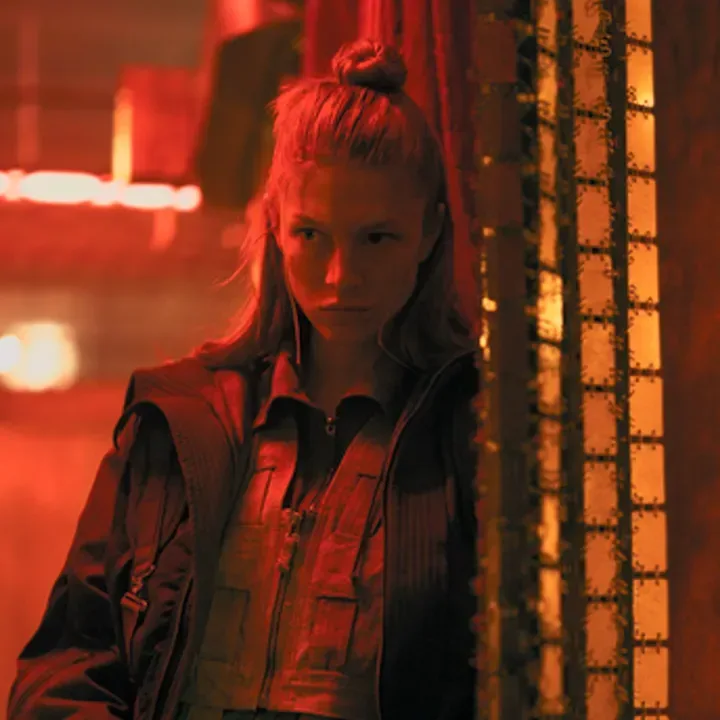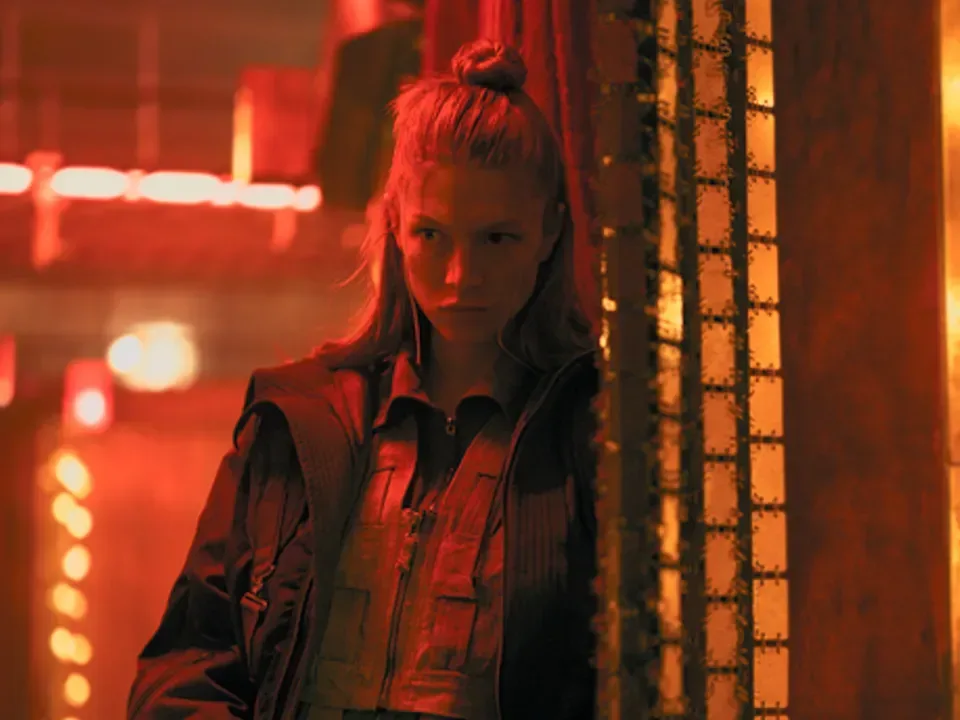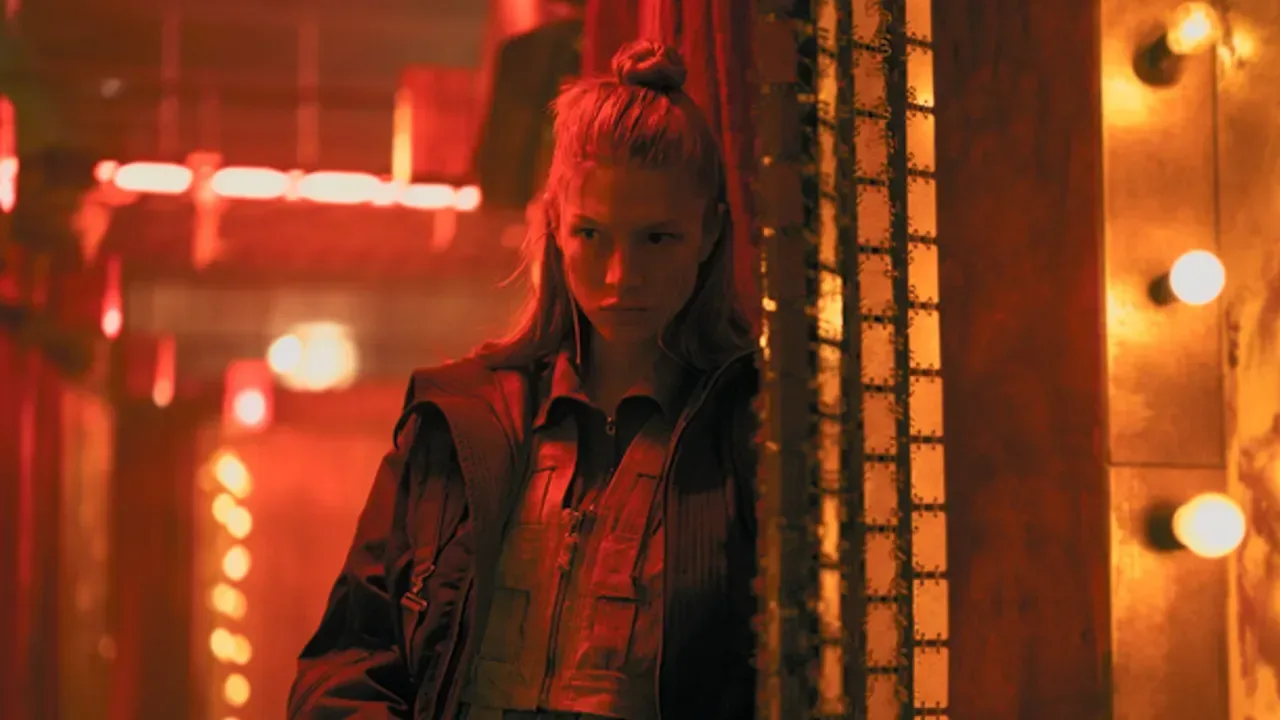
Blade Runner 2099 is narrowing its focus. The newly released trailer for the Prime Video limited series places Hunter Schafer’s Cora and Michelle Yeoh’s Olwen inside a case involving missing Replicants, a fugitive with potentially catastrophic knowledge, and a Los Angeles described as having been remade by something other than humanity.
The eight-episode series arrives November 25, 2026, with every episode scheduled to stream that day. It is set 50 years after Blade Runner 2049, making its title more than a stylistic flourish: this story occupies Los Angeles in the year 2099, 80 years after the original film’s 2019 setting.
For a franchise often concerned with unstable memories, personhood and institutions exerting power over artificial people, the trailer’s most concrete new detail is also its most ominous. Olwen says that 10 female and 18 male Replicants have disappeared during the past year. That total of 28 missing people gives the series a defined investigative problem rather than merely a distant-future atmosphere.
The case begins with a runaway—and a countdown
The official premise identifies Cora as a fugitive making one final attempt to stop running. She adopts the identity of a Blade Runner and is compelled to work with Olwen, who is herself a Replicant and only days from dying. Together, they pursue a runaway said to be hiding information that could bring down a fragile city.
That arrangement creates several pressures at once. Cora is not introduced simply as an investigator with institutional security; she is a person attempting to escape a life on the run by taking a perilous new identity. Olwen, meanwhile, is not only a partner on the case. Her approaching death makes the reported secret about a “cure for all Replicants” immediately personal.
The trailer also points toward an unidentified man who supposedly knows that cure. The footage does not establish what the cure is, whether it works, or why the missing Replicants are connected to it. Those are important limits on what can be inferred. Still, the wording suggests that the mystery is not confined to locating a single absent person. The stakes may reach every Replicant whose life is shaped by the same condition affecting Olwen.
“I don’t know what you’re doing,” Olwen says near the trailer’s close. “Do you?”
It is a compact challenge, but an effective one for a story built around concealed motives. The line can be read as directed at Cora, the target of the investigation, or the wider forces surrounding the pair. The trailer does not answer that question, and it should not be treated as confirmation of anyone’s allegiance. Its purpose is to underline uncertainty: even the people closest to the investigation may not understand the role they are playing.
Related coverage includes Blade Runner 2099 Trailer Deepens Its Replicant Mystery Ahead of November Premiere.
What “Blade Runner” and “Replicant” mean here
In this fictional world, a Replicant is an artificial human. A Blade Runner is the designation associated with hunting Replicants. Those terms matter because the premise deliberately complicates their conventional hunter-and-target relationship.
Cora takes on the Blade Runner identity while she is trying to leave her own fugitive status behind. Olwen is a Replicant, yet she becomes Cora’s required partner rather than the quarry. Then the person they seek is a runaway with information that may alter the balance of power in Los Angeles. The series therefore begins with categories that overlap rather than stay cleanly divided: hunter, fugitive, partner, victim and potential threat.
The possibility of a cure adds another layer. A cure ordinarily implies a condition that can be treated or reversed. Within the trailer’s framing, it is linked directly to Replicants and Olwen’s limited remaining time. But the footage has not explained the medical or technical mechanism involved, nor whether the claim is reliable. It is best understood for now as the central promise driving the characters toward the runaway—not a confirmed solution.
A future Los Angeles that is “reborn” without humanity
The official description says Los Angeles has been reborn, “just not by humanity.” That phrase is one of the trailer’s broadest statements, and also one of its most intriguing. It implies a transformed city whose renewal cannot simply be credited to human society. Yet it does not specify whether that change is political, technological, demographic or something else entirely.
The missing-Replicant figure gives that ambiguity practical weight. If 28 Replicants have vanished in a year, their disappearance could be a symptom of a larger system at work, a deliberate campaign, or an event connected to the rumored cure. The trailer supports the existence of the disappearance pattern and the cure claim; it does not establish the cause. Viewers should be wary of treating the two facts as definitively linked until the series supplies the missing connective tissue.
What is clear is that the city is portrayed as fragile. A truth held by the runaway could collapse it, the premise says. In a mystery story, “collapse” need not mean physical destruction. It could refer to the collapse of a social arrangement, a political order, a concealed narrative or an assumption about Replicants themselves. The trailer leaves that deliberately open.
Schafer and Yeoh carry a two-hander within the larger mystery
Schafer plays Cora, while Yeoh plays Olwen. The trailer positions their forced partnership as the human engine of the larger case. Cora’s tense exchanges and Olwen’s closing question suggest that trust will be as important as clue-following. Since Olwen has only days left to live, the partnership also appears to have a built-in time limit.
That is a useful dramatic choice for an eight-episode binge release. A countdown can give a sprawling city mystery urgency without requiring the audience to wait week to week for the next installment. The complete-season drop means viewers will be able to follow Cora and Olwen’s investigation from its opening premise through its resolution on November 25, provided they have access to the streaming service.
There is also a meaningful contrast between the two characters as currently described. Cora’s final effort to stop fleeing involves becoming a Blade Runner, a role tied to pursuit. Olwen is a Replicant facing imminent death while pursuing a lead that may promise survival for others like her. Both characters are therefore pushed forward by necessity, but from different directions: one by an assumed identity, the other by mortality.
How the new trailer changes the picture
An earlier preview shown in July offered a first look at the project. This trailer supplies more narrative structure. It names the size and gender breakdown of the missing-Replicant group, identifies the alleged holder of the cure as a mysterious “he,” and makes the Cora-Olwen investigation easier to define.
It does not, however, reveal the identity of that man, the runaway’s specific secret, why the 28 Replicants went missing, or the nature of Olwen’s condition. Those absences are not gaps in the story so much as the core of the show’s pitch. The series is presenting a future in which evidence exists, but the meaning of that evidence is contested.
That approach fits the broader setting without needing to repeat older stories. The 2099 timeframe establishes a substantial distance from the events of Blade Runner 2049 while retaining the world’s defining questions: who gets to decide what a person is, who benefits from that decision, and what happens when a supposedly fixed boundary begins to fail.
Fans looking for more television-focused reading while waiting for the series can also browse our coverage of the pressures of leading a TV series at a young age. For Blade Runner 2099, though, the immediate question is narrower and more urgent: what happened to the missing Replicants, and whether the answer can save Olwen before time runs out.
What is confirmed before release
- Release date: November 25, 2026.
- Format: An eight-episode limited series, with all episodes planned for release on the same day.
- Setting: Los Angeles in 2099, 50 years after Blade Runner 2049 and 80 years after the original film.
- Lead characters: Hunter Schafer as Cora and Michelle Yeoh as Olwen.
- Central investigation: A runaway is connected to a truth capable of destabilizing the city.
- Key clue: Olwen reports 28 missing Replicants in the previous year—10 female and 18 male.
- Personal stakes: Olwen is described as a Replicant days from dying, while a mysterious figure is said to know a cure for all Replicants.
The new preview does not solve the mystery it introduces, but it makes the intended shape of Blade Runner 2099 much clearer: a city-scale conspiracy filtered through a partnership in which both investigators have every reason to question the job, each other and the information drawing them forward.