Jay-Z has revisited the complicated end of his close professional relationship with Irv Gotti, framing the dispute as a lesson in how loyalty can erode long before two people completely cut contact.
Speaking with Rick Rubin in Chapter 7 of the HBO series JAŸ-Z In 8, Jay-Z was asked whether he had ever been the person who betrayed someone else in a relationship. He said he had not done so consciously or from hatred, but then described the break with Gotti as an example of how he could respond once he believed the other person had already violated the bond.
The important distinction in Jay-Z’s account is not that his later action was harmless. He explicitly calls it betrayal. His point is that he no longer felt bound by the same standard of loyalty after deciding Gotti had changed the terms of their friendship.
That is a much more candid framing than a simple right-versus-wrong retelling. Jay-Z does not present retaliation as morally clean. Instead, he describes the mental process by which a person can see an act as justified in the moment while still recognizing its damaging nature.
Jay-Z traces the split back to early ties and competing interests
Jay-Z said Gotti had been his DJ in London during the early part of his career and described doing a great deal for him. In his telling, the relationship later became strained when an artist associated with Gotti spoke negatively about Jay-Z and Gotti allowed it to continue.
Another key pressure point involved Nas. Jay-Z said Gotti considered signing Nas while Jay-Z and Nas were in the middle of their highly visible feud. For Jay-Z, that was not merely a business conversation happening at a distance. He viewed it as a personal line being crossed by someone he considered close.
In music, business decisions often have relationship consequences beyond the paperwork. Signing an artist can mean an investment, a creative opportunity, or a label’s attempt to grow. But where artists and executives share deep history—and where public conflict is already involved—the move can also be read as a declaration of allegiance. Jay-Z’s recollection places the potential Nas deal in that latter category.
Gotti had previously acknowledged that the Nas situation hurt the relationship. In a 2017 appearance on Drink Champs, he said pursuing the possibility was among his biggest regrets and that his ambition overtook his loyalty to Jay-Z, whom he said he had known since the late 1980s.
Related coverage includes Jay-Z Revisits Irv Gotti Rift, Loyalty and Retaliation.
Those accounts do not eliminate the personal disagreement, but they do show a point of overlap: both men connected the rift to competing ideas of ambition and loyalty. Gotti’s earlier comments characterize the episode as a failure to put a friend first; Jay-Z’s newer comments explain how that perceived failure altered the obligations he believed he still owed Gotti.
The 2003 Reebok commercial became Jay-Z’s example of retaliation
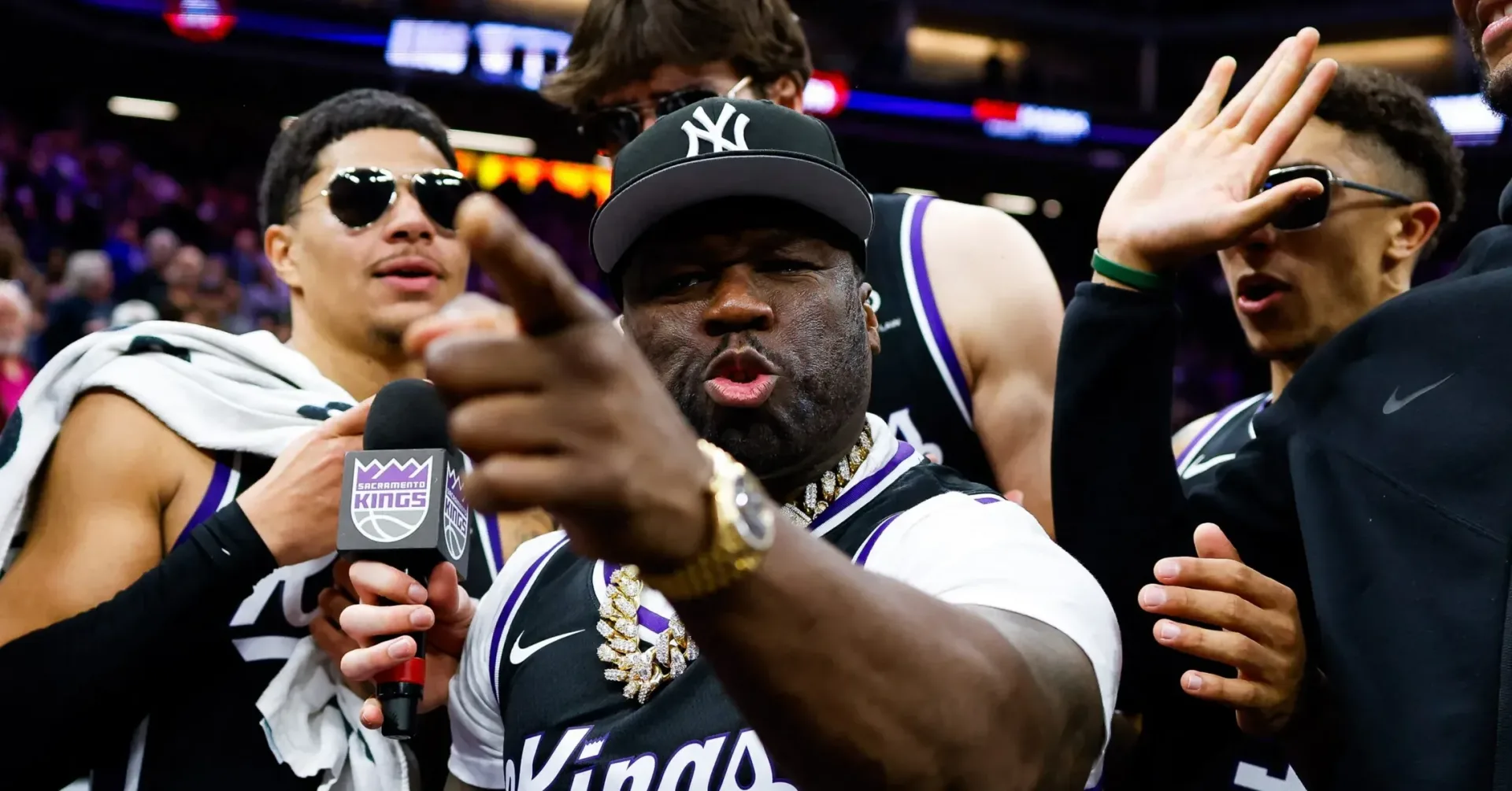
Jay-Z pointed to his appearance alongside 50 Cent in a 2003 Reebok commercial as his own retaliatory act. The commercial promoted the artists’ respective sneaker lines at a time when Murder Inc. and 50 Cent were in conflict.
Jay-Z’s logic was blunt: appearing with Gotti’s rival was betrayal because of that rivalry. Yet he also said he had put Gotti in a different “box” by then, meaning he no longer saw Gotti as someone entitled to the same level of loyalty and integrity that had existed before.
That wording matters because it identifies a common fault line in friendships that overlap with work. People rarely agree on the precise moment when a relationship changes. One person may see a business decision as competitive but legitimate; another may see it as proof that trust is already gone. Once that interpretation hardens, later decisions can become responses to a relationship that both people remember differently.
Jay-Z did not deny the contradiction. He said, in effect, that he felt justified because he believed Gotti had acted first, while accepting that the response remained betrayal. That admission makes the exchange less about settling an old score and more about recognizing the cost of keeping score at all.
What “retaliation” means in this context
Retaliation is an action taken in response to a perceived injury. It is often explained as restoring balance, defending oneself, or showing that a boundary has consequences. But retaliation can also reproduce the exact behavior being condemned. Jay-Z’s example illustrates that tension: he believed he was reacting to a prior breach, but he did not argue that the reaction became something other than betrayal.
His account also separates motive from effect. A person may believe their motive is self-protection rather than malice, while the effect on the relationship is still punitive and damaging. In Jay-Z’s telling, the perceived earlier disloyalty changed his motive and sense of obligation; it did not erase what the later act represented.
Affection remained, but the relationship had boundaries
Despite the conflict, Jay-Z said the two did not completely sever ties. He recalled later participating in a meeting intended to help Gotti secure a deal with BET. That detail complicates any notion that the relationship became pure hostility.
Instead, Jay-Z described a reduced form of closeness: care could remain, but access had limits. In practical terms, that suggests a relationship can survive without returning to its former level of trust. A person may still be willing to offer help, acknowledge shared history, or wish someone well while declining to restore the intimacy and loyalty that existed before a rupture.
That distinction is particularly relevant to professional relationships in entertainment, where personal loyalty, creative alliances, public image, and business opportunities can all be connected. A single action may carry different meanings to each person involved. It can be a strategic deal to one party and a personal statement to another.
Jay-Z’s conversation with Rubin is therefore not simply a recap of an old rivalry. It is an examination of how people make ethical exceptions for themselves after feeling abandoned. He says he did not act out of hatred, but he also does not use that claim to absolve himself. The key concession is the one he repeats: even when he considered his response warranted, it was still betrayal.
Why the exchange stands out
Public accounts of industry feuds frequently focus on the loudest incident: a diss, a deal, an endorsement, or a high-profile partnership. Jay-Z’s comments instead emphasize the gradual change in what two people owe each other. The alleged tolerance of criticism from an affiliated artist and the possibility of working with Nas became, in his view, evidence that Gotti was no longer operating as a friend.
Once Jay-Z reached that conclusion, he says his own code changed with it. That may explain his decision to stand beside 50 Cent commercially, but it does not make his description celebratory. The exchange is notable precisely because Jay-Z allows both ideas to coexist: he felt betrayed first, and he later committed a betrayal himself.
It is a reminder that loyalty is not only about whether relationships end. It is also about what people decide they can do once they believe a relationship has already been broken. For more current rap-industry coverage, see the report on J. Cole’s Grammy ballot situation.