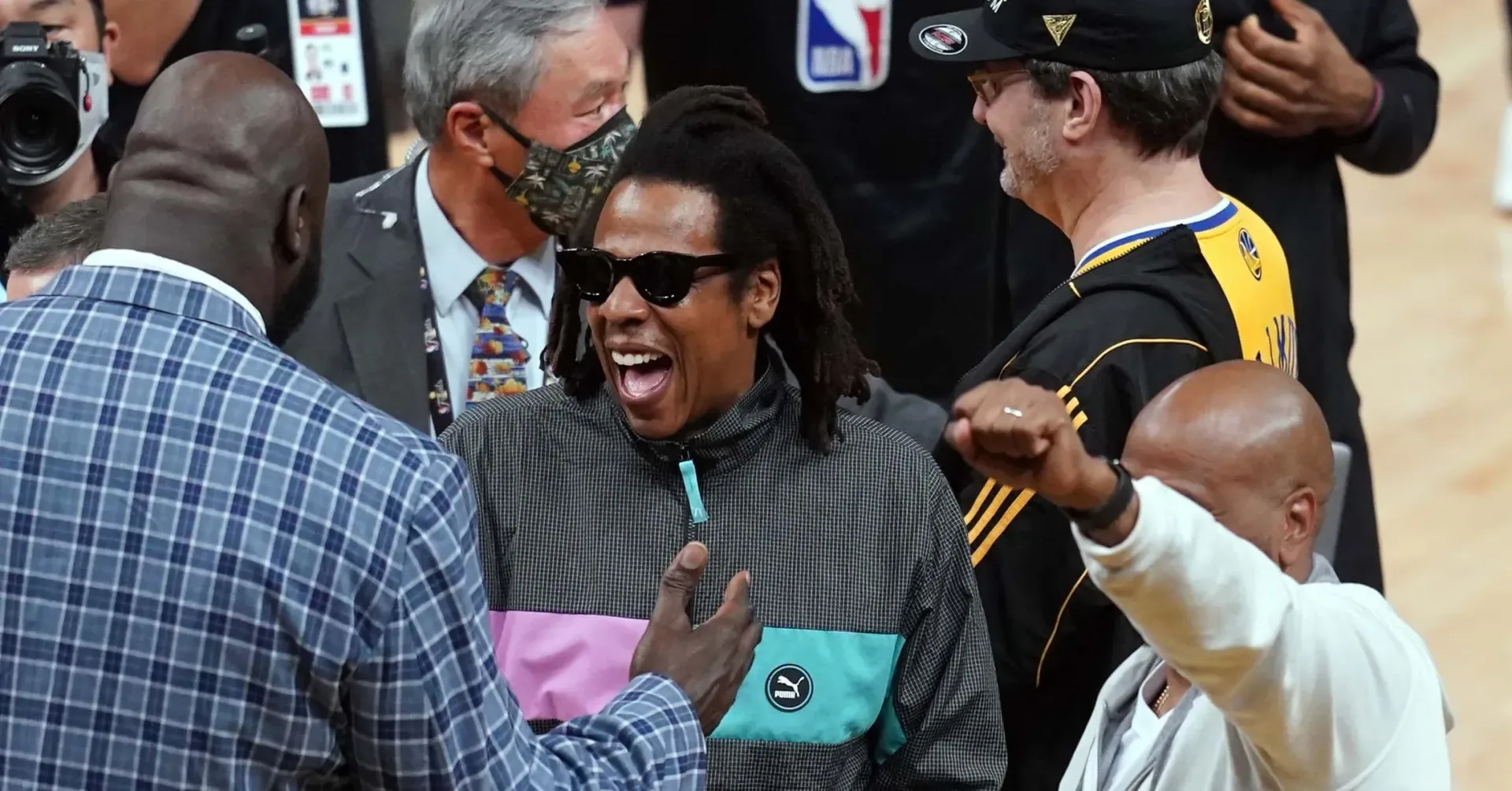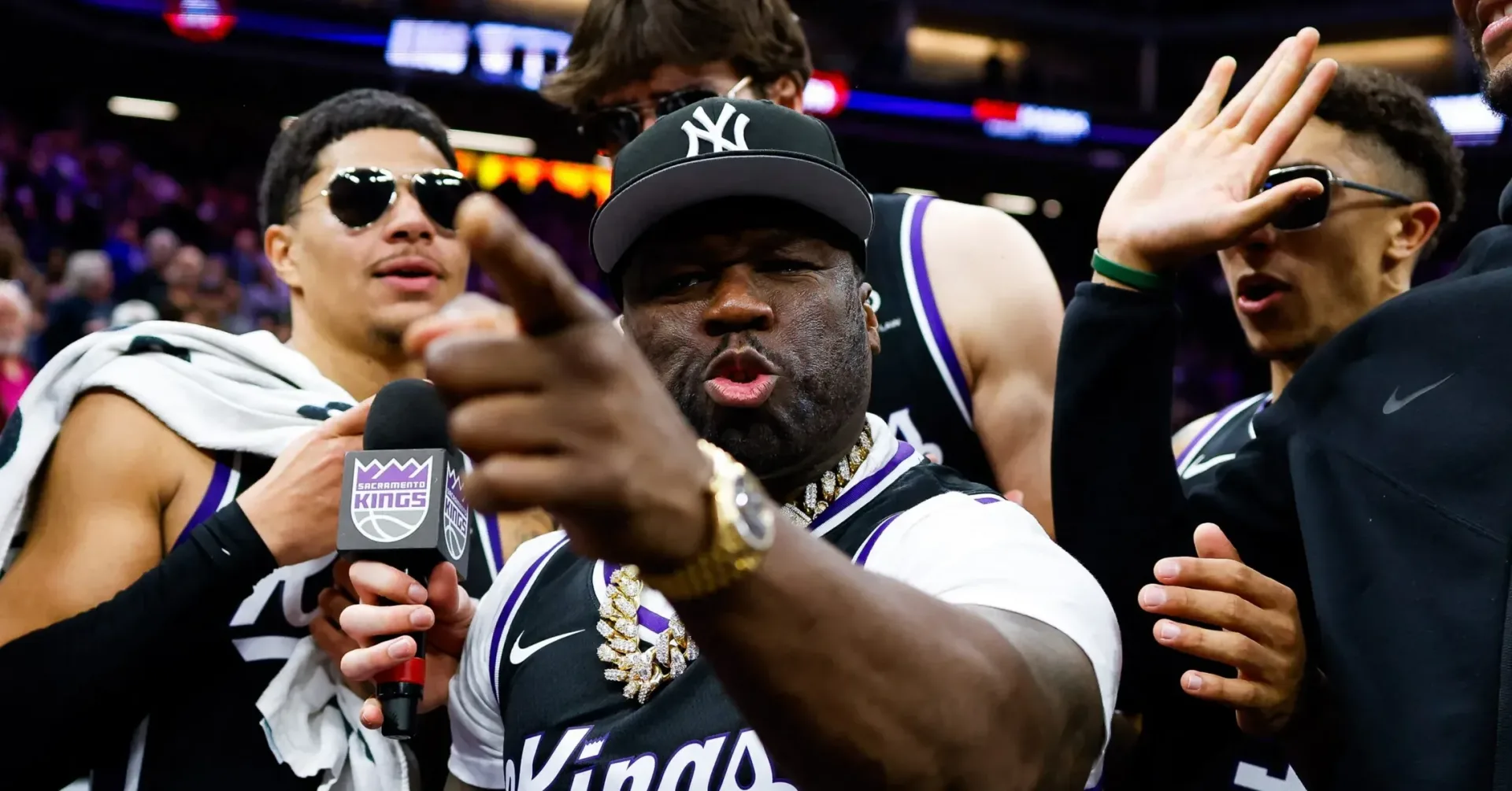
50 Cent has taken aim at the scale of Jay-Z’s Reasonable Doubt anniversary celebrations, framing the campaign as a case study in how enduring celebrity, business power and carefully managed nostalgia can reshape an album’s public stature. In a recent conversation with Andrew Schulz, Curtis Jackson argued that Jay-Z’s 1996 debut did not arrive as the kind of immediate blockbuster that its 30th-anniversary treatment might suggest today.
The core of 50 Cent’s argument is simple: an album’s original commercial reception and its later cultural standing are not necessarily the same thing. He pointed to Reasonable Doubt debuting at No. 23 on the chart, then questioned why it is now receiving such expansive recognition. His answer was blunt: “It’s great marketing.”
That is a provocative reading of a record whose reputation has plainly grown over time, but it also identifies a real tension in anniversary campaigns. A milestone celebration does more than acknowledge an old release. Concerts, pop-ups and special vinyl editions can make an album newly visible, turn a catalog title into a current retail event, and give newer audiences an easy entry point into a body of work they may have encountered only through reputation.
What 50 Cent is actually disputing
Jackson was not merely saying that Jay-Z should not celebrate a landmark anniversary. His criticism was directed at the perceived scale of the narrative around it. To him, the modern presentation risks treating Reasonable Doubt as though it were an unquestioned mainstream phenomenon at the moment it first arrived, rather than a record whose meaning and stature accumulated over many years.
That distinction matters. A debut chart position is a snapshot of a particular release week, not a complete measurement of influence, critical esteem, long-term listening or the importance a work gains within an artist’s larger career. At the same time, 50 Cent’s point is that audiences should not confuse present-day prestige with original mass-market impact. Those are separate claims, and both can be discussed without pretending they are identical.
In practical terms, anniversary marketing often compresses a complicated history into a cleaner story: an important record reaches a round-number birthday, fans are offered events and collectible editions, and the occasion becomes a broad statement about legacy. That process is not inherently misleading, but it is selective. It emphasizes the version of a work that has survived, been reassessed and become valuable to later audiences.
Why the anniversary has become bigger than one album
The celebrations around Reasonable Doubt also coincide with activity marking 25 years of The Blueprint. Taken together, the milestones create a wider Jay-Z catalog moment rather than a narrowly historical look at one release. The reported activities include concerts, pop-ups and special vinyl editions. No potential new music has been announced as part of those plans.
For listeners, these formats serve different purposes. A concert creates a shared, time-limited experience. A pop-up turns an album anniversary into a destination and a cultural event. A vinyl edition gives the campaign a physical object that can function as both a listening format and a commemorative item. None of those formats changes where an album first charted, but each can increase its visibility and reinforce its place in public memory.
Related coverage includes 50 Cent Questions the Scale of Jay-Z’s ‘Reasonable Doubt’ Anniversary.
That is the marketing mechanism 50 Cent appears to be challenging. Marketing, in this context, does not simply mean advertising. It means organizing a story around an artist and their catalog: deciding which anniversary is foregrounded, connecting physical releases to live events, and inviting audiences to revisit a project through the lens of everything that came afterward.
There is also a difference between an album’s initial commercial footprint and its legacy value. A record can become more central to an artist’s identity after later successes give audiences a reason to explore the earlier work. It can also benefit from being revisited in new formats, discussed by subsequent generations, or positioned as an origin point for a career that became far larger than its first-week numbers could have predicted.
A familiar rivalry expressed through business and image
50 Cent’s comments fit a long-running competitive dynamic between him and Jay-Z. Their public relationship has included respect alongside criticism, and Jackson’s latest remarks carry the same mixture of provocation and business-minded scrutiny. Rather than limiting the conversation to songs, he focused on the machinery around fame: tours, corporate relationships, branding and the way influence can be presented to the public.
During the broader discussion, Jackson spoke about how people can reveal themselves after achieving extraordinary status. He also criticized what he characterized as image-making and “gimmicks,” referencing Jay-Z’s Basquiat-style hair and a Tiffany advertisement. The point of that critique was not a factual claim about an album’s sales; it was a broader accusation that celebrity image can be constructed and strategically deployed.
He similarly mentioned the 2010 Home & Home dates involving Jay-Z and Eminem, arguing that the association made Jay-Z appear bigger than he was. This is again an interpretation rather than a measurable conclusion. Major collaborative events naturally combine audiences, star power and promotional attention. Jackson’s objection is to the conclusion audiences may draw from that scale: that a large platform automatically proves one performer’s individual reach in precisely the same way.
That line of criticism is consistent with his view of the anniversary effort. In both cases, he is questioning the difference between public perception and the underlying evidence he considers most meaningful. For Reasonable Doubt, he uses the No. 23 debut as that evidence. For tours and fashion-facing branding, he points to partnerships and presentation.
Chart performance is evidence, not the entire verdict
Jackson’s No. 23 reference is central to his critique because charts are one of the clearest public measures of release-week traction. They can show how an album performed at a particular moment relative to other releases. But they do not, on their own, settle every question about artistic standing or historical significance.
A chart position does not capture how a record may circulate in the years after release, how it is discussed by artists and listeners, or how its songs and ideas become part of a wider catalog narrative. Conversely, calling an album influential or beloved years later does not erase its initial commercial context. The most useful way to read the dispute is as a disagreement over which measure deserves priority: immediate market response, or the legacy built after the fact.
That distinction is especially relevant to legacy artists. Anniversary campaigns generally do not operate like a normal album launch. Their purpose is not necessarily to recreate the first week of release. They are retrospective: they offer an artist and audience a chance to reassess a work with the benefit of decades of context. A strong campaign can make that reassessment feel larger, more tangible and more commercial.
Whether that amounts to a deserved tribute or an overstatement depends on the listener’s view of the album, its place in Jay-Z’s career, and the role marketing should play in canon-building. 50 Cent has made his position clear: he believes the celebration is inflating a record that was not initially a major commercial story.
What the debate means for fans and collectors
For fans, the immediate takeaway is that the anniversary activity is centered on experiences and physical editions, not confirmed new Jay-Z music. Anyone interested in the campaign should treat the available elements as commemorative programming rather than evidence of an imminent release.
For physical-media buyers, special vinyl editions have an appeal that goes beyond the music itself. They mark a specific anniversary and can document the way an album was presented at a particular point in its life. But “anniversary” does not automatically answer practical questions such as edition size, availability, pressing details or long-term desirability. Those details were not established here, so collectors should avoid assuming scarcity or investment value from the anniversary label alone.
The wider pop-culture pattern is familiar: a work gains a second or third life as audiences reconnect with it under a new frame. Music is not alone in that process. Milestone releases, revived formats and event programming can all change the way a past work is encountered in the present. Recent discussion of artists working between heritage and reinvention shows how strongly those frames can shape reception, as explored in Danielle Ponder’s work between tradition and futurism.
50 Cent’s comments will likely keep the focus on whether Jay-Z’s anniversary presentation reflects earned legacy, expert promotion, or—as is often the case with cultural institutions—some combination of both. His argument does not eliminate the album’s modern stature. It challenges audiences to separate that stature from the story of its original release, and to notice the business decisions that help preserve and amplify an artist’s past.