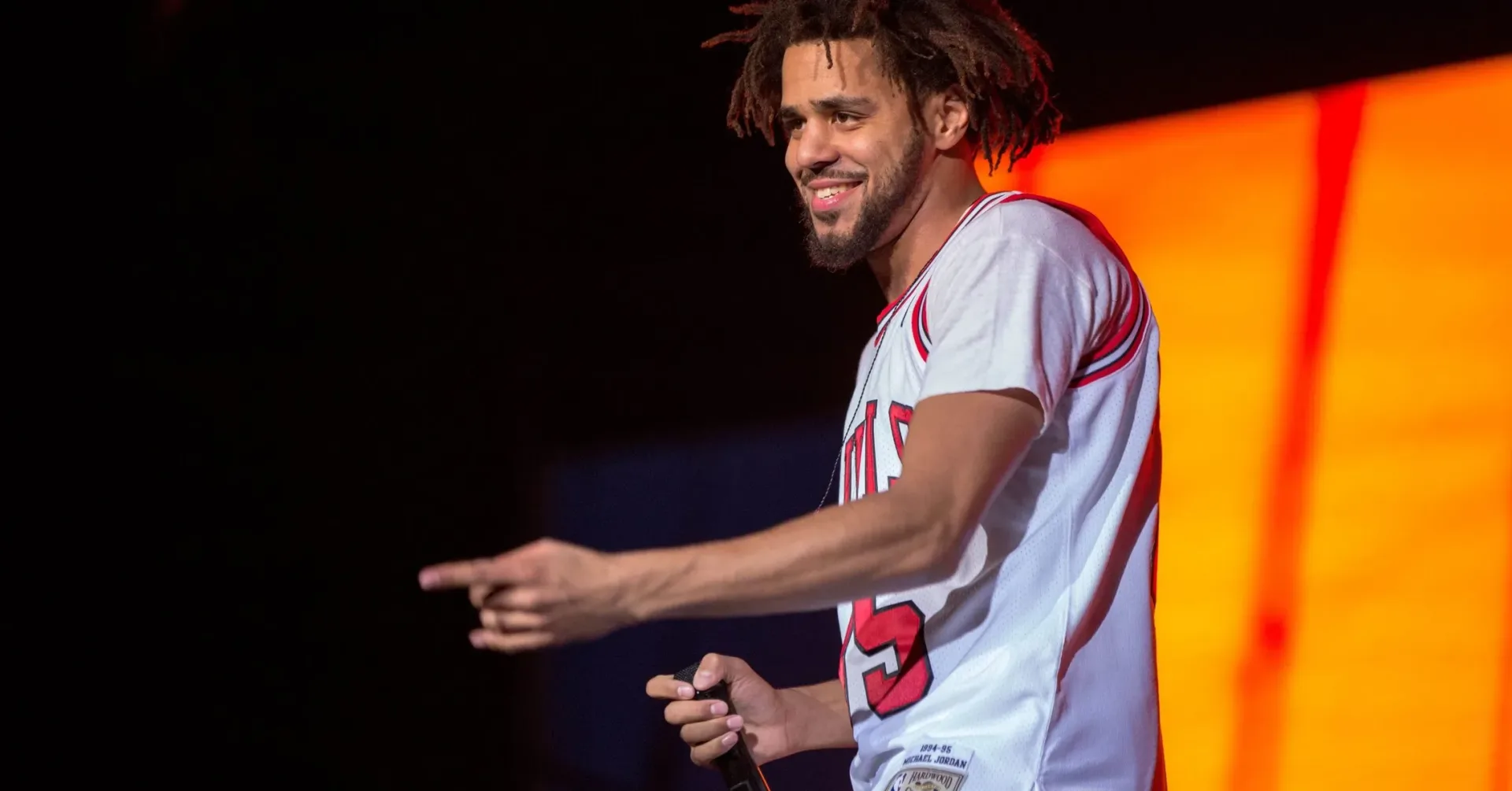
J. Cole’s The Fall-Off may be absent from the 2027 Grammy conversation for a reason far more definitive than a nomination-day surprise: reports indicate that it was not entered for consideration at all.
As first-round voting opens for the 2027 awards, Grammy-focused social accounts have circulated the claim that Cole did not submit eligible music released in 2026, including The Fall-Off. Cole and his team have not publicly addressed the reports. That leaves the most important question unanswered: whether the apparent non-submission was an intentional rejection of the awards process, an administrative decision, or something else entirely.
The uncertainty is important. A deliberate boycott is a major statement. A missed or withheld entry is a different kind of story. At present, the only firm takeaway is conditional: if the reports are accurate, The Fall-Off was not placed in the formal Grammy pipeline and therefore cannot appear when nominations are announced in November.
This would not be a Grammy “snub”
It is tempting to use “snub” as shorthand whenever a high-profile record is missing from a major awards ballot. But the term does not fit a project that was never submitted. A snub concerns a work that was in contention and ultimately not nominated. A non-entry means voters did not have that work on their ballot in the first place.
That procedural distinction is the center of this story. Eligible recordings must be entered through the Recording Academy’s Online Entry Process before they can reach the voting stage. The deadline for 2027 submissions was Aug. 21, and first-round voting began Oct. 12. Once the submission period has closed and voting is underway, there is no alternative route for an album to be added to the ballot.
In practical terms, no amount of commercial success, online campaigning, fan enthusiasm, or retrospective consensus can convert a non-entry into a nomination. Grammy voters can only consider material that made it through the entry process. If Cole’s album was not entered, its absence would be procedural rather than an artistic judgment by the voting body.
What “submission” means in this case
A Grammy submission is not the same thing as winning a nomination, and it is not itself a public endorsement from the academy. It is the formal entry that makes an eligible recording available for consideration. The difference may sound technical, but it changes how the awards season should be read.
- Eligibility refers to whether music falls within the awards’ qualifying rules and period.
- Submission is the act of formally entering that eligible music into the process.
- Nomination is the later result of voting.
Those steps are separate. The reporting does not establish that The Fall-Off was ineligible, nor does it say the Recording Academy rejected it. It says Cole reportedly did not submit it. Until Cole or his representatives explain the decision, claims about the motive should be treated as speculation rather than fact.
Related coverage includes J. Cole’s ‘The Fall-Off’ Reportedly Wasn’t Submitted for 2027 Grammys.
Why The Fall-Off stood out as an expected contender
The Fall-Off arrived in February after a long buildup. Cole had teased the project as far back as 2018, giving it the kind of extended anticipation that few rap releases carry into a launch. It debuted at No. 1 on the Billboard 200, a clear marker of the attention surrounding the album.
Cole also described the project as made “with intentions to be my last.” That framing naturally raised the stakes around the release. An album presented with possible finality invites a different level of scrutiny from listeners: it is not only judged song by song, but as a potential closing statement from an artist with a lengthy and visible career.
Commercial impact, anticipation, and an artist’s own framing do not guarantee Grammy nominations. Still, those factors help explain why the reported lack of an entry is notable. The question was not merely whether Cole might receive recognition. It was whether a No. 1 album long positioned as a significant release would be part of the race at all.
If the reporting is correct, it will not be. That means any eventual debate over the rap categories needs to start from the right premise: The Fall-Off did not lose out to another album in the voting process. It did not compete.
Cole’s Grammy record makes the report more complicated
J. Cole has not maintained a simple relationship with the Grammys. His music has expressed frustration with the institution, most directly on 2024’s “7 Minute Drill,” where he bluntly rejected the awards. Yet his work has also remained connected to the Grammy process over the years.
He won Best Rap Song in 2020 as a featured artist on 21 Savage’s “A Lot.” He later won Best Melodic Rap Performance with Lil Durk for “All My Life.” His album The Off-Season earned multiple nominations in 2022, and Might Delete Later received a Best Rap Album nomination at the 2025 ceremony.
That history complicates an easy narrative that Cole has simply turned his back on the Grammys. Past criticism has existed alongside past participation, nominations, and wins. It is fair to observe that the lyrics and the reported non-submission can look connected; it is not fair to declare a boycott without confirmation from Cole’s camp.
The key unresolved issue is motive. The reported outcome is clear enough to shape the ballot; the reason behind it is not publicly established.
What happens next for the 2027 race
With first-round voting beginning Oct. 12, the timeline leaves little room for ambiguity about the consequence. The awards process has moved beyond the entry deadline. If The Fall-Off was not submitted, it cannot surface as a late addition, and a November nomination would not be possible.
For fans, that may shift attention away from prediction and toward explanation. A Grammy nomination can affect headlines and prestige, but it is not the only measure of an album’s reach. The Fall-Off already opened at No. 1, and its long lead-up means the record occupies a place in Cole’s catalog that exists independently of awards-season results.
It also reinforces a useful bit of awards literacy. High-profile omissions are not always the product of voters overlooking a major release. Sometimes the decisive action happened earlier, in the administrative stage, before voters were ever asked to make a choice. Understanding that difference prevents an incomplete story from hardening into a claim about the academy’s taste or a supposed backlash against an artist.
The broader rap conversation will continue without one album many observers expected to see in the field. Grammy submissions remain a recurring point of interest across the genre, as seen in discussion around whether other major releases are being entered, including coverage of Drake and Don Toliver’s recent chart performance. But Cole’s situation is distinct because the reported absence comes after an album release that had been teased for years and arrived with considerable commercial momentum.
For now, the most accurate description is also the least dramatic: The Fall-Off is reportedly not a 2027 Grammy entry. Unless J. Cole or his representatives clarify why, every stronger interpretation—from boycott to procedural complication—remains unconfirmed.