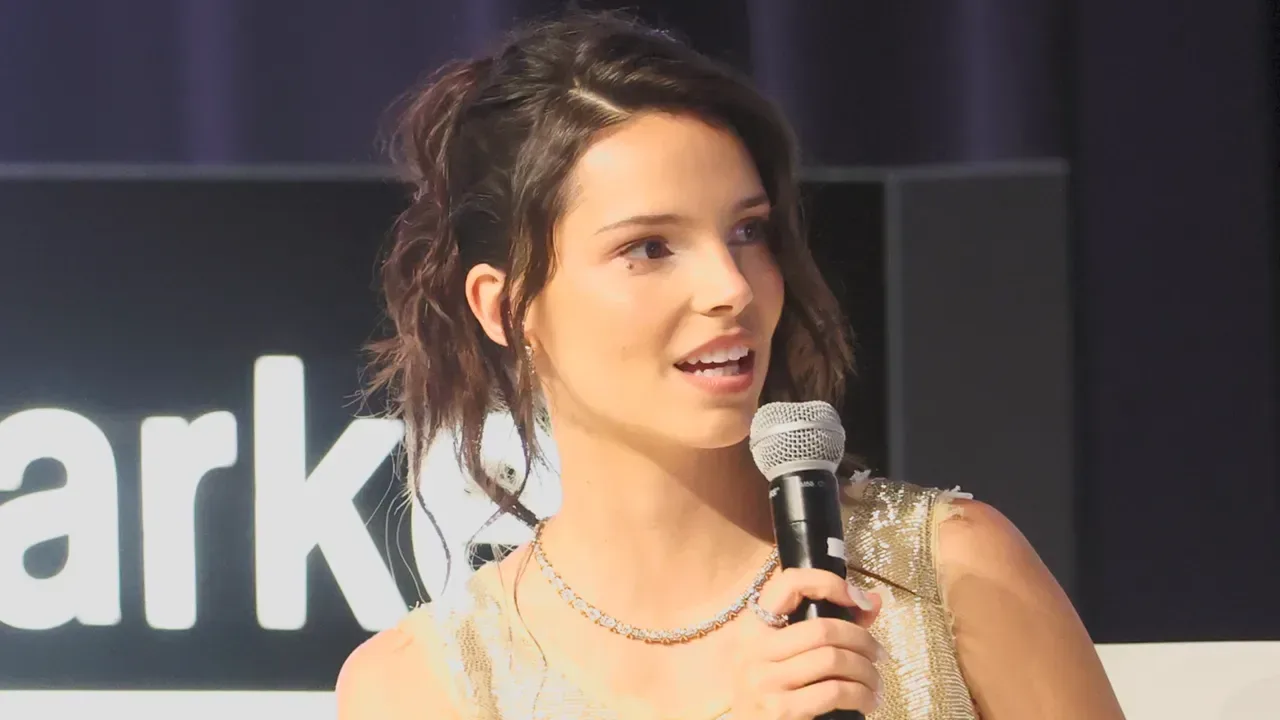
Inde Navarrette is approaching Rogue with the appropriate amount of seriousness for a character whose history spans comics, animation and live-action film. Cast as the power-siphoning mutant in Marvel’s upcoming X-Men, Navarrette says she is putting everything she can into preparing for the part.
“I’m doing everything humanly possible because I love that character,” Navarrette said. “I’ve studied that character. I want to do it justice” for herself, director Jake Schreier, the creative team’s intended portrayal and her own expectations as a fan.
That is a compact statement, but it identifies the tricky balancing act facing any actor taking on a long-running superhero role. Navarrette is not simply joining a new film cast. She is inheriting a character audiences already know through several forms of media and through prior performers. The task is to make Rogue recognizable in spirit while still building a performance for a new film, a new director and a new ensemble.
Marvel’s X-Men is currently scheduled to arrive on May 5, 2028. Its story remains undisclosed, although Schreier has indicated that comic-book stories will help inform the movie. Until more is confirmed, the most concrete picture of the project is its announced cast and the evident care Navarrette is devoting to a central role.
Why Rogue carries unusual expectations
Rogue is a Mississippi-born mutant with decades of comic-book history. That alone creates a substantial reference library for an actor, but her profile extends well beyond the page. She has appeared in animated productions and in live-action films, making her one of the most familiar characters in the wider X-Men world.
Anna Paquin previously played Rogue in the 2000 X-Men film and X2: X-Men United. Meanwhile, Lenore Zann has voiced the character across multiple animated X-Men projects. Those earlier portrayals do not dictate what Navarrette’s version must be, but they explain why viewers may arrive with strongly held ideas about the character’s voice, personality and place within a team.
Navarrette has already acknowledged one especially identifiable part of Rogue’s presentation: her Southern accent. She has discussed taking steps to get it right. Accent work can be easy to underestimate in superhero casting, where the visual elements—costume, powers and spectacle—often draw immediate attention. Yet a voice is one of the fastest ways an audience decides whether a familiar character feels believable. A broad or inconsistent accent can pull viewers out of a scene; a controlled one can help a performance feel lived-in without becoming an imitation of somebody else’s work.
Her comments suggest preparation that is broader than dialect practice. Studying a character means looking for recurring traits and tensions across the material available, then deciding what is useful for the production at hand. That does not mean every past interpretation can, or should, fit into one new film. It means the actor understands the scale of the inheritance before choosing how to carry it forward.
What “doing Rogue justice” can mean for a reboot
The language of “doing justice” to a comic-book character is common, but it can mean several different things. First, it can refer to respect: understanding why a character has lasted and why fans care. Second, it can refer to specificity: identifying details that make a character distinct rather than treating them as a generic member of a super-powered group. Third, it can mean collaboration, because a film performance has to work within the director’s approach, script, other actors and the story’s needs.
Navarrette explicitly framed her preparation around all of those pressures. She cited her love for Rogue, the work she has done studying the character, Schreier’s direction and the version she wants to see as a fan. That is not a promise that the film will reproduce any single comics or animated interpretation. It is a clearer, and more realistic, commitment: she is treating the role as both a responsibility and an opportunity to make the character her own.
The term “reboot” matters here. A reboot restarts a screen property with a new creative foundation rather than simply continuing the same cast and version of events. It tends to invite comparison because it asks audiences to accept new performers in roles that may have been associated with earlier films for years. For the X-Men, that challenge reaches beyond Rogue. Cyclops, Storm, Jean Grey, Professor X and other figures all come with their own histories and audience expectations.
That can be a burden, but it is also a strength. Familiarity gives a new ensemble an immediate shared vocabulary with viewers. The creative question is not whether the characters have a past; it is how much of that past should be echoed, revised or left behind. With plot details still under wraps, there is no basis yet for declaring how this X-Men will answer it. Navarrette’s preparation is one early indication that the character side of the reboot is being taken seriously.
An ensemble full of recognizable names
Navarrette is part of a newly assembled cast playing some of Marvel’s best-known mutants and associated figures. The announced lineup includes Adam Driver as Mister Sinister, Maya Boyd as Storm, Christopher Abbott as Professor X, Sadie Sink as Jean Grey, Kit Connor as Cyclops, Samara Weaving as Emma Frost and Asa Germann as Angel.
For Rogue, the ensemble context is particularly important. X-Men stories are generally defined by group dynamics as much as individual powers. A character’s effect often comes from how she responds to teammates, mentors, adversaries and the larger pressures facing the group. A strong solo interpretation is valuable, but the chemistry among performers will be just as important once the film reaches audiences.
The cast list also underscores why it is too early to predict Rogue’s exact narrative weight. A substantial roster can support many different story structures: a character-driven introduction, a wider team origin, an antagonist-focused conflict or something else informed by the comic material Schreier has referenced. None of those possibilities has been confirmed. The responsible takeaway is simply that Navarrette will be working within a high-profile ensemble, not carrying the entire legacy alone.
Support from a previous Rogue
Navarrette’s preparation has received encouragement from Lenore Zann, who has played Rogue in several animated X-Men projects. Zann offered her support to the actor last month, adding a meaningful note of continuity between past and future versions of the character.
That kind of support does not make the two performances identical, nor should it. Different formats demand different things. Voice acting relies entirely on vocal choices; a live-action feature asks an actor to integrate voice, physical performance, camera framing, costumes, editing and interaction with a full cast. But encouragement from someone so closely associated with Rogue acknowledges a simple reality: the character has endured because performers and audiences keep finding something worth returning to.
It also gives fans a more constructive lens through which to view recasting. New actors are not automatically replacing the value of prior portrayals. They are adding another interpretation to a character’s screen history. Navarrette will ultimately be judged on the finished film and performance, but the early signs point to someone who recognizes the legacy rather than dismissing it.
Navarrette’s path to the X-Men
Navarrette has been visible on television through roles in 13 Reasons Why and Superman & Lois. Her work as Nikki in the low-budget horror breakout Obsession raised her profile further. After the attention around that performance and other career opportunities, Schreier’s X-Men became one of her first major post-Obsession choices.
That background may help explain why her Rogue comments focus on work rather than spectacle. The character represents what could be the largest role of her career, but it also arrives at a moment when audiences will be scrutinizing the new X-Men closely. Choosing a prominent franchise role does not eliminate the need for detailed preparation; it amplifies it.
The long runway to May 2028 may also be useful. Major franchise films involve a lot of anticipation, but actors benefit from time to research, train and refine the pieces of a role that need care. In Navarrette’s case, the material explicitly points to character study and dialect work. Those are concrete preparations rather than vague promises of enthusiasm.
The wider Marvel timeline remains separate—for now
Before the new X-Men arrives, earlier X-Men performers are set to return to cinemas in Avengers: Doomsday this December. Avengers: Secret Wars is set for the following year. Those projects place familiar mutant faces back in the broader Marvel conversation, even as the 2028 film prepares a new set of actors for its own take on the team.
However, the available information does not establish which heroes, if any, could appear across those films or how their stories may connect. That uncertainty is worth preserving. Speculation is inevitable around a property as large as X-Men, but casting announcements and a release date are not the same as confirmed plot links.
For now, the clearest story is about preparation. Navarrette knows Rogue comes with a demanding legacy, is studying the character, is working on the Southern accent and has received support from an established animated Rogue performer. In an era of enormous franchise expectations—and amid other film-industry developments—that focus on the fundamentals is a sensible place to start.