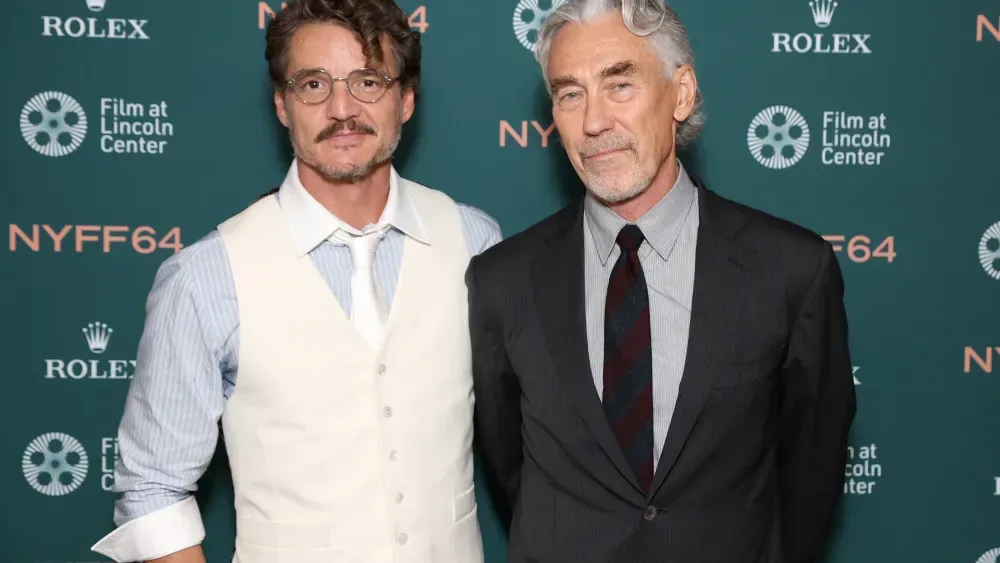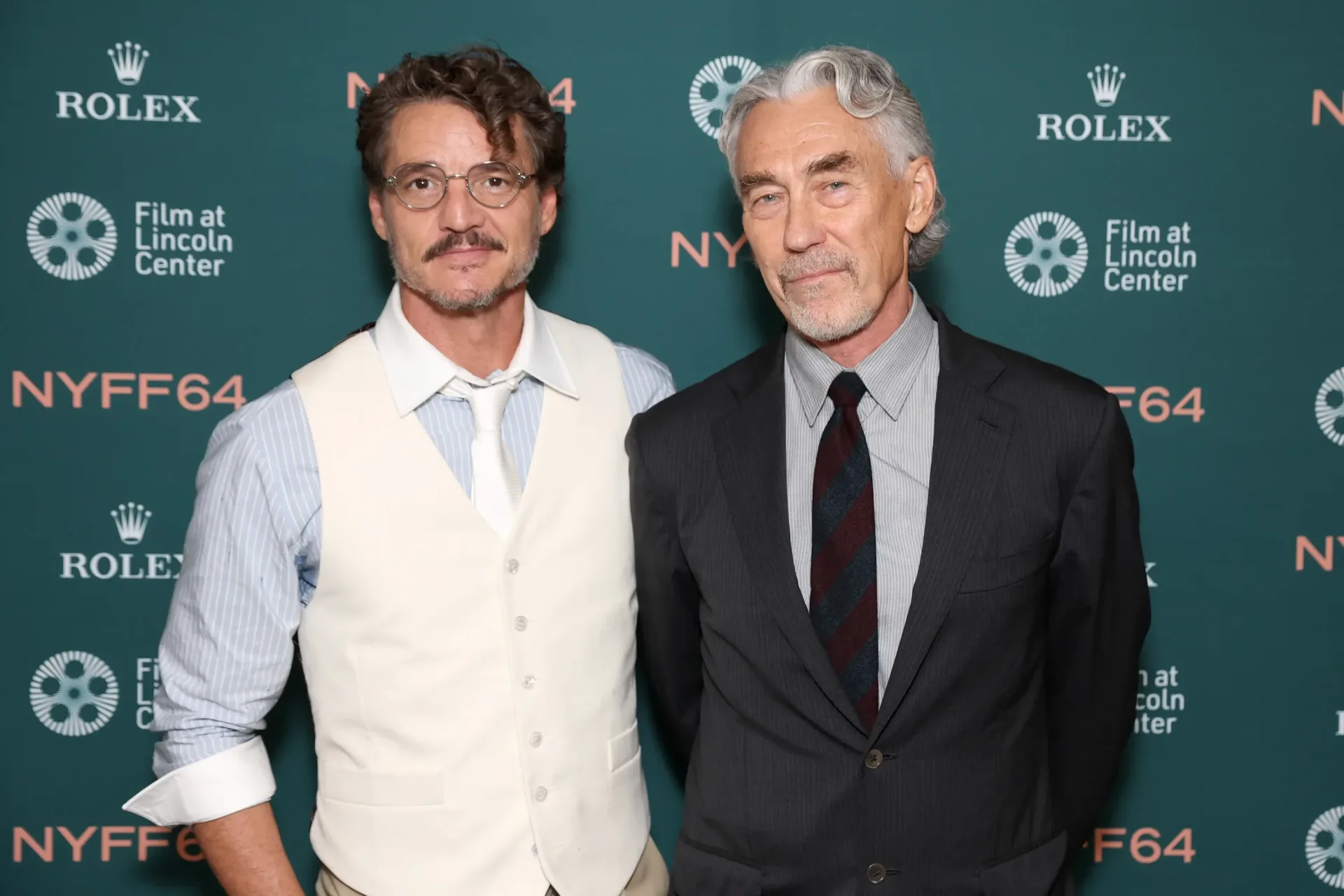
Tony Gilroy used the world premiere of Behemoth! to argue that Hollywood’s looming Paramount-Warner Bros. consolidation risks damaging the creative and commercial structure that has supported films outside the biggest franchise bets.
Speaking at Alice Tully Hall during the 64th New York Film Festival, Gilroy described the planned merger as “tragic.” His concern was not that audiences have abandoned movies and television, but that corporate consolidation could alter the mechanisms that decide which projects receive financing, marketing and theatrical attention.
“People say the movie business is in trouble,” Gilroy said. “You go around, you stand anywhere you want, what do people talk about? Did you see this? Did you see that? What episode are you on?” He characterized audience conversation as evidence that demand remains strong, then warned against “destroy[ing] the architecture” of the business through venture-capital priorities.
Gilroy’s comments arrived at a particularly fitting moment for the argument. Behemoth!, budgeted at $36 million, is an adult-oriented mid-budget drama—precisely the type of project he suggested needs a healthy studio ecosystem in order to exist. Pedro Pascal stars as a gifted cellist who returns to the world of Hollywood film scoring. The movie is Gilroy’s first major project since completing work on the Emmy-winning Andor.
Why the corporate structure is part of the story
Studio consolidation can sound abstract because it is discussed in terms of ownership, brands and corporate names. Its practical stakes are more concrete: a smaller number of owners can mean fewer distinct places for filmmakers, producers and performers to take projects. It can also put more pressure on every division to chase the same perceived safe bets rather than maintain separate slates with different appetites for risk.
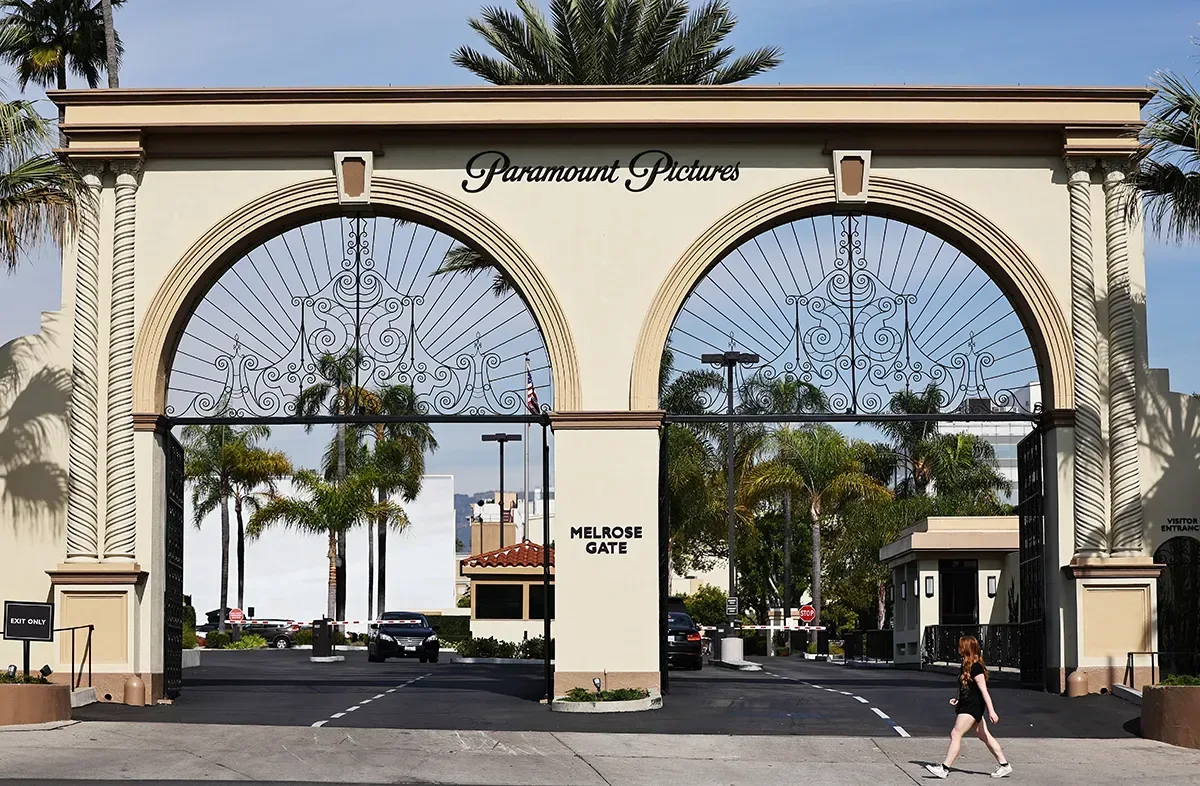
In this case, David Ellison has said Paramount and Warner Bros. will keep their separate studio identities under Skydance. That distinction matters. A recognizable label can retain its own creative reputation, staff and release strategy. But the companies would ultimately sit beneath one corporate owner, and the proposed deal would reduce Hollywood’s traditional Big Five studios—Disney, Universal, Sony, Warner Bros. and Paramount—to four corporate owners.
The combination was tentatively scheduled to close Tuesday, Oct. 6. The concern voiced by Gilroy and Behemoth! producer Sanne Wohlenberg is therefore less about whether the two names continue to appear on screen and more about how decisions may be made after the ownership change.
“Greenlight” is the industry term for a company formally approving a project to move into production, committing the money needed to make it. Gilroy said Behemoth! was not an easy film to greenlight or sell. That is a useful lens for this story: the debate is not only about giant studio tentpoles, but about whether more challenging, specialized or adult-facing projects keep finding backers with the patience to see them through.
Related coverage includes Tony Gilroy Calls Paramount-Warner Bros. Merger ‘Tragic’ at ‘Behemoth!’ Premiere.
A $36 million film makes the case in miniature
At $36 million, Behemoth! occupies a financial space between low-cost independent filmmaking and the enormous budgets commonly associated with major effects-driven franchises. The supplied details do not establish how the movie will perform commercially, and no conclusion about its prospects should be drawn from its festival debut alone. But its existence illustrates why advocates for a diverse studio marketplace focus on the middle of the budget range.
A mid-budget drama does not have to function like a microbudget discovery, nor does it have to carry the burden of becoming a global event. Its business case can be built around a distinctive premise, a known filmmaker, a major performer, awards positioning, theatrical exhibition and later viewing windows. The critical point is that such movies require companies willing to finance a portfolio of different kinds of films rather than expect every title to meet identical scale expectations.
Gilroy framed the former studio system as a “healthy and beautiful business” he has worked in for more than three decades. That description is plainly an opinion, not a guarantee that the older model served every artist equally or that any merger automatically ends adult dramas. Yet it identifies a specific anxiety: fewer major decision-makers may limit the number of routes by which a difficult-to-package film reaches an audience.
That anxiety extends beyond directors. Producers assemble financing, cast, crew and distribution plans around the assumption that there are prospective buyers and partners. If a marketplace becomes more concentrated, a project rejected by one owner may have fewer comparable alternatives. Wohlenberg called the potential effect on filmmakers’ opportunities “alarmingly limited.”
“God, it’s certainly turbulent and uncertain times, isn’t it? It never seems to get any easier,” Wohlenberg said, while adding that she hoped the industry would survive the downturn and reach better times.
Festival recognition, not a solution
Behemoth! was selected as the centerpiece of the 64th New York Film Festival, placed after James Gray’s opening-night film Paper Tiger and before Ava DuVernay’s closing-night documentary 14th. Gilroy praised the festival’s curation and the films around his own premiere, presenting the event as a welcome affirmation during a fraught period for the business.
Film festivals can provide prestige, press attention and an early communal setting for films that may not be designed around massive opening weekends. They cannot, on their own, resolve the structural questions raised by a studio merger. Still, the centerpiece slot gives Behemoth! a prominent platform and underscores the continuing cultural value placed on director-led cinema for adult audiences.
Gilroy also thanked Matt Greenfield and his partners at Searchlight Pictures, the Disney-owned specialty studio that produced both Behemoth! and Andor. The acknowledgement highlights another important distinction in the consolidation conversation: large entertainment companies can house labels that pursue different material and release strategies. Whether those divisions maintain meaningful latitude is the part observers will watch, not merely whether their branding survives.
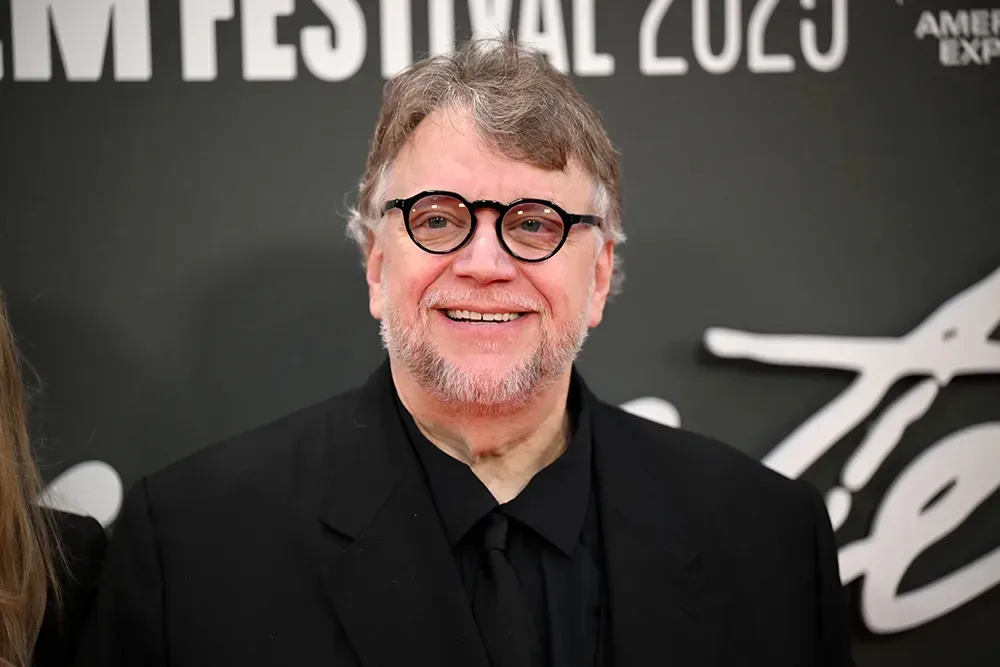
For a related look at how established filmmakers are defending theatrical movies that do not fit the easiest commercial category, see Guillermo del Toro’s defense of Digger amid its difficult opening.
What Gilroy is—and is not—claiming
Gilroy is not arguing that viewers no longer care about screen stories; he is making the opposite case. His remarks point to the everyday popularity of discussing films and episodes as evidence that entertainment remains central to audiences. The problem, in his view, is the business architecture that connects that demand to the people who make work.
“Venture capital” in this context refers to an investment-driven approach that emphasizes financial returns and efficiency. Gilroy used the term critically, suggesting that financial restructuring can conflict with the longer-term, creatively varied approach he believes sustained the industry. That is a broad critique of priorities, not a factual prediction of a particular title being canceled or a specific studio division being shuttered.
Likewise, a merger does not by itself prove that future films will be less diverse. Ellison’s position is that Paramount and Warner Bros. will remain separate studio identities. The tension between that assurance and filmmakers’ fears is the central unresolved issue. Retaining two labels may preserve distinct pipelines; common ownership may also bring shared financial goals and consolidation pressures. The supplied information does not settle which outcome will prevail.
The immediate practical question: choice
For audiences, the merger debate can eventually be felt in choice: which stories are offered theatrically, which projects receive meaningful support, and whether adult dramas have enough room beside franchises and broader commercial plays. For filmmakers, it concerns bargaining power and the number of companies able to say yes. For producers, it affects the viable pathways from a script or concept to a completed, distributed movie.
Gilroy ended his introduction on a more celebratory note, saying the production had reached its premiere “calmly, gracefully, no drama” with its “joie de vivre intact.” That optimism coexists with the warning. Behemoth! made it to a major festival stage, with Pascal leading its cast and a $36 million production behind it. But Gilroy’s remarks suggest he sees the film not as proof that the system is safe, but as an example of the kind of work whose path could become harder if the industry’s ownership base keeps narrowing.
As the proposed Skydance transaction moves toward its tentative closing date, the most meaningful measure will be less the continued use of historic studio names than the projects those studios actually choose to finance, distribute and champion.