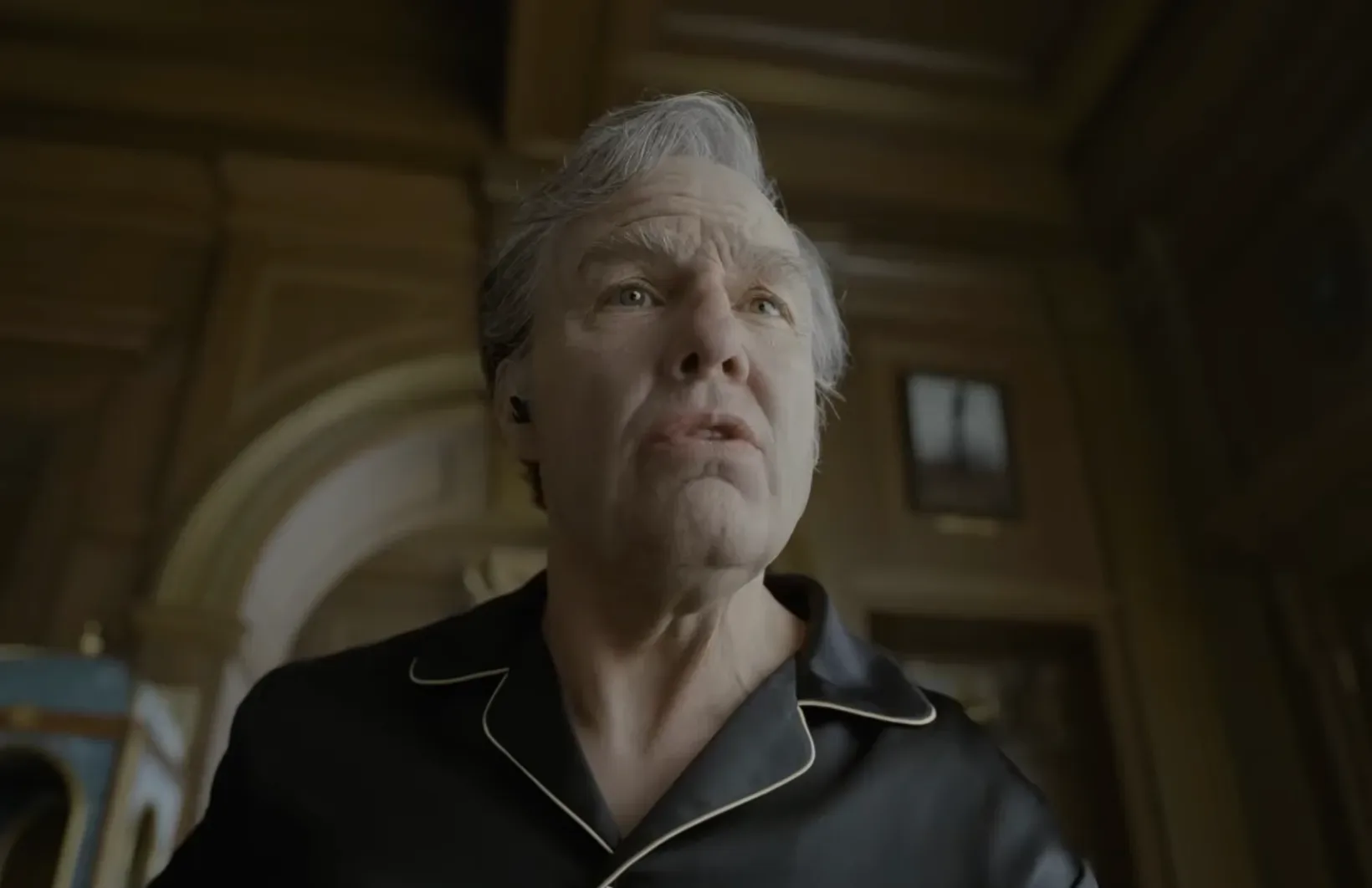
Guillermo del Toro has stepped into the public argument around Digger, offering an emphatic defense of Alejandro G. Iñárritu’s R-rated black comedy while the Tom Cruise-led film confronts sharply divided reactions and a soft start in domestic theaters.
Posting on X ahead of the film’s Friday release, del Toro objected to a dismissive framing around one review and made clear that his support was not tentative. He described Digger as a work of scale, ambition and cinematic complexity, arguing that it is designed for the theatrical screen. His position leaves room for disagreement—“love it or not” was the essence of his message—but firmly rejects the idea that a hostile early response settles the film’s value.
That is a notable intervention because the initial data points are undeniably tough. Digger held a 51% Rotten Tomatoes score at the time in question, and it took in $3.4 million domestically on Friday. Estimates placed its opening weekend at roughly $7.5 million domestically. The film reportedly cost more than $125 million to make, a figure that makes the gap between spending and early theatrical revenue especially conspicuous.
What del Toro is defending
Del Toro’s praise is focused less on proving that every joke lands than on the experience and scope of the picture. Calling something a “theatrical experience” is not merely a claim that it happens to be playing in cinemas. In this context, it means the director sees the film’s size, visual ambition and complexity as qualities intended to be felt on a large screen with an audience.
That distinction matters for a black comedy. The term refers to comedy built around subjects, moods or situations that can be unsettling, grim or abrasive rather than comfortably amusing. It can ask an audience to laugh while also feeling tension or discomfort. Such a film can therefore create a particular kind of split: viewers may admire its boldness while still resisting its tone, or they may find the very awkwardness and excess that frustrate others to be the point.
Del Toro continued amplifying favorable reactions, including praise for Cruise’s leading performance. In one post, he remarked that positive notices were appearing prominently in his timeline and said he would keep sharing them. In another, he urged readers to “Dig or Die,” turning the title into a compact rallying cry for the film.
Cruise also publicly supported the project on Saturday. He said he was honored to have had the chance to create the film with talented artists. It is a concise statement, but it places the star alongside del Toro in resisting the temptation to treat a difficult opening as a final verdict on the work.
The critical objection is about tone and scale
The negative case against Digger is not simply that the movie is unusual. One major review characterized it as a film that presents itself as comedy without being sufficiently funny, and argued that its sense of importance overwhelms it. The same critique connected the reported budget to a concern that the production had assumed audiences would show up for what it viewed as a ponderous absurdist lecture.
Related coverage includes Guillermo del Toro Backs ‘Digger’ as Opening Weekend Turns Rocky.
That is a more specific complaint than “the movie is too weird.” It identifies a perceived mismatch between the film’s comic format and its weighty presentation. In other words, detractors appear to believe the movie’s ambition becomes self-seriousness, and that its scale does not earn the commercial confidence implied by a budget north of $125 million.
Del Toro’s reaction essentially reverses that interpretation. Where critics see overreach, he sees daring; where they see a film too full of itself, he sees bold, layered filmmaking on a properly cinematic scale. Neither perspective is a neutral fact about the movie. They are competing assessments of the same apparent qualities: ambition, tonal severity and a production conceived for theaters rather than modest expectations.
Why comparisons to later-reappraised films are not a prediction
In making his case, del Toro pointed to The Big Lebowski, The King of Comedy and The Counselor—films that faced scrutiny at release and later found greater appreciation with audiences. The comparison is useful as context for the larger argument: early reviews and opening-weekend conversation can be incomplete measures of how a provocative film will be regarded over time.
But the comparison should not be mistaken for proof that Digger will follow the same path. Later reassessment is possible; it is not automatic. A 51% aggregate score, divided word of mouth and an estimated $7.5 million domestic opening weekend describe the film’s early reception, not its long-term cultural status. Whether the movie develops a following will depend on audiences continuing to engage with it beyond this first wave, something those opening figures cannot establish on their own.
The immediate practical implication is simpler. A divisive reception creates a harder marketing challenge than a clear critical consensus. Word of mouth—the informal recommendations and warnings people exchange after seeing a movie—can be especially consequential for a black comedy, where a prospective viewer often wants to know not just whether it is “good,” but whether its humor and tonal approach fit their tastes.
- For viewers: del Toro’s endorsement signals that the film’s defenders value its scale and formal ambition, not only Cruise’s performance.
- For those wary of the reviews: the criticism centers on humor, self-importance and tonal weight, so expectations about a conventional crowd-pleasing comedy may be misplaced.
- For the theatrical run: Friday’s $3.4 million and the estimated $7.5 million weekend indicate a difficult start relative to the reported budget, even though an opening weekend is only one stage of a film’s life.
A debate about the kind of movie audiences want theaters to support
The dispute around Digger also lands in a familiar tension around adult-oriented studio filmmaking. The available details describe an R-rated, large-scale black comedy with a major star, an acclaimed filmmaker and a cost exceeding $125 million. That combination naturally raises the stakes: it is not a small experiment whose commercial expectations can remain modest, yet its humor and apparent thematic heft may alienate people looking for something more direct.
Del Toro’s defense is therefore not just a rebuttal to a score. It is an argument for making room for films that are difficult, ambitious and designed to command a theater, even when the first response is messy. His language acknowledges that viewers may not love Digger. What he contests is the leap from disagreement to dismissal.
For broader film coverage involving major stars and ambitious projects, see our report on Eddie Murphy’s potential live-action scripted TV lead.
At this early point, the measurable picture remains clear: mixed reviews, a 51% aggregate score, divided audience conversation and an underwhelming domestic start. The artistic picture is less settled. Del Toro and Cruise are publicly standing behind Digger, while critics question whether its sweeping ambition works as comedy. That disagreement—not a simple consensus—now defines the film’s opening-weekend story.