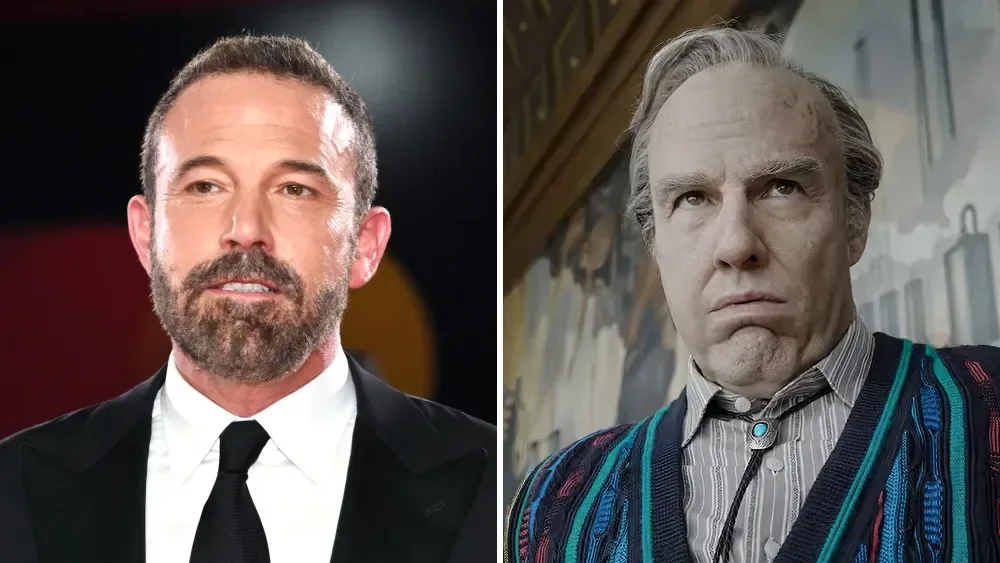
Ben Affleck has entered the increasingly loud conversation around Digger, the Tom Cruise-led Alejandro G. Iñárritu film whose weak theatrical performance has become almost as prominent a subject as the movie itself. His core point is less a claim that every audience member must like the film than a warning about what studios may learn if a conspicuous flop becomes a spectator sport.
Affleck argued on the Happy Sad Confused podcast that people are treating Digger’s commercial struggles with the kind of enthusiasm usually reserved for a public humiliation. In his view, much of that reaction is detached from engagement with the actual work. He described the movie as ambitious and made by talented people, then connected its fate to a broader incentive problem: when expensive projects that depart from the expected template are “punished,” the likely response is more cautious, more interchangeable filmmaking.
“You cannot do something interesting without taking a big swing,” Affleck said, adding that such swings will sometimes make their creators “look bad.”
That is a useful distinction. Affleck is not arguing that criticism should disappear, nor that a large-budget production deserves protection from scrutiny because it is ambitious. Audiences can reject a movie, critics can dislike it, and studios can face real financial consequences. His concern is the celebration of defeat itself: the conversion of a movie’s loss into the main event, particularly when the discussion reduces a complicated production to memes, grosses and a scorecard.
Why ‘Digger’ has become a high-stakes example
Digger is not a small experimental feature that quietly missed its audience. It is a major studio release directed by Iñárritu and starring Cruise as an oil tycoon facing an apocalyptic crisis after a malfunction on one of his Antarctic rigs sends ice caps toward Europe. Its scale is central to the debate. The supplied production figure is more than $160 million, while marketing has been pegged at $100 million. Those figures make the film’s theatrical performance unusually consequential for the people who financed and distributed it.
The movie opened October 2 and has earned $15 million domestically so far. It has also divided reviewers, carrying a 53% critics score on Rotten Tomatoes. A reported theatrical break-even point of $350 million illustrates the gap between a film’s visible opening-weekend conversation and the math facing a studio. One report has put the potential loss to Warner Bros. at around $245 million, a figure that would place it among the studio’s most expensive failures.
Those numbers should be read as estimates rather than a complete ledger. The available figures do not provide a full accounting of all revenue streams, contractual arrangements or long-term returns. But they do establish why Digger has prompted an outsized reaction. A project with a very large budget, an internationally known star and a filmmaker associated with a distinct creative voice is now being discussed through the blunt language of a “bomb.”
What box-office language can obscure
“Box office” refers to the money taken in from theatrical ticket sales. It is not automatically the same thing as studio profit. Theaters retain part of ticket revenue, while marketing, distribution, financing and participant arrangements can all affect the eventual result. That complexity is often lost when the conversation turns into a running tally of whether a title has made enough money.
Related coverage includes Ben Affleck Defends ‘Digger’ and Warns Against Celebrating Risky Films’ Failures.
Affleck’s criticism is aimed at that flattening effect. Revenue matters to studios, employees and future productions; pretending otherwise would be unrealistic. Yet revenue is not a full description of artistic intent, audience response or future influence. A divisive film can fail commercially and still contain choices worth arguing about. Equally, a profitable film can be conventional. Financial outcome and creative value overlap sometimes, but they are not identical measurements.
The danger in turning a miss into entertainment is that it rewards a different sort of commentary. The question shifts from “What did this movie attempt?” and “Why did it fail to connect for some viewers?” to “How much did it lose?” The second question may be newsworthy, but it cannot answer the first two.
The real issue: risk and studio behavior
Affleck’s argument has a practical dimension. Major releases are built through decisions made long before audiences see a trailer, and studios use recent results to guide future choices. If decision-makers conclude that audiences only reward familiar intellectual property, continuing franchises or movies designed to resemble recent hits, they may allocate more money toward those perceived certainties.
That does not mean every franchise movie is artistically empty, or that every original and aggressive movie is automatically good. It means the incentives are different. A familiar brand can be easier to explain in a marketing campaign because people already understand the premise and the connection to earlier entries. A film built around an unusual tone, a disruptive structure or a filmmaker’s more singular sensibility carries the harder job of persuading people to take a chance.
Digger, as described by both its defenders and detractors in this dispute, appears to have invited that harder conversation. Its advocates have emphasized its ambition, tonal volatility and political and social resonance rather than selling it simply as a conventional Cruise vehicle. That framing is notable because star expectations can shape a film’s reception before viewers encounter its particular story or style.
For related reading on the tangible craft that can sit behind large-scale filmmaking, see our look at how practical effects, full-scale sets and IMAX film were used to build an epic world. Spectacle alone does not resolve whether a movie works, but it can represent a meaningful commitment to a particular creative approach.
Celebrity support does not settle the argument
Several high-profile figures have rallied around Digger, but their praise underscores how sharply the movie has split opinion rather than ending the debate. Neil Young called it the best film he has seen and urged people to approach it on its own terms, arguing that it should not be treated merely as a Tom Cruise movie or as a standard commercial product. He characterized it as a film of its time and suggested that its radical changes in direction may overwhelm viewers expecting something more familiar.
Mandy Patinkin was similarly emphatic, calling it an instant classic and one of the greatest pieces of film he has seen. Anne Hathaway praised it as smart, trippy, aggressive, funny and ambitious, encouraging viewers to make time for it and decide for themselves. These are strong endorsements, but they remain individual responses—not evidence that disagreement is invalid.
In fact, the gap between those reactions and the 53% critical score may be the most revealing thing about the movie’s position. Consensus can be useful when people want a broad signal of reception, but consensus is not the only reason to watch something. A polarizing movie can produce more meaningful discussion than a broadly acceptable but quickly forgotten one. That is not a defense of every failed creative decision; it is a case for letting a work be more than its aggregate score or its reported losses.
What audiences can take from the debate
Affleck’s “bullying” comparison is deliberately blunt, and it points to an online habit worth separating into parts. There is a meaningful difference between saying a film did not work, criticizing its plotting or performances, and delighting in the prospect that the people behind it will be embarrassed or financially punished. The first is criticism. The latter can become a reflex that treats failure as more entertaining than the art under discussion.
Moviegoers are not responsible for rescuing projects they do not want to see. Nobody owes a ticket to a director, a studio or a star. But viewers who value range in big-screen releases can make their preferences clearer in a simpler way: engage with movies on their actual merits, rather than solely through their projected financial collapse. Seeing a divisive film and forming a specific opinion is more useful than repeating its worst statistic.
For studios, the lesson should not be that risk never works. It should be that a risky project needs a coherent path to its audience, and that ambition, marketing expectations and budget scale have to be considered together. The available information does not establish why Digger has underperformed, so declaring a single cause would be speculation. Its divided critical reaction, enormous reported costs and difficult commercial position are enough to show that the title has become a consequential test case.
Affleck has experienced box-office disappointments across his own long career, which gives his comments added perspective without making them immune from challenge. His argument ultimately asks for a healthier distinction: a film can miss, viewers can criticize it, and the public can still resist treating the miss as a victory. If ambitious projects are judged only by how cleanly they avoid embarrassment, the films most likely to survive the greenlight process may be the ones least likely to surprise anyone.