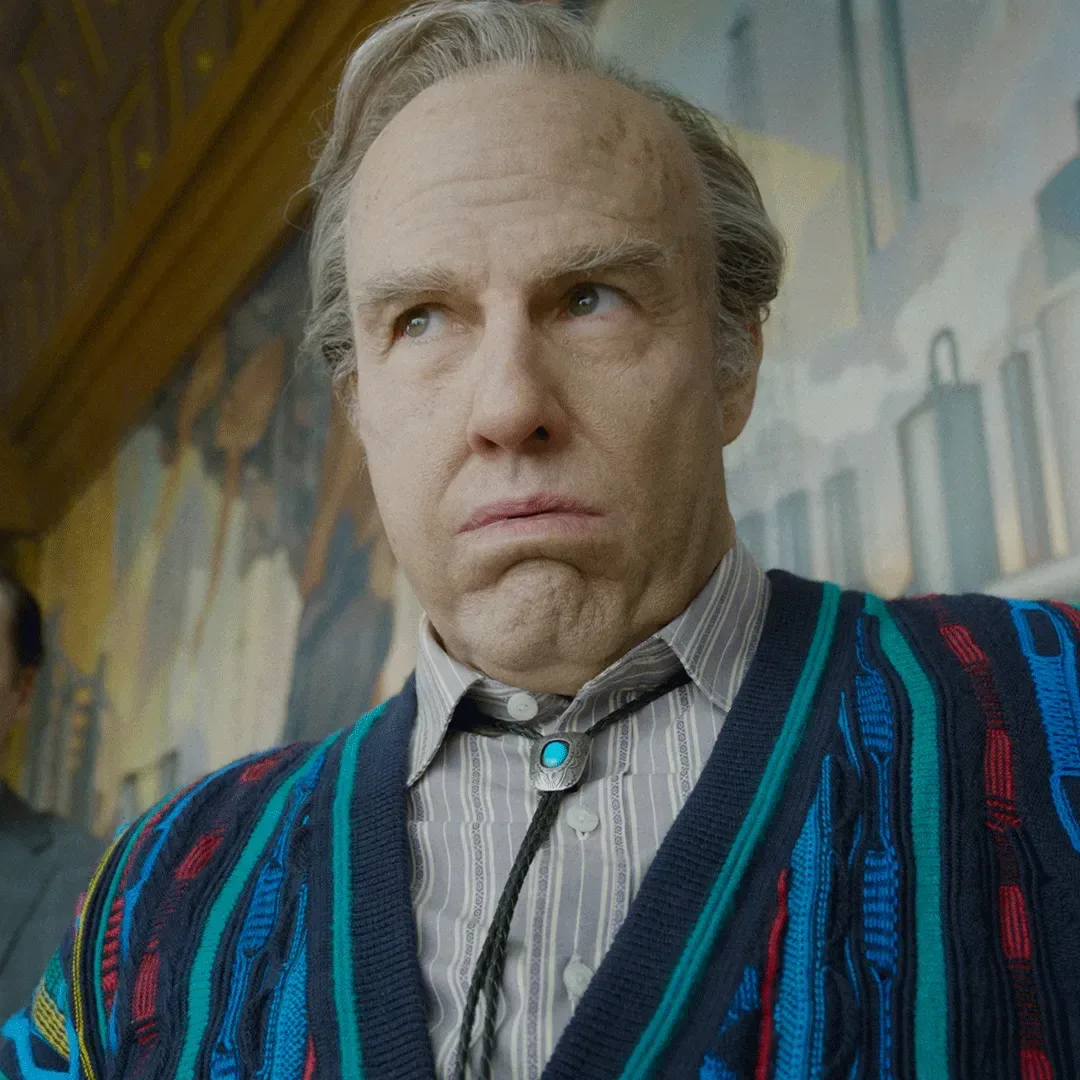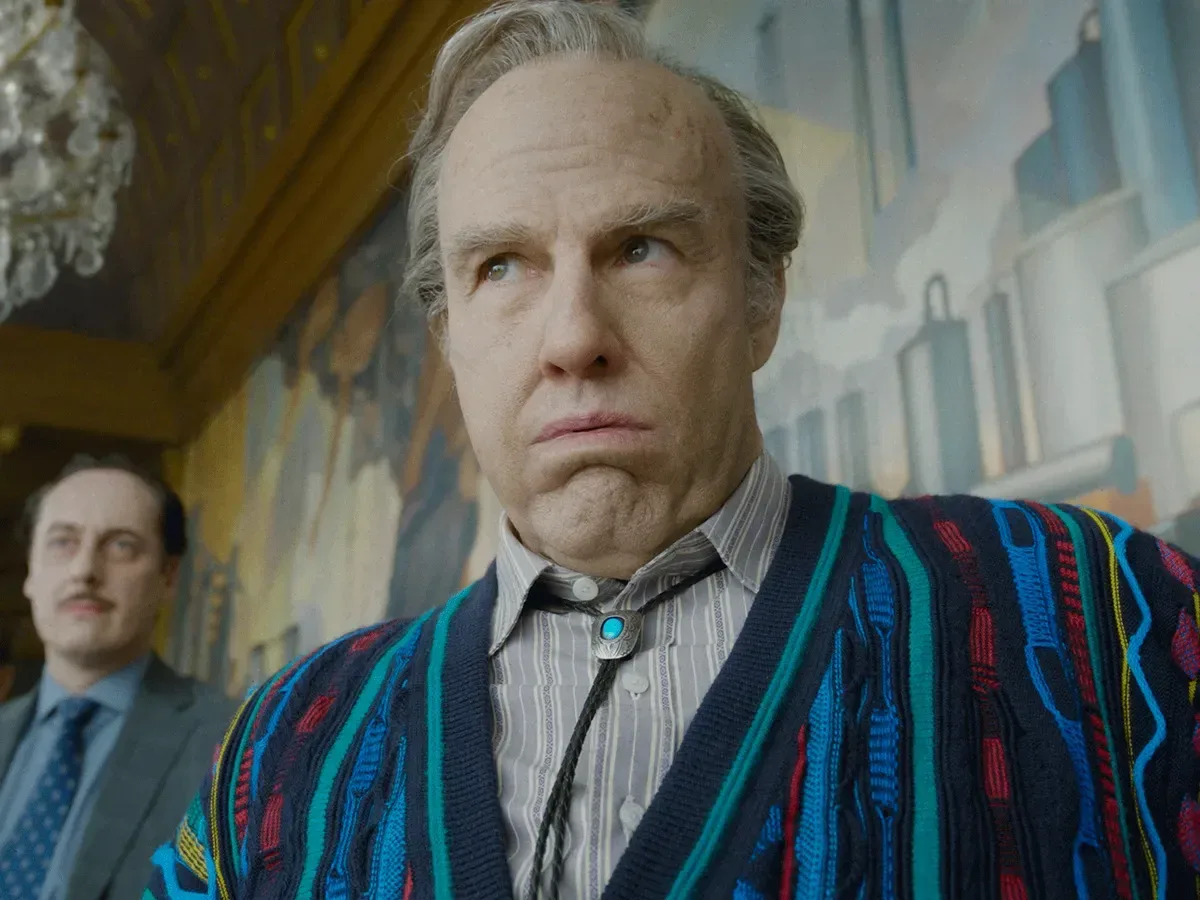
Ben Affleck has offered a sharp rebuke to the online and industry-side enthusiasm surrounding the poor theatrical performance of Digger, the Tom Cruise-led film directed by Alejandro G. Iñárritu. His concern is larger than one movie’s disappointing receipts: when a high-profile creative gamble becomes a spectacle of failure, he argues, the lesson absorbed by Hollywood may be to make fewer gambles at all.
Speaking on the Happy Sad Confused podcast, Affleck compared the reaction to a form of high-school bullying. He objected in particular to people treating the movie’s commercial shortfall as entertainment, including people who have not seen it. For Affleck, reducing the conversation to losses and mockery misses the value of an ambitious work made by established artists with a willingness to try something outside the safest lane.
“If you punish movies that take risks, guess what you’re going to get? A bunch of homogenized movies,” Affleck said, arguing that making something interesting requires taking a substantial swing—and sometimes looking bad when it does not connect.
Digger’s numbers are difficult to ignore
The scale of Digger’s theatrical trouble is undeniably part of why the film has become such a lightning rod. The movie opened with $8 million domestically and $12 million internationally. After two weekends, it stood at $35.3 million worldwide. Warner Bros. reportedly expects its global theatrical total to finish at roughly $40 million, while projections place its potential loss by the end of the run at $250 million.
Those figures make a recovery look unlikely based on the information currently available. In box-office language, a film having “legs” means it keeps drawing audiences beyond its debut weekend. A strong opening is not the only path to success; sustained ticket sales can alter a movie’s trajectory. But Digger does not presently appear to be finding that sustained momentum.
There is no useful way to pretend the result is routine. A potential loss of that size is significant, and the film’s earnings have fallen far short of what a major studio release starring Cruise would ordinarily need to avoid becoming a business story as much as a movie story. Still, Affleck’s point is not that commercial outcomes should never be discussed. Rather, it is that fascination with a visible failure can turn into a cultural incentive against trying unusual material in the first place.
An ambitious pairing met a divided response
Digger brings together Cruise and Iñárritu, the director behind Birdman and The Revenant, who has won the Best Director Oscar in consecutive years. That combination alone frames the film as an event built around a major screen star and a filmmaker associated with a distinct authorial approach.
Critical and audience reactions, however, have not landed in the same place. The film holds a 53% Tomatometer score and a 74% Popcornmeter audience rating on Rotten Tomatoes. Those percentages are not a complete account of a movie’s reception, but they do show a meaningful gap between the critic aggregate and the user-review aggregate.
The split matters because it complicates the simple claim that the film has been rejected on every front. A 53% critics’ aggregate signals a mixed response, not universal dismissal. Meanwhile, the higher audience figure suggests that a portion of viewers has found more to value than the broader commercial result would indicate. Available criticism has described the film’s satire as unlikely to change viewers’ minds about global warming, while also recognizing strong performances and several effective laughs.
That leaves Digger in an awkward, recognizable position: it has not found a large theatrical audience, it has divided reviewers, and it has still drawn appreciable support from some moviegoers. Those facts can all coexist. Box office measures ticket revenue; review aggregations summarize a pool of opinions; neither on its own settles whether a creative experiment was worth attempting.
What Affleck means by “risk”
In this context, risk is not merely a synonym for spending a large budget. It means staking time, talent and studio support on work whose appeal cannot be guaranteed by an already familiar formula. Affleck specifically warned that severe punishment for risk-taking could steer the business toward sequels and adaptations of recognizable intellectual property.
“IP,” short for intellectual property, is industry shorthand for a known brand or pre-existing fictional property. It can include an established film series, a book, a comic, a game or another recognizable universe. Familiarity can make marketing easier because audiences already understand the basic proposition. That does not automatically make an IP-based film creatively lesser, nor does an original or unconventional project automatically deserve success. Affleck’s worry is about the overall mix: if every setback is treated as proof that only familiar properties are viable, the incentives narrow.
His argument is also distinct from saying studios should disregard financial discipline. The numbers around Digger are a legitimate subject of scrutiny, especially where a major studio faces a reported loss. But the appetite to publicly celebrate failure is a separate behavior from asking why a movie missed its target. One asks questions about execution, positioning, costs or audience interest. The other turns the miss itself into the attraction.
That distinction matters for performers, directors and financiers deciding what to support next. A creative choice may be difficult to justify again if the perceived consequence is not only a financial disappointment, but a long-running public pile-on that overshadows the work itself. Affleck’s warning is that the most visible response to failure can become part of the risk calculation.
A marketing jab did not change the trajectory
Digger’s recent advertising campaign attempted to turn negative reviews into part of its promotion. That is a familiar defensive tactic: acknowledge criticism, frame it as proof of provocation or individuality, and invite audiences to decide for themselves. In this case, it did not move the box-office needle.
The failed campaign does not necessarily prove that the film’s underlying approach was wrong. It does show that self-aware marketing cannot automatically reverse weak early ticket sales. A campaign can draw attention, but attention is not the same as persuading people to buy tickets. The available figures suggest that Digger has not converted the debate around it into the kind of audience turnout it needed.
Cruise has not issued an official public statement about the movie’s reception. The absence of one leaves Affleck’s remarks as one of the more prominent defenses of the creative premise behind the project, rather than a response from the film’s star.
Why the conversation reaches beyond one box-office miss
Affleck’s intervention is ultimately about how audiences, commentators and the business talk about art that does not immediately work as a mass-market event. There is room to criticize Digger, question its choices, or observe that it has fallen far below commercial expectations. There is also room to reject the idea that a conspicuous flop is inherently funny or that its failure should be used to discourage similarly ambitious films.
That tension is especially relevant for anyone who values movies that do more than repeat a dependable template. A filmmaking culture needs the freedom for projects to misfire if it is also going to produce work that surprises people. Affleck is not asking viewers to pretend they enjoyed a film they did not enjoy. He is asking for a little more care in what the celebration of a miss communicates.
The broader creative question is not whether Hollywood should abandon sequels, recognizable brands or commercial instincts. It is whether those choices become the only acceptable choices once an ambitious project fails loudly. That concern also overlaps with games-industry discussions of creative missteps and polished releases, such as a recent reflection on a creator calling a polished game a personal misstep: a disappointing outcome can be worth examining without becoming an excuse to stop attempting difficult work.
For now, Digger remains a stark case study. Its box office is weak, its critical reaction is mixed, and its user response is more favorable than its commercial performance. Affleck’s message is that none of those realities requires turning the movie’s problems into a victory lap. If the industry learns only to avoid anything that might fail conspicuously, the next ambitious swing may never get made.