Christopher Nolan’s The Odyssey is being described in unusually large physical terms: a 91-day shoot, 2 million feet of IMAX film, work spanning six countries, and a Troy set covering more than 2.5 acres. But the more revealing part of the production is not simply its scale. It is how three departments approached the same underlying challenge: make a mythic world feel coherent when its places, creatures and characters are built through a mix of real landscapes, constructed sets, costumes, animatronics, puppetry and editorial choices.
Production designer Ruth De Jong, costume designer Ellen Mirojnick and editor Jennifer Lame are set to receive a creative collaborators honor at the Middleburg Film Festival on October 16. Their work offers a useful look at the practical architecture behind a huge film: design establishes the spaces, costumes define the people moving through them, and editing turns a collection of shots, performances and effects into story and momentum.
A production designed for a giant frame
The film was shot entirely on IMAX 70mm, making it the first feature reported to do so. In simple terms, 70mm refers to a physically large film format, while IMAX 70mm is associated with an even larger image capture and projection system. The immediate creative consequence is that environments, surfaces and scale cannot be treated as background details. A format built to present an enormous image can make construction, location texture, crowds and costume materials especially prominent.
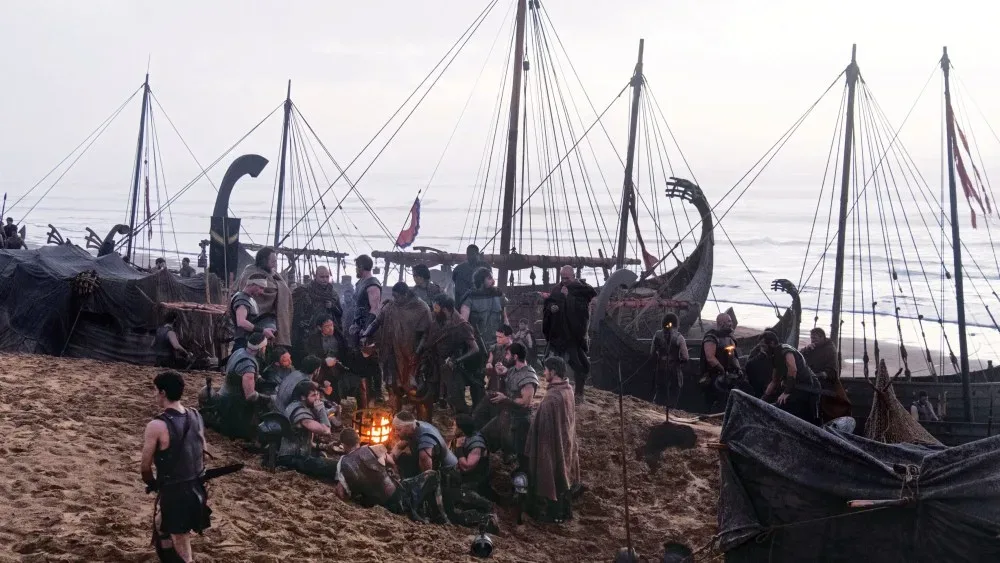
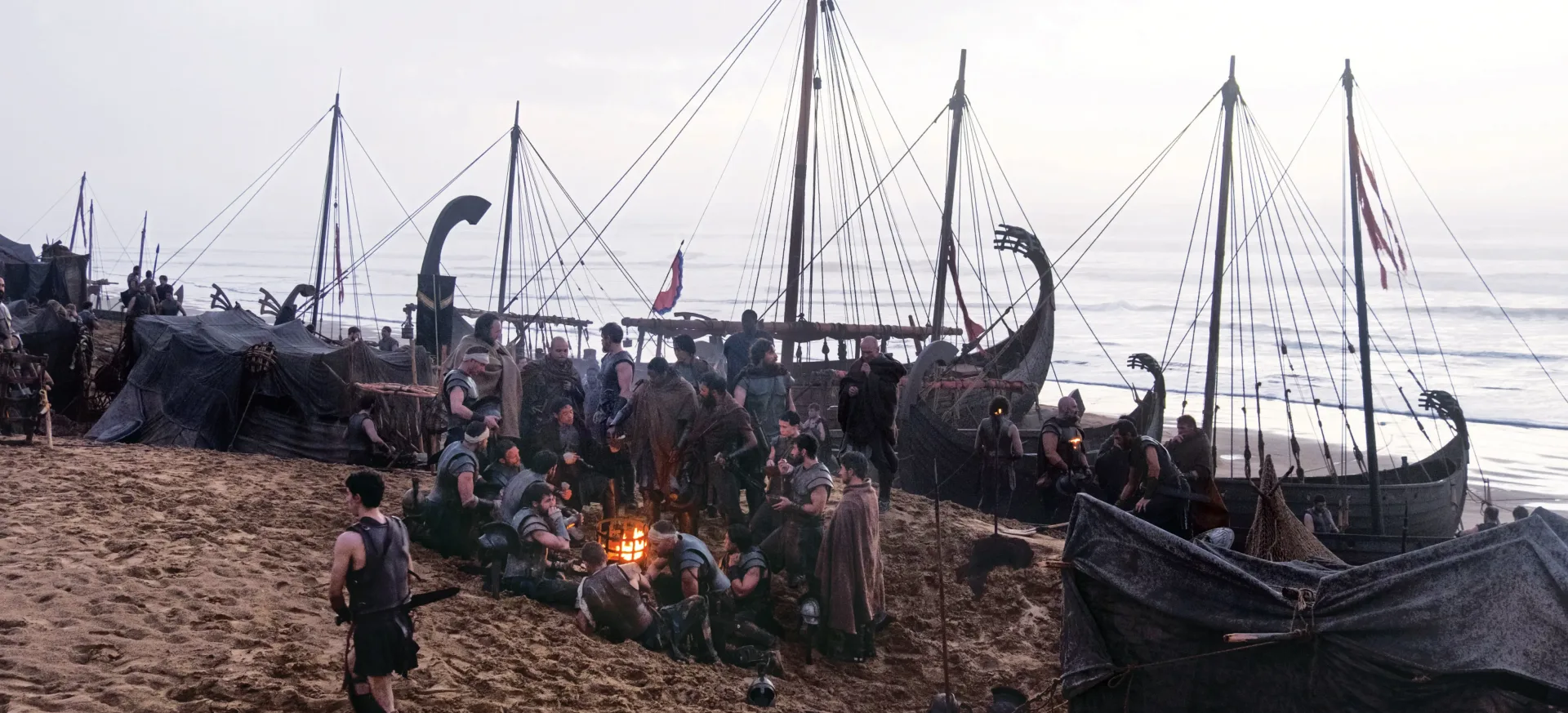
That does not mean every element has to be bigger merely for the sake of bigness. It means the departments must make visual decisions that hold together under close scrutiny and across an expansive image. De Jong’s work illustrates the point. Her team scouted locations internationally, with a fifth-century Italian castle, positioned about 1,030 feet above sea level, becoming Ithaca. The production also used the Atlantic-coast beaches of Essaouira, Morocco, for the Trojan horse discovery and for the launch of Odysseus’ trip back to Ithaca.
Locations give filmmakers existing geography, age and irregularity that are difficult to fake. Yet location work also creates complexity. A production can need a particular landscape for one scene, a buildable controlled environment for another and a different country’s crew or infrastructure for a third. De Jong said the design operation covered six countries, with multiple national art departments being managed simultaneously. Her concise description of doing it while travelling carry-on only underlines a less glamorous production reality: the creative plan has to survive continual movement.
Troy was a build, not an implication
The Troy work was especially substantial. The set occupied more than 110,000 square feet, included over 60 structures and had room for 2,000 extras. Those numbers matter because they indicate a place designed to function as a real working environment for the camera, cast and crowd, rather than a small fragment enlarged mainly through digital duplication.
De Jong also designed multiple Trojan horses, each roughly 35 feet tall. Multiple versions can be a practical response to a film’s different staging needs: one setup may need a particular angle, placement or interaction that another cannot provide. The supplied production details do not specify how each was used, so it would be speculation to assign them separate functions. What is clear is that the horse was treated as a major physical object within the world rather than a minor visual accent.
Large builds bring a practical benefit beyond spectacle. They give actors, extras and cinematographers shared spatial information. Gates, streets, structures and the object at the center of a scene all occupy actual positions. That can help crowd movement feel responsive instead of abstract, while allowing the camera to discover relationships between people and architecture. The tradeoff is that every construction decision becomes visible and must support the period, the story and the frame.
Related coverage includes The Odyssey’s Crafts Team Built a World at IMAX Scale.
Not all of the film was made on distant locations. Specific sets were built in Los Angeles, where De Jong emphasized the value of established crews. For a production carrying many locations and large simultaneous demands, this is a reminder that logistical confidence is itself a creative resource. A crew familiar with a production’s standards can reduce uncertainty around execution, leaving the department more room to solve the next difficult problem.
Costume design starts by questioning familiar mythology
Mirojnick’s task was not simply to make ancient-looking clothing. She described having to first dismantle the inherited visual shorthand associated with the mythology before creating the film’s own world. That is an important distinction for an adaptation of material with centuries of art, theater, books and screen depictions behind it. Familiarity can be helpful, but it can also lock a new interpretation into images that audiences expect rather than images that serve this particular film.
Her stated starting point was Odysseus. She called him the film’s “centering ground,” with his wardrobe establishing a visual language from which the rest of the characters could emerge. A visual language is a recurring design system: choices in silhouette, material, wear, ornament, color or proportion can suggest how people belong to the same culture while still communicating different status, loyalties or personal histories.
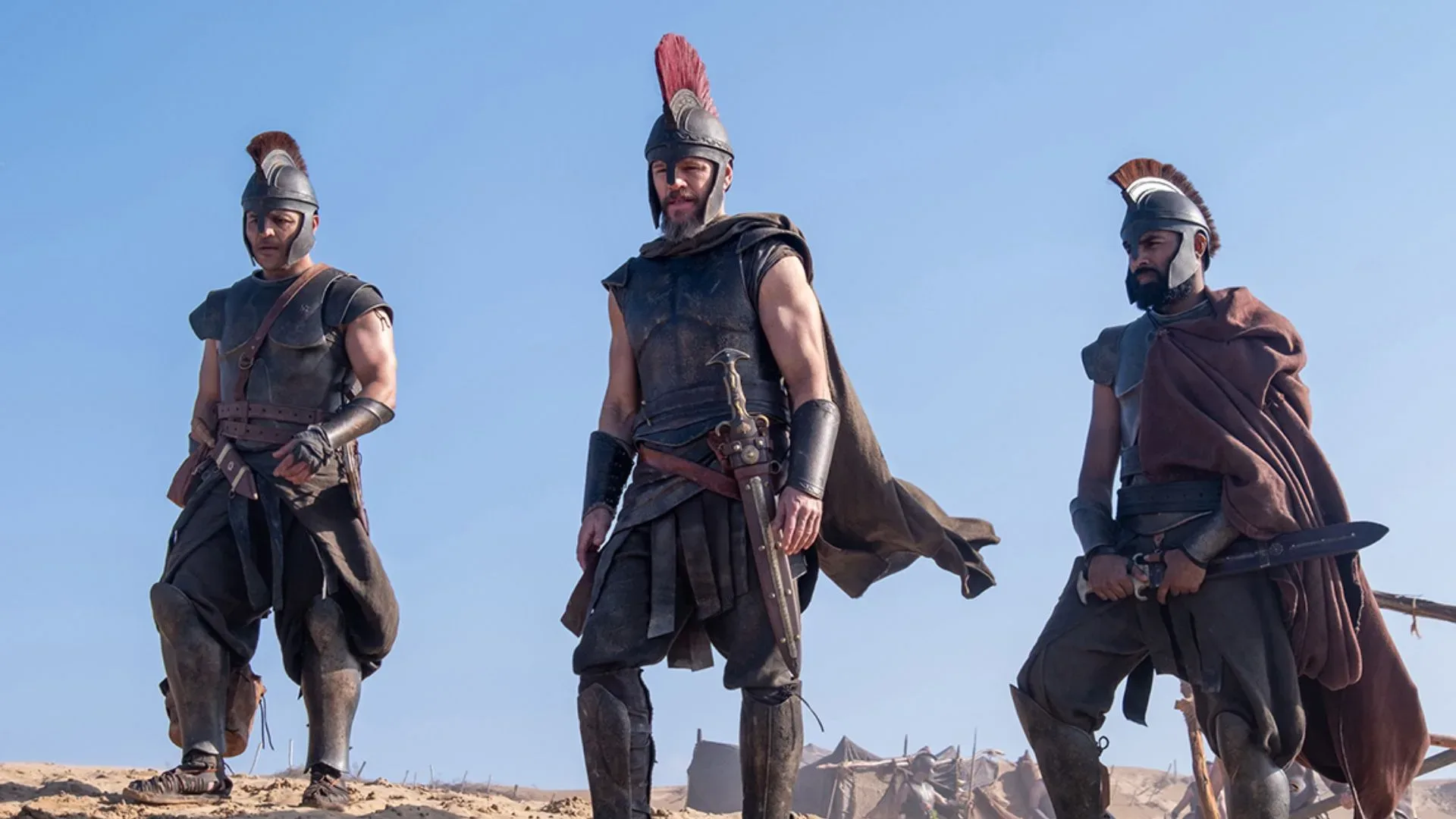
That approach becomes especially useful in a mythic story populated by figures whose identities can carry immense narrative weight. Mirojnick said each costume needed to fit the same world while signaling a distinct relationship to power, identity and myth. The phrase is more precise than a broad claim that costumes make characters look different. It suggests the clothing has to do narrative work. Who appears protected, ceremonial, battle-worn, authoritative, exposed, ordinary or elevated can help an audience read a scene before dialogue explains every relationship.
There is also a continuity challenge in a production moving across countries with crews travelling alongside it. Costumes must remain consistent from shot to shot even when scenes are filmed out of story order, locations change and a character’s condition evolves. The available details do not lay out the film’s continuity system, but Mirojnick’s account makes clear that the department’s core issue was conceptual as well as logistical: every costume had to belong to one newly built interpretation of the myth.
Why practical effects can simplify an editor’s job
Lame’s examples show how effects methodology changes the edit. Nolan’s extensive in-camera approach meant that some sequences arrived with key visual information already present in the footage. “In-camera” means an effect or illusion is captured during filming rather than being created entirely later through digital compositing.
For Circe’s transformation of men into pigs, Samantha Morton performed with animatronics and other practical effects. An animatronic is a physical, mechanically controlled figure or component used on set. Because the scene’s effects existed in front of the camera, Lame said it could be edited like a dramatic scene. That phrase does not diminish the craft involved; it identifies the advantage of capturing interactions physically. The editor can focus on performance, reaction, timing and emotional progression with the effect already embedded in the shot.
Practical effects are not automatically easier, nor do they remove the need for careful cutting. They can be restrictive or technically demanding on set. But when the right material has been photographed, the editorial task may be more direct because performers have something concrete to respond to and the image contains the intended action rather than a placeholder awaiting a later layer.
The Cyclops sequence presented the opposite sort of editorial puzzle. It combines filming in a Greek cave, soundstage work in Los Angeles, puppetry and Bill Irwin’s performance as the one-eyed giant. Lame had been working on the scene from the production’s time in Greece. Her job was to join material captured in different places and with different tools into one continuous dramatic event.
Puppetry, here, means a physical performance method in which a creature or figure is operated rather than generated wholly in post-production. The key editorial challenge in such a sequence is not only hiding joins between sources. It is preserving cause and effect: where characters are, what they see, when they react, and how danger shifts from moment to moment. The scene was described as carrying both horror and pathos while advancing Odysseus and Eurylochus. Those are demanding dramatic goals for a sequence that also has to sell a giant creature assembled from multiple production techniques.
The connective tissue is collaboration
The numbers attached to The Odyssey are striking, but they only explain part of how an epic takes shape. A castle can become Ithaca because production design gives it a dramatic identity. A large Trojan horse matters because the surrounding city, crowd and camera staging make it part of an event. Wardrobe can separate characters on sight while binding them to the same world. And an editor can turn practical effects, puppetry, cave photography and stage material into a sequence with emotional stakes.
That is why the recognition for De Jong, Mirojnick and Lame is meaningful beyond a single credit list. Their departments are separate, but their choices meet in every finished scene. The production design creates the terrain, costume design tells viewers who belongs within it, and editing determines how the audience experiences its space, danger and drama.
The Middleburg Film Festival runs October 15–18 in Middleburg, Virginia. For more entertainment coverage, see our weekend streaming guide.