Spoilers follow for “Collide,” the Season 23 premiere of Grey’s Anatomy.
Grey’s Anatomy has returned to Grey Sloan Memorial with a conflict that is larger than one difficult operation or one romantic misunderstanding: who, exactly, is a hospital for when it is struggling to stay open?
Season 23 begins with the unveiling of Grey Sloan’s new VIP floor, a luxury wing intended for wealthy patients. It comes with private suites, elevated security, hotel-style bedding and private-chef access. The project is backed by Seth Norton, played by James Wolk, a physician turned businessman who has also arrived as the hospital’s new chief of surgery. That combination is not subtle—and it is not meant to be. Norton is both the person selling an expensive new model of care and the person who will hold authority over the doctors expected to work within it.
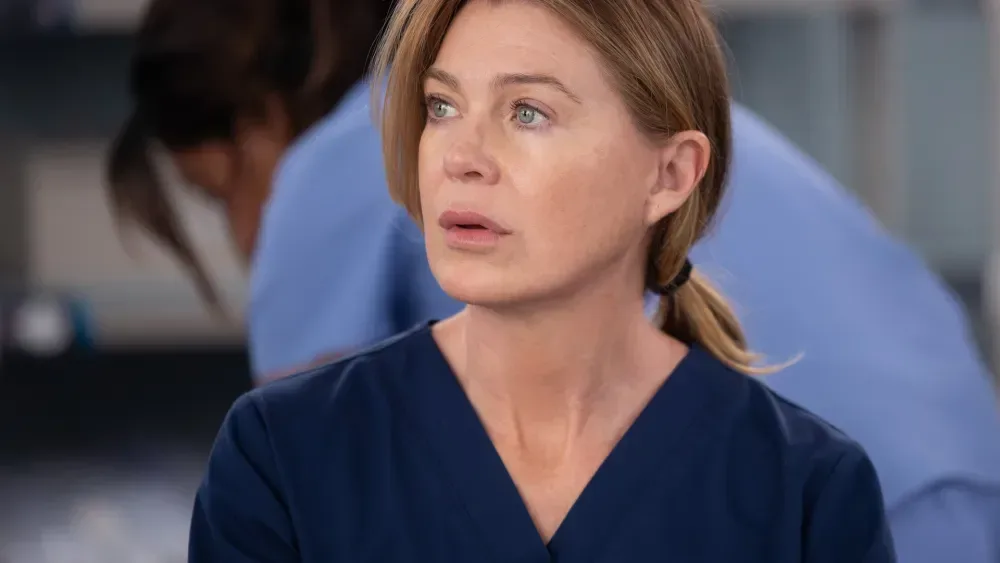
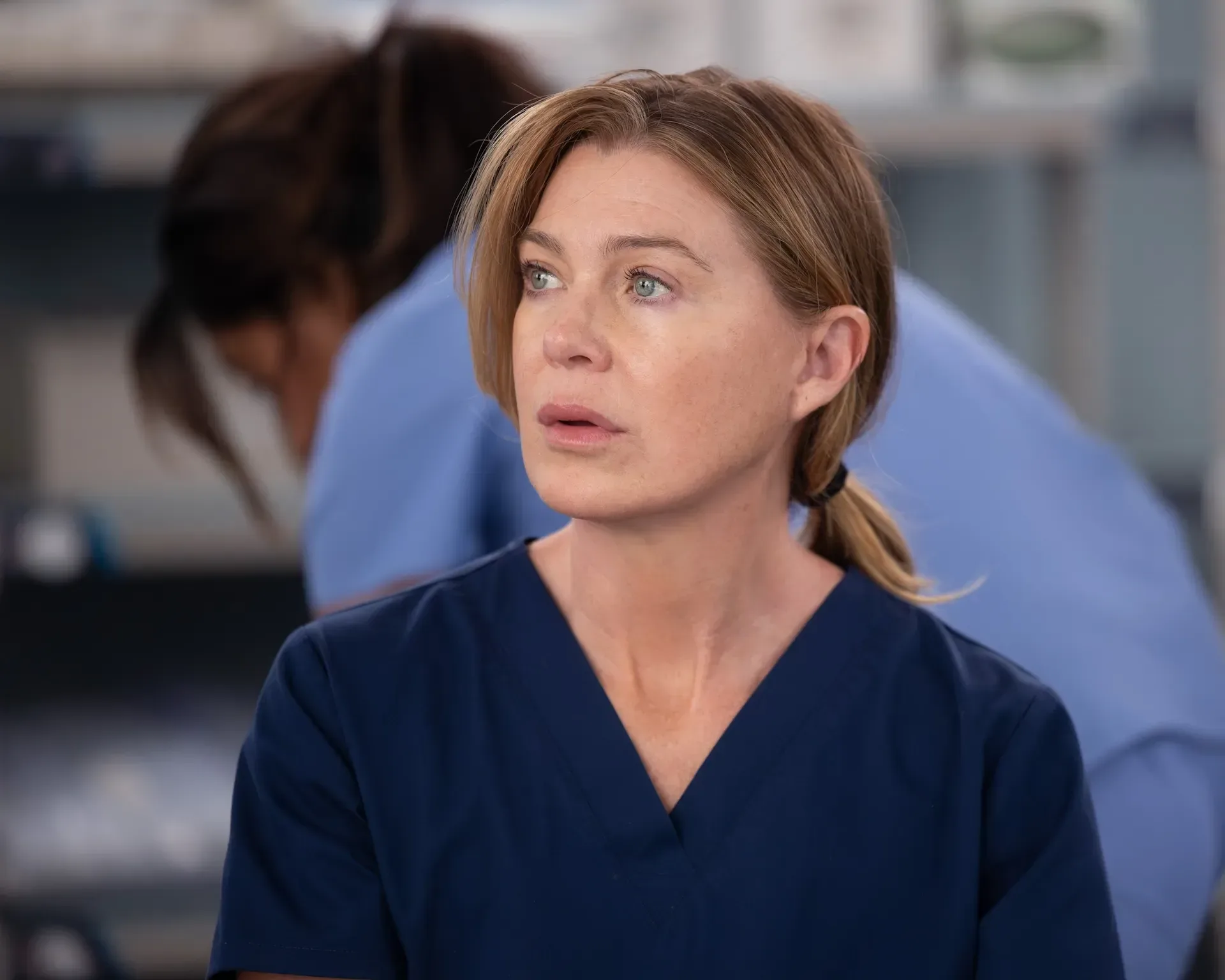
Meredith Grey, played by Ellen Pompeo, immediately objects. Her warning that the initiative will implode frames the season’s central institutional tension. Grey Sloan has faced administrative fights before, but Meredith now approaches the issue as more than the former intern who distrusts corporate logic. She is an attending physician with an ownership stake in the hospital, giving her a different kind of responsibility when business decisions collide with patient care.
For more context, explore Jeff Kaplan Says He Hasn’t Played Overwatch Since Leaving Blizzard in 2021.
For a broader look at the premiere’s major setup and the developing spinoff, see this related overview.
The VIP floor is the season’s biggest professional fault line
The show’s new chief arrives after the exits of Owen Hunt and Teddy Altman, previously Grey Sloan’s chiefs of surgery. Rather than elevating a familiar doctor from within the ensemble, Season 23 introduces Norton as an outsider with an explicitly commercial perspective. That decision matters because it creates conflict at two levels: Norton’s individual leadership and the financial pressures that made his approach appealing in the first place.
The series is using the VIP floor to examine healthcare disparity—here, the gap between the services available to people with money and the care available to everyone else. The key dramatic question is not merely whether wealthy patients receive perks. It is whether creating a premium tier can help sustain a hospital’s ability to serve the broader public, or whether it inevitably reshapes priorities and standards throughout the building.
That is why Meredith’s role is particularly useful. Her objections do not come from a distance; she has a stake in keeping the institution alive as well as a commitment to its patients. The season will also explore the consequences when a hospital closes, including the immediate problem of where displaced patients—and their care—go afterward. Grey Sloan itself is not confirmed as the hospital facing that outcome, but the subject gives the VIP-floor argument a larger consequence than a boardroom dispute.
“Corporate interests” is often used as shorthand in hospital dramas, but the season’s setup gives the phrase a specific practical meaning. Maintaining a hospital involves resources, staffing and expensive services. Norton’s philosophy appears to be that medicine is also a business. For the doctors who see their work primarily as care, that outlook is likely to produce repeated clashes rather than one easy villain-versus-hero confrontation.
Meredith’s episode count remains unconfirmed
Pompeo’s precise number of Season 23 appearances has not been confirmed. The plan is to include Meredith as much as scheduling allows while accommodating Pompeo’s other projects. Her material is reportedly designed across multiple episodes in a way that can help with production scheduling, but that does not amount to a promised episode total.
Meredith will have additional scenes with Martin Martinez, a new patient in foster care who may have cancer. That story is one part of her season rather than her sole arc. Meanwhile, viewers hoping for a definitive answer on whether Meredith and Nick will have an onscreen wedding will have to keep waiting; no confirmation has been offered.
Grey Sloan’s relationship complications are built around power and recovery
Several of the season’s personal plots are inseparable from professional responsibilities. Bailey has begun pursuing a master’s degree in public health and, needing to remove something from her workload, appoints Winston as residency director. Bailey will still work at the hospital, with her clinical experiences informing her educational path, and her campus material begins in Episode 2.
But Winston’s promotion makes his relationship with Jules much more complicated. As residency director, he is directly responsible for the program in which she works. The issue is a power dynamic: a relationship where one person has institutional authority that can affect the other person’s opportunities, evaluation or career. The season does not present that concern as a minor technicality. Winston and Jules had already recognized the risk, and his acceptance of a major career opportunity turns their private relationship into a much more consequential problem.
Amelia and Toni also begin the season in a fragile place. Toni had left the state after finding Amelia with Cass, but the premiere gives Amelia and Toni a reconciliation and a kiss. The story is positioned as a test of whether Amelia can recognize her own self-sabotaging behavior rather than simply repeat it. Amelia believed Toni might return to her ex-wife; that does not erase the hurt caused by Amelia’s decision, but it explains why the writers see room for disagreement over fault.
The relationship will not exist in isolation. Toni’s connection with Ben Warren remains part of her role at Grey Sloan, while Amelia’s professional story will involve residents selecting areas of focus. Lucas, in particular, will have material connected to neurosurgery and his family tie to the specialty.
Jo and Link’s stories will not resolve quickly
Jo Wilson quits her job in the premiere following the traumatic childbirth experience that nearly killed her while she delivered her and Link’s twins last season. The season will continue examining the lasting effects of that trauma rather than treating it as a plot point that can be closed out in one episode.
The story specifically addresses PTSD after birth trauma. PTSD, or post-traumatic stress disorder, describes persistent psychological effects that can follow a traumatic event; in Jo’s case, the series is using it to explore how a frightening medical experience may affect her confidence, identity and parenting choices over time. Her resignation is therefore a turning point, but not necessarily a permanent answer to whether she can practice medicine again.
Link has a separate issue developing beneath the appearance of a stable home and career. The season intends to explore drug dependency through his denial and secrecy, rather than relying only on overt, easily recognizable behavior. The story’s emphasis is that someone can seem functional at work and at home while hiding a serious problem. Link will initially conceal what is happening, though it is expected to emerge.
Simone, Blue and an already crowded season of consequences
Simone discovers she is pregnant and does not know whether Lucas or Wes is the father. The uncertainty arrives after last season’s fertility storyline, which established that Simone may not be able to have children conventionally. That context changes the emotional calculation: she is not ready for a child, yet she may fear this is her only chance. The storyline will unfold over multiple episodes as Simone weighs her career, the pregnancy and whether either potential father will be told.
Blue, meanwhile, remains out of work after Richard fired him for giving a patient an unapproved drug. He has been filling his time with video games and online French lessons, but the premiere makes clear that he cannot comfortably detach from medicine. After secretly helping his French teacher during a medical emergency at Grey Sloan, he faces a choice between seeking another route back to practice and trying to regain Richard’s trust. Importantly, Richard may not be the only person capable of opening a door for him.
Harry Shum Jr.’s work on the series is described as continuing normally despite his participation in Dancing With the Stars. The production has even been supporting his run with on-set viewing and voting reminders.
Episode 3 will feature a Dolly Parton impersonator as a patient. The storyline was being filmed when Parton died, making its production unexpectedly emotional. The episode is titled “It’s All Wrong, but It’s All Right,” which shares its name with a Parton song. Debbie Allen directed the story.
Is Season 23 the last season? There is no confirmation
There is no confirmed episode count for Season 23, and there is no confirmed end date for Grey’s Anatomy. The uncertainty reflects broader financial pressure on television production and the unusual demands of a large ensemble. Production decisions can involve questions of locations, visual effects and which performers appear in individual episodes.
That uncertainty should not be confused with an announced final season. No one has said the end is coming. The creative team recognizes that any season could potentially be the last in the current climate, but production is continuing. For now, the most accurate expectation is simple: Season 23 is being made, its length has not been publicly locked down, and its future beyond that remains undecided.
The West Texas spinoff is still in development
An untitled Grey’s Anatomy spinoff set in rural West Texas remains in the works. Meg Marinis is creating it with Shonda Rhimes, who has been involved from the beginning. The project is intended to connect to the existing Grey’s universe, though its timing is still being discussed with an eye toward what works best for both shows.
Its focus is expected to be medical deserts—areas where people lack reasonable access to healthcare services. The proposed setting offers a route to explore communities where people may have to travel long distances for basic treatment or childbirth care. While the show is set in West Texas, the stated aim is a story that speaks to access issues in small towns more broadly.
That makes the potential spinoff thematically compatible with Season 23’s VIP-floor debate. One story asks what happens inside a major hospital when financial survival influences care; the other would look at what happens when there may be no nearby hospital, birthing center or routine medical option at all. Neither project has all its details public yet, but together they signal that the franchise’s next phase is interested in the structures surrounding medicine as much as the emergencies inside the operating room.