Possible spoilers for the first three episodes of Lanterns follow.
The DCU’s trip to Rushville, Nebraska appears to be connecting with a remarkably large audience. Newly circulated viewing figures suggest that Lanterns has become HBO Max’s third most successful first season for a new series, trailing only House of the Dragon and The Last of Us. If the reported data holds, it would put the Green Lantern drama ahead of A Knight of the Seven Kingdoms in this particular early-season comparison.
That is an enormous claim, and it is worth keeping the wording careful: the numbers being discussed come from streaming and box-office commentator Luiz Fernando rather than a complete, independently detailed public data release from the platform. Streaming measurements can also change based on territory, viewing window, definitions of a viewer, and later reporting. Still, the figures paint a clear picture of a series that has not simply launched loudly, but has apparently gained traction as audiences move through its weekly mysteries.
The reported headline number is 20 million viewers for the season premiere since debut. Episode 3 is said to have reached 10 million global viewers in its first three days, including 7 million in the United States. Particularly notable is the comparison within that same reporting: Episode 3 reportedly outperformed the premiere’s own three-day viewing result from two weeks earlier. That would point to sustained growth rather than a familiar premiere-weekend burst followed by an immediate retreat into the streaming swamp.
A Green Lantern story built for weekly speculation
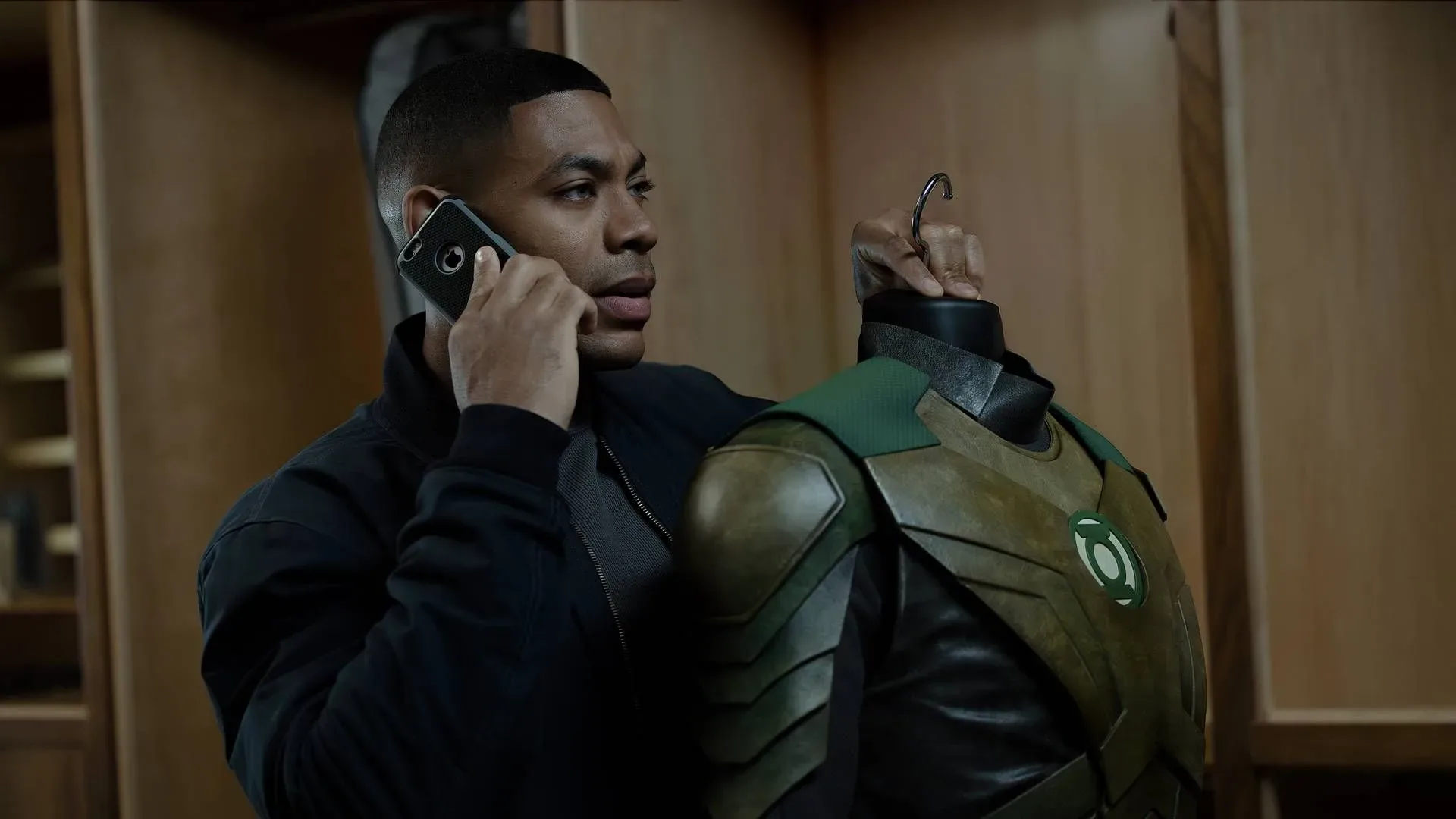
Lanterns has a premise with enough cosmic weight to satisfy DC readers, but its immediate structure is more intimate and ominous. The series introduces the Green Lantern Corps, the intergalactic peacekeeping organization whose members wield extraordinary power in the name of law and order. Earth’s established representative is Hal Jordan, and he is paired with John Stewart, a rookie positioned as the likely person to take over from him.
Rather than immediately sending that partnership across a galaxy of neon planets and deeply inconvenient asteroid belts, the story directs them to a strange crime in the small town of Rushville, Nebraska. The collision of an enormous space-police mythology with a grounded local investigation gives the show a useful hook. It lets the spectacle arrive with a trench coat and an evidence bag instead of kicking down the door with a planet-sized laser cannon.
That approach may help explain why the show’s potential audience reaches beyond people who already know their Lantern lore. Comic-book adaptations often need an accessible human-scale question to sit beside the cape-and-cosmos material. In this case, the central crime offers a recognizable entry point, while the Green Lantern Corps supplies the larger mythology around it. The format also creates room for viewers to discuss clues between episodes, which is increasingly valuable for a weekly series trying to become a conversation rather than merely another item in an endlessly scrolling queue.
The show’s reported audience pattern fits that possibility. A rising third-episode total does not prove one single reason for success, but word of mouth is a plausible factor when later installments keep growing. The weekly cadence gives curiosity time to spread: a viewer hears that a reveal happened, realizes they are behind, and decides that perhaps the small-town murder investigation involving cosmic guardians deserves a look after all.
The questions keeping viewers in Rushville
The series has also made sure it has more than one mystery on the board. The most immediate is the question of who killed Hal Jordan after his dramatic death at the end of Episode 1. It is an audacious turn for a show built around a character with deep history in DC fiction, and it makes John Stewart’s position more complicated than a straightforward rookie-learning-from-a-veteran arc.
Then there is the Manhunter question. The show has revealed that an alien was hiding in plain sight, turning the investigation into a hunt for identity as well as motive. That is exactly the kind of premise designed to make every conversation, background detail, and suspiciously calm bystander feel like potential evidence. A good serialized mystery does not need every fan theory to be right; it needs the audience to believe that looking closely is rewarding.
Those two threads operate on different emotional levels. Hal’s death gives the series a personal absence and a sharp disruption of expectations. The Manhunter reveal provides paranoia and an expanding sense that the problem may be bigger than one crime in one town. Put together, they give Lanterns an engine for return viewing: viewers can want answers about the person who is gone while fearing that someone still on screen is not what they seem.
That tension is useful for a DCU project. Shared-universe storytelling can sometimes lean too hard on future teases, treating the current plot like a waiting room for a more important crossover. Here, the reported response suggests audiences are following the show’s own questions. The Green Lantern Corps connection matters, certainly, but so do Rushville’s secrets, Jordan’s fate, Stewart’s role, and the concealed alien presence.
Why this result matters for DCU momentum
At this stage, the ranking should be treated as a reported benchmark, not a final engraved table of all HBO Max history. What makes it important is the company it invokes. House of the Dragon arrived carrying the vast reach of the Game of Thrones world. The Last of Us paired a major video-game property with a high-profile prestige-drama presentation. To be mentioned behind those two shows in an early-season success comparison is significant for any series, especially one tasked with making a new DCU television identity feel essential rather than optional.
It also suggests the Green Lantern name can support a drama with a particular tone and structure. There has long been a temptation to view the concept only through the lens of giant constructs, color-coded emotion and universe-spanning action. Those elements remain part of the DNA, but Lanterns is finding room for a procedural-style investigation, a partnership under pressure, and a carefully rationed supply of unsettling revelations.
The show’s positive reception has been part of the conversation as well. One published assessment awarded the season 4.5 stars and argued that it shows the DCU getting back on course. Scores are never a substitute for audience data, nor can they explain every viewing decision, but favorable critical notices can contribute to the confidence a hesitant viewer needs before starting a serial story. When a show asks people to track crimes, corps mythology, deaths, replacements, and hidden aliens, a reputation for being worth the effort is a genuine asset.
For DC fans who want a broader refresher on the collectibles side of the publisher’s superhero universe, Joking Joystick’s beginner’s guide to Marvel trading cards is not a Green Lantern guide, naturally, but it does show how much context, editions, and character focus can matter when pop-culture fandom crosses into collecting. The same principle applies to a series like Lanterns: newcomers can follow the core story, while longtime readers may enjoy noticing how a massive mythology is being selected, adapted, and rearranged.
Big numbers, useful caveats, and the road ahead
The cleanest interpretation of the figures is not that every question around Lanterns has been settled. Viewership totals need context, and public comparisons are often messier than the headline suggests. “Most successful” can mean different things depending on whether the measure is cumulative viewers, early-window performance, subscribers retained, total hours watched, regional reach, or another internal metric. The public reporting attached to this claim emphasizes first-season performance and the growth seen from the premiere through Episode 3.
That said, the available numbers are encouraging in precisely the way a serialized drama wants them to be encouraging. Twenty million viewers since launch is a major reported premiere total. Ten million global viewers for the third episode in three days, with seven million attributed to the U.S., indicates that the conversation has not vanished after the opening chapter. And growth over the premiere’s comparable three-day period gives the show something more valuable than a single giant number: a narrative of momentum.
Momentum is not a magical ring that can solve every problem, but it can reshape how a series is perceived. It encourages new viewers to start. It keeps social speculation alive. It places pressure on future episodes to pay off the attention they are receiving. Most of all, it gives Lanterns the chance to be discussed as a show with its own identity, not merely a signpost toward some later DCU event.
For now, viewers watching week by week have good reason to keep their eyes on Rushville. Hal Jordan’s death still demands an answer. The Manhunter’s identity turns every apparent certainty into a potential misdirection. John Stewart’s path has changed dramatically. And the Green Lantern Corps, an institution built to impose order across the galaxy, is confronting a case that appears determined to make order feel like the least reliable thing in the room.
Whether the reported third-place standing remains unchanged as more data emerges, the early indication is that Lanterns has found an audience eager for its blend of cosmic DC mythology and grounded mystery. For a show about wielding willpower against impossible odds, that is a fittingly strong start.