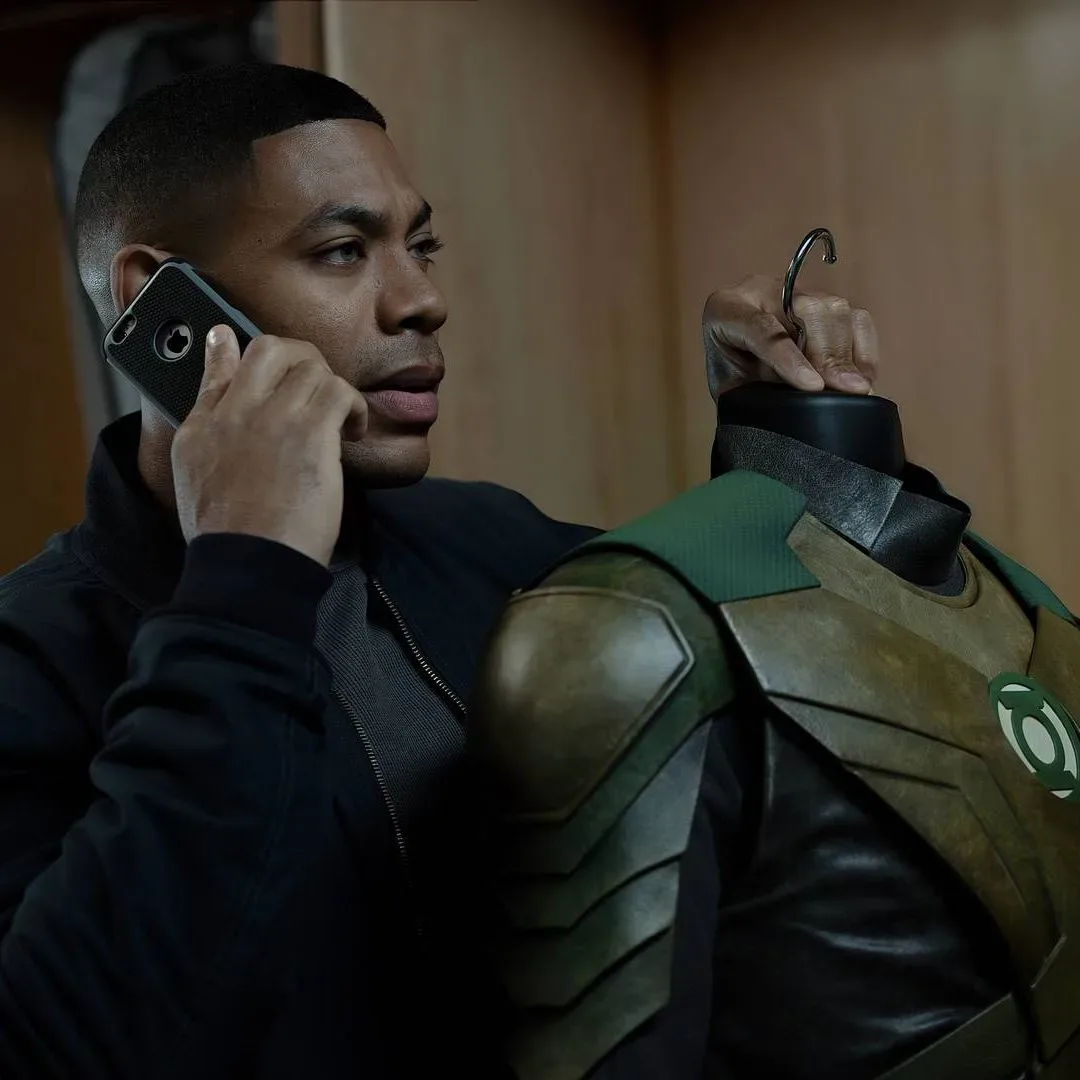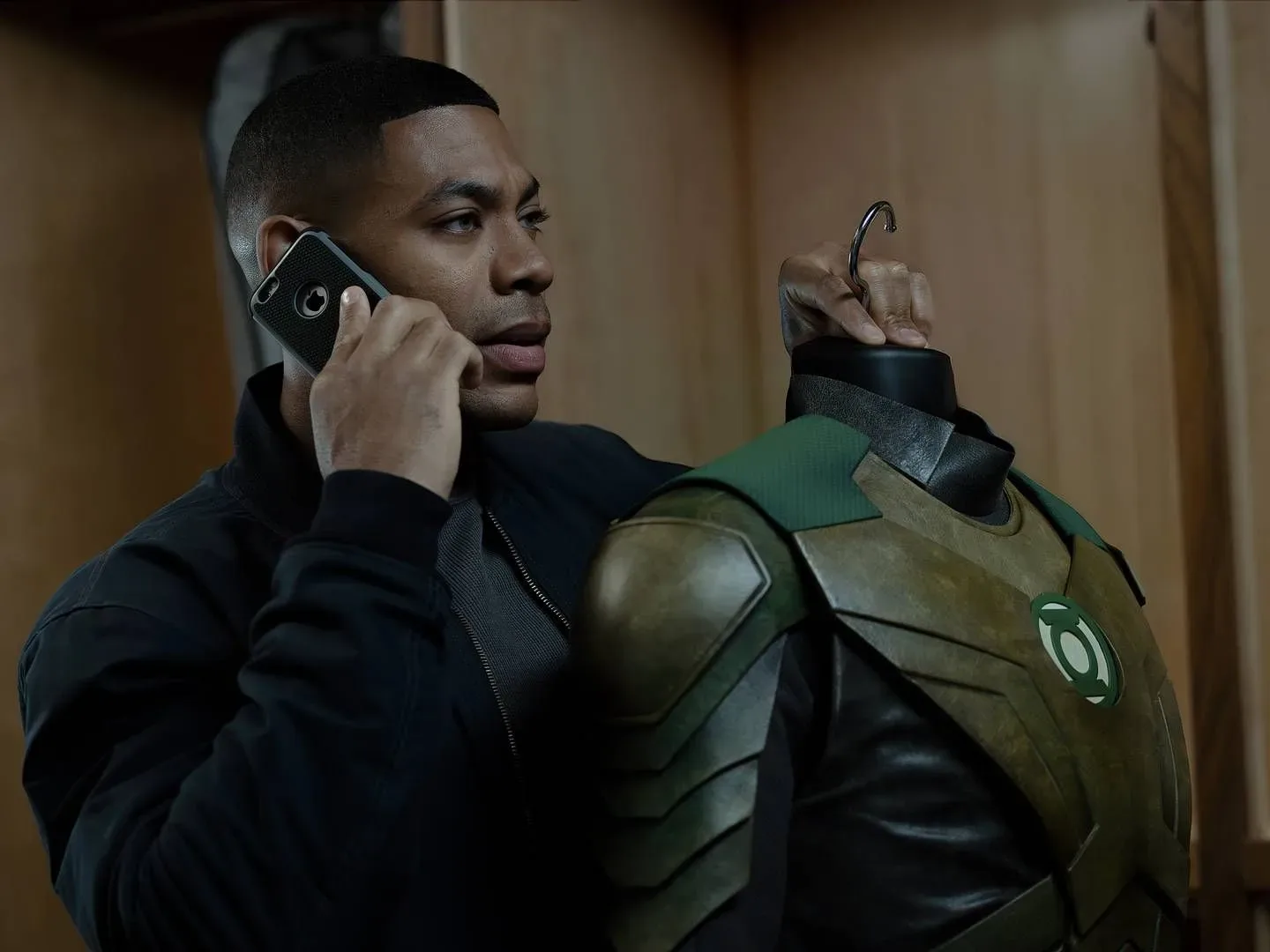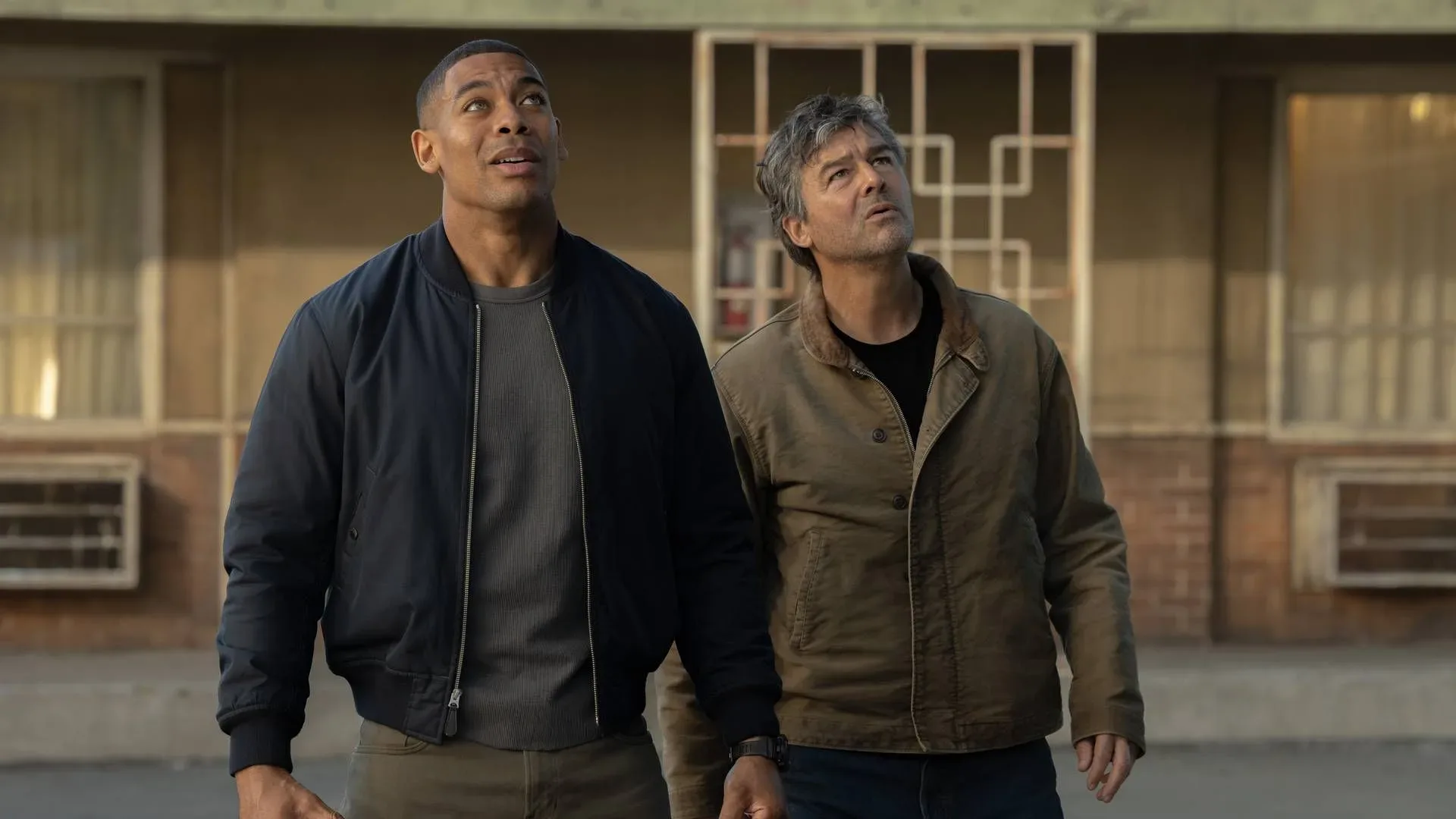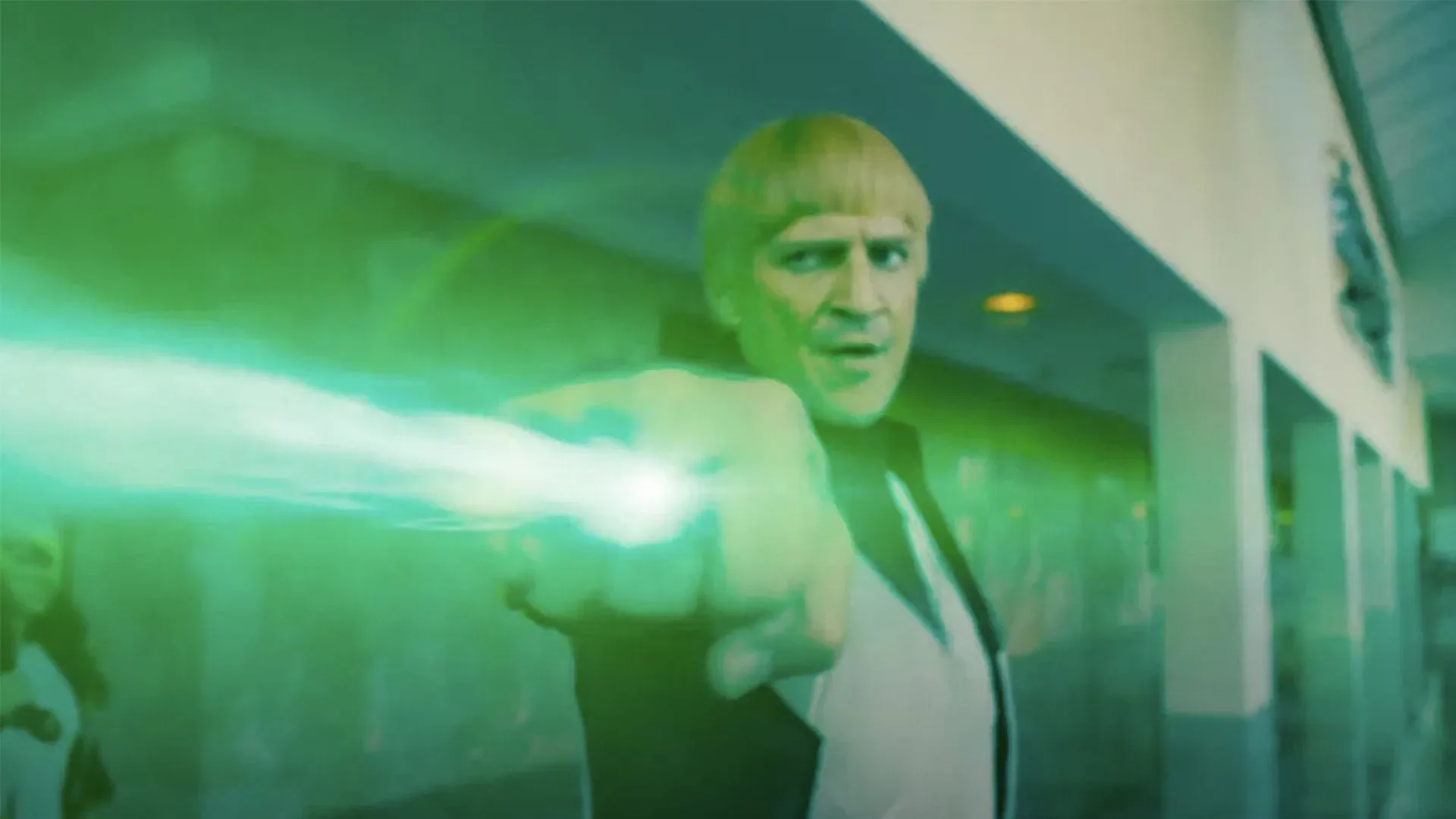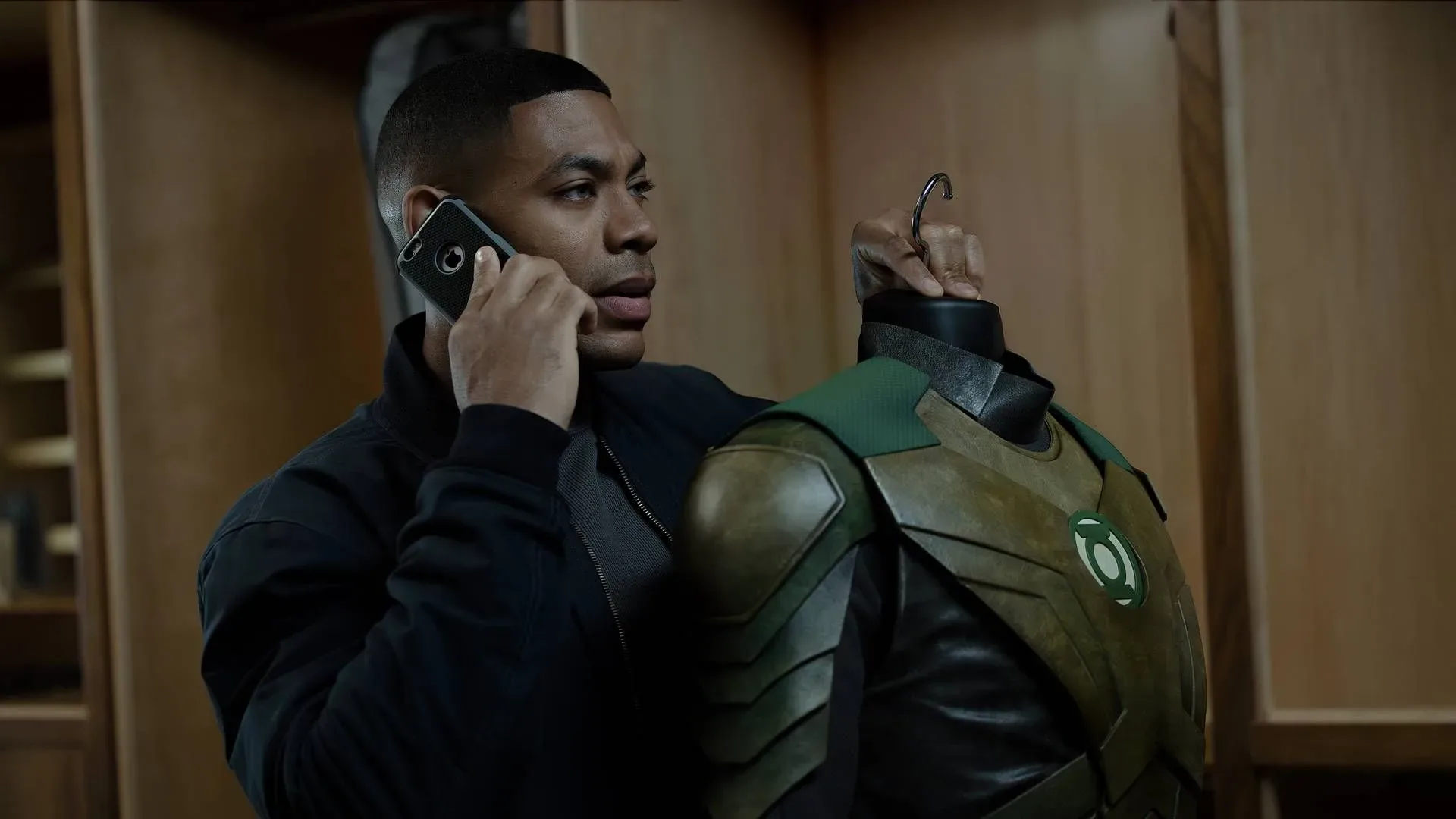
Lanterns may be built around cosmic law enforcement, a shadowy Manhunter mystery and the growing friction between its Green Lantern leads, but a small, very human detail has taken over the conversation after episode four: Aaron Pierre’s accent briefly breaks through John Stewart’s Detroit delivery.
In the episode’s Rushville-set interrogation sequence, Pierre’s Stewart demands answers from across the table. The moment begins with the controlled intensity viewers have come to expect from the character, including a table slam and the question, “Who are you?” Then comes the sharper command to speak louder, delivered with a noticeably South London flavor. For a beat, the voice of the DC hero is no longer entirely Detroit. It sounds unmistakably closer to Pierre’s own roots in Croydon.
The clip spread widely on social platforms, where viewers treated it less as a scandal and more as an unexpectedly endearing crack in an otherwise committed performance. HBO Max UK and Ireland leaned directly into that response instead of behaving as if the line had escaped everyone’s notice. The streamer shared an Instagram “fan edit” that placed the scene alongside highlights of Pierre’s John Stewart, framing the moment as a playful celebration rather than an error requiring a stern cosmic courtroom hearing.
“You can take Aaron Pierre out of Croydon, but you can’t take the Croydon out of Aaron Pierre,” read the post’s caption.
It is a smartly self-aware bit of social media from a franchise that can often be associated with enormous stakes, lore-heavy continuity and audiences ready to scrutinize every frame. The official post effectively accepts the premise of the meme: yes, the accent is audible; yes, fans caught it; and yes, it can be funny without diminishing the performer or the series.
A one-line detour from Detroit to South London
Accent work is among the least forgiving forms of screen acting. A performer can maintain a chosen rhythm, vowel shape and placement for long stretches, then have their natural speech pattern emerge on one forceful word. It tends to happen in moments with heightened emotion because intensity changes how dialogue is produced. A barked command has a different physical shape from an ordinary conversation, and that is precisely the kind of moment in which an actor’s native cadence may briefly slip through.
That is what makes this particular Lanterns moment so easy for fans to identify. The scene is tense, loud and sudden. Stewart is applying pressure, rather than calmly gathering information. Pierre had reportedly held the character’s Detroit accent consistently through the series up to that point, which only makes the brief switch more conspicuous when replayed in isolation. It is not a newly rewritten origin story for John Stewart, nor evidence that the character has secretly been operating a Green Lantern franchise in South London. It is simply a conspicuous vocal beat in a high-pressure scene.
Online reactions rapidly supplied the expected wordplay. Fans dubbed the idea “The Green Mandem” and adapted the Green Lantern oath into British slang. Those jokes work because they are affectionate extensions of a performance viewers have already embraced, rather than attempts to reject the character. The response has largely recognized the difference between laughing at a fleeting slip and dismissing the work around it.
Why HBO Max UK’s response lands
Official accounts are often caught between two approaches when audiences latch onto a continuity oddity, production goof or performance imperfection. They can ignore it and let conversation run independently, or they can join in. HBO Max UK chose the latter, turning an already-circulating clip into a compact promotional edit with a local angle that Pierre’s UK fans would immediately understand.
The decision also gives the discussion a warmer frame. Rather than presenting Pierre as having failed some impossible standard of technical precision, the post makes Croydon part of the joke’s personality. That is important because a social-media pile-on can become needlessly harsh when it treats performers as machines. Here, the official account’s tone says the production is comfortable enough with its show, and with Pierre’s place in it, to laugh along.
There is an obvious marketing benefit, too. A short clip is much easier to share than a broad explanation of the Manhunter plot, and it can pull curious viewers toward a weekly show at exactly the point when each episode needs attention. Still, the meme only works because the underlying scene has enough dramatic force to sustain a joke outside its original context. People remember the line because Pierre plays it with real urgency.
Superhero adaptations increasingly have to survive the internet’s ability to convert any isolated image, phrase or vocal inflection into a running gag. Sometimes that can flatten a show’s reception; sometimes it gives an audience a shared language around it. This looks like the second case. The meme is operating alongside the main discussion of episode four rather than replacing it.
The larger Lanterns picture remains intact
Episode four returns viewers to Rushville and advances the mystery surrounding the Manhunter, placing the interrogation inside a narrative that is aiming for suspense rather than a simple collection of heroic poses. Pierre’s John Stewart is still a Green Lantern trainee, and the series continues to pair him with Kyle Chandler’s Hal Jordan. That dynamic is central to the show’s early identity: Stewart’s developing place within the corps is explored beside a more established Lantern figure.
A one-word accent departure has not changed the broader appraisal of Pierre’s work. The performance is still being widely praised, and the moment has arguably made the actor feel more visible as a person without erasing the character. For a comic-book property, that balance can be valuable. Fans want a convincing John Stewart, but they also enjoy seeing the distinctive personality an actor brings to a role.
The series arrived as part of DCU Chapter One and debuted with a 92% Rotten Tomatoes score, a figure that signals a strong early critical reception even though aggregator scores can shift as more reviews are added. It has also been described as one of HBO’s biggest shows, behind House of the Dragon and The Last of Us. Such rankings can depend on the measurement being used, whether that means viewership, platform performance or another internal benchmark, so the claim is best read as an indication of substantial momentum rather than a fixed all-purpose leaderboard.
The show earned a 4.5-out-of-5 critical rating in an early review, another marker that the response has been driven by much more than an accidental change in vowel placement. The real test for Lanterns will remain its weekly ability to develop the Rushville investigation, clarify the Manhunter threat and continue giving Stewart and Jordan material worthy of their comic-book history.
John Stewart has plenty of history beyond a viral line reading
John Stewart carries particular weight in DC culture. For many viewers, he is not merely one interchangeable ring-bearer among many. The character has been a defining Green Lantern in comics and animation, and that history creates understandably close attention around his live-action portrayal. Pierre’s interpretation arrives with the challenge of honoring that legacy while giving the character a distinct dramatic presence in a new screen universe.
That context helps explain why the internet reaction has been so invested rather than merely mocking. Fans know Stewart matters. The good-natured “Croydon Lantern” riffs are possible in part because they coexist with enthusiasm for seeing him occupy a major live-action role. Pierre’s brief accent break became memorable precisely because viewers are paying close attention to a character they care about.
It also fits a broader superhero-screen landscape in which casting choices, character voices and tiny performance details are examined relentlessly. Even franchises outside DC continually generate debate about what actors bring from themselves into iconic parts, as seen in Chris Evans reflecting on his personal Team Iron Man lean years after Captain America: Civil War. The line between performer, role and fan interpretation is rarely clean, and social media makes every overlap instantly visible.
Weekly releases give the joke room to breathe
Lanterns is continuing with weekly episodes, meaning the accent clip has arrived during an active run rather than years after the show’s release. That timing favors HBO Max UK’s approach. The account can acknowledge the chatter while viewers still have a new chapter to anticipate, and the conversation can move naturally back toward story developments rather than becoming a permanent verdict on the season.
For now, the viral moment is a reminder that prestige-scale superhero television does not need to pretend it is above a harmless joke. A Manhunter investigation can be deadly serious. A Green Lantern can command a room. And, for one emphatic line, a little piece of Croydon can apparently make it past the ring’s defenses.