Ten editions in, Venice Immersive is marking a milestone without treating it like a museum exhibit. The showcase has grown from a small area inside the Palazzo del Casinò into a destination with its own island setting in the Venetian lagoon, but its 2026 focus is pointed firmly toward whatever XR becomes next.
That future does not look like the old prediction of everyone buying a chunky headset for home use. Personal-headset adoption has not delivered the consumer gold rush many developers, platforms and hardware companies once expected. As that happened, financing from technology firms and platforms tightened. Public support, particularly in Europe, helped fill some of the gap.
Yet the immersive field has not simply stood still waiting for a headset revival. Instead, its center of gravity is increasingly moving toward location-based entertainment: ticketed, purpose-built experiences where visitors share a physical space and take part together. That shift is all over Venice Immersive’s 30-project competition lineup, which spans multiplayer free-roam work, augmented reality narratives, 360-degree documentary, spatial-audio installations and stories built for lightweight AR glasses.
For anyone who thinks an immersive experience is just a game demo with an expensive face computer strapped on, the breadth of this program is the important news. The format is still finding its grammar. It is also finding more practical routes to audiences, partners and funding.
From solo headset fantasy to a room full of players
Location-based entertainment, or LBE, is becoming an answer to XR’s stubborn business problem: a work made for home headsets is dependent on viewers already owning the hardware and wanting to isolate themselves in it. A venue can instead provide the technology, build the environment and sell access to a group experience.
That model can accommodate six, eight or 10 participants, and in some spaces far more. It is especially expanding in Asia, where centers designed to handle immersive experiences at scale have become a meaningful part of the market. The benefit is not only commercial. Shared attendance gives creators a different storytelling toolkit. People can move through a space together, take on roles, affect what happens and respond to one another.
It is a design challenge familiar to anybody who has tried to get a couch-multiplayer session working without somebody commandeering every power-up. As our guide to the unwritten rules of couch multiplayer makes clear, sharing a play space changes the social rules as much as the mechanics. XR creators are dealing with a higher-tech, more open-ended version of that same problem: how do you make several people feel included in one unfolding narrative?
Venice’s competition includes projects that embrace that collective model. Amsterdam 1652: The Hands of the City, Smithsonian Starstruck: An Immersive Experience and Everest: The First Ascent are examples of free-roam multiplayer work connected to education and heritage settings. Those institutional partners can bring stability to a sector that has often depended on uncertain technology investment.
Smithsonian Starstruck also signals a changing finance equation. It was funded by Fever, a marketing and ticketing company active in immersive events. That matters because a company that can help finance a production while also supplying ticketing, promotion and audience infrastructure has a practical reason to see the work reach the public. XR may still need grants, funds and adventurous patrons, but production money with an attached route to distribution is a considerably sturdier proposition than a demo hoping to go viral.
Immersion without a headset is part of the point
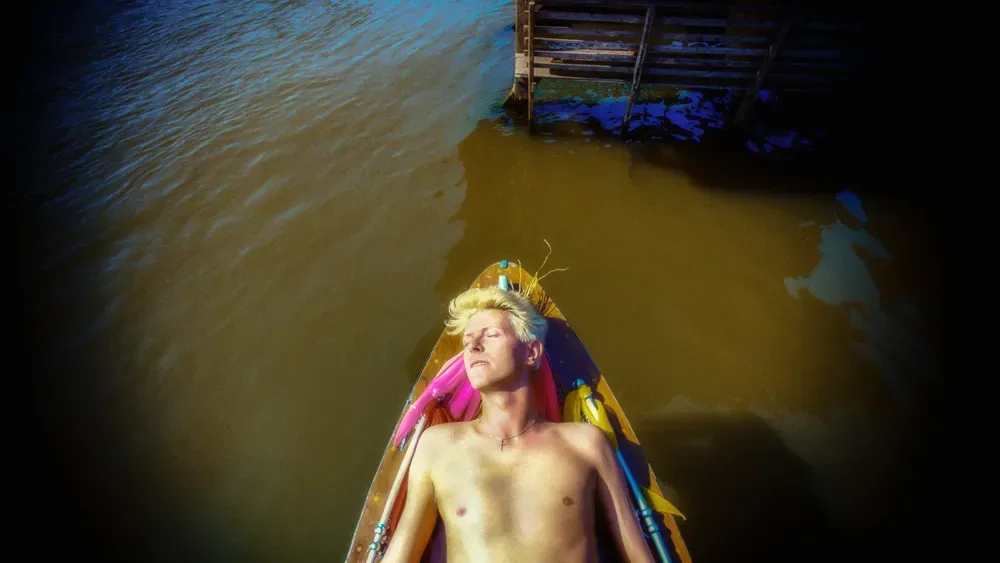
Not every project in the program makes immersion synonymous with VR or AR. Bowie: Unseen | Unheard is a music experience supported by speaker manufacturer L-Acoustics that abandons headsets altogether. Its focus is spatial sound in a venue built to deliver it at a high level, with groups of roughly 20 to 30 people entering David Bowie’s world at a time.
The project points toward a useful correction in how the word “immersive” is used. Technology can be part of the delivery, but the desired result is an experience that surrounds the participant—visually, physically, socially or sonically. A carefully designed sound environment may achieve that without putting anything over a visitor’s eyes.
It also suggests a format that can travel. A purpose-built installation intended to be reproduced in multiple cities could let audiences encounter the same work with comparable audio quality rather than turning every stop into a one-off compromise. That does not erase the logistical difficulty of venue work, but it is a far more tangible exhibition strategy than asking every potential viewer to buy the same device.
New funders are entering the frame
Technology companies are no longer the only players shaping immersive production. The 2026 competition includes Empire at Sea, supported by the Alfred P. Sloan Foundation, and Raj’in (We Shall Return), a 360-degree documentary following three Palestinian families in the West Bank. The latter is B’Tselem’s first production venture.
National film funds and co-production structures are also adapting the methods used in conventional screen production for XR. Among the directors helping test those systems is Hilde K. Kjøs, whose Finding Frida transforms the work of 19th-century textile artist Frida Hansen into a dreamlike immersive environment. The film is notable as the first XR title backed by the Norwegian Film Institute.
Kjøs, who came to VR during the pandemic after first working in photography and film, has framed the project as a pathfinder for others crossing over from documentary and 2D work. That distinction is crucial. The goal is not merely for one project to exist; it is to establish the knowledge, technical workflows and international-distribution lessons that make the next project easier to support.
XR has often suffered from prototype syndrome: impressive first attempts that do not create a repeatable production ecosystem. Institutional backing can help change that if funders see completed work finding audiences and reaching viable distribution. It is less glamorous than announcing a new headset, perhaps, but pipelines and repeat business are what turn a medium into an industry.
XREAL Aura puts lightweight AR in the spotlight
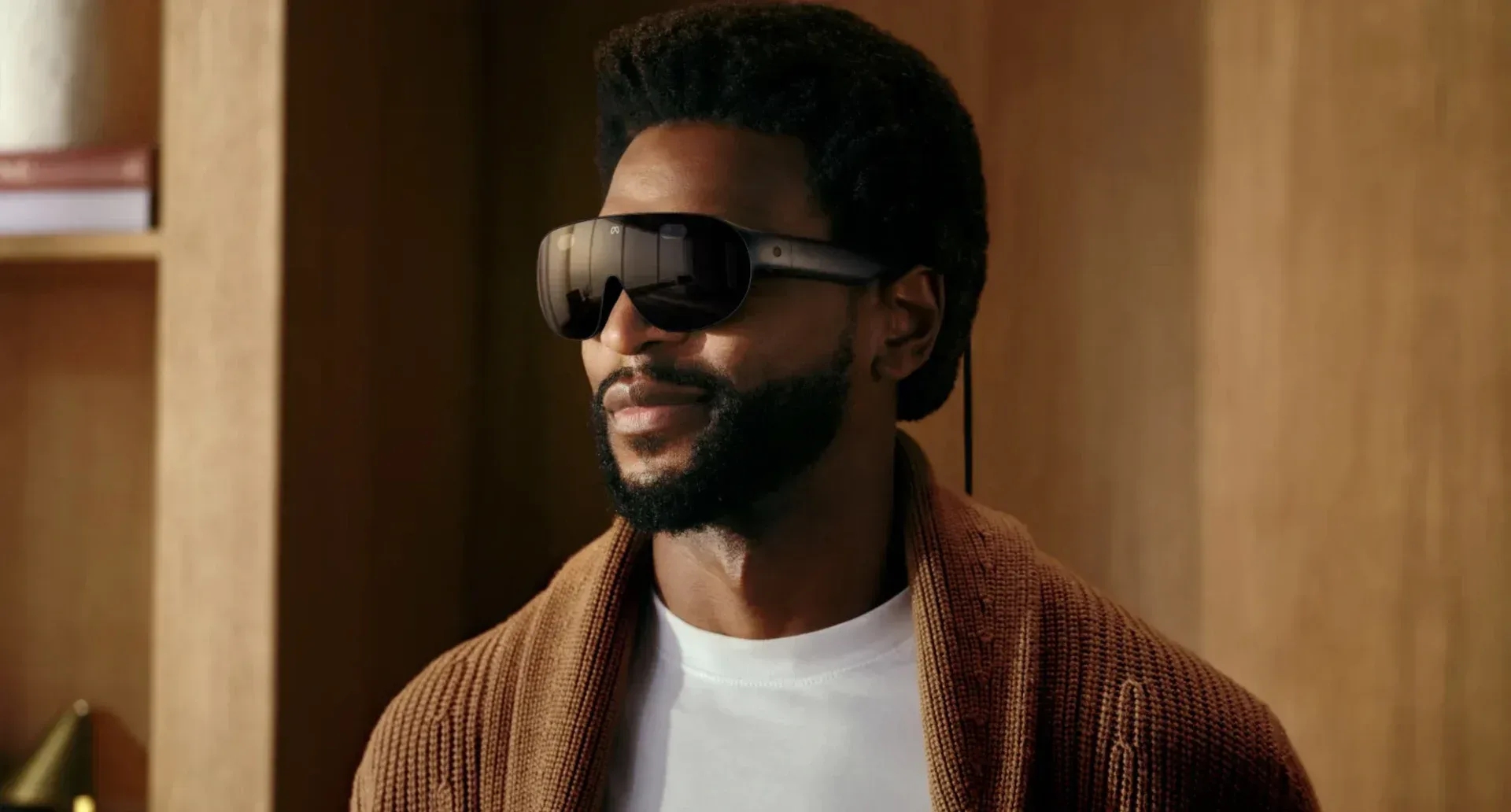
The year’s most conspicuous hardware story is XREAL Aura, a Google-powered pair of AR smart glasses presented as an alternative to the weight and bulk that have limited the appeal of traditional headsets. Festival organizers are working with Agog, the XR institute co-founded by Wendy Schmidt, on a four-day open hardware demonstration area. Festival attendees and delegates can try the glasses without booking a slot.
The promise is straightforward: near-headset-grade image qualities in something more streamlined, portable and ordinary-looking. It remains a claim that will be tested by real-world use and broader adoption, not by festival excitement alone. But lighter glasses address a genuine access barrier. Hardware that feels less cumbersome may allow immersive media to emerge from the niche ritual of fitting, adjusting and disappearing behind a visor.
Two competition titles are built for the device. Andy Serkis’s Nevatars, starring Daisy Ridley, and Galápagos: The Last Eden, hosted by Margot Robbie, are positioned as spatial narratives rather than the data-centric or audio-led proofs of concept that have often appeared around emerging devices.
Galápagos, directed by Anthony Geffen, is designed around interaction. Participants can engage with the environment, observe changes in its animals and consult a digital Charles Darwin for answers. That AI-driven, voice-activated encounter is meant to distinguish the piece from simply watching a high-end nature program through glasses. The ambition is for viewers to have agency within a story world while retaining polished visual and sound design.
That is a delicate balance. More interaction does not automatically mean better storytelling, just as more buttons never magically made a game more fun. But the project’s premise recognizes that XR needs to use capabilities that film and television do not share. Interactivity must feel motivated rather than bolted on like a tutorial prompt that refuses to leave the screen.
Why famous faces still matter in an experimental medium
David Bowie, Daisy Ridley and Margot Robbie are joined in the Venice lineup by projects involving Isabelle Huppert. Their presence reflects a strategic choice, not merely a red-carpet calculation. Immersive creators are still working out how to guide an audience through stories where multiple people may be moving, participating and deciding where to look.
Familiar actors can make those situations feel less alien. Empire at Sea, an AR drama that weaves climate science into its narrative, takes a particularly interesting approach. Rather than rely only on global megastars, it features recognizable character performers Orlando Jones and Beth Grant. The theory is that viewers may feel at ease with a face that seems known, even when they cannot immediately identify it.
In a new format, comfort can be part of the interface. A trusted presence can help an audience accept a digital character, understand where to focus and settle into unfamiliar rules. This is a different task from star casting in a standard film, where the audience already understands the basic language of the screen.
Venice Immersive’s tenth edition therefore looks less like a victory lap than a field report from a medium in active negotiation with itself. The home-headset boom did not arrive as predicted. In response, creators and backers are turning toward collectively experienced venues, cultural and scientific partners, conventional funding structures adapted for XR, spatial sound, and glasses that could make augmented reality feel less like specialist equipment.
The question is no longer whether XR can produce impressive moments. It plainly can. The harder and more interesting question is how those moments become works people can find, afford, share and revisit. The projects in Venice suggest that the answer may not be one device or one perfect business model. It may be an ecosystem where the technology finally serves the story, the venue and the audience rather than demanding that everybody adapt to the gadget first.