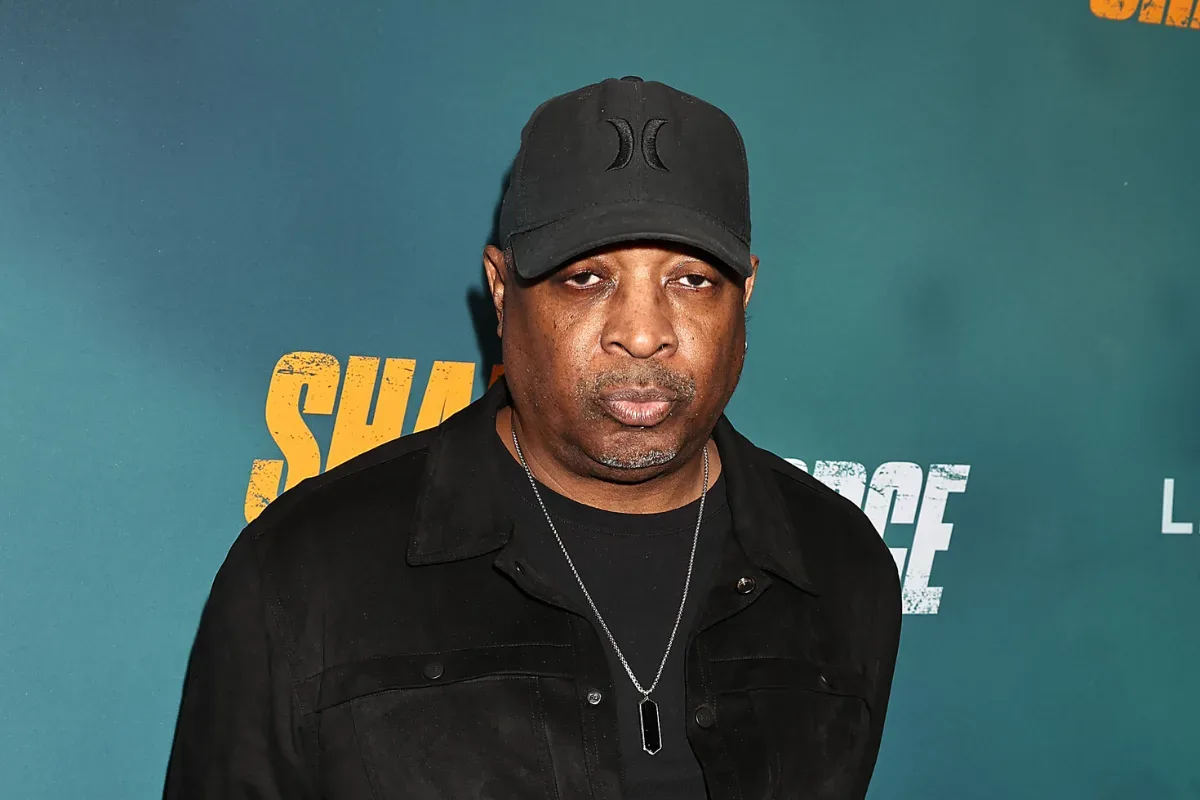
Hip-Hop’s music, visual art, dance and community-facing traditions will share the floor at the Delaware Art Museum on October 17, when the fourth annual Hip-Hop Cultural Summit brings Chuck D and Darryl “Cornbread” McCray to Wilmington. The free program runs from 10 a.m. to 5 p.m. and is structured as more than a guest-speaker event: its schedule spans performances, a graffiti-focused exhibition, an MC battle, a book signing and discussions about social change.
That range matters. Hip-Hop is often discussed through recordings and celebrity, but the summit’s stated emphasis is on all five elements of the culture through activism. In practical terms, visitors will encounter several of those disciplines in one place: DJing and MCing through the music programming and battle, graffiti through Cornbread’s appearance and the accompanying exhibition, and dance through the day’s broader cultural program. The gathering also makes room for dialogue about what art can do in a community beyond the gallery wall or a playlist.
Chuck D and Cornbread headline a full-day program
The day begins with a drumline from the Stop the Violence Coalition, followed by a land dedication led by Brother Iz Balleto. Roxy Romeo’s brunch then features Ladies of Hip-Hop and DJ Supreme before programming moves into the Auditorium.
Cornbread is scheduled for a 2 p.m. Auditorium conversation, Art As Activism, moderated by James Top. A book signing follows in the Market at DelArt. His participation is particularly central to the event’s visual-art side: his work is included in Walls of Resistance: Art as Activism, an exhibition on view through October 25.
The exhibition includes Cornbread and 17 other graffiti artists. Its focus on graffiti as both art and activism gives attendees a useful lens for the day’s conversation. Graffiti is not treated here simply as a visual backdrop to music; it is presented as a form capable of carrying ideas, identity and public-facing messages. Pairing an exhibition with an artist talk creates an opportunity to consider the art itself alongside the cultural history and lived perspective behind it.
“We are proud to represent all five elements of Hip-Hop through the lens of activism,” Iz Balleto, the museum’s cultural program manager, said in the event announcement.
After Cornbread’s talk, the Culture Restoration Project MC battle will be hosted by Champtown, with Hezekiah on beats. An MC battle is a competitive performance format built around rapping and crowd-facing presence. Including one within a museum program is a pointed choice: it puts a participatory, live form of Hip-Hop expression beside lectures and displayed works, rather than separating “performance” from “art” into different cultural boxes.
The afternoon closes at 3:50 p.m. with an Auditorium fireside chat between Chuck D and Chuck “Jigsaw” Creekmur. Chuck D is a co-founder of Public Enemy and a Rock and Roll Hall of Famer. His work in music and multimedia makes him a fitting voice for a summit examining culture’s capacity to influence communities. In a 2020 conversation, he credited Run-DMC and Jam Master Jay with helping set Public Enemy in motion, a reminder that the story of Hip-Hop is also a story of artists creating momentum for one another.
Why “art as activism” is the program’s connective idea
Activism, in this context, means using cultural work to engage with public issues and community life. It does not require every piece of music, dance or visual art at the summit to make the same argument. Instead, the program’s design suggests that Hip-Hop’s creative practices can be vehicles for historical memory, social discussion and collective expression.
Chuck D’s presence aligns with that framework through a career associated with politically charged music and multimedia work. Cornbread’s presence brings the visual dimension into sharper focus. The summit’s organizers describe him as a living legend and credit him with inventing graffiti, while emphasizing the value of hearing the history of the form in his own words. Whether a visitor comes primarily for music, art or community programming, his talk and the exhibition provide a direct bridge between the culture’s past and a present-day museum setting.
There is a useful distinction in the phrase “art as activism.” It does not just mean art displayed in a civic venue, nor does it reduce art to a slogan. In this program, it describes a relationship: art can document experience, claim space, pass along knowledge and bring people into conversation. The summit’s schedule reflects that relationship by putting speakers, performers and visual artists across multiple museum spaces rather than limiting the event to one stage.
The event also runs in association with Peace Week Delaware. Activities are planned across Fusco Hall, East Court, the Orientation Hallway, the Auditorium and Kids Corner. That multi-room footprint reinforces the idea of a cultural summit as an active gathering rather than a single presentation people passively watch.
A museum setting, without flattening the culture
Bringing Hip-Hop into a museum can create meaningful access to archival and visual context, but it also raises an important question: how can an institution recognize a living culture without making it feel static? This program’s answer appears to be programming breadth. The museum is not only showing work; it is hosting a drumline, DJs, an MC battle, dance-related programming, a signing and conversations with major figures.
That approach matters for graffiti in particular. The companion exhibition offers a formal setting for viewing the work, while Cornbread’s session places an artist’s voice at the center of its interpretation. The event therefore does not ask visitors to treat the art as detached from its makers or from the communities that shaped it.
It also frames Hip-Hop heritage as ongoing. Heritage can sometimes imply an artifact locked behind glass. Here, the day’s live elements argue for something different: a tradition passed through performance, competition, conversation and participation. The scheduled MC battle is especially effective on that front, because its format depends on present-tense skill and exchange.
What attendees can plan around
The summit is free, and prospective visitors can register through the official summit site before October 17. Those primarily interested in Cornbread should note the 2 p.m. Art As Activism conversation and subsequent signing at the Market at DelArt. Anyone looking for the Chuck D discussion should plan for the 3:50 p.m. fireside chat in the Auditorium.
For visitors with a wider interest in Hip-Hop’s forms, arriving early offers the clearest view of the event’s scope: the Stop the Violence Coalition drumline and land dedication open the day, while brunch programming includes Ladies of Hip-Hop and DJ Supreme. The exhibition extends the experience beyond the one-day event, remaining on view through October 25.
The summit’s focus on artists working across sound, words, movement and image is also a reminder that pop culture news does not stop at a release calendar. Music remains a major part of the wider conversation—see, for example, the latest on Rihanna’s unreleased music archive and the still-unannounced status of R9—but events like this emphasize how much cultural meaning is also made in public spaces, exhibitions and face-to-face exchange.
For Wilmington, the October 17 program offers a concentrated day of Hip-Hop culture that resists a narrow definition of what belongs in an art museum. Its line-up gives equal weight to historic voices and live practice, with Chuck D and Cornbread anchoring a schedule designed around the idea that creativity can move a community.