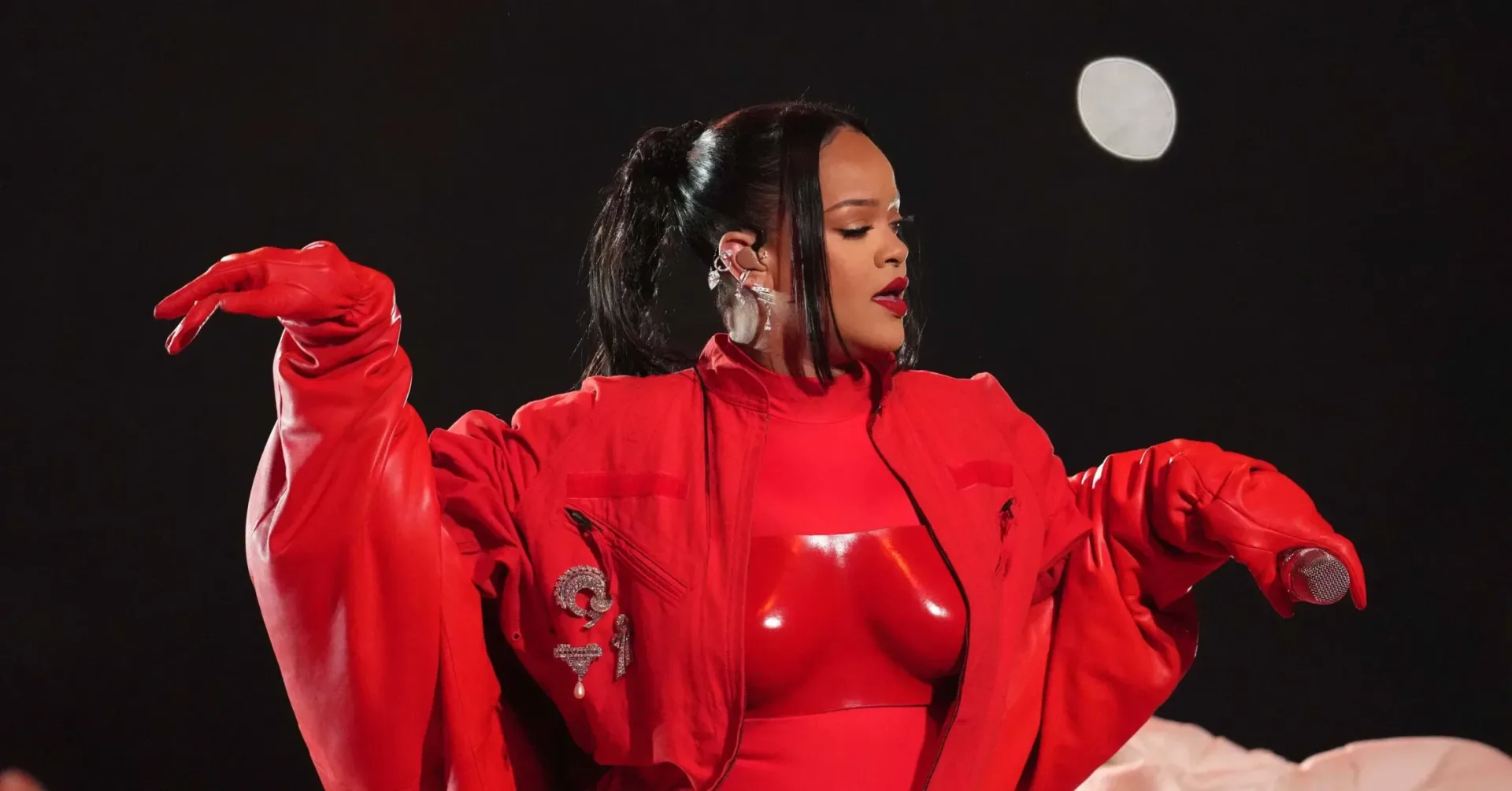
Rihanna has given fans one of the clearest indications yet of just how much unheard music may exist behind the long-running wait for her next album. During a Fenty Beauty event, she was asked how many songs she has in reserve and answered with a comparison to the brand’s Gloss Bomb Vault products.
“If there are 10 products [in the Gloss Bomb Vault] then I have at least 17 Vaults,” Rihanna said.
On that math, the answer points to at least 170 songs. It is a striking number, particularly because Rihanna’s most recent album, ANTI, arrived in 2016. Still, the wording matters: this was an estimate expressed through a product analogy, not a track-by-track inventory or a formal album announcement.
For fans who have collectively used “R9” as shorthand for Rihanna’s hoped-for ninth studio album, the comment offers something substantial and something frustrating at the same time. There appears to be a deep pool of material. But there is no confirmed title, track list, release date, rollout, or indication that any particular group of songs has been selected for a finished album.
What Rihanna’s “17 Vaults” answer actually establishes
The most defensible reading of the exchange is simple: Rihanna believes she is sitting on a significant amount of unreleased music, with 170 functioning as a floor rather than a final count. Her use of “at least” leaves open the possibility that the total is larger, but it does not verify a precise number beyond that framing.
It also provides a direct counterpoint to the idea that Rihanna has spent the years since ANTI entirely away from music. The scale of the estimate suggests continued writing, recording, or otherwise developing songs over that period. That is meaningful context for a fanbase that has been waiting for a tangible next step.
However, an unreleased-song count and an album are different things. In music-industry terms, a “vault” is a convenient fan and marketing phrase for material that has not been officially issued. It can include work at very different stages: early ideas, recordings that did not fit a project, songs that are nearly complete, and material an artist simply elects not to release. Rihanna’s comment does not sort the songs into those categories.
Nor does a large archive necessarily mean a release is around the corner. A recorded song may remain unreleased because it no longer matches an artist’s direction, because a body of work has not cohered into an album, or because the artist has not decided that it is time to put music out. In Rihanna’s case, the available facts support the existence of many songs, not a timetable for R9.
The difference between productivity and a release commitment
The temptation with any large “vault” number is to turn it into a countdown. Fans may imagine that 170 songs means several completed records are ready to go. That leap goes beyond what Rihanna said.
Album-making is not just an exercise in accumulating enough tracks. A release typically involves choices about what belongs together, what represents the artist at that moment, and what should be held back. That final act of selection is especially important for an artist whose next full-length project carries years of public expectation. More songs can create more options, but they can also make the decision more complicated.
Rihanna’s own recent history underscores that distinction. ANTI remains her latest album, and the long period since then has made the hypothetical R9 unusually loaded as a fan concept. The nickname has become a vessel for expectation rather than the confirmed name of a project. It describes the desire for a ninth album, not a release that has been formally put on the calendar.
That gap is worth protecting. Treating an estimate about unreleased songs as a launch signal risks creating a deadline that Rihanna did not set. The available information does not show that she has promised an album soon, said a particular song is a single, or indicated that her current work has reached a final sequence.
Why the wait has continued
Rihanna has been occupied with major commitments outside a conventional album cycle. She is heavily involved in Fenty Beauty and is raising her family with A$AP Rocky. Those facts do not explain every creative decision, and they do not require an explanation: artists are not obligated to release on a schedule simply because listeners are eager for more material.
The key point is that the absence of an album should not be confused with an absence of creative output. Her “17 Vaults” response makes that distinction unusually vivid. There may be a considerable amount of music behind the scenes while no current public release is in motion.
It also suggests that Rihanna’s relationship to new music is not reducible to whether an album appears immediately. Fans understandably measure the gap through the absence of a release, while the artist’s answer describes an active private stockpile. Both can be true: the wait can be long, and substantial work can exist without being made public.
What fans can reasonably take from the update
- There is a meaningful amount of unreleased Rihanna music: her comparison indicates at least 170 songs.
- The estimate is not a detailed accounting: “at least” signals a broad lower-bound figure, not a confirmed total or a list of finished tracks.
- R9 remains unannounced: no album title, date, release plan, or selected track list was attached to the comment.
- Patience remains the only honest forecast: the existence of songs does not establish when, or even in what form, listeners will hear them.
For now, the news is less a release update than a rare look at the scale of Rihanna’s private creative archive. It makes the post-ANTI era feel less empty while preserving the central uncertainty: which songs, if any, will become the next Rihanna album?
That uncertainty is familiar across pop culture, where audience expectation can become a story of its own. A recent look at the shadow Batman casts over Gotham storytelling offers another example of how an established legacy can shape every conversation around what comes next.