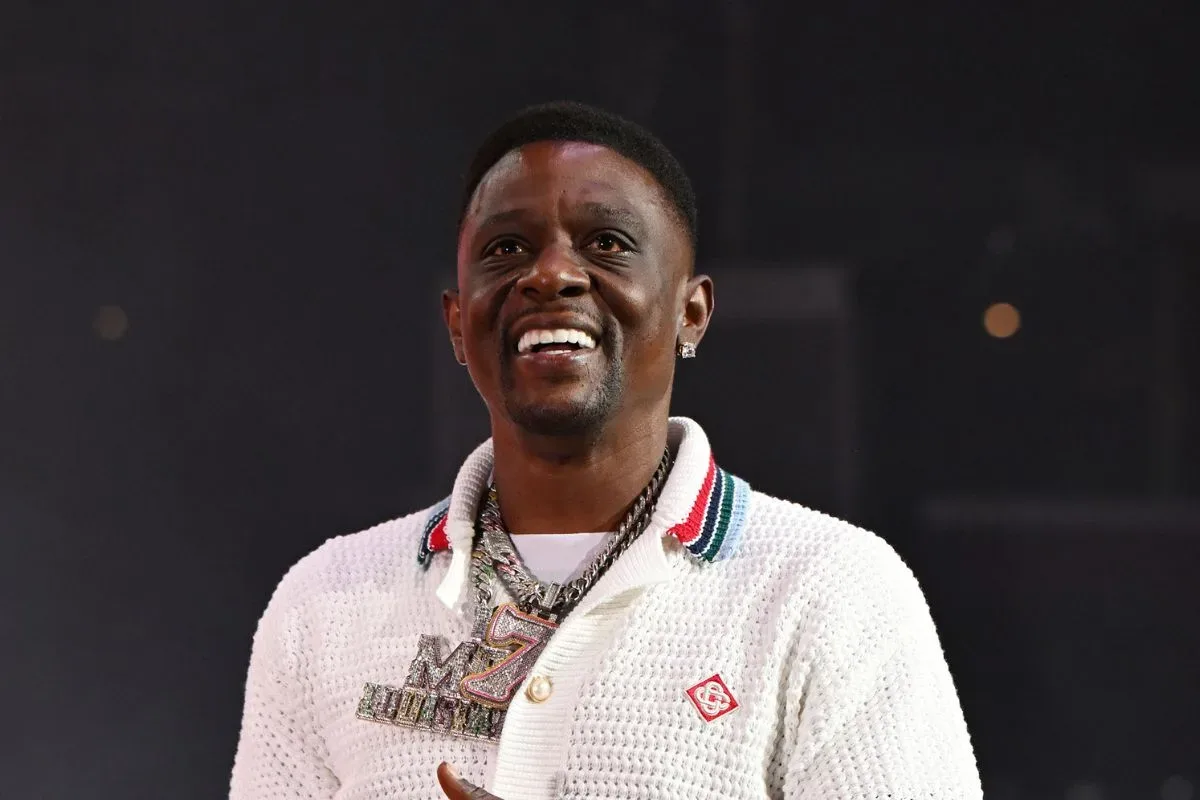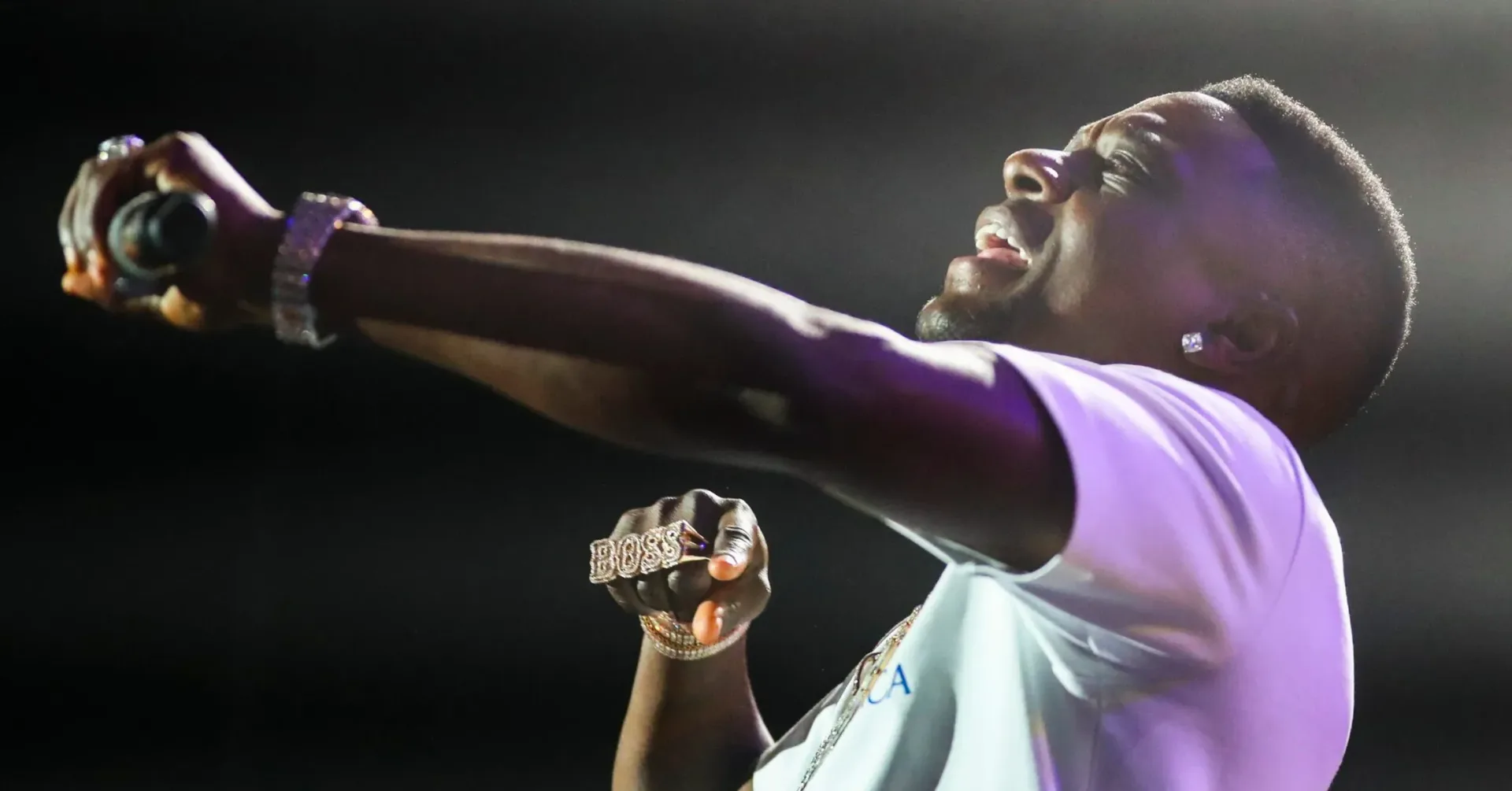
Boosie Badazz is drawing a sharp line between hiring people to seek a presidential pardon and paying a president for one. The Baton Rouge rapper says the first is what he did, and insists it was not illegal. His wider dispute concerns the money he paid, the work he says was promised, and whether the people he hired delivered anything close to it.
The matter has drawn renewed attention following Boosie’s appearance in a television investigation examining the business that can grow around presidential clemency. Boosie says he paid a firm associated with political operatives Jack Burkman and Jacob Wohl in 2025 to advocate for clemency in his federal gun case. The reported total was $600,000. A pardon did not arrive, and Boosie is now seeking the return of $300,000.
In a recent video response to people questioning him directly, Boosie rejected the idea that retaining lobbyists amounted to wrongdoing. His argument is straightforward: paying advocates to press a clemency case is different from paying a president for a pardon. The concern, as he frames it, is not that he sought help; it is what allegedly happened after the money changed hands.
“I ain't do nothing illegal,” Boosie said, arguing that the real problem would be taking money and failing to perform the work it was meant to fund.
What Boosie is—and is not—claiming
There are two separate questions in this story, and blending them together obscures the dispute.
- Hiring lobbyists: Boosie says he retained Burkman and Wohl’s firm to advocate for a pardon. On the currently reported facts, simply paying lobbyists to advocate for presidential clemency is not, by itself, illegal.
- Whether promised services were delivered: Boosie alleges that the operatives overstated their access to politically powerful figures and is pursuing a partial refund. Burkman and Wohl deny wrongdoing. That conflict remains unresolved, so Boosie’s allegations are not established findings.
That distinction is central to Boosie’s public defense. He is not presenting the $600,000 as a direct payment for presidential action. He says it was compensation for advocacy around his case. The reported agreement allegedly gave the pair until January 31, 2026, to secure the pardon. Months after that date, Boosie had not received one.
A pardon is an act of executive clemency that forgives an offense; clemency is the broader term for presidential relief involving a criminal sentence or conviction. Lobbying, in the plain sense relevant here, means paid advocacy meant to persuade decision-makers or people with influence. The important reported distinction is between advocacy for consideration and any unlawful exchange for an official act.
Boosie’s complaint is therefore closer to a disagreement over representation than an admission that he tried to buy a pardon. That does not settle the financial conflict, of course. It identifies where the competing accounts differ: Boosie says the political access sold to him was exaggerated and the work did not produce what was promised; Burkman and Wohl say they did nothing wrong.
The $600,000 dispute remains unresolved
The figures matter because they make clear this was no casual outreach effort. Boosie says he spent $600,000 pursuing clemency and is now attempting to get half of that sum back. His request for $300,000 does not change the larger reported amount, but it signals that he is contesting at least part of the arrangement rather than describing every dollar as automatically recoverable.
Boosie has also publicly shared alleged messages with Burkman and Wohl while questioning whether the connections he was told could assist his case were real or meaningful. Those communications form part of his public argument, but they do not independently resolve the underlying dispute. There has been no reported outcome establishing that the connections were fabricated or that fraud occurred.
Burkman and Wohl have previously been convicted on fraud-related charges, a background detail that has intensified scrutiny of their involvement. It is still important not to use that history as a substitute for proof in this matter. Their past convictions do not establish Boosie’s allegations, and their current denial remains part of the record.
Why the language around pardon seeking matters
Stories involving celebrity, national politics and six-figure payments can quickly flatten into a sensational shorthand: money was paid, a pardon was sought, therefore the payment itself must have been corrupt. Boosie is pushing back on precisely that shorthand.
His response does not argue that he received a pardon. He plainly did not, based on the facts reported here. Nor does it show that the lobbying arrangement succeeded. Instead, he is emphasizing a narrower proposition: an individual can pay representatives to advocate for clemency without that act alone becoming an illegal payment to the president.
The practical issue for anyone following the controversy is to keep the parties and actions distinct. Boosie says he paid private lobbyists. His stated goal was a pardon from President Donald Trump. The reported dispute is with the lobbyists—not with the president—and it concerns alleged failures in the private arrangement. That is a materially different claim from an allegation of a direct payment for a presidential pardon.
It also explains why Boosie can sound both defensive and aggrieved. In public, he is rebutting claims that he personally broke the law by seeking help. At the same time, he is accusing the people he hired of failing to honor their side of the deal. Those positions are not inherently contradictory: a person can lawfully retain advocates and later argue that the advocates did not provide the services represented.
A celebrity case inside a broader political conversation
Boosie’s situation has become part of a wider discussion about how pardon-seeking can create an industry of intermediaries, influence claims and high-stakes promises. The attention is unsurprising: clemency is a consequential form of presidential power, while a would-be recipient often has an enormous incentive to find advocates who claim they can make a case heard.
But the public conversation should not leap past the facts available. The reported record supports that Boosie paid $600,000, that a January 31, 2026 target date was allegedly part of the deal, that no pardon followed, and that he is seeking $300,000 back. It also supports that he alleges inflated claims of political influence, while Burkman and Wohl deny misconduct. It does not establish who is ultimately right about the arrangement.
The controversy also arrives amid a pop-culture climate in which discussions of Trump, hip-hop and political loyalty often become larger arguments about public identity. For another recent example of how quickly music-world commentary can overlap with those debates, see Coi Leray’s comments on Nicki Minaj’s hip-hop legacy amid a Trump debate.
What happens next is about proof, not the headline
Boosie’s latest comments make his own position clear: he believes seeking a pardon through paid advocates was within legal bounds, and he believes his money was mishandled. The first point is broadly consistent with the reported legal framing. The second remains a live allegation challenged by the operatives involved.
For now, the absence of a pardon is the undisputed outcome. Everything beyond that—the quality of the work, the value of the access claimed, and whether Boosie is owed the $300,000 he seeks—belongs to an unresolved disagreement. The most accurate reading is not that Boosie purchased a pardon, because no pardon was granted, nor that the dispute has already proved a scam. It is a high-dollar conflict over paid clemency advocacy, with both sides offering sharply different accounts of what the deal required and what was delivered.