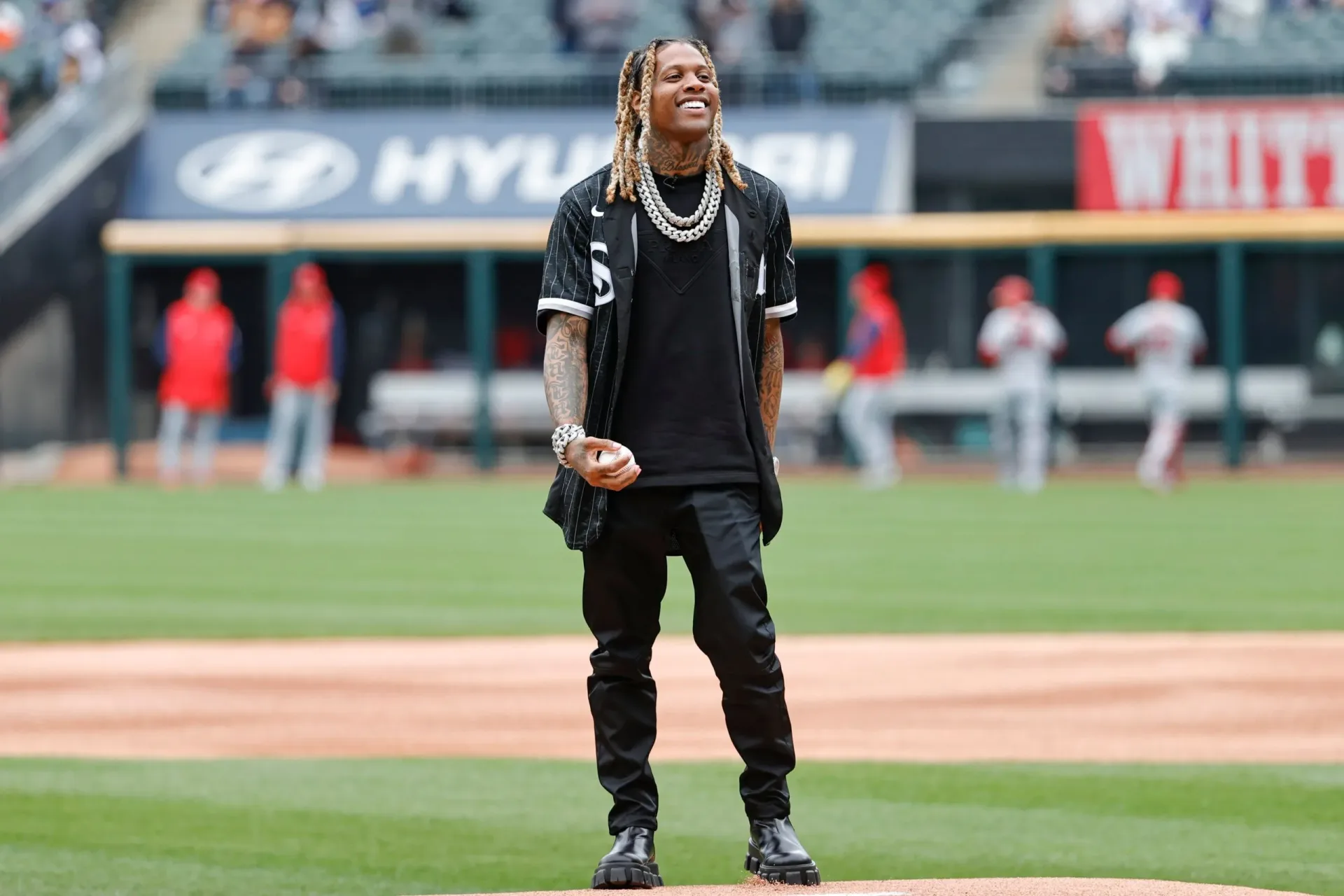
Boosie Badazz has appeared for arraignment in Harris County, Texas, in a felony case tied to an alleged confrontation at a downtown Houston nightclub. The rapper is accused of striking a security guard with a glass hookah base during an incident near the venue’s closing time.
The arraignment is an early procedural step rather than a resolution of the accusation. It formally brings the defendant before the court on the charge and starts a process that can include further hearings, motions, negotiations or a trial. The allegation remains unproven, and the available account does not establish how the criminal case will ultimately be decided.
What the allegation says happened
Court records describe an incident at roughly 2 a.m. as a woman was being escorted from the club. The woman was reportedly upset after being told she could not use the restroom because the venue was closing. She allegedly struck a security guard, then dropped her phone and keys.
The central allegation is that, when the guard bent down to collect those belongings, Boosie struck him in the head with a glass hookah base. The guard reportedly needed eight staples for the resulting injury.
A second guard is said to have witnessed the event, heard glass break and seen Boosie holding the broken hookah while yelling in the injured guard’s direction. Both guards reportedly identified him by his stage name before confirming his identity through photographs.
Those descriptions set out the prosecution-facing account of an alleged event. They are not a judicial finding of guilt. Identification evidence, eyewitness recollections, the sequence of events, video if any exists, physical evidence and the legal arguments around intent and self-defense can all become important in a contested assault prosecution. None of those questions is settled merely because an arraignment has occurred.
The charge and the question of a “deadly weapon”
The reported charge is aggravated assault with a deadly weapon. In Texas, the supplied case information describes that offense as a second-degree felony carrying a potential prison range of two to 20 years. It also notes that prosecutors could seek a first-degree treatment, though no outcome on that question is established here.
“Deadly weapon” is a legal classification, not necessarily the name of a purpose-built weapon. The important allegation is not that a hookah is inherently a weapon. Rather, the claim is that a glass object became one through its alleged manner of use and its alleged capacity to cause serious injury. That distinction is significant because the classification can increase the seriousness of an assault allegation.
The factual dispute will matter enormously. A prosecutor would need to establish the elements of the offense beyond a reasonable doubt. The defense may challenge whether the accused was the person involved, what occurred during the confrontation, whether the object was used as alleged, and whether the evidence supports the charged level of offense. These are general implications of a pending criminal charge, not predictions about the case.
An $85,000 bond does not end the legal process
Bond in the Harris County case is set at $85,000. Bond concerns release while a case is pending and the conditions associated with that release; it is not a verdict, a sentence or an assessment of civil liability.
For observers accustomed to celebrity-news shorthand, that distinction is worth keeping clear. A defendant can be released on bond and still face months or longer of court proceedings. Likewise, the existence of a serious charge does not mean a court has accepted every allegation in a charging document.
The Houston matter also arrives amid a wider set of legal pressures. Those separate proceedings should not be treated as one combined case, even if each could affect the practical stakes for Boosie.
The civil lawsuit is separate from the felony prosecution
The injured security guard has filed a civil lawsuit seeking $8 million in damages. That claim is independent of the state’s criminal case. Criminal prosecutors pursue an alleged violation of criminal law, while a civil plaintiff seeks monetary damages for claimed injuries or losses.
The two matters can concern the same reported incident without operating under the same rules or seeking the same result. A criminal conviction is not required for someone to file a civil complaint, and a civil filing is not proof that the criminal allegations will result in conviction. Each track has its own evidence, standards and procedures.
The $8 million figure is the amount sought in the complaint, not an amount awarded. Any recovery, settlement or dismissal would depend on subsequent developments.
Reported supervised-release consequences raise the stakes
Beyond Harris County, federal probation supervisors are reportedly seeking to revoke Boosie’s supervised release connected to an earlier federal gun case. The information available says that could add as much as 18 months.
Supervised release is a period of federal court supervision that follows a federal prison sentence. A claimed violation can lead to a separate federal proceeding. It does not automatically mean that every accusation becomes a violation or that a maximum possible consequence will be imposed. Still, a new criminal allegation can have consequences beyond the court where that allegation was filed, particularly when a defendant is already under supervision.
This makes the Houston case consequential in more than one forum. The state prosecution concerns the alleged nightclub assault. The civil suit concerns claimed damages by the guard. A federal supervised-release matter would concern compliance with conditions tied to the prior federal case. Keeping those lanes distinct is essential when evaluating headlines around the matter.
A separate lawsuit over a promised pardon
Boosie also recently discussed a different dispute in a television interview: he said he paid $600,000 to lobbyists Jack Burkman and Jacob Wohl for what he believed would be a guaranteed presidential pardon from Donald Trump.
He said the pardon did not materialize and that he is suing Burkman and Wohl to recover the money and seek additional damages. Boosie has further claimed he has evidence the pair told him presidential approval had already been secured. Those are claims in a separate dispute and are unrelated to deciding the facts of the Houston nightclub accusation.
The overlap is therefore one of timing, not legal identity. The pardon-related suit, the Harris County felony charge, the guard’s civil action and the reported federal supervision issue each involve different claims, decision-makers and potential outcomes.
Why careful language matters in an unfolding case
There is a temptation to collapse a high-profile arraignment into a final verdict, particularly when the alleged injury and potential sentence are stark. The record described so far supports reporting that prosecutors have brought a serious allegation and that the guard has pursued a substantial civil claim. It does not support declaring guilt before the criminal process has run its course.
It is also premature to add potential prison ranges from different matters as though they are inevitable sentences. The reported two-to-20-year range describes exposure attached to the alleged second-degree offense; it is not a prediction. The reported 18-month federal consequence is similarly contingent on a supervised-release process and any judicial decision within it.
For now, the concrete milestones are limited: Boosie has been arraigned, bond is set at $85,000, a civil suit seeks $8 million, and there is reported action involving federal supervised release. The next meaningful developments will be courtroom filings, hearing results and any statements from the parties that clarify how the allegations are being contested.
The story also sits within a broader Texas entertainment-news cycle, including a separate recent dispute involving a Texas honor offered to Chris Brown, but the cases and circumstances are unrelated.