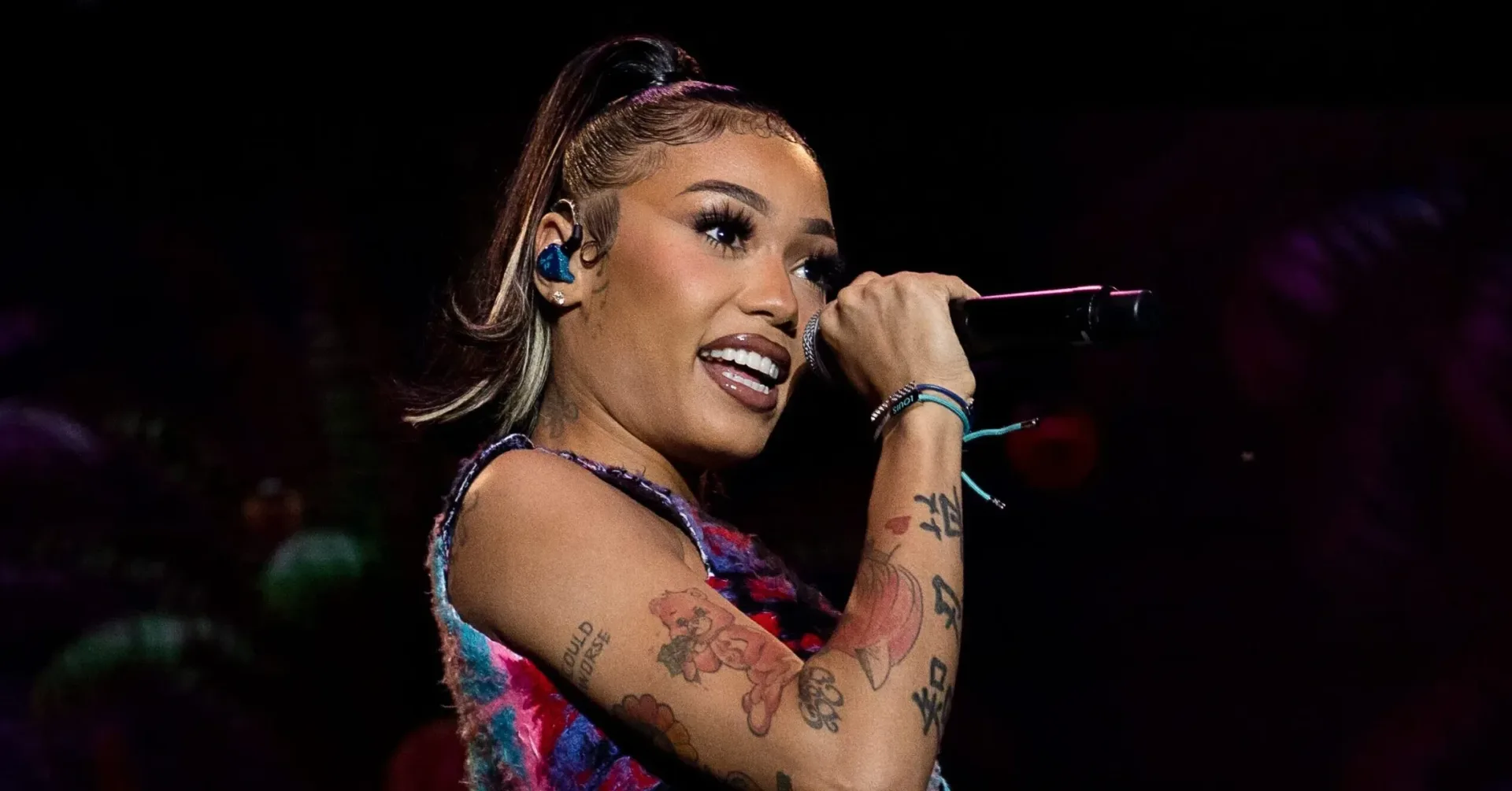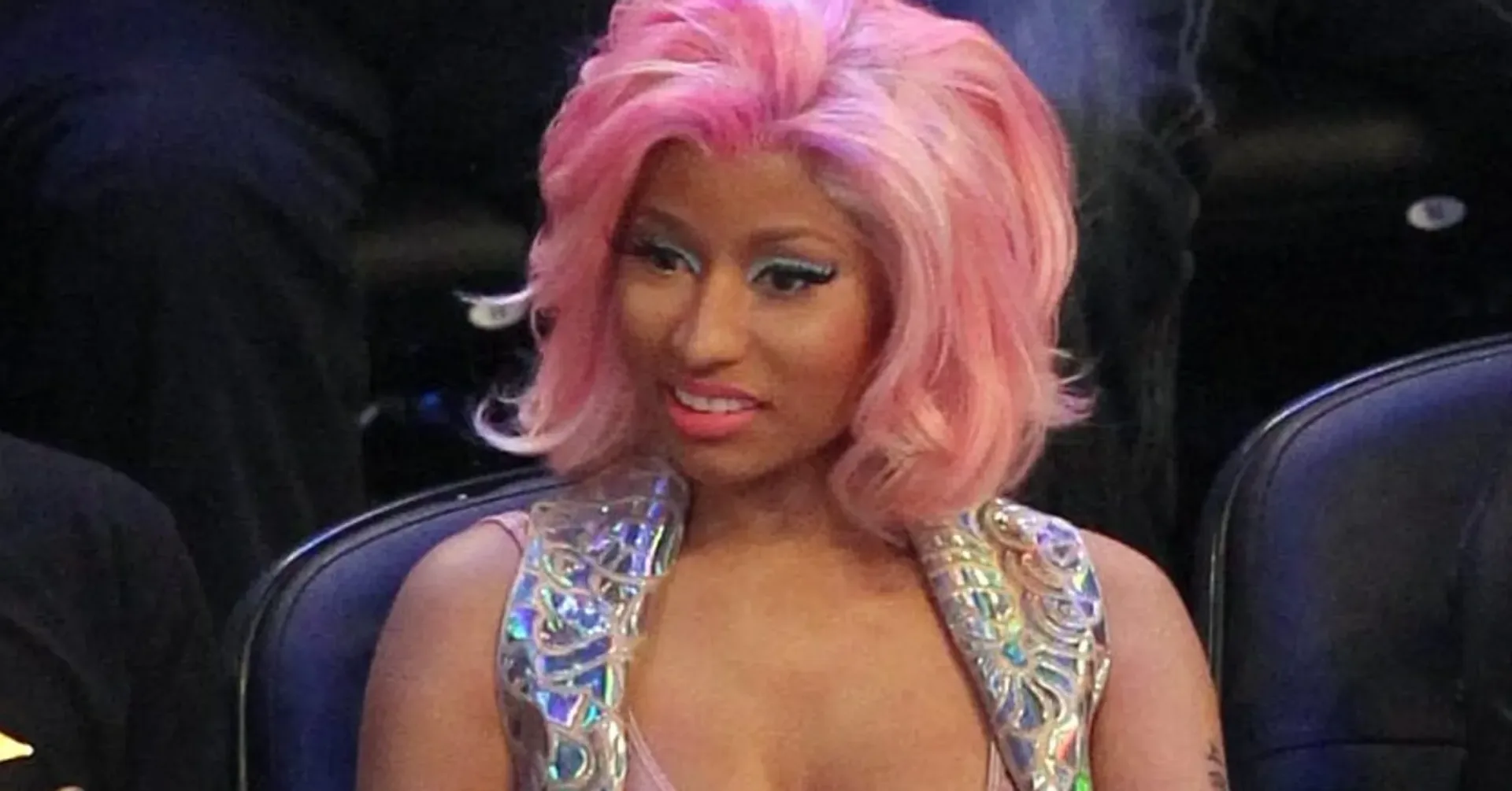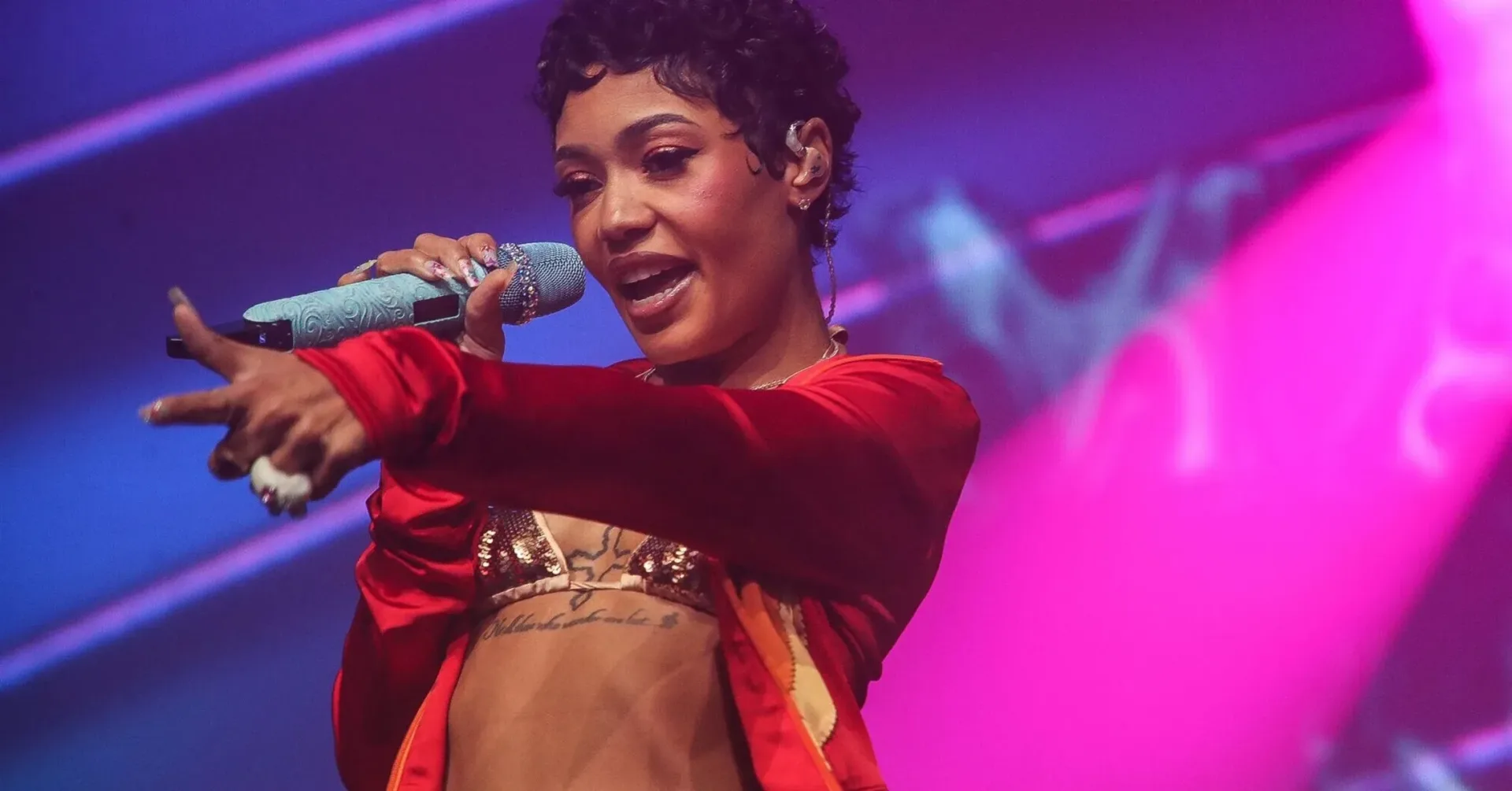
Coi Leray has drawn a firm distinction between an artist’s legacy and the political controversy surrounding them. Speaking on The Jason Lee Show, Leray said she does not believe Nicki Minaj’s public alignment with President Donald Trump changes what Minaj has achieved in Hip-Hop, even as it has become an unavoidable part of the conversation around her.
The comments are notable partly because Leray did not present herself as a close associate protecting a current friendship. Asked whether she and Minaj still have a relationship, Leray replied, “No, I don’t think so.” Yet she still described herself as a fan and said she has “a lot of love” for Minaj. Her position is not that audiences must share Minaj’s politics or disregard their objections. It is that political disagreement should not automatically wipe out an artist’s musical record.
“I think she’s an icon, I think she’s still one of the greatest artists when it comes to Hip Hop,” Leray said.
What Leray is—and is not—arguing
Leray’s remarks center on the difference between artistic legacy and public approval. Legacy, in this context, means an artist’s lasting contribution and stature within a genre: the music, influence and importance that listeners and peers attach to a body of work. Public approval is more immediate and more changeable. It includes how fans react to interviews, affiliations, disputes and conduct outside of songs.
Those categories often overlap, but they are not identical. An artist can lose support from some listeners while remaining historically significant to others. Likewise, admiration for a catalog does not require agreement with every public stance an artist takes. Leray’s argument is that Minaj’s support for Trump has become so dominant in public discussion that it can eclipse discussion of Minaj as a rapper.
“How are you gonna sit there and say you’re a fan and you love somebody so much, or you love the song, and the only thing you can think about is her sitting next to Trump?” Leray asked. “Since when was y’all into politics?”
That framing will not settle the disagreement, because it points to a real divide in how audiences approach celebrity. Some listeners are comfortable separating art from the artist, treating a song or album as distinct from the creator’s political identity. Others see public support for political figures and movements as meaningful enough that it necessarily shapes how they engage with the work. Neither reaction is erased by Leray’s defense; her comments instead push back on the idea that only one lens is legitimate.
For a wider look at why audiences increasingly expect their relationship with entertainment to involve values and participation rather than simple consumption, see the changing expectations around fandom as a partnership.
Minaj’s politics have become more public in 2026
The political context behind Leray’s comments is not speculative. Minaj has openly embraced Trump. In January, she appeared with him at an event promoting his administration’s investment accounts for children. She endorsed the initiative, called herself the president’s “number-one fan,” and said criticism would not alter her support.
By May, Minaj was speaking publicly about identifying with Trump’s political movement. She said she had previously kept that support private because she anticipated backlash in the music industry, but no longer wanted to conceal it.
That public visibility helps explain why many reactions to Minaj now begin with politics rather than music. A celebrity endorsement is not merely a private voting preference when it is communicated at public events and in interviews. It invites a response, especially when the politician involved is as divisive as Trump. Leray’s point is not that such response is impossible or forbidden. Rather, she is asking whether the response has become the whole story.
She also compared the scale of attention around Minaj and Trump to coverage of Barack Obama, saying, “I don’t even think Obama got that much press and that was our first Black president.” That is Leray’s assessment of the media attention, not a demonstrated comparison of total coverage. It nevertheless illustrates her frustration: she sees Minaj’s political association receiving an outsized share of the attention that once went to her music.
A personal connection that has changed
Leray has a specific history with Minaj. The pair collaborated on “Blick Blick” in 2022. The record’s path was complicated after Benzino prematurely disclosed the collaboration. Minaj initially removed her verse, then reversed that decision after a private conversation with Leray.
That episode gives Leray’s current praise added context. She is not talking about Minaj solely as an observer of the genre; she was involved in a release with her and saw a difficult situation resolved privately. Still, Leray was direct that they do not appear to have a current relationship. Her support is therefore framed as fandom and professional respect rather than evidence of an ongoing alliance.
“I truly got a lot of love for that woman, because I’m a fan, first, before anything,” Leray said. “I don’t know her personally, but I have a lot of love for her because I’m a fan.”
That distinction is useful in a celebrity culture that frequently treats collaboration, mutual praise and personal friendship as interchangeable. They are not. Two artists may share a record, respect each other’s accomplishments, or have a cordial private interaction without sustaining a lasting personal connection. Leray’s comments acknowledge that reality without diminishing the significance she assigns to Minaj’s career.
Feuds, controversies and the attention economy
Leray also referred to the criticism surrounding Minaj’s conflicts with other women in rap, including Latto. Her broader concern is that high-profile disputes and backlash can take over the public narrative until an artist’s music is treated as secondary.
This is partly a question of the attention economy: the competition for public interest in a media environment where conflict, short clips and social-media reactions often spread faster than nuanced discussion of creative work. Feuds are easy to summarize and invite quick allegiance. A career assessment demands more from the audience. It requires listeners to weigh output, longevity and influence while accepting that their final judgment may be complicated.
There is also no requirement that criticism of public behavior be dismissed as distraction. Artists who use their platforms politically can expect their politics to be part of their public identity. But Leray’s comments highlight the risk at the other extreme: reducing a long career to whichever controversy is most recent or most emotionally charged.
For fans, the practical question is not whether a universal separation between art and artist exists. It plainly does not; people draw that boundary differently. The more honest approach is to be clear about the standard being applied. A listener can say that Minaj’s political support changes their willingness to stream her music. Another can say that they reject her politics while continuing to recognize her importance in Hip-Hop. Leray falls closest to the second position.
Why this debate is unlikely to disappear
Minaj’s public support for Trump means the political dimension is unlikely to fade from discussion simply because some fans would rather focus on songs. At the same time, Leray’s defense makes clear that controversy does not automatically create agreement about how an artist should be remembered.
Her central line—“You can’t take away or stop greatness”—is an assertion of how she views Minaj’s place in Hip-Hop. It is not a demand that every listener celebrate Minaj, nor is it a factual measure that can be conclusively scored. It is a statement of artistic esteem from another rapper whose own connection with Minaj has cooled.
That may be the most revealing aspect of Leray’s response. She separates proximity from praise, politics from musical evaluation, and current controversy from a larger career. In doing so, she gives voice to a common but increasingly difficult fan position: it is possible to oppose or question an artist’s public choices while still recognizing why that artist matters to the culture.